

SPORTS / TECHNOLOGY / BUSINESS
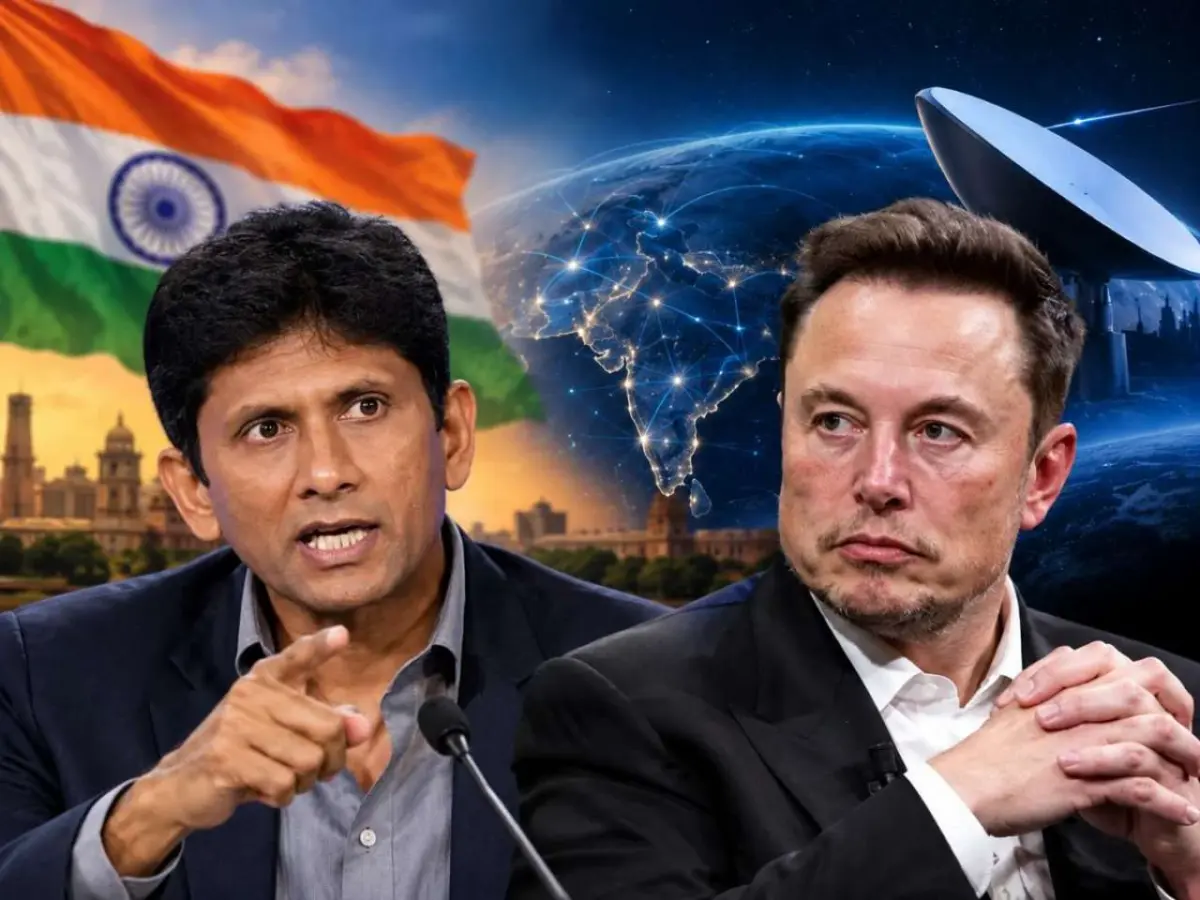
New Delhi, [Date of Publication] – The ongoing saga surrounding Starlink’s proposed entry into the Indian market has taken a dramatic turn, drawing in a surprising figure: former Indian cricket fast bowler Venkatesh Prasad. Known for his incisive commentary on the sport, Prasad has now launched a blistering critique of tech billionaire Elon Musk, escalating a debate that intertwines cutting-edge satellite technology, intricate regulatory frameworks, corporate power plays, and national security concerns. His pointed remarks, particularly labeling Musk a "terrible human being," have sent ripples across social media and media outlets, spotlighting the friction between global tech ambitions and national sovereignty.
The Core Controversy: Starlink’s Stalled India Launch
At its heart, the dispute revolves around Starlink, the satellite internet division of Elon Musk’s SpaceX, and its persistent struggle to secure operational licenses in India. Starlink aims to provide high-speed, low-latency internet access, particularly to underserved and remote regions, utilizing a constellation of low-Earth orbit (LEO) satellites. Musk has repeatedly expressed frustration over the perceived bureaucratic hurdles and regulatory delays, asserting that India’s stringent requirements are hindering a service he believes could bridge the nation’s digital divide and foster economic growth in rural areas.
This frustration recently boiled over on social media platform X (formerly Twitter), where Musk not only voiced his impatience but also aimed a direct jibe at Reliance Industries chairman Mukesh Ambani, a dominant force in India’s telecommunications sector. Musk provocatively referred to Ambani as "Prime Minister Ambani," implying that the established telecom giant wields undue influence, effectively blocking new entrants like Starlink to protect its market share. This comment ignited a firestorm, drawing responses from various quarters, including a sharp rebuttal from Indian authorities who maintain that all companies, foreign or domestic, must adhere to the country’s robust regulatory and national security protocols.
)
A Chronology of Escalation: From Frustration to Fiery Critique
The recent intensification of the Starlink India controversy can be traced through a series of public statements and social media exchanges:
- Musk’s Persistent Frustration: For several years, Elon Musk has openly voiced his exasperation with the slow pace of regulatory approvals for Starlink in India. His vision for Starlink aligns with broader goals of global connectivity, and India, with its vast population and significant digital divide, represents a critical market. Musk has often highlighted Starlink’s potential to empower students with online learning and enable small businesses to access wider markets, especially in regions lacking traditional broadband infrastructure.
- The "Prime Minister Ambani" Remark: In a significant escalation, Musk’s post on X, referring to Mukesh Ambani with a mock title, signaled a direct accusation of monopolistic practices and political leverage. This comment was widely interpreted as an insinuation that Ambani’s influence was being used to create an uneven playing field, effectively stifling competition and preventing Starlink from obtaining the necessary licenses. This move, uncharacteristic in its directness against a prominent Indian business figure, quickly became a focal point of the debate.
- Official Indian Rebuttal: Promptly, Indian government officials pushed back against Musk’s insinuations. They categorically denied any evidence that a specific business group was obstructing Starlink’s entry. Instead, they reiterated the government’s consistent stance: any satellite communication service seeking to operate in India must fully comply with all applicable regulatory guidelines and, crucially, satisfy national security requirements. This response aimed to depoliticize the issue and reframe it as a matter of due process and adherence to sovereign laws.
- Venkatesh Prasad’s Scathing Intervention: It was into this charged atmosphere that Venkatesh Prasad, a respected voice from India’s cricketing fraternity, stepped. On October 10, 2026, Prasad took to X, not merely to comment on the Starlink issue, but to directly attack Musk’s character and perceived hypocrisy. His intervention shifted the narrative from a purely business and regulatory dispute to one questioning the ethical conduct and double standards of a global business leader.
Starlink’s Grand Vision and India’s Digital Landscape
Starlink’s core proposition is transformative: to deliver internet services globally via a massive constellation of satellites orbiting Earth at a much lower altitude than traditional geostationary satellites. This LEO technology promises significantly reduced latency and higher speeds, making it ideal for areas where terrestrial infrastructure is difficult or uneconomical to deploy.

For a country like India, with its diverse geography ranging from remote Himalayan villages to densely populated urban fringes, Starlink’s potential is immense. Despite India’s rapid strides in digital connectivity, a substantial portion of its population, particularly in rural and tribal areas, still lacks reliable and affordable internet access. Bridging this digital divide is a stated priority for the Indian government, aligning with initiatives like "Digital India." Musk’s argument that Starlink could democratize access to education, healthcare, and e-commerce for millions resonates deeply with this national objective. However, the path to realizing this vision is paved with regulatory complexities unique to India.
The Regulatory Maze: India’s Stance on Satellite Communications
India’s telecommunications sector is one of the most dynamic and competitive globally, but it is also governed by a robust and multi-layered regulatory framework. For satellite communication services like Starlink, several key hurdles must be cleared:
)
- Licensing Requirements: Obtaining licenses from the Department of Telecommunications (DoT) is paramount. This involves detailed scrutiny of technical specifications, operational plans, financial viability, and security protocols.
- Spectrum Allocation: Access to electromagnetic spectrum is a critical resource for satellite communications. India has a well-defined policy for spectrum allocation, often involving auctions or administrative assignments, which can be a lengthy process.
- National Security Concerns: Given the nature of satellite communications, national security is a paramount consideration. The Indian government is meticulous about ensuring that any foreign entity operating within its communication space does not pose a threat to national data integrity, surveillance capabilities, or overall sovereignty. This includes stipulations on data localization, encryption standards, and potential access by law enforcement agencies.
- Level Playing Field: Indian regulators emphasize creating a "level playing field" for all operators, domestic and international. This means ensuring that foreign companies adhere to the same rules and pay the same fees as their Indian counterparts, preventing unfair advantages.
- Local Presence and Investment: India often encourages foreign companies to establish a local presence, invest in local infrastructure, and contribute to the "Make in India" initiative, fostering job creation and technology transfer.
Indian officials maintain that Starlink’s delays are not due to protectionism or corporate lobbying, but simply the time required to navigate these legitimate and necessary regulatory processes. They argue that applying the same standards to all players is fundamental to fair competition and national interest.
Venkatesh Prasad’s Intervention: A Scathing Critique
It was against this backdrop of regulatory standoff and corporate accusations that Venkatesh Prasad’s voice emerged, adding a layer of personal moral judgment to the technical and economic debate. Prasad, a former right-arm fast-medium bowler who represented India in Tests and One Day Internationals, has transitioned into a prominent media personality, known for his direct and often critical commentary.
)
On October 10, 2026, Prasad unleashed a torrent of criticism against Elon Musk on X, accusing him of glaring double standards regarding market competition and national sovereignty. His central argument revolved around the alleged hypocrisy of Musk complaining about India’s regulatory environment while, according to Prasad, employing similar tactics to protect his own business interests in the United States.
Prasad stated bluntly: "Extremely poor from President Musk, who ensured BYD didn’t enter the US for fear of his Tesla sales crumbling. And here making an issue out of our right for national security. A great entrepreneur but a v bitter man."
)
This accusation centered on the Chinese electric vehicle (EV) manufacturer BYD. While BYD has indeed faced significant challenges entering the U.S. passenger vehicle market, attributed to factors like tariffs, geopolitical tensions, and consumer preferences, Prasad’s claim that Musk "ensured" BYD’s exclusion to protect Tesla is a strong allegation. While there is no independently verified evidence directly linking Musk’s personal actions to U.S. policy decisions regarding BYD, Prasad’s assertion tapped into a broader narrative of corporate protectionism and competitive maneuvering in global markets. It served to question Musk’s integrity, painting him as someone who champions free markets only when it benefits his own ventures.
Prasad further deepened his critique by referencing Musk’s past public disagreements with former U.S. President Donald Trump, specifically mentioning an instance where Musk reportedly "went after Trump claiming his name is in Epstein files only to calm down later to ensure his business doesn’t suffer. Lol Musk." This reference aimed to portray Musk as a pragmatist whose public stances are often dictated by his business interests rather than consistent principles. By drawing these parallels, Prasad sought to cast doubt on the sincerity of Musk’s arguments regarding fair competition and open markets in India, suggesting that the billionaire’s concerns shift conveniently when his own bottom line is at stake.
)
Prasad’s use of phrases like "terrible human being" and "v bitter man" elevated his criticism beyond a policy debate, turning it into a character assassination. His intervention, coming from a respected national figure, amplified the sentiment that Musk’s approach to doing business in India might be perceived as arrogant or disrespectful of sovereign processes.
Musk’s "Prime Minister Ambani" Remark and its Repercussions
Elon Musk’s decision to name-check Mukesh Ambani and sarcastically label him "Prime Minister Ambani" was a calculated, albeit risky, move. In India, Mukesh Ambani and Reliance Industries hold immense economic and political sway. Reliance Jio, a subsidiary of Reliance Industries, revolutionized the Indian telecom sector with its aggressive pricing and widespread network, quickly becoming a dominant player.
)
Musk’s comment implied a cartel-like behavior or an unhealthy nexus between powerful business interests and regulatory bodies, suggesting that Ambani’s influence was being leveraged to create entry barriers for competitors like Starlink. This accusation, while not entirely unprecedented in the discourse surrounding large corporations, carries significant weight when made by a global figure like Musk.
The repercussions of such a direct attack are multifaceted:
)
- Diplomatic Sensitivity: Such comments can strain business relations and even touch upon diplomatic sensitivities, as they implicitly question the integrity of a nation’s regulatory environment and its leading industrialists.
- Market Perception: It can create a perception of an unfair market, potentially deterring other foreign investors or, conversely, strengthening the resolve of regulators to prove their impartiality.
- Public Discourse: It fuels public debate about corporate power, crony capitalism, and the challenges foreign companies face when entering markets dominated by powerful local players.
- Increased Scrutiny: It likely subjects Starlink’s application to even greater scrutiny, as regulators would be keen to demonstrate that their decisions are based purely on merit and compliance, not external pressures.
Musk’s justification for these remarks centers on his belief that satellite internet is a "lifeline for disconnected communities" and that "better connectivity can open doors for education and business in rural India." He portrays himself as a champion of connectivity against entrenched interests. However, the manner of his criticism has overshadowed the perceived altruism of his intentions, raising questions about his approach to engaging with national governments and business ecosystems.
Broader Implications: National Security vs. Market Dynamics
The Starlink India controversy is more than just a dispute between a tech mogul and a national government; it encapsulates several larger questions critical to India’s future and its role in the global economy:
)
- Balancing Innovation and Regulation: How does India foster an environment conducive to cutting-edge technologies and foreign investment while safeguarding its regulatory autonomy and national interests? The challenge lies in creating predictable and transparent processes that encourage innovation without compromising security or fair competition.
- The Role of National Security: The Indian government’s emphasis on national security is non-negotiable. Satellite communication, by its very nature, can have implications for data sovereignty, surveillance, and critical infrastructure. Ensuring that foreign entities operating in this space adhere to stringent security protocols is a legitimate concern for any sovereign nation.
- Corporate Power and Lobbying: The debate has reignited discussions about the influence of large corporations, both domestic and international, on policy-making. While lobbying is a common practice, accusations of undue influence or attempts to stifle competition raise ethical questions about the integrity of market mechanisms.
- The "India Story" for Foreign Investors: How this controversy plays out will send signals to other foreign investors considering the Indian market. While India remains an attractive destination due to its size and growth potential, perceived bureaucratic hurdles or the impression of an uneven playing field could impact investment decisions.
- The Power of Social Media in Global Debates: The entire saga has unfolded largely on social media, demonstrating its power as a platform for direct communication, public criticism, and rapid escalation of international disputes. It allows global figures to bypass traditional media, but also exposes them to immediate public scrutiny and backlash.
For Venkatesh Prasad, the issue extends beyond business and policy; it’s a moral question about whether business leaders, regardless of their entrepreneurial success, play by consistent ethical rules. His blunt assessment of Musk as a "terrible human being" injects a strong personal dimension into what would otherwise be a technical and economic debate.
The Road Ahead: What’s Next for Starlink in India?
As the back-and-forth continues, Starlink’s fate in India remains uncertain. The immediate future will likely depend on several factors:
)
- Regulatory Compliance: Starlink will need to demonstrate its full adherence to India’s DoT and other relevant regulatory bodies’ requirements, including security audits and financial commitments.
- Dialogue and Diplomacy: A more constructive dialogue between SpaceX/Starlink and Indian authorities might be necessary to resolve outstanding issues and bridge communication gaps. Public accusations, while generating attention, may not be the most effective strategy for securing complex governmental approvals.
- Policy Evolution: India’s satellite communication policies are continuously evolving. Any changes in these policies could either smooth or complicate Starlink’s path.
- Competitive Landscape: The existing telecom players in India, particularly Reliance Jio and Bharti Airtel, are also exploring satellite communication services, intensifying the competitive pressure.
Ultimately, the Starlink India controversy serves as a microcosm of the larger global challenge: how to integrate disruptive technologies from powerful international players into national markets while upholding sovereign rights, ensuring fair competition, and protecting national security interests. Venkatesh Prasad’s fiery critique has ensured that this complex debate is now squarely in the public consciousness, transcending the boundaries of business and technology to touch upon ethics and national pride.
