

The Indian automotive landscape in September 2026 has demonstrated a remarkable display of resilience and growth, underpinned by a shifting consumer preference toward feature-rich hatchbacks and versatile SUVs. As the industry transitioned into the high-stakes festive season, the top 10 selling passenger vehicles collectively accounted for a staggering 1,91,332 units. This performance represents a 15.45% year-on-year (YoY) increase compared to the 1,65,725 units sold by the same models in September 2025.
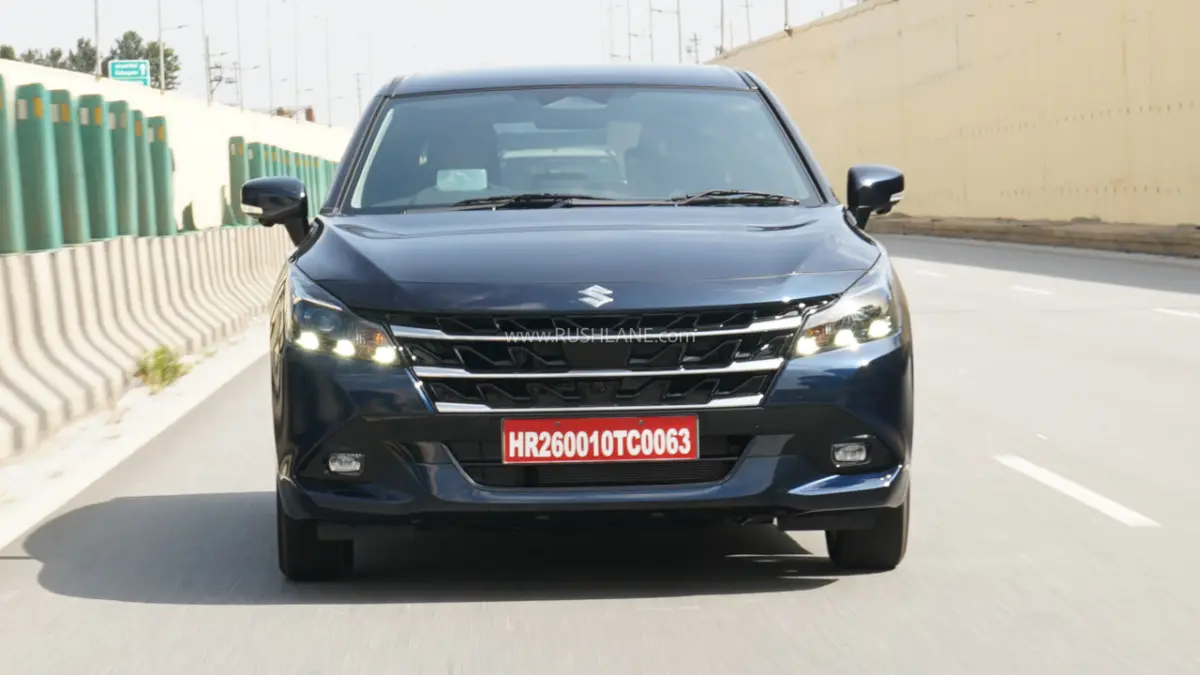
The standout performer of the month was undoubtedly the Maruti Suzuki Baleno. Following the recent launch of its much-anticipated facelift, the premium hatchback not only secured the top spot but also acted as the primary engine for the market’s volume growth. With Maruti Suzuki commanding six positions within the top 10, the company has reaffirmed its dominant market share, even as rivals like Tata Motors, Hyundai, and Mahindra continue to consolidate their presence in specific high-growth segments.
Main Facts: A Month of Milestones
The data for September 2026 reveals a complex but positive narrative for the Indian original equipment manufacturers (OEMs). The total volume increase of 25,607 units YoY among the top 10 models suggests that despite inflationary pressures and fluctuating fuel prices, the appetite for new personal mobility remains robust.
The Baleno Phenomenon
The Maruti Suzuki Baleno’s performance was nothing short of extraordinary. Registering 25,392 units, the model nearly doubled its sales from the previous year. This 92.76% growth trajectory is a testament to the success of the facelifted version, which introduced updated aesthetics and a more comprehensive technology suite. The Baleno alone contributed 13.27% to the total sales of the top 10 list, highlighting its role as the current "volume king" of the Indian roads.
The Tata Motors Duo
Tata Motors secured the second and third positions with the Nexon and the Punch, respectively. Both models crossed the significant 20,000-unit threshold. It is important to note that these figures are inclusive of their Internal Combustion Engine (ICE) and Electric Vehicle (EV) variants. The narrow margin between the Nexon (20,456 units) and the Punch (20,333 units)—a difference of only 123 units—indicates a healthy internal competition and a strong brand pull for Tata’s "New Forever" philosophy.
Market Composition
The top 10 list was dominated by Maruti Suzuki (6 models), followed by Tata Motors (2 models), Hyundai (1 model), and Mahindra (1 model). This distribution underscores a market that is increasingly bifurcated between high-volume budget/premium hatchbacks and aspirational mid-size SUVs.
Chronology: The Road to September 2026
To understand the September 2026 surge, one must look at the preceding months and the strategic launches that set the stage.
The Q3 Build-up
The third quarter of 2026 began with a cautious optimism. In July and August, manufacturers began stocking dealerships in anticipation of the festive period, which traditionally begins with Ganesh Chaturthi and Onam, leading up to Navratri and Diwali.
In August 2026, the top 10 models recorded a combined sale of 1,83,037 units. The jump to 1,91,332 units in September (a 4.53% month-on-month increase) reflects the successful conversion of consumer interest into actual sales as the festive auspicious days commenced.

The Facelift Strategy
A critical chronological marker was the mid-year launch of the Baleno facelift. Maruti Suzuki’s decision to refresh its premium hatchback at a time when the market was tilting heavily toward sub-compact SUVs proved to be a masterstroke. By enhancing the vehicle’s safety ratings and digital interface, Maruti managed to claw back interest from consumers who were previously considering entry-level SUVs.
Supporting Data: A Detailed Analytical Breakdown
The performance of the top 10 models can be dissected through two primary lenses: Year-on-Year (YoY) growth and Month-on-Month (MoM) momentum.
Year-on-Year (YoY) Comparison
While the overall trend was positive, the YoY data reveals significant disparities between different models:
- Maruti Baleno: 25,392 units (Sept ’26) vs. 13,173 (Sept ’25). Growth: 92.76%
- Tata Nexon: 20,456 units (Sept ’26) vs. 22,573 (Sept ’25). Decline: 9.38%
- Tata Punch: 20,333 units (Sept ’26) vs. 15,891 (Sept ’25). Growth: 27.95%
- Maruti Fronx: 19,282 units (Sept ’26) vs. 13,767 (Sept ’25). Growth: 40.06%
- Maruti WagonR: 18,835 units (Sept ’26) vs. 15,388 (Sept ’25). Growth: 22.40%
- Maruti Dzire: 17,754 units (Sept ’26) vs. 20,038 (Sept ’25). Decline: 11.40%
- Hyundai Creta: 17,657 units (Sept ’26) vs. 18,860 (Sept ’25). Decline: 6.38%
- Maruti Swift: 17,399 units (Sept ’26) vs. 15,547 (Sept ’25). Growth: 11.91%
- Mahindra Scorpio: 17,313 units (Sept ’26) vs. 18,371 (Sept ’25). Decline: 5.76%
- Maruti Ertiga: 16,911 units (Sept ’26) vs. 12,115 (Sept ’25). Growth: 39.59%
The Maruti Dzire faced the sharpest YoY decline (11.40%), suggesting a cooling of interest in the sub-4-meter sedan segment as consumers migrate toward crossovers like the Fronx.
Month-on-Month (MoM) Dynamics
The MoM figures provide a snapshot of immediate market sentiment. Interestingly, the growth was not uniform:
- Winners: The Baleno led MoM growth with a staggering 61.26% increase over August 2026. Other gainers included the Nexon (10.99%), Creta (8.40%), and Scorpio (11.15%).
- Losers: The Maruti Swift saw the most significant monthly drop, sliding 12.27% (a loss of 2,433 units). This is often attributed to the "cannibalization" effect, where the success of the Baleno facelift likely drew potential buyers away from its sibling, the Swift. The Ertiga and WagonR also saw marginal MoM declines of 8.67% and 6.67%, respectively.
Official Responses and Industry Perspectives
While official statements from the manufacturers often highlight the "customer-centric" nature of these numbers, industry analysts provide a more nuanced view of the September results.
The Manufacturer’s Stance
A spokesperson for Maruti Suzuki commented on the results: "The overwhelming response to the new Baleno confirms that the Indian consumer values a blend of sophisticated technology and reliable performance. Our multi-pronged strategy—offering various body styles from the WagonR to the Fronx—allows us to cater to every micro-segment of the market. We are particularly pleased with the Fronx’s consistent growth, which proves that the ‘SUV-styled hatchback’ is a category with immense potential."
Tata Motors’ executive team emphasized the role of electrification: "Our strategy to integrate EV sales with our core brands like Nexon and Punch is paying off. By offering consumers the ‘Power of Choice’—between petrol, diesel, and electric—we are ensuring that the Tata brand remains at the forefront of the green mobility transition."
Analyst Insights
Automotive analyst Dr. Rajesh Kumar noted: "The September numbers are a clear indicator of a ‘K-shaped’ recovery in the passenger vehicle segment. While premium hatchbacks and mid-size SUVs are booming, the entry-level mini-segment continues to struggle. The fact that the Baleno can grow by 92% while the Dzire falls by 11% shows that the Indian buyer is no longer just looking for utility; they are looking for a lifestyle statement."

Implications: What Lies Ahead for the Indian Auto Market?
The data from September 2026 carries several long-term implications for the industry as it moves toward 2027.
1. The Consolidation of the "Premium Hatchback"
For a few years, it was predicted that SUVs would completely eradicate the hatchback segment. However, the Baleno’s resurgence suggests that a well-executed, feature-rich hatchback can still dominate. This may prompt rivals like Hyundai (with the i20) and Tata (with the Altroz) to reconsider their investment strategies for their non-SUV portfolios.
2. The Normalization of EVs
By including EV sales in the totals for the Nexon, Punch, and Creta, it is becoming increasingly difficult to ignore the impact of electrification. As charging infrastructure improves, the percentage of the "Top 10" that is powered by batteries will likely increase, eventually requiring a separate tracking mechanism to gauge true ICE vs. EV sentiment.
3. The "Fronx" Factor and Segment Blurring
The Maruti Fronx’s ability to grow both YoY and MoM is significant. It sits in a "grey area" between a hatchback and an SUV. Its success implies that traditional segment definitions (Sedan vs. Hatchback vs. SUV) are becoming less relevant to consumers than the actual "form factor" and "road presence" of the vehicle.
4. Supply Chain and Production Capacity
The decline in numbers for the Mahindra Scorpio and Hyundai Creta (YoY) might not necessarily reflect a drop in demand, but rather a ceiling in production capacity or a strategic shift in inventory management for the festive peak in October. As Mahindra ramps up its production facilities, the Scorpio N and Classic are expected to see a resurgence in the final quarter of the year.
5. Festive Season Outlook
With nearly 2 lakh units sold by just the top 10 models in September, the industry is on track for a record-breaking festive season. If the momentum from the Baleno facelift and the steady demand for Tata’s SUVs continue, October 2026 could see the first instance of the top 10 cars crossing the 2.1 lakh unit mark in a single month.
Conclusion
September 2026 has set a high benchmark for the Indian automotive industry. The dominance of Maruti Suzuki remains the central theme, but the underlying narrative is one of a market that is maturing. Consumers are gravitating toward vehicles that offer a comprehensive package of safety, technology, and brand prestige. As the year draws to a close, the battle for the top spot will likely intensify, with the Baleno currently holding a significant lead in the race for India’s favorite car of 2026.
