

By [Your Name/Editorial Desk]
Published: October 9, 2026
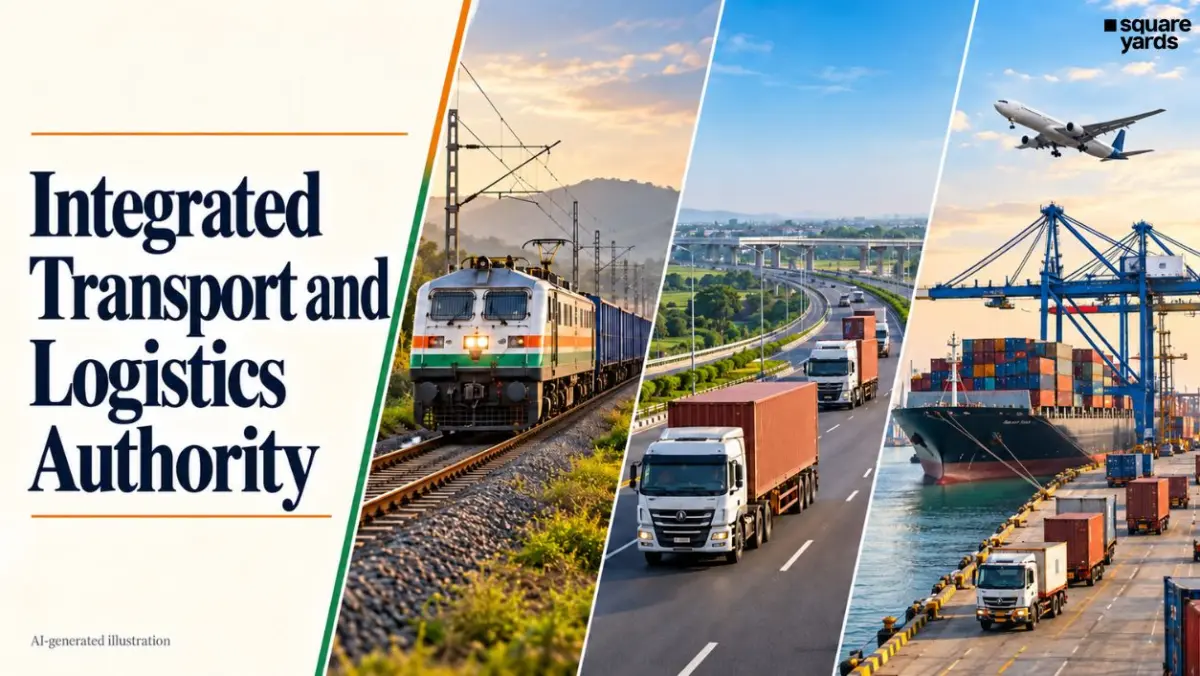
On October 6, 2026, the Union Cabinet of India took a definitive step toward rectifying the long-standing fragmentation of the nation’s infrastructure planning. By approving the creation of the Integrated Transport and Logistics Authority (ITLA), the government has established a high-powered Special Purpose Vehicle (SPV) designed to serve as the apex body for all transport and logistics strategy.
This move marks a shift from a "siloed" approach—where ministries for roads, railways, and ports often operated in isolation—to a unified, data-driven framework. With a mandate to oversee massive capital expenditures and streamline the movement of goods and people, the ITLA is poised to become the most influential entity in India’s multi-trillion-dollar infrastructure journey.
I. Main Facts: The Mandate and Structure of ITLA
The ITLA is not merely a consultative committee; it is designed as a technical and strategic powerhouse. Its primary objective is to harmonize the planning of India’s vast transport network to ensure that investments are synchronized across different modes of transit.
The National Transport Master Plan
At the heart of ITLA’s mission is the formulation of a National Transport Master Plan. This document will carry a horizon of ten years or more, providing a long-term roadmap for roads, railways, ports, aviation, inland waterways, coastal shipping, and urban mobility. Unlike previous plans, the ITLA’s master plan is intended to be a living document that guides the five-year sectoral plans and annual budgets of individual ministries, ensuring they remain consistent with national priorities.
Project Appraisal and Monitoring
The ITLA has been granted significant oversight over the national exchequer. It will technically appraise and monitor all central infrastructure projects with a valuation of Rs 500 crore or more. While financial appraisal—the process of vetting the monetary feasibility—remains with existing finance ministry mechanisms, the ITLA will focus on the "utility" and "impact" of these projects. Crucially, the authority will also conduct post-completion assessments to determine if a project actually delivered the promised socio-economic benefits.
The National Transport Data Repository (NTDR)
Information is the currency of modern logistics. The ITLA will build and manage the National Transport Data Repository. By aggregating data from GST e-way bills, FASTag, Vahan (vehicle registration), GPS tracking systems, and urban traffic sensors, the NTDR will provide a real-time heat map of how goods and people move across the subcontinent. This data-driven approach aims to identify bottlenecks before they become crises.
II. Chronology: The Road to Unified Planning
The birth of the ITLA is the culmination of over a decade of incremental reforms aimed at reducing India’s logistics "friction."
- 2014–2021: The Era of Mega-Projects: The government focused on rapid physical expansion, including the Bharatmala (roads) and Sagarmala (ports) projects. During this period, infrastructure investment surged, totaling roughly $360 billion.
- October 2021: PM Gati Shakti National Master Plan: The Prime Minister launched the Gati Shakti digital platform to break down ministerial silos by mapping all existing and planned infrastructure on a single GIS-based portal.
- September 2022: National Logistics Policy (NLP): The NLP was introduced to set a target for reducing logistics costs and improving the Logistics Performance Index (LPI) ranking.
- FY 2025–26: The Efficiency Milestone: By the end of the 2025-26 fiscal year, industry reports confirmed that India’s logistics costs had successfully fallen to approximately 10-10.7% of GDP, down from 13-14% a decade prior.
- October 6, 2026: The ITLA Approval: Recognizing that digital mapping (Gati Shakti) needed a statutory "brain" to enforce decisions, the Union Cabinet approved the ITLA to institutionalize integrated planning.
III. Supporting Data: The Economic Logic of Integration
The impetus for ITLA is rooted in hard economic data. Historically, India’s logistics costs were a major deterrent to manufacturing competitiveness.
| Logistics Costs as % of GDP | Period | Logistics Cost (% of GDP) | Primary Drivers |
|---|---|---|---|
| 2014-2016 | 13.5% – 14% | High fuel costs, fragmented trucking, poor road quality. | |
| 2020-2022 | 11.5% – 12% | Implementation of GST, FASTag, and dedicated freight corridors. | |
| 2025-2026 | 10% – 10.7% | Completion of major expressways and digital integration. |
The Rs 500 Crore Threshold
By setting the appraisal threshold at Rs 500 crore, the government ensures that the ITLA focuses on "nation-building" projects. According to current project pipelines, this threshold covers approximately 80% of the total capital outlay in the transport sector, allowing the ITLA to influence the projects that have the highest impact on the macro-economy while leaving smaller, localized projects to respective departments.
Data Integration Scale
The NTDR will be one of the largest transport databases in the world. As of 2026, the FASTag system alone processes over 10 million transactions daily, and the GST e-way bill system tracks billions of dollars worth of cargo every month. Integrating this with urban traffic data represents a leap toward "Smart Governance."
IV. Official Responses and Industry Outlook
While official statements from the Cabinet emphasize "synergy" and "efficiency," industry leaders have expressed a mix of optimism and cautious observation.
Government Perspective:
A spokesperson for the Ministry of Commerce and Industry noted, "The ITLA is the final piece of the puzzle. We have the physical assets and the digital maps; now we have the institutional authority to ensure that every rupee spent on transport contributes to a seamless, multi-modal network."
Industry Reaction:
Logistics providers have welcomed the move. "The biggest challenge in Indian logistics has always been the ‘intermodal friction’—the delay when a container moves from a ship to a train or a train to a truck," said a CEO of a leading private logistics firm. "If the ITLA can synchronize the schedules and infrastructure of these different modes, we could see costs drop below 9% of GDP by 2030."
V. Implications: Real Estate and Urban Mobility
The creation of the ITLA has profound implications for the property market, particularly in sectors where "connectivity" is the primary driver of value.
1. Strengthening Established Logistics Clusters
Cities like Delhi-NCR, Chennai, Mumbai, Pune, and Bengaluru currently dominate the warehousing and logistics leasing market. The ITLA’s focus on port-to-rail links will likely lead to the expansion of these clusters. For instance, a warehouse in the Mumbai-Pune belt becomes exponentially more valuable if the ITLA ensures a seamless rail-link to the Jawaharlal Nehru Port Trust (JNPT), bypassing road congestion.
2. The Rise of Emerging Freight Corridors
Regions like Ahmedabad and Kolkata are currently witnessing logistics leasing growth exceeding 30% year-on-year. These "emerging" cities often suffer from thin infrastructure. ITLA’s coordinated planning is expected to prioritize these high-growth zones, potentially leading to a real estate boom in peri-urban areas that were previously considered inaccessible.
3. Urban Mobility and the "Transit Premium"
In urban centers, the ITLA will work alongside Unified Metropolitan Transport Authorities (UMTAs). In cities like Delhi, which is renewing efforts to centralize its transit management, the integration of metro lines with bus networks and "last-mile" connectivity will be a priority. Real estate history shows that homes near well-connected transit interchanges command a significant price premium—often 15% to 25% higher than projects just a few kilometers away.
VI. The Fine Print: Challenges and Risks
Despite the high expectations, the path forward for the ITLA is fraught with bureaucratic and structural risks.
The Advisory Trap
India has a history of creating coordination bodies that lack "teeth." If the ITLA’s appraisals do not have the power to veto or redirect funding, it risks becoming another layer of red tape—a "consultation stop" that adds months to project timelines without improving outcomes. The effectiveness of the ITLA will depend entirely on whether the Ministry of Finance ties budget releases to ITLA’s technical approvals.
Overlap with PM Gati Shakti
There is a potential for functional overlap with the PM Gati Shakti platform. While Gati Shakti provides the visualization, the ITLA provides the governance. Clear boundaries must be drawn to ensure these two entities complement rather than compete with each other.
The Implementation Lag
The National Common Mobility Card (NCMC) serves as a cautionary tale. Launched in 2019 to provide a "One Nation, One Card" experience for all public transport, it was only functional in 13 metro projects and 11 bus corporations as of mid-2026. This highlights the difficulty of integrating disparate state and central agencies.
Risks for Property Buyers
For real estate investors, the ITLA presents a "speculation risk." A National Transport Master Plan takes years to finalize and even longer to implement. If property prices in a specific region spike based on an ITLA proposal that is later delayed or modified, investors could find themselves holding "stranded assets." Furthermore, the Rs 500 crore threshold means the ITLA will not oversee the small-scale local roads that often determine the daily quality of life in a residential neighborhood.
Conclusion: The Connectivity Dividend
The establishment of the Integrated Transport and Logistics Authority is a recognition that India can no longer afford to build infrastructure in isolation. In an era where global supply chains are seeking alternatives to China, India’s ability to offer low-cost, high-efficiency logistics is a strategic necessity.
For the real estate sector, the ITLA is a signal to move away from speculative "land banking" toward "connectivity-based investing." The "connectivity dividend" will ultimately go to those who can read the National Transport Master Plan accurately and identify where different modes of transport—be it rail, road, or air—converge. If the ITLA succeeds, it will not just move goods and people; it will reshape the economic geography of India.
