

The Indian automotive landscape is bracing for a significant update in the premium hatchback segment as Toyota Kirloskar Motor (TKM) prepares to pull the wraps off the highly anticipated Toyota Glanza facelift. Scheduled for an official market launch on October 14, 2026, the updated Glanza represents more than just a cosmetic refresh; it signifies Toyota’s commitment to staying competitive in a segment increasingly squeezed by the rise of sub-compact SUVs.
Through a series of strategically released teasers, Toyota has offered enthusiasts and prospective buyers a glimpse into the design philosophy guiding this update. While the Glanza has traditionally shared its DNA with the Maruti Suzuki Baleno under the global Toyota-Suzuki partnership, this latest iteration aims to carve out a more distinct identity through sharper aesthetics, advanced safety technology, and a pivot toward powertrain efficiency.
Main Facts: A Refined Aesthetic and Technological Leap
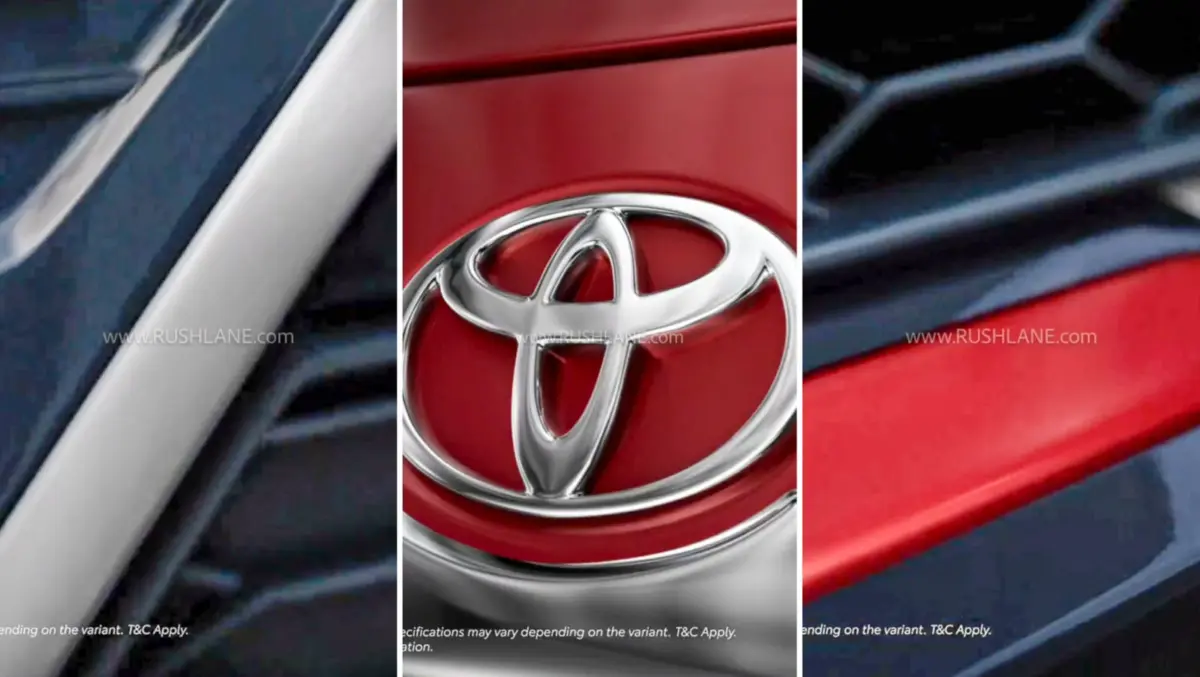
The primary focus of the October 14 launch is the introduction of a more aggressive and premium front-end design. The teasers revealed by Toyota India showcase a departure from the more rounded contours of the predecessor. Key visual highlights include:

- Redesigned Front Fascia: The new Glanza features a redesigned grille with a sophisticated black honeycomb mesh pattern. This is complemented by a thick, silver-finished surround that adds a sense of width and stature to the hatchback.
- Distinctive Lighting: While the full headlamp assembly remains partially obscured, the teasers suggest a sharper LED DRL (Daytime Running Light) signature. A separate lamp housing integrated into the bumper indicates a more complex and modern lighting architecture.
- Strategic Chrome and Color Play: A prominent metallic-finish trim piece runs beneath the Toyota badge on the bonnet, separating the body-colored panels from the dark, functional elements of the intake.
- Safety Evolution: In a move that could redefine expectations in the premium hatchback category, the new Glanza is expected to debut Level 2 ADAS (Advanced Driver Assistance Systems). This includes functionalities such as Automatic Emergency Braking (AEB), Lane Keep Assist, and Adaptive Cruise Control.
Chronology: The Evolution of the Glanza in India
To understand the significance of the 2026 facelift, one must look at the timeline of Toyota’s journey in the Indian hatchback market:
- June 2019 – The Inception: Toyota launched the first-generation Glanza in India. It was the first product to emerge from the Toyota-Suzuki collaboration, essentially a rebadged Maruti Suzuki Baleno. It allowed Toyota to re-enter the premium hatchback space after the discontinuation of the Etios Liva.
- March 2022 – The Second Generation: Following the launch of the heavily updated Baleno, Toyota introduced the second-generation Glanza. This version saw a greater effort to differentiate the styling, particularly with a Camry-inspired front bumper and grille.
- 2023-2024 – Feature Increments: Over the following two years, Toyota introduced minor updates, including the introduction of a factory-fitted CNG variant to cater to the rising demand for economical fuel alternatives.
- October 10, 2026 – The Teaser Campaign: Toyota officially began the countdown to the facelift by releasing high-definition teasers across social media platforms, confirming the October 14 launch date.
Supporting Data: Powertrain and Mechanical Transitions
One of the most significant shifts in the upcoming Glanza facelift lies beneath the hood. According to industry insiders and technical projections, Toyota will transition the Glanza from the current four-cylinder engine to a new 1.2-litre, three-cylinder Z-Series petrol engine.
The Z-Series Advantage
The outgoing 1.2L K-Series four-cylinder engine is lauded for its refinement, but the new three-cylinder unit, already seen in the latest iterations of the Swift and Dzire, is designed with a focus on "volumetric efficiency."

- Fuel Economy: The new engine is expected to offer a significant jump in ARAI-certified fuel efficiency, potentially crossing the 25 km/l mark for the manual variant.
- Torque Delivery: While three-cylinder engines are often criticized for vibrations, Toyota and Suzuki have worked on counter-balancing technology to ensure smooth delivery. The Z-Series engine is tuned to provide better low-end torque, making it more responsive in stop-and-go city traffic.
- Transmission Options: The facelift will likely retain the 5-speed manual gearbox and the 5-speed AMT (Automated Manual Transmission). There are rumors of Toyota fine-tuning the AMT software to provide smoother shifts, addressing one of the common complaints of the previous model.
Dimensions and Capacity
The vehicle is expected to maintain its sub-four-meter footprint to take advantage of small-car tax benefits in India.
- Length: ~3,990 mm
- Wheelbase: ~2,520 mm
- Boot Space: ~318 liters (Petrol)
Official Responses and Marketing Strategy
The teaser campaign was accompanied by a statement from Toyota India via their official social media channels: "A whole new vibe is about to hit the road. Get ready to make your move."
This marketing angle suggests that Toyota is targeting a younger, more tech-savvy demographic. TKM’s strategy with the Glanza has always been to leverage Toyota’s "Total Quality Management" (TQM) philosophy and its superior after-sales service reputation to attract buyers who might otherwise choose the Maruti Baleno.

Industry analysts suggest that by introducing Level 2 ADAS, Toyota is positioning the Glanza as the "premium" choice in the partnership duo. By offering a longer standard warranty (typically 3 years/1,00,000 km compared to Maruti’s 2 years/40,000 km), Toyota aims to justify the slight price premium the Glanza usually carries over its Maruti sibling.
Implications: A High-Stakes Battle in the Premium Segment
The launch of the Glanza facelift comes at a time when the premium hatchback segment is facing intense competition. The implications of this launch are manifold:
1. Pressure on Competitors
The inclusion of Level 2 ADAS and ventilated seats puts direct pressure on the Hyundai i20 and the Tata Altroz. While the i20 has long been the feature-king of the segment, Toyota’s move to include active cooling for wireless charging and high-end Clarion speakers suggests a shift in the feature-war.

2. The CNG Evolution
With the expected introduction of a CNG-AMT combination, Toyota is targeting the "green-conscious but convenience-seeking" buyer. This is a niche that is rapidly expanding in urban India, where traffic congestion makes manual CNG cars cumbersome to drive.
3. Safety Standards
The Indian government’s push for higher safety ratings (Bharat NCAP) means that the Glanza facelift must perform well in crash tests. The inclusion of six airbags as standard across most variants, along with the ADAS suite, indicates that Toyota is aiming for a high safety rating to counter the Tata Altroz’s 5-star Global NCAP pedigree.
4. Cabin Experience
Inside, while the layout will remain familiar, the use of Toyota-specific upholstery and trim finishes will be crucial. The expected addition of a 360-degree camera and a Head-Up Display (HUD) further elevates the premium feel, making the Glanza a viable alternative to entry-level compact SUVs like the Tata Nexon or Maruti Brezza.

Conclusion: Setting the Stage for October 14
The Toyota Glanza facelift is more than just a seasonal update; it is a calculated move by Toyota Kirloskar Motor to dominate the premium hatchback space. By blending Suzuki’s expertise in efficient, small-car engineering with Toyota’s standards of safety, features, and reliability, the new Glanza is poised to be a formidable contender.
As the October 14 launch approaches, all eyes will be on the final pricing strategy. If Toyota can price the ADAS-equipped variants competitively, it may well disrupt the market, forcing other manufacturers to accelerate their own technology roadmaps. For the Indian consumer, the result is a safer, more efficient, and more technologically advanced vehicle in a segment that remains the heartbeat of the urban middle class.
