

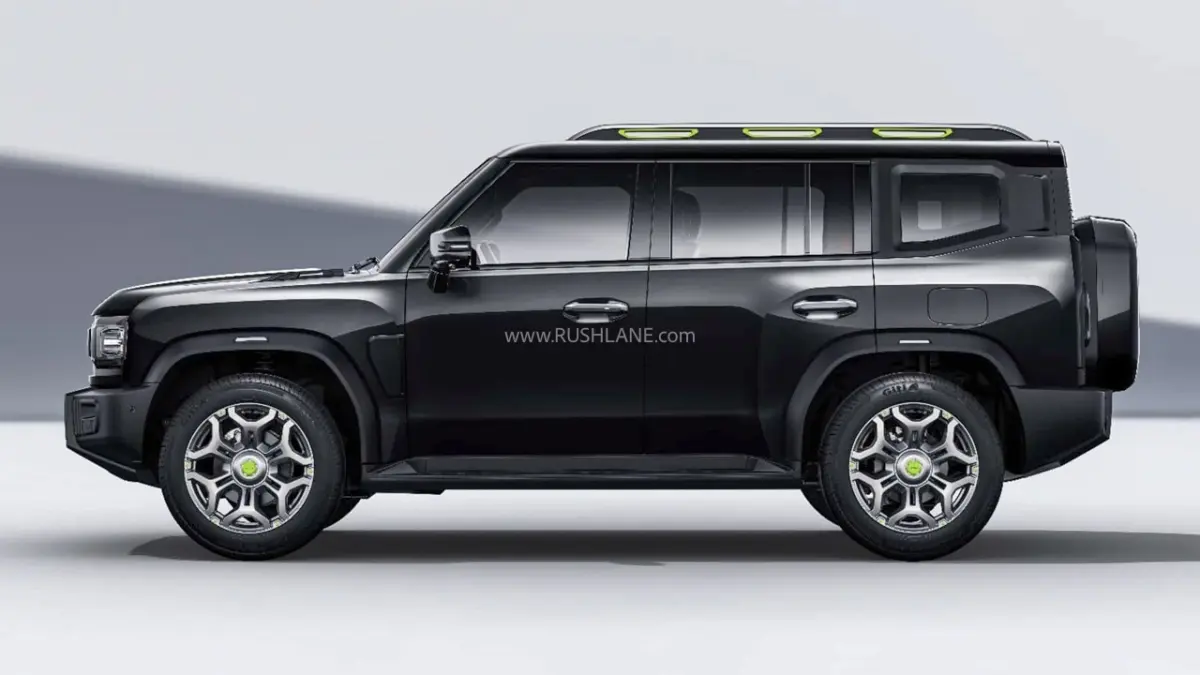
New Delhi, India – The Indian automotive sector is on the precipice of a significant transformation as the JSW Group, a multi-billion-dollar conglomerate with interests ranging from steel to energy, prepares to launch its first independent automotive venture. After months of speculation and strategic maneuvering, JSW Motors has officially locked in the launch date for its maiden vehicle. The JSW Combat, a rugged, high-performance Plug-in Hybrid Electric Vehicle (PHEV), is slated to make its grand debut on December 4, 2026.
This launch marks a pivotal moment for JSW Motors as it transitions from a strategic partner in the JSW-MG Motor India joint venture to a standalone manufacturer with its own distinct brand identity. The Combat, based on the internationally acclaimed Jetour T2 from China’s Chery Automobile, is positioned to challenge the established hierarchy of premium rugged SUVs in the Indian market.
Main Facts: The Arrival of the JSW Combat
The JSW Combat is not merely another SUV; it represents a calculated entry into the "lifestyle off-roader" segment, which has seen explosive growth in India recently. While the vehicle was originally anticipated to arrive before the Diwali festive season in 2026, internal strategic realignments and logistical fine-tuning have pushed the launch to early December.
A New Brand Identity
JSW Motors is positioning itself as a premium, technology-driven Indian brand. While the company continues its fruitful partnership with MG Motor India (under the JSW MG Motor India Pvt. Ltd. banner), the Combat will be the flagship of a separate JSW-branded retail and service ecosystem. The name "Combat" itself suggests a vehicle designed for resilience, off-road capability, and a commanding presence, aiming directly at enthusiasts who find the current market offerings either too utilitarian or prohibitively expensive.
The Chery Connection
The Combat is the first fruit of a strategic collaboration between JSW and Chery Automobile. Specifically, the Combat is a localized iteration of the Jetour T2 (also known as the Traveller in some markets). Under this partnership, JSW will leverage Chery’s advanced PHEV platforms and off-road engineering, while JSW provides the local manufacturing prowess, market insights, and the capital required to scale.

Key Specifications at a Glance:
- Powertrain: 1.5L Turbo Petrol Engine + Dual Electric Motors (PHEV).
- Combined Output: 360 bhp and 610 Nm of torque.
- Battery: 18.4 kWh Lithium-ion pack.
- Electric-only Range: Approximately 90 km.
- Total Range: Up to 1,100 km (combined).
- Dimensions: 4,785 mm (L) x 2,006 mm (W) x 1,880 mm (H).
- Ground Clearance: 220 mm.
Chronology: The Road to December 4
The journey of JSW Motors into the automotive space has been rapid and characterized by high-stakes investments.
- Early 2024: The MG Partnership: JSW Group entered the automotive fray by acquiring a significant stake in MG Motor India. This gave JSW immediate access to manufacturing facilities in Halol, Gujarat, and an established dealer network.
- Mid-2024: The Standalone Ambition: Recognizing the potential for a homegrown premium brand, JSW Group Chairman Sajjan Jindal articulated a vision for a "JSW-branded" car. The company began scouting for global partners to provide a platform that could rival global giants like Jeep and Land Rover.
- Late 2024: The Chery Alliance: Strategic talks with Chery Automobile culminated in an agreement to bring the Jetour and Jaecoo brands to India under the JSW umbrella. Testing of various models, including the Jetour T2 and Jaecoo J7, commenced on Indian roads.
- September 2026: The Manufacturing Milestone: JSW announced the development of a dedicated manufacturing facility in Chhatrapati Sambhajinagar (formerly Aurangabad), Maharashtra. This facility is intended to become a hub for the brand’s future CKD (Completely Knocked Down) and domestically manufactured models.
- October 2026: The Delay: Initially targeted for a pre-Diwali launch to capitalize on festive spending, the company decided to postpone the launch to December 4, 2026. This delay is attributed to ensuring the CBU (Completely Built Unit) logistics and the "Combat" rebranding efforts are perfectly aligned with the premium customer experience the brand aims to deliver.
Supporting Data: Engineering and Technology
The JSW Combat is set to be one of the most technologically advanced SUVs in its price bracket. By opting for a PHEV powertrain, JSW is addressing the "range anxiety" often associated with pure EVs while providing the fuel efficiency and torque advantages that traditional ICE (Internal Combustion Engine) vehicles lack.
The PHEV Advantage
The heart of the Combat is its sophisticated Plug-in Hybrid system. Unlike "strong hybrids" (like those from Toyota or Maruti Suzuki) that have tiny batteries, the Combat’s 18.4 kWh battery allows for significant daily commuting on pure electricity. For the average urban Indian user, a 90 km EV range covers most daily needs, effectively making it an EV for the city and a long-range cruiser for the highway.
The dedicated 3-speed DHT (Dedicated Hybrid Transmission) is a marvel of engineering, managing the power flow between the 1.5L turbo engine and the twin electric motors. This setup allows the vehicle to operate in various modes: pure EV, series hybrid, parallel hybrid, and engine-direct drive.
Design and Dimensions
The Combat features a "boxy" silhouette that is currently in high demand globally. Its design language is reminiscent of the Land Rover Defender and the Ford Bronco, featuring short overhangs, a vertical tailgate with a spare wheel carrier, and flared wheel arches.

- Wheelbase: At 2,800 mm, the Combat offers a spacious cabin, particularly in terms of legroom.
- Cargo Space: Despite the hybrid battery, the vehicle boasts a massive 752L boot capacity, making it ideal for overlanding and long-distance touring.
- Wheels: Large 20-inch alloy wheels come as standard, providing a stance that dwarfs many mid-size SUVs currently on the road.
Interior and Features
The India-spec JSW Combat is expected to mirror the premium interiors of the global Jetour T2. High-quality soft-touch materials, aircraft-style gear shifters, and a minimalist dashboard dominate the cabin.
- Infotainment: A massive 15.6-inch central touchscreen will serve as the hub for navigation, vehicle settings, and entertainment.
- Audio: A 12-speaker Sony premium sound system is integrated for an immersive experience.
- Safety: The vehicle will be equipped with Level-2 ADAS (Advanced Driver Assistance Systems), including autonomous emergency braking, lane-keep assist, and adaptive cruise control. A 540-degree camera system (including an "under-chassis" view) will aid in technical off-roading.
Official Responses and Strategic Context
While JSW Motors has been tight-lipped about the exact pricing, industry insiders suggest the Combat will be positioned in the ₹35 lakh to ₹45 lakh (ex-showroom) price bracket.
The Manufacturing Strategy
In a move to bypass the initial high costs of localizing a complex PHEV system, JSW will bring the first batch of Combat SUVs via the CBU route. However, the company has made it clear that this is a temporary measure. The long-term goal is full-scale production at the Chhatrapati Sambhajinagar plant. This facility is part of a larger ₹40,000 crore investment plan by the JSW Group into the electric and hybrid vehicle ecosystem in India.
Addressing the "China Connection"
Given the geopolitical sensitivities surrounding Chinese brands in India, JSW’s strategy of rebranding the Jetour T2 as the "JSW Combat" is a significant move. By taking full ownership of the brand identity, after-sales service, and manufacturing, JSW aims to reassure Indian consumers of the vehicle’s long-term viability and "Indianness."
Implications: A New Era for the Indian SUV Market
The entry of the JSW Combat has several far-reaching implications for the Indian automotive industry:

1. The Challenge to Legacy Players
The Combat is set to go head-to-head with the Mahindra Thar ROXX (top-end variants), the Jeep Compass, and even higher-end offerings like the Hyundai Tucson and the Jeep Meridian. With 360 bhp on tap, the Combat significantly outpowers almost every other SUV in the sub-₹50 lakh category.
2. Validating PHEV Technology
India has largely skipped the PHEV phase, moving directly from ICE/Strong Hybrids to BEVs. JSW’s bet on PHEV technology will be a litmus test for the Indian market. If successful, it could prompt other manufacturers like Tata Motors or Mahindra to reconsider PHEVs as a viable middle ground for the Indian consumer who travels long distances but wants the benefits of electrification.
3. Expansion of the Chery Portfolio
The Combat is just the beginning. The sightings of the Jaecoo J5, J7, and iCar V23 on Indian roads suggest that JSW is preparing a comprehensive onslaught across various price points. These vehicles will likely follow a CKD (Completely Knocked Down) route, allowing JSW to price them competitively against the likes of the Kia Seltos and Hyundai Creta in the future.
4. Economic Impact in Maharashtra
The development of the Chhatrapati Sambhajinagar facility is expected to create thousands of direct and indirect jobs. It further solidifies Maharashtra’s position as the "Detroit of India," attracting more component suppliers and specialized engineering firms to the region.
Conclusion
The December 4 launch of the JSW Combat is more than just a product release; it is the birth of a new Indian automotive titan. By combining the industrial might of the JSW Group with the cutting-edge hybrid technology of Chery, the Combat is poised to offer a unique proposition: a rugged, go-anywhere SUV that is environmentally conscious and technologically superior.

As the countdown to December begins, all eyes will be on how the Indian consumer reacts to this "Combat-ready" entrant. If JSW can back its impressive specifications with a robust service network and competitive pricing, the Combat may well be the vehicle that redefines the premium SUV segment in India for years to come.
