

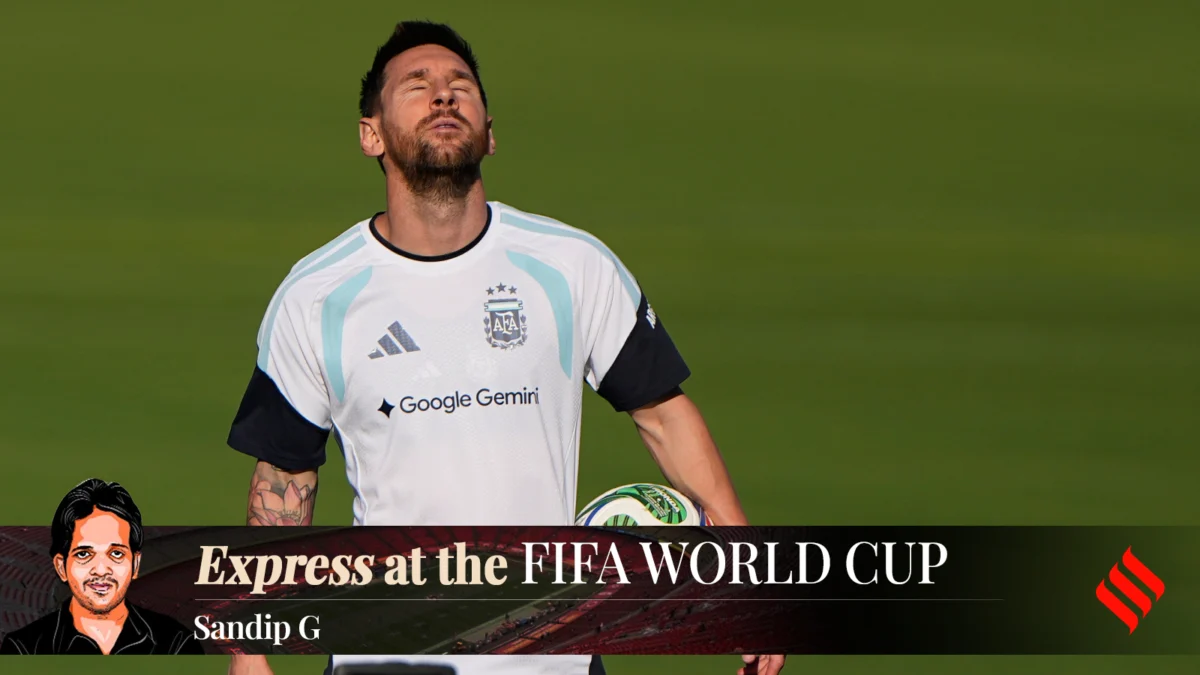
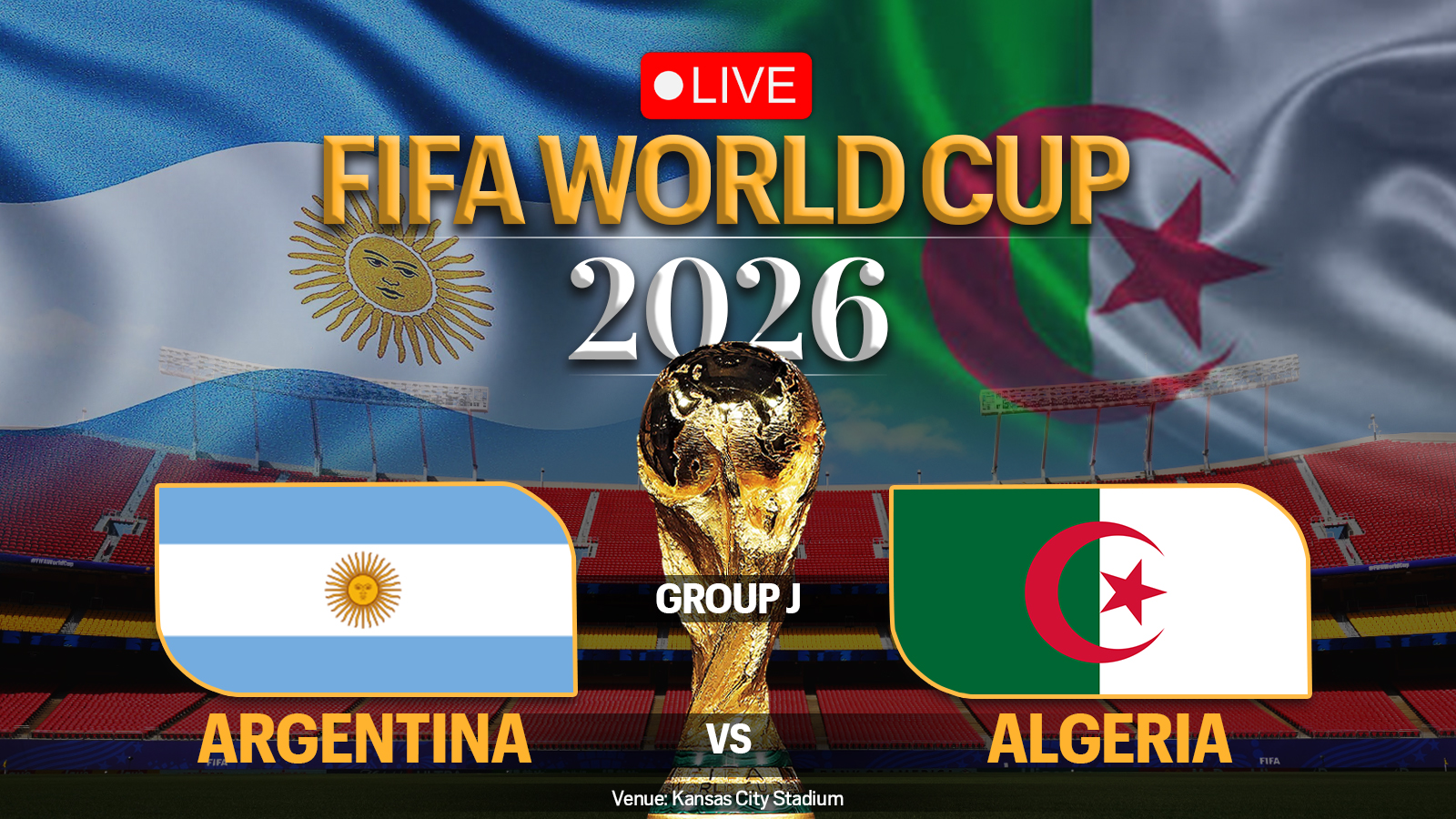
KANSAS CITY, USA – The footballing world holds its breath as Lionel Messi, the undisputed maestro of the modern era, prepares to etch another indelible mark in the annals of sporting history. Four years after leading Argentina to a fairytale FIFA World Cup triumph in Qatar, the iconic captain is set to make his monumental 200th international appearance for the Albiceleste in their opening fixture of the FIFA World Cup 2026 against Algeria. The highly anticipated Group J clash, hosted at the iconic Arrowhead Stadium in Kansas City, marks the beginning of Argentina’s quest to defend their coveted title and Messi’s audacious pursuit of an unprecedented second consecutive World Cup crown.
The air in Kansas City crackles with electric anticipation, a palpable excitement that transcends national allegiances. Fans, media, and pundits alike are united in their desire to witness the diminutive genius once more grace the grandest stage. This milestone match is not merely a fixture; it is a celebration of longevity, unparalleled skill, and an enduring passion for the beautiful game, embodied by a player who continues to defy age and expectation.
A Monumental Return: Messi’s 200th Cap at FIFA World Cup 2026
The spectacle of the FIFA World Cup 2026 has barely begun, yet the spotlight is already firmly fixed on Lionel Messi. His 200th cap for Argentina represents a testament to his remarkable consistency, dedication, and an unyielding commitment to his national team spanning over two decades. From his debut in 2005, Messi has navigated the highs of Copa América and World Cup victories, alongside the bitter lows of numerous final defeats, all while accumulating an astonishing tally of appearances that places him among the most capped players in international football history. This milestone is not just a number; it symbolizes a career interwoven with the fabric of Argentinian football, a journey marked by personal brilliance and collective ambition.
Argentina finds itself in Group J, a diverse quartet comprising the familiar challenge of Algeria, the tactical prowess of Austria, and the intriguing unknown of tournament debutants Jordan. Their opening encounter against Algeria is crucial, not just for securing early points, but for setting the tone for their title defense. The choice of Arrowhead Stadium, a venue synonymous with grand sporting events, underscores the magnitude of the occasion. Known for its raucous atmosphere and passionate crowds, it promises to provide a fitting backdrop for Messi’s historic 200th outing.
The build-up to this World Cup has seen Coach Lionel Scaloni meticulously manage his star player’s minutes, a strategic approach honed since their triumphant campaign in Qatar. In Argentina’s final warm-up game against Iceland, Messi was deployed as a substitute for a mere 20 minutes, a clear indication of Scaloni’s intent to preserve his captain’s energy for the demanding tournament ahead. However, for the Algeria clash, the stakes are higher, and the world expects Messi to assume a central, commanding role. His presence, whether orchestrating attacks from deep or delivering decisive passes in the final third, remains Argentina’s most potent weapon.
Scaloni, keenly aware of the global fascination with his captain, articulated the universal sentiment perfectly before the match. "Not only the Argentinian population but everybody – the whole planet – wants to see him play," he stated. "Everybody wants to see him on the pitch, because he has an effect not only on Argentina fans but supporters all over the world." This sentiment encapsulates the unparalleled magnetism of Messi, a player whose influence transcends sport and borders, drawing millions to witness his every move.
The Road to Immortality: Messi’s Enduring Legacy
Lionel Messi’s career has been a tapestry woven with breathtaking skill, record-breaking achievements, and an insatiable desire for glory. His journey to 200 caps is a chronicle of a player who has continuously redefined what is possible on a football pitch.
A Career Defined by Milestones
Since making his senior international debut against Hungary on August 17, 2005, Messi has evolved from a prodigious talent into a global icon. His early years with Argentina were marked by immense individual brilliance often overshadowed by the collective failure to secure major silverware. Yet, through successive World Cups and Copa Américas, he steadfastly pursued the elusive international trophy. His 2014 World Cup Golden Ball, though bittersweet after a final defeat, highlighted his individual dominance. The watershed moment arrived in 2021 with the Copa América triumph, finally breaking his senior international trophy duck, a prelude to the ultimate glory in Qatar. Each cap has added to a staggering record of goals, assists, and moments of magic that have consistently placed him at the pinnacle of the sport. His ability to adapt his game, from a blistering winger to a deep-lying playmaker, showcases an intelligence and longevity rarely seen. Reaching 200 caps at a World Cup, especially as the reigning champion, adds another layer of historical significance to an already legendary career.
Echoes of Qatar: The Quest for a Repeat
The image of Lionel Messi lifting the FIFA World Cup trophy in Qatar remains etched in the memory of football fans worldwide – the perfect culmination of a storied career, the realization of a lifelong dream. That triumph, however, has set a new, extraordinary challenge: to repeat the feat. History offers a rare precedent in Pelé, who, alongside his Brazilian teammates, achieved the monumental task of winning consecutive World Cups in 1958 and 1962. Messi’s decision to continue with the national team for the 2026 campaign is a clear indication of his ambition to emulate this legendary achievement, to write a new chapter of unparalleled success.
The pull of destiny, the desire to relive the glorious past, is an irresistible force. To win it once was the ultimate validation; to win it again would be an act of defiance against time and expectation. As the original article astutely noted, "Messi wants to match Messi himself, composing a tribute act to himself." This pursuit is not without its risks. At 39 during the tournament, the physical demands are immense, and there’s a delicate balance between cementing a legacy and potentially spoiling a perfect ending. However, Messi’s motivation appears rooted in a profound love for the game and an unyielding competitive spirit, rather than a delusion of past physical prowess. His presence alone elevates Argentina’s stature, instilling belief in his teammates and fear in opponents.
Tactical Nuances: Argentina’s Approach and Messi’s Evolving Role
Argentina’s success in 2022 was built on a foundation of tactical flexibility, collective effort, and the individual brilliance of Messi. Under Lionel Scaloni, the team has found a coherent identity that maximizes their star player’s impact while ensuring defensive solidity and midfield control.
Scaloni’s Vision
Coach Lionel Scaloni has proven to be a master tactician, transforming Argentina from a team heavily reliant on Messi’s individual heroics into a cohesive unit capable of winning major tournaments. His vision for the 2026 campaign appears to be a continuation of this philosophy: protect Messi, utilize his unparalleled vision and passing range, and empower the younger generation around him. The decision to limit Messi’s minutes in the warm-up against Iceland was not a sign of waning ability, but a strategic move to ensure peak performance when it truly matters. Scaloni understands that a 39-year-old Messi cannot cover every blade of grass, but his intelligence, decision-making, and ability to unlock defenses remain unmatched. His role as a leader extends beyond the pitch, fostering a strong team spirit and a winning mentality. Scaloni’s Argentina plays with passion and discipline, a reflection of their coach’s pragmatic yet ambitious approach.
The ‘Xavi’ Comparison: A Maestro in Midfield
The analysis that "Messi playing like Xavi works for Argentina" highlights a significant evolution in his game. While Messi’s early career was defined by breathtaking dribbles and prolific goalscoring from wide positions, his later years have seen him transition into a deeper-lying playmaker, akin to the legendary Spanish midfielder Xavi Hernández. This shift is a testament to his footballing intelligence and adaptability.
In this ‘Xavi-esque’ role, Messi drops into midfield, dictating the tempo, spraying incisive passes, and orchestrating attacks from a central position. He becomes the team’s primary creative hub, rather than solely its finishing touch. This allows younger, more athletic forwards to make runs beyond him, exploiting the spaces he creates with his gravitational pull on defenders. His vision, honed over decades, allows him to spot passes that few others can, turning seemingly innocuous situations into dangerous attacking opportunities.
For Argentina, this tactical evolution is immensely beneficial. It prolongs Messi’s career at the elite level by reducing the physical burden of constant sprints and defensive tracking. It also makes Argentina less predictable; opponents can no longer solely focus on stopping Messi’s runs from the wing. Instead, they must contend with his unparalleled distribution and ability to switch play, creating openings for players like Julián Álvarez, Lautaro Martínez, and Enzo Fernández. This deeper role allows Messi to conserve energy while still influencing every facet of the game, leveraging his tactical genius rather than purely his athletic prowess. It’s a testament to his understanding of the game and his willingness to adapt for the collective good.
The Squad’s Depth
Beyond Messi, Argentina boasts a formidable squad depth that underpins their title aspirations. The midfield, featuring the dynamism of Enzo Fernández and Alexis Mac Allister, provides both defensive steel and creative spark. Upfront, the likes of Julián Álvarez and Lautaro Martínez offer pace, pressing ability, and clinical finishing, taking some of the goalscoring burden off Messi. Defensively, the experienced Nicolás Otamendi and Cristian Romero provide a robust core, while Emiliano Martínez remains a commanding presence in goal. This blend of youth and experience, combined with a strong collective ethos, ensures that Argentina is far from a one-man team, allowing Messi to flourish in his evolved role.
Algeria: The First Hurdle in Group J
Argentina’s journey to defending their title begins with a challenging encounter against Algeria, a nation with a rich footballing heritage and a reputation for spirited performances.
A Formidable Opponent
Algeria enters the FIFA World Cup 2026 as a team that, while perhaps not among the pre-tournament favorites, possesses the quality and tactical discipline to trouble any opponent. Known for their physical style, tenacious defending, and swift counter-attacks, the Desert Foxes will undoubtedly present a stern test for the reigning champions. Their squad features a blend of experienced European-based players and emerging talents, creating a dynamic unit capable of springing surprises. Under their coach, who would likely emphasize tactical solidity and opportunistic attacking, Algeria will aim to disrupt Argentina’s rhythm, frustrate their creative players, and capitalize on any momentary lapse in concentration. A hypothetical Algerian coach, prior to such a monumental clash, might emphasize resilience and belief: "We respect Argentina and Lionel Messi, but we fear no one. This is our chance to show the world the quality of Algerian football. We will play with heart, discipline, and the courage to take the game to the world champions." This underdog mentality often fuels their most memorable performances.
Group J Dynamics
The composition of Group J ensures that Argentina cannot afford any complacency. Austria, with their disciplined approach and talented individuals, will be a tough nut to crack, likely employing a compact defense and quick transitions. Jordan, as tournament debutants, will play with immense pride and nothing to lose, often making them unpredictable and dangerous. Securing maximum points against Algeria in the opening fixture is paramount for Argentina to build momentum and avoid any early pressure, especially with the looming challenges from Austria and Jordan. The group stage demands consistent performance, and Argentina will need to be at their best from the very first whistle.
The Global Spectacle: Anticipation and Impact
The FIFA World Cup 2026, co-hosted across North America, is set to be the largest and most inclusive iteration of the tournament yet. Messi’s presence, particularly in the opening stages, amplifies its global appeal.
Fan Frenzy and Economic Ripple
The anticipation surrounding Messi’s 200th cap and Argentina’s opening match is immense, translating into a fervent fan frenzy. Tickets for the Arrowhead Stadium clash sold out in record time, reflecting the insatiable demand to witness a living legend. Beyond the stadium, fan zones across Kansas City and indeed, throughout the host nations, will be packed with supporters adorned in blue and white, eager to catch a glimpse of their hero. This passion fuels a significant economic ripple effect, boosting tourism, hospitality, and local businesses. The presence of a global icon like Messi ensures maximum media coverage, bringing international attention to the host cities and leaving a lasting economic legacy far beyond the final whistle. His image alone is a marketing powerhouse, driving merchandise sales and broadcasting figures to astronomical levels.
A World Stage for a World Icon
Lionel Messi is not merely a footballer; he is a global phenomenon, an ambassador for the sport whose appeal transcends cultural and linguistic barriers. Coach Scaloni’s earlier remarks about the entire planet wanting to see him play are not hyperbole. From Buenos Aires to Beijing, from Madrid to Mumbai, millions will tune in, captivated by the prospect of witnessing another moment of Messi magic. His unique ability to unite fans, regardless of their preferred club or national team, underscores his status as a truly universal icon. This World Cup provides him with yet another platform to showcase his unparalleled talent and continue to inspire generations of aspiring footballers worldwide. His story, marked by resilience, genius, and ultimate triumph, resonates deeply, making him one of the most beloved figures in sports history.
Broader Implications: Messi’s Final Dance and Football’s Future
As Lionel Messi embarks on what is widely anticipated to be his final FIFA World Cup, the implications extend far beyond the immediate results on the pitch, touching upon his enduring legacy and the future trajectory of global football.
Cementing a Legacy
The decision for Messi to participate in the 2026 World Cup, despite turning 39 during the tournament, is a testament to his ambition to further cement his already unparalleled legacy. Having matched Diego Maradona by bringing the World Cup trophy home, he now stands at the precipice of achieving something only Pelé has managed: back-to-back World Cup triumphs. This pursuit adds a compelling narrative to the tournament, transforming his final dance into a high-stakes gamble with history. There is, of course, the inherent risk of diminishing a perfect ending, of succumbing to the relentless demands of age on the biggest stage. However, Messi’s commitment suggests a profound belief in his capabilities and a desire to challenge the boundaries of what is possible. If he were to achieve this incredible feat, it would not only elevate his status beyond any historical comparison but also redefine the parameters of individual achievement in team sports. His legacy is no longer just about statistics or trophies; it is about an enduring presence, an unwavering pursuit of excellence that continues to inspire.
The Post-Messi Era
The inevitability of Messi’s eventual retirement looms large over global football. While he continues to defy time, the sport is already contemplating the void his absence will create. For Argentina, the transition will be particularly profound. The national team has, for decades, revolved around his genius, and finding a new identity in a post-Messi era will be their biggest challenge. The 2026 World Cup, even if not his last competitive match, serves as a crucial period for the younger generation of Argentine talents to step up, gain invaluable experience playing alongside him, and begin to forge their own paths. Globally, the search for the ‘next Messi’ continues, though it is widely accepted that such a singular talent may never be replicated. His departure will mark the end of an extraordinary era, leaving behind a legacy that will be studied, celebrated, and cherished for centuries, but also ushering in a new chapter for football where collective brilliance and diverse talents will likely come to the forefront. The sport will adapt, as it always does, but the magic, the sheer artistry, and the consistent brilliance that Messi brought to the game will be sorely missed.
As the whistle approaches for Argentina vs. Algeria, the world braces for another chapter in the Lionel Messi saga. His 200th cap is more than just a personal milestone; it’s a beacon for Argentina’s title defense, a testament to his enduring brilliance, and a moment that will be etched into the collective memory of football fans worldwide. The King is back on his throne, and the quest for immortality continues.
