

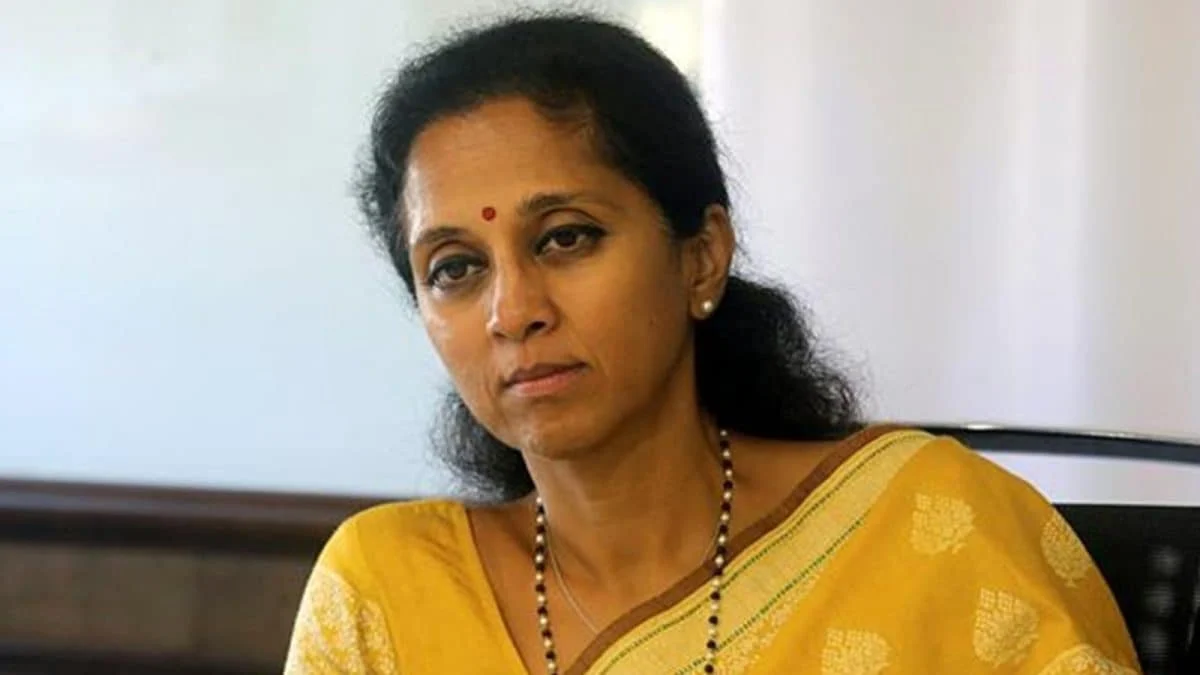
Mumbai, Maharashtra – In a harrowing incident that has once again cast a stark spotlight on the perilous conditions of India’s arterial highways, senior Nationalist Congress Party (Sharadchandra Pawar) leader and Baramati MP, Supriya Sule, had a remarkably narrow escape on Saturday evening. Her vehicle was struck by a speeding SUV on the Mumbai-Pune Expressway, a notorious stretch known for its high volume of traffic and frequent accidents. While her car sustained significant damage, all occupants, including the prominent politician, emerged miraculously unharmed – a testament, Sule asserted, to the critical importance of wearing seat belts.
The collision, which occurred as Sule was travelling from Pune to Mumbai, serves as a grim reminder of the daily risks faced by commuters on one of the nation’s busiest thoroughfares. The incident has swiftly reignited public discourse and official concern over persistent issues of overspeeding, reckless driving, and the urgent need for enhanced road safety measures.
The Incident: A Close Call on India’s Busiest Corridor
The accident unfolded on Saturday, May 9, 2026, after Sule’s convoy had traversed the Khalapur toll plaza, a strategic point approximately 29 kilometres shy of the Madap tunnel. According to preliminary reports from the Highway Safety Patrol (HSP), a white SUV, bearing the Gujarat registration number GJ13CF5257, executed a dangerous and high-speed manoeuvre, recklessly grazing the side of the MP’s car. The impact was severe enough to cause substantial damage to Sule’s vehicle, particularly on the side where she was seated in the rear.
Describing the experience as "awful" on social media, Sule quickly shared details of the incident, emphasizing the sheer negligence that led to the collision. "While travelling from Pune to Mumbai today, I had an awful experience on the highway when vehicle GJ13CF5257 rammed into my car from the side due to reckless driving. Thankfully, everyone is safe," she posted, accompanying her statement with an image of the damaged vehicle. This immediate public address not only informed her followers of her safety but also served as an instant, potent appeal for greater road discipline.
Crucially, Sule attributed her and her staff’s safety to the simple, yet often overlooked, act of buckling up. The structural integrity of her vehicle, combined with the secure restraint provided by her seat belt, prevented any physical injuries, despite the significant force of the impact. Her chauffeur and personal assistant, who were also in the car at the time, were equally fortunate, escaping the harrowing ordeal without a scratch. This detail resonated widely, reinforcing the life-saving efficacy of seat belts, a message that frequently struggles to penetrate the collective consciousness of Indian motorists.
Chronology of the Mishap: A Sequence of Events
The sequence of events leading to the near-catastrophe paints a clear picture of how quickly a routine journey can turn perilous on a high-speed corridor like the Mumbai-Pune Expressway:
- Saturday Evening, May 9, 2026: Supriya Sule, accompanied by her chauffeur and personal assistant, embarks on a journey from Pune towards Mumbai. Her schedule, typical of a busy Member of Parliament, likely included official engagements in both cities.
- Post-Khalapur Toll Plaza: The convoy successfully navigates the Khalapur toll plaza, indicating they are well into the Expressway stretch known for its varying terrains and high traffic density. The area immediately after the toll is often prone to vehicles accelerating rapidly.
- Approximately 29 km Before Madap Tunnel: As Sule’s vehicle proceeds, a white SUV, later identified with Gujarat registration GJ13CF5257, approaches from behind.
- Reckless Manoeuvre and Impact: The driver of the SUV attempts an aggressive and high-speed overtaking manoeuvre, failing to maintain adequate distance or control. The vehicle violently grazes the side of Sule’s car, where she was seated. The impact causes significant damage to the side door and bodywork of her vehicle.
- Immediate Aftermath: Despite the jolt and damage, the driver of Sule’s car manages to maintain control. The occupants, though shaken, quickly ascertain that they are physically unharmed, largely due to their seat belts.
- Offending Vehicle Flees Briefly: The white SUV continues its journey, possibly unaware of the full extent of the damage or choosing to evade immediate confrontation.
- Alert to Authorities: Details of the offending vehicle, including its registration number, are promptly relayed to the Highway Safety Patrol.
- Detention Near Madap Tunnel: Acting swiftly, HSP units intercept and detain the white SUV and its occupants near the Madap tunnel, not far from the accident site.
- Police Investigation Initiated: Khalapur police take charge, registering a suo motu First Information Report (FIR) based on the clear evidence of rash and negligent driving, even without an immediate formal complaint from Sule.
- Sule’s Social Media Post: Shortly after the incident, Sule takes to social media to share her experience, thank her stars, and issue a public appeal for road safety, highlighting the role of seat belts.
Supporting Data: The Mumbai-Pune Expressway and India’s Road Safety Crisis
The Mumbai-Pune Expressway, India’s first six-lane concrete high-speed toll road, inaugurated in 2002, was envisioned as a symbol of modern infrastructure, dramatically reducing travel time between the two major cities. However, its very design for speed, coupled with exponential growth in traffic volume and a persistent disregard for traffic laws, has unfortunately also made it one of the country’s most accident-prone highways. Affectionately known as the "Gateway to Maharashtra’s Economic Powerhouse," it has tragically earned another moniker: the "Killer Highway."
Statistics Painting a Grim Picture:
- National Context: India continues to grapple with one of the highest road fatality rates globally. According to the Ministry of Road Transport and Highways (MoRTH), an average of over 1.5 lakh lives are lost annually in road accidents across the country. This translates to roughly 17 deaths every hour, making road accidents a leading cause of premature mortality and disability.
- Maharashtra’s Contribution: Maharashtra, a densely populated and economically vibrant state, consistently ranks among the top states in terms of road accident fatalities. While specific, real-time data for 2026 is still evolving, historical trends indicate that the Mumbai-Pune Expressway contributes a disproportionate share to these numbers. Data from previous years often shows hundreds of fatalities and thousands of injuries on this single stretch annually.
- Common Causes on the Expressway: Studies and police records repeatedly identify overspeeding, sudden lane changes (lane cutting), driver fatigue, and impaired driving (alcohol/drugs) as the primary culprits. The varying terrain, including ghat sections and tunnels, adds to the complexity, requiring heightened vigilance that is often lacking.
- The Seat Belt Imperative: Global and national studies unequivocally demonstrate the life-saving potential of seat belts. Wearing a seat belt can reduce the risk of fatal injury for front-seat occupants by 45-50% and the risk of moderate to critical injury by 20-40%. For rear-seat passengers, the reduction in fatality risk is also significant, estimated at around 25%. Supriya Sule’s experience serves as a powerful, real-world example of these statistics in action. Despite repeated campaigns, compliance with seat belt usage, especially in the rear seats, remains alarmingly low in India.
The incident involving Supriya Sule is not an isolated one but rather a high-profile manifestation of a systemic problem. It underscores the urgent need for a multi-pronged approach encompassing stricter enforcement, continuous public awareness campaigns, and potential infrastructure improvements to mitigate risks on such critical national arteries.
Official Responses and Legal Proceedings
The response from law enforcement was swift and decisive, highlighting a commitment to addressing reckless driving, especially when it results in such dangerous incidents.
Highway Safety Patrol (HSP) Action:
Upon receiving information about the collision and the details of the offending vehicle, the Highway Safety Patrol immediately swung into action. HSP units strategically positioned along the Expressway were alerted, leading to the interception and detention of the white SUV (GJ13CF5257) and its occupants near the Madap tunnel. This rapid response prevented the driver from potentially escaping accountability. Investigators revealed that the vehicle was being driven by a resident of Gujarat who was reportedly returning from a trip to Lonavala with friends, a common recreational route that often sees a surge in traffic and, regrettably, instances of reckless behaviour.
Suo Motu FIR by Khalapur Police:
Despite the fact that Supriya Sule, in the immediate aftermath, did not lodge a formal complaint, the Khalapur police demonstrated proactive engagement by registering a suo motu First Information Report (FIR). This action, taken on their own initiative, underscores the seriousness with which authorities viewed the incident and the clear evidence of dangerous driving. The FIR has been registered under relevant sections of the recently enacted Bharatiya Nyaya Sanhita (BNS), which replaced the Indian Penal Code, and the Motor Vehicles Act. These sections typically pertain to rash and negligent driving, endangering life or personal safety of others, and causing damage through reckless acts. The legal proceedings will now ascertain the full extent of culpability and determine appropriate penalties for the driver of the SUV.
Supriya Sule’s Enduring Appeal:
Beyond her initial social media post, Supriya Sule leveraged her platform as a prominent public figure to amplify the message of road safety. In her poignant appeal to motorists, she not only shared the details of the vehicle that hit her but also urged all commuters to remain alert and disciplined. "Incidents like these are a serious reminder that overspeeding and negligence on our roads can put countless lives at risk," she stated, her words carrying the weight of her personal experience. She further emphasized that road safety is not merely an individual responsibility but a collective one, where "one’s safety often depends on the conduct of others sharing the highway." This message resonates deeply in a country where individualistic driving behaviour often overrides collective safety considerations.
Political Context and Continued Advocacy:
The incident, while alarming, has not deterred the Baramati MP from her official duties. She has swiftly resumed her rigorous schedule, using every available platform to advocate for stricter adherence to traffic protocols. Her personal experience has added a powerful, relatable dimension to her calls for consistent use of seat belts for all passengers, not just those in the front seats. This advocacy is expected to translate into parliamentary discussions or public campaigns, pushing for policy changes and greater enforcement.
Expert Perspectives on Highway Safety
The near-tragedy involving Supriya Sule has prompted a renewed call from road safety experts for a comprehensive re-evaluation of strategies to enhance highway safety.
Human Factor: The Primary Culprit:
"While we often focus on infrastructure, the human element remains the most critical variable in road safety," states Dr. Rakesh Sharma, a prominent road safety analyst based in Mumbai. "Overspeeding, distracted driving (including mobile phone use), sudden lane changes, and driving under the influence are endemic issues. Many drivers perceive expressways as racetracks, forgetting that these are shared public spaces." Dr. Sharma emphasizes the need for continuous driver education, starting from the licensing stage, and refresher courses that go beyond theoretical knowledge to practical demonstrations of safe driving practices.
Infrastructure and Technology’s Role:
While the Mumbai-Pune Expressway is considered modern, some experts point to areas for improvement. "Even advanced expressways can benefit from intelligent traffic management systems," suggests Ar. Priya Singh, an urban planner specializing in transportation infrastructure. "This includes more dynamic speed limit displays, automated enforcement through AI-powered cameras, and better signage, especially in high-risk zones like ghat sections and tunnel entries/exits. Rumble strips and improved crash barriers could also play a role in mitigating impact severity."
Enforcement Gaps:
A senior traffic police official, speaking anonymously, conceded that enforcement faces significant challenges. "With millions of vehicles and limited personnel, consistent, round-the-clock enforcement is tough. Technology like ANPR (Automatic Number Plate Recognition) cameras and speed guns helps, but the presence of police personnel on the ground still acts as a strong deterrent. The lack of fear of consequence is a major issue. Stricter penalties and more efficient judicial processes are also vital."
The Seat Belt Mandate:
Medical professionals are unanimous in their support for mandatory seat belt use. "Seat belts are the simplest, most effective passive safety device in a vehicle," says Dr. Anjali Mehta, an emergency physician. "They prevent ejection, reduce impact with the vehicle interior, and distribute crash forces across stronger parts of the body. We see countless severe injuries and fatalities that could have been prevented or significantly lessened if occupants had simply buckled up, especially in the rear."
The Broader Implications: A Call for Systemic Change
The incident serves as a poignant catalyst for a broader discussion on systemic changes required to make Indian roads safer for everyone.
Policy Reforms and Stricter Enforcement:
The event is likely to fuel renewed calls for stricter implementation of existing traffic laws and potential amendments to the Motor Vehicles Act to enhance penalties for reckless driving. Discussions around mandating advanced driver assistance systems (ADAS) in new vehicles, similar to global trends, could also gain traction. The government may consider increasing the deployment of Highway Safety Patrol units, investing in more advanced surveillance technology, and implementing stricter licensing and renewal processes.
Public Awareness and Behavioral Change:
Beyond punitive measures, there is an undeniable need for sustained and impactful public awareness campaigns. These campaigns should not only highlight the legal consequences of traffic violations but also focus on fostering a culture of responsible driving. Emphasizing the "collective responsibility" that Supriya Sule spoke of is crucial, as individual actions have direct consequences for others on the road. Campaigns could target specific demographics, such as young drivers, and focus on the dangers of distracted driving and fatigue.
Infrastructure Upgrades:
While the Mumbai-Pune Expressway is well-maintained, continuous evaluation and upgrades are necessary. This could include exploring innovative engineering solutions for accident blackspots, improving road markings, enhancing illumination in poorly lit stretches, and regularly auditing road design for potential hazards. Implementing intelligent transportation systems (ITS) that provide real-time traffic information, warn of hazards, and manage speeds dynamically could be a significant step forward.
Role of Public Figures:
Supriya Sule’s experience underscores the powerful role that public figures can play in advocating for road safety. Their personal accounts resonate more deeply with the public than abstract statistics. By sharing her ordeal and emphasizing the life-saving role of seat belts, Sule has undoubtedly contributed to greater awareness and encouraged adherence to safety norms. Such incidents, though unfortunate, provide an invaluable opportunity for leaders to champion critical public health and safety initiatives.
Conclusion: A Stark Reminder for Collective Vigilance
Supriya Sule’s narrow escape on the Mumbai-Pune Expressway is a stark, real-world illustration of the constant dangers lurking on India’s roads. It is a powerful testament to the efficacy of seat belts, a simple yet profoundly impactful safety measure that saved lives on that Saturday evening. Beyond the immediate shock and relief, the incident serves as an urgent reminder for every motorist and policymaker alike: overspeeding, negligence, and disregard for traffic rules are not minor infractions but potentially fatal errors.
As the nation continues its developmental trajectory, modernizing its infrastructure and expanding its road networks, the human element remains paramount. The onus is on every individual to drive responsibly, adhere to safety protocols, and embrace the collective responsibility of ensuring safer roads. Supriya Sule’s experience must not fade into another statistic but instead galvanize a renewed, sustained effort towards creating a culture of road safety where such "awful experiences" become rare exceptions, not recurring reminders of a crisis. The path to safer highways is paved with vigilance, discipline, and an unwavering commitment to life.
