

Thiruvananthapuram, May 13, 2026 – Two weeks after securing a resounding mandate in the Kerala Assembly elections, the Congress party finds itself embroiled in a deepening leadership crisis, struggling to name its Chief Ministerial candidate. The protracted stalemate has not only cast a shadow over the United Democratic Front’s (UDF) triumphant return to power but has also triggered widespread public discontent and internal strife, threatening to unravel the hard-won unity of the alliance.
The UDF, spearheaded by the Congress, swept the polls, securing an impressive 102 out of 140 Assembly seats. The Congress alone contributed 63 legislators to this tally, a significant improvement that heralded a fresh chapter for the coalition after years in opposition. However, what should have been a straightforward process of government formation has devolved into a complex political drama, with the party’s central high command seemingly paralysed by conflicting pressures from various factions, elected representatives, and the enthusiastic grassroots.
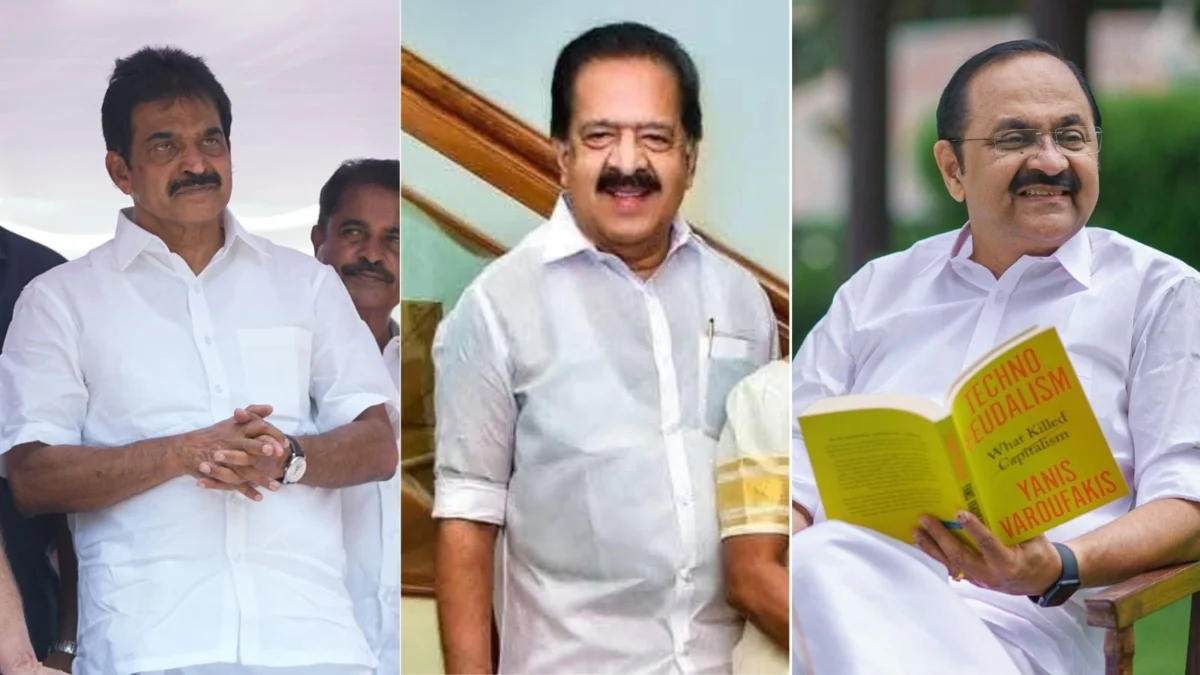
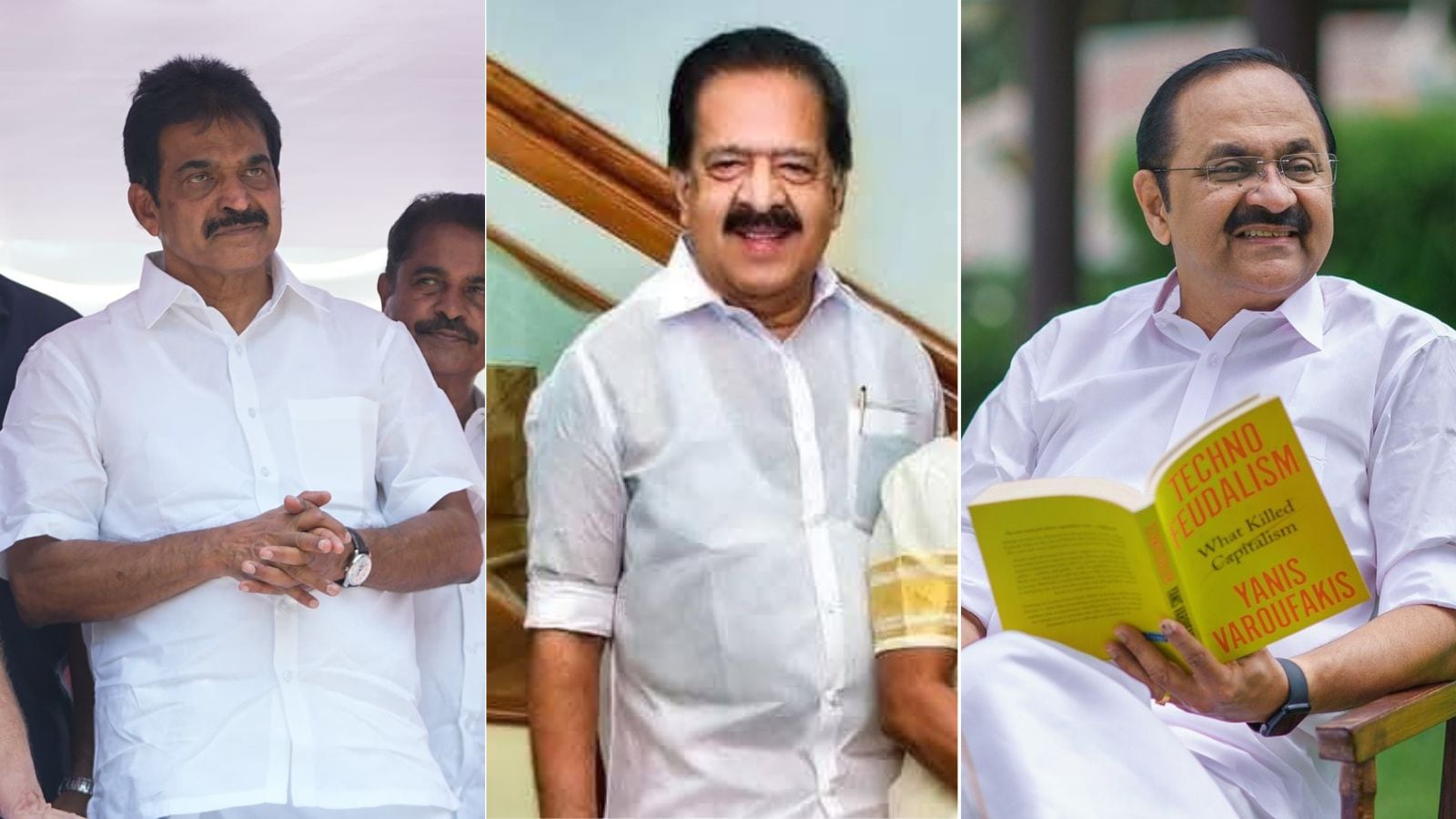
At the heart of the contention are three prominent figures vying for the top post: AICC General Secretary (Organisation) K.C. Venugopal, the outgoing Leader of the Opposition V.D. Satheesan, and former Opposition Leader Ramesh Chennithala. Each contender brings a distinct set of strengths and a dedicated support base, making the high command’s decision an unenviable tightrope walk.
The Mandate and the Mounting Pressure
The UDF’s victory in the 2026 Assembly elections was nothing short of emphatic. After a period of introspection and strategic realignment, the Congress-led front managed to decisively defeat the incumbent Left Democratic Front (LDF), which had sought an unprecedented consecutive term. The mandate was widely interpreted as a clear call for change and a vote of confidence in the UDF’s promises of good governance and inclusive development.
Yet, this celebratory mood has been steadily eroded by the persistent delay in naming a Chief Minister. The initial jubilation among party workers and the electorate has morphed into growing frustration and impatience. For two full weeks, the high command has engaged in multiple rounds of discussions, headcounts among elected MLAs, and consultations with various stakeholders, yet a consensus remains elusive. The longer the delay persists, the more palpable the public’s disappointment, with many questioning the party’s capacity for decisive leadership even before assuming office.
This internal discord is particularly damaging given the expectations placed on the new government. Kerala faces significant socio-economic challenges, and a stable, responsive administration is crucial for addressing them. The current impasse not only delays the formation of a cabinet and the initiation of policy-making but also sends an unsettling signal about the stability and coherence of the incoming government.
The Contenders: A Battle of Influence and Ideology
The race for the Chief Minister’s chair has exposed the intricate power dynamics within the Kerala Congress, highlighting the divergent aspirations and support bases of its top leaders.
K.C. Venugopal: The Organizational Architect
K.C. Venugopal, a seasoned politician and the All India Congress Committee (AICC) General Secretary (Organisation), represents a powerful faction within the party. Known for his proximity to the central leadership and his extensive organizational network, Venugopal enjoys the backing of a significant majority of the newly elected Congress MLAs. His supporters argue that his administrative experience at the national level, coupled with his ability to navigate central party politics, makes him an ideal choice to lead the state. Having served as a Union Minister and a Member of Parliament, Venugopal’s profile suggests a leader capable of commanding respect both within the state and in Delhi. However, a crucial point of contention against him is that he did not contest the Assembly elections, leading some to question his direct mandate from the Kerala electorate for the Chief Minister’s role.
V.D. Satheesan: The Grassroots Catalyst
V.D. Satheesan, the outgoing Leader of the Opposition, has emerged as the clear favourite among the Congress’s rank and file, UDF allies, and a considerable section of civil society. Satheesan’s tenure as Opposition Leader was marked by his articulate and aggressive stance against the LDF government, often taking uncompromising positions on critical issues. He is widely credited for galvanising the UDF’s campaign and presenting a credible alternative vision for Kerala. His popular appeal stems from his perceived accessibility, his sharp intellect, and his ability to connect with ordinary workers. The prevailing sentiment among party cadres is that the emphatic mandate was largely a result of the UDF’s campaign under Satheesan’s leadership, making him the natural choice for the top post. His supporters view him as the "face of the alliance" and the embodiment of the public’s desire for a fresh, dynamic leadership.
Ramesh Chennithala: The Veteran Claimant
Ramesh Chennithala, a former Leader of the Opposition and a long-standing fixture in Kerala politics, also remains in the fray, albeit with seemingly less overt support in the current public discourse. A veteran leader with extensive experience in both state and central politics, Chennithala has previously held significant ministerial portfolios and has a strong network within the party. His supporters would point to his experience and steady hand as assets in leading the government. However, the narrative of "change" and "new leadership" that dominated the recent elections seems to have somewhat shifted the focus away from older guard leaders, making his path to the Chief Minister’s chair more challenging in this specific context.
The High Command’s Conundrum: Balancing Competing Interests
The Congress high command, responsible for finalising the Chief Ministerial candidate, finds itself in a precarious position, caught between the imperatives of internal party democracy and the broader demands of coalition politics and public sentiment. On Tuesday, senior central leaders held extensive discussions with three KPCC vice-presidents and four former state unit chiefs, reflecting the gravity and complexity of the situation.
A senior party leader, speaking on condition of anonymity, articulated the core dilemma: "If the support of MLAs was the only criterion, the party could have decided in favour of Venugopal last week itself. But party workers, UDF allies, and a section of civil society are backing Satheesan. Hence, the leadership could not arrive at a decision." This statement underscores the multifaceted nature of the challenge. While a significant number of MLAs might favour Venugopal, the overwhelming grassroots support for Satheesan cannot be ignored without risking a massive backlash from within the party’s foundational base.
Historically, the Congress high command has often played a decisive role in Chief Ministerial selections, especially in states with multiple strong contenders. However, in recent years, the party has faced criticism for its perceived top-down approach and its occasional inability to accurately gauge local sentiments. In Kerala, a state known for its politically aware electorate and robust internal party dynamics, imposing a leader against popular will could have severe and lasting repercussions for the party’s credibility and unity. The high command’s prolonged indecision suggests a cautious approach, attempting to navigate a path that minimises internal dissent and maximises broader acceptance.
Voices from the Ground: Public Discontent and Worker Pressure
The delay has not merely remained within the confines of party offices; it has spilled onto the streets and across digital platforms, manifesting as vocal public anger and intense worker pressure. Last week, Congress workers staged spontaneous protests across Kerala, unequivocally demanding that V.D. Satheesan be appointed Chief Minister. Though these protests subsided following direct intervention from the high command, the underlying sentiment has not abated.
Elected Congress MLAs, tasked with representing their constituencies, have found themselves in an unenviable position. Several legislators were reportedly forced to cancel planned constituency visits after being confronted and questioned by angry constituents about the delay in selecting the CM. This direct public engagement highlights the depth of frustration among the electorate, who perceive the internal squabbling as a betrayal of their mandate.
The digital sphere has also become a battleground. Vatakara MP and KPCC vice-president Shafi Parambil, a popular youth leader, came under severe attack on Congress social media handles for allegedly backing K.C. Venugopal. Netizens accused him of reviving the long-standing "groupism" that has historically plagued the Kerala Congress – a reference to the factional rivalries that have often undermined party unity and electoral prospects. This digital backlash underscores the strong emotional investment of party workers in Satheesan’s leadership and their zero-tolerance for perceived internal sabotage. The fear of resurgent groupism is a significant concern, as it has historically weakened the Congress in Kerala, leading to electoral setbacks.
Allies’ Intervention: The IUML Factor
Adding another layer of complexity to the crisis is the unequivocal intervention of key UDF allies. The Indian Union Muslim League (IUML), which secured a substantial 22 seats in the Assembly elections, has openly thrown its weight behind V.D. Satheesan. The IUML, a long-standing and crucial partner in the UDF, views Satheesan as the cohesive force behind the alliance and the natural leader to carry forward their shared agenda.
The IUML has made its discontent clear regarding the prospect of Venugopal, who did not participate in the Assembly elections, being considered for the Chief Minister’s post. Senior IUML legislator T.V. Ibrahim voiced the growing exasperation within the party on Tuesday, stating, "We cannot go out and meet the people who voted for the UDF. People are asking where the Chief Minister is. The crisis has taken the sheen off the massive victory." This statement is a stark warning, indicating that the delay is not just an internal Congress matter but one that impacts the credibility and unity of the entire UDF.
The public endorsement of a specific candidate by an ally, while unusual, highlights the extraordinary nature of the current deadlock. While supporters of Venugopal argue that the Congress should not allow allies to dictate an internal decision, the rival camp counters that the issue concerns the UDF chief ministership, making it a matter of coalition consensus, not merely an internal party affair. The Congress central leadership cannot afford to ignore the IUML’s views, given the party’s critical role in the UDF’s electoral success and, notably, its instrumental support in Priyanka Gandhi’s victory from the Wayanad Lok Sabha seat in the 2024 bypoll. This historical leverage gives the IUML significant sway, making their preference for Satheesan a formidable factor in the high command’s deliberations.
Historical Context: Kerala Congress’s Past and Present
The current leadership crisis is not an isolated incident but rather echoes a long history of factionalism and intense leadership contests within the Kerala Congress. The state unit has often been characterised by powerful "groups" aligned with different leaders, a phenomenon that has historically both animated and hindered the party’s progress. While internal democracy is a strength, unchecked groupism has, at times, led to debilitating infighting and compromised electoral performance.
The UDF’s victory in 2026 was largely attributed to a concerted effort to present a united front and minimise the visible signs of internal strife. V.D. Satheesan, in his role as Leader of the Opposition, was seen as embodying this renewed unity, capable of bridging gaps between different factions and presenting a cohesive challenge to the LDF. The current stalemate, therefore, risks undoing much of the painstaking work that went into projecting a unified and decisive UDF to the electorate. The memory of past electoral defeats, often linked to internal divisions, looms large over the current decision-making process.
The Stakes: Implications for Congress and UDF
The implications of this protracted leadership battle extend far beyond the immediate selection of a Chief Minister.
- Governance Paralysis: The most immediate impact is on governance. Every day without a Chief Minister and a cabinet is a day lost for policy formulation, administrative action, and addressing the pressing needs of the state. This can quickly erode public trust and create an impression of an inefficient or unstable government.
- Damage to Public Image: The spectacle of internal squabbling after a massive victory can significantly damage the Congress’s image as a responsible and capable governing party. It can foster cynicism among voters and make it harder to deliver on election promises.
- Internal Unity and Morale: Prolonged indecision risks fracturing the fragile unity achieved during the election campaign. Alienating either the MLA faction or the grassroots/ally base could lead to deep-seated resentment, making effective governance and future electoral coordination extremely difficult. The resurfacing of groupism could cripple the party from within.
- Strained Alliance Relations: The public stance taken by key allies like the IUML puts a strain on coalition dynamics. While allies have a right to express their preferences, the Congress’s handling of this situation will determine the future health and stability of the UDF.
- National Ramifications: For the Congress party at the national level, a stable and well-governed Kerala is crucial. As one of the few states where the party holds significant power, any mishandling of the CM selection could send a negative signal about its leadership capabilities nationwide, especially as it seeks to strengthen its position in the broader national political landscape.
Conclusion: Awaiting a Resolution
As Kerala enters its third week without a Chief Minister-designate, the pressure on the Congress high command continues to mount. The choice they make will not only determine who leads the state for the next five years but will also profoundly shape the future trajectory of the Congress party in Kerala and, by extension, the stability and effectiveness of the UDF. Balancing the will of the elected representatives with the overwhelming sentiment of the party’s grassroots and crucial allies is a tightrope walk that demands astute political acumen and decisive action. The sheen of a massive electoral victory now hangs precariously, awaiting a resolution that can restore public confidence and set Kerala on a clear path forward. The coming days will be critical in determining whether the Congress can successfully navigate this storm and deliver on the promise of its mandate.
