<img decoding=”async” src=”https://images.indianexpress.com/2026/05/rahul_e902cf.jpg?w=1600″ alt=”Rahul Gandhi” width=”650″ height=”366″>
</p>
<h2>Congress Embarks on Major Organizational Overhaul, Rahul Gandhi Pushes for Youth Leadership Ahead of 2029 Polls</h2>
<p>
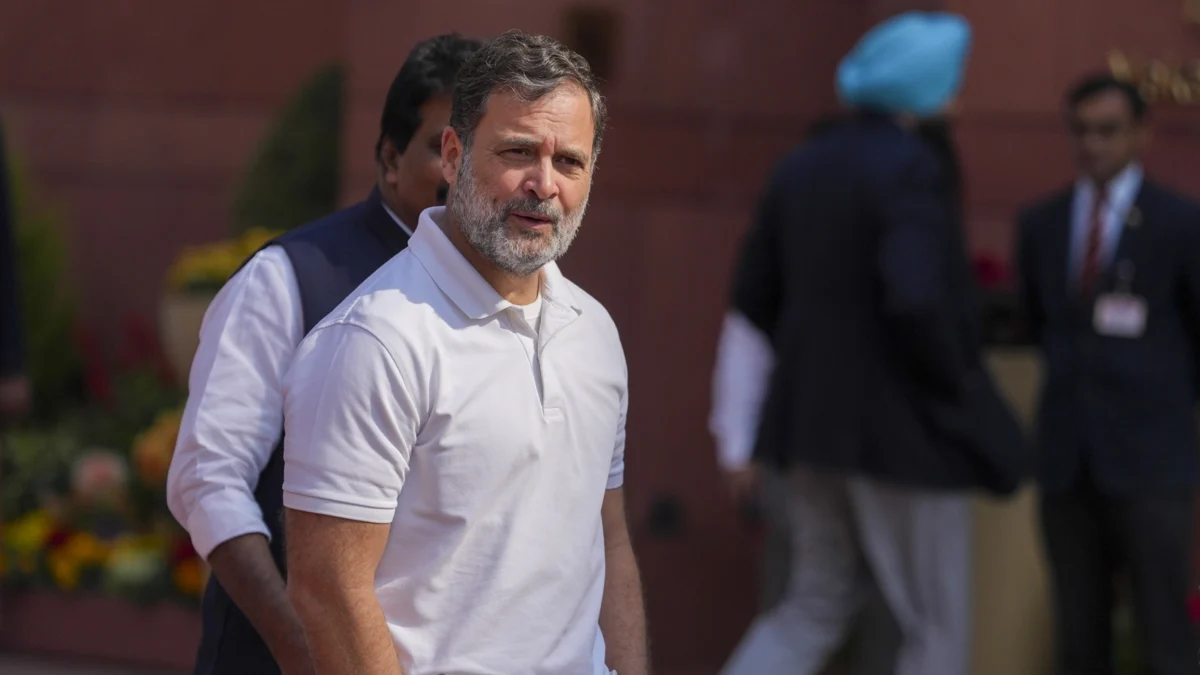
<em>New Delhi, May 31, 2026</em> – The Indian National Congress, emerging from a demanding Assembly election cycle and having successfully navigated a crucial leadership transition in Karnataka, is poised for a significant organizational restructuring. Sources within the All India Congress Committee (AICC) confirm that the party high command has initiated a comprehensive revamp of its state units and a reshuffle of organizational responsibilities at the national level. At the heart of this strategic overhaul is Leader of the Opposition, Rahul Gandhi, who is understood to be a strong proponent of elevating young leaders to pivotal roles, a move seen as foundational to the party’s preparations for the 2029 Lok Sabha elections.
</p>
<p>
This extensive exercise, described by party insiders as a “surgical strike” against complacency, aims to inject fresh dynamism into the party apparatus, address lingering factionalism, and recalibrate its electoral machinery. With an eye on the next general elections, the leadership appears determined to foster a more agile, responsive, and youth-oriented organizational structure capable of mounting a robust challenge to the incumbent government. The decisions, meticulously discussed between Congress President Mallikarjun Kharge and Rahul Gandhi, signal a concerted effort to reposition the party for future political battles.
</p>
<h3>Main Facts: A Sweeping Reshuffle on the Horizon</h3>
<p>
The Congress party is on the cusp of announcing sweeping changes across its organizational hierarchy, impacting leadership positions in at least six states and initiating a critical reshuffle within the AICC. The move comes as the party seeks to consolidate its strengths, address weaknesses highlighted by recent electoral performances, and prepare for upcoming state and national elections.
</p>
<p>
Key highlights of the impending changes include:
</p>
<ul>
<li>
<strong>Punjab:</strong> A leadership change is anticipated ahead of the February 2027 Assembly elections, with current chief Amrinder Singh Raja Warring likely to be replaced. Former Chief Minister Charanjit Singh Channi, currently a Jalandhar MP, is being strongly considered as his successor.
</li>
<li>
<strong>Kerala:</strong> With state Congress president Sunny Joseph now serving as a minister in the V.D. Satheesan government, a new party chief will be appointed. A competitive field of contenders includes Lok Sabha MPs Kodikunnil Suresh, Benny Behanan, and Anto Antony, alongside UDF convener Adoor Prakash and senior leader Joseph Vazhackan, with caste and community dynamics playing a significant role.
</li>
<li>
<strong>Tamil Nadu:</strong> K. Selvaperunthagai is expected to be removed from his post as state president, reportedly due to dissatisfaction within the high command regarding his operational style.
</li>
<li>
<strong>Karnataka:</strong> Following D.K. Shivakumar’s elevation to Chief Minister, the search for his successor as state Congress chief is underway, intricately linked to the impending Cabinet reshuffle. Minister Satish Jarkiholi is a frontrunner, with AICC Haryana in-charge B.K. Hariprasad also in contention. A decision is expected before Shivakumar’s swearing-in on June 3.
</li>
<li>
<strong>Rajasthan & Uttar Pradesh:</strong> The leadership is actively debating whether to replace state chiefs Govind Singh Dotasra (Rajasthan, in post since July 2020) and Ajay Rai (Uttar Pradesh, in post since August 2023), particularly given Uttar Pradesh’s crucial electoral significance.
</li>
<li>
<strong>Andhra Pradesh:</strong> Current state president Y.S. Sharmila is likely to be nominated to the Rajya Sabha from Karnataka, fulfilling a pre-2024 election promise, necessitating a change at the helm of the state unit.
</li>
<li>
<strong>Goa:</strong> The reappointment of Girish Chodankar as state Congress president has reportedly sparked internal “disquiet,” given his previous resignation after the party’s defeat in the March 2022 Assembly polls.
</li>
<li>
<strong>AICC Level:</strong> A broader reshuffle of organizational responsibilities at the AICC is also under active consideration, driven by dissatisfaction with the performance of several state in-charges.
</li>
</ul>
<h3>Chronology of the Strategic Overhaul</h3>
<p>
The genesis of this extensive organizational revamp can be traced back to the culmination of the recent Assembly election cycle, which provided the Congress party with critical data points regarding its strengths and weaknesses on the ground. The smooth and decisive transition of power in Karnataka, where the party successfully managed to install a new Chief Minister while accommodating various factions, served as a template and a confidence booster for more widespread structural changes.
</p>
<p>
The initial discussions gained momentum in the aftermath of these electoral assessments, with a clear focus on the impending 2029 Lok Sabha elections. Party strategists recognized that mere electoral victories in states, while important, would not suffice without a robust, coherent, and well-oiled organizational machinery at both state and national levels.
</p>
<h4>State-Specific Mandates and Contenders</h4>
<p>
The party’s assessment of its state units has been rigorous, focusing on performance, internal cohesion, and future electoral potential.
</p>
<p>
<strong>Punjab: A Pre-2027 Revamp</strong>
</p>
<p>
In Punjab, the impetus for change is particularly strong, fueled by the party’s underwhelming performance in the recent local body elections. These results not only exposed deep-seated factional fault lines within the state unit but also raised concerns about the party’s readiness for the February 2027 Assembly elections. Amrinder Singh Raja Warring, the incumbent Punjab Congress chief, is facing scrutiny over his leadership’s ability to unite disparate groups and galvanize the cadre. A significant section of the leadership is now actively pitching for Charanjit Singh Channi, the Jalandhar MP and former Chief Minister, to take over. Channi’s brief stint as CM before the 2022 elections, despite the electoral defeat, garnered him a certain degree of public sympathy and recognition, especially among Dalit communities. His potential elevation is seen as a strategic move to consolidate Dalit votes and present a strong local face against the ruling Aam Aadmi Party (AAP) and the resurgent Shiromani Akali Dal (SAD).
</p>
<p>
<strong>Kerala: Balancing Caste and Community Equations</strong>
</p>
<p>
Kerala presents a complex challenge, where the appointment of a new state Congress president is intricately tied to caste, community, and factional equations. With Sunny Joseph transitioning into a ministerial role within the V.D. Satheesan government, the race for the top party post has intensified. Among the prominent contenders, Lok Sabha MP Kodikunnil Suresh, an eight-term parliamentarian and former working president, has strong backing from those advocating for a Dalit leader. This move would aim to reinforce the party’s commitment to inclusive representation and solidify its base among marginalized communities. However, another influential lobby argues for a Christian leader, citing the community’s substantial support for the Congress and the Bharatiya Janata Party’s (BJP) increasing outreach to Christian voters in the state. Other contenders like Benny Behanan, Anto Antony, Adoor Prakash, and Joseph Vazhackan also bring their own factional and community support bases, making the decision a delicate balancing act for the high command.
</p>
<p>
<strong>Tamil Nadu: Unhappiness with Leadership Style</strong>
</p>
<p>
In Tamil Nadu, the decision to remove K. Selvaperunthagai is reportedly driven by the high command’s dissatisfaction with his “style of functioning.” This often translates to concerns over a lack of effective coordination with alliance partners (Dravida Munnetra Kazhagam – DMK), inability to energize the party cadre, or a perceived failure to strategize effectively in a state where the Congress plays a junior partner role. The party is likely seeking a leader who can assert the Congress’s identity more forcefully within the alliance and prepare for a potentially more significant role in the future.
</p>
<p>
<strong>Karnataka: CM’s Successor and Cabinet Reshuffle Link</strong>
</p>
<p>
The leadership change in Karnataka is a direct consequence of D.K. Shivakumar’s elevation as Chief Minister. The selection of his successor as state Congress chief is critically linked to the impending Cabinet reshuffle, as the party aims to balance power centers and reward loyalists while maintaining a unified front. Minister Satish Jarkiholi, a prominent Dalit leader with a strong organizational base, is considered the frontrunner. His appointment would not only ensure caste representation but also provide a strong counter-narrative to the BJP’s attempts to woo Dalit votes. AICC Haryana in-charge B.K. Hariprasad, with his extensive organizational experience, is also in the running. Sources indicate that a final decision on the Karnataka Congress chief could be made in Delhi before Shivakumar’s swearing-in on June 3, underscoring the urgency and strategic importance of this appointment.
</p>
<p>
<strong>Rajasthan and Uttar Pradesh: Weighing Performance and Future Prospects</strong>
</p>
<p>
The long tenures of Govind Singh Dotasra in Rajasthan (since July 2020) and Ajay Rai in Uttar Pradesh (since August 2023) are now under scrutiny. In Rajasthan, Dotasra’s leadership has been marked by persistent factionalism between the Ashok Gehlot and Sachin Pilot camps, which has periodically hampered the party’s effectiveness. The leadership is assessing whether a new face could bring greater unity and dynamism. Uttar Pradesh, a politically crucial state, remains a significant challenge for the Congress. Despite Rai’s efforts, the party’s footprint in the state remains limited. Given the state’s outsized influence on national politics, the leadership is weighing whether a change at the top is necessary to rejuvenate the organization and improve its electoral fortunes ahead of the 2029 Lok Sabha elections.
</p>
<p>
<strong>Andhra Pradesh: A Promised Rajya Sabha Seat</strong>
</p>
<p>
In Andhra Pradesh, the leadership change is a consequence of a pre-election agreement. Y.S. Sharmila, who joined the Congress ahead of the 2024 elections, is expected to be nominated to the Rajya Sabha from Karnataka, fulfilling a promise made by the high command. Her departure creates a vacuum, necessitating the appointment of a new state president to lead the party in a state where it faces an uphill battle against regional giants.
</p>
<p>
<strong>Goa: Disquiet Over Reappointment</strong>
</p>
<p>
The decision to reappoint Girish Chodankar as Goa Congress president has, however, triggered notable “disquiet” within the state unit. Chodankar had previously resigned in March 2022 following the party’s defeat in the Assembly polls, and his return has raised questions about the party’s strategy and commitment to accountability. This move has reportedly exacerbated existing factional tensions, with critics arguing that it undermines the principle of taking responsibility for electoral setbacks and could demoralize other aspiring leaders ahead of the February 2027 Assembly elections.
</p>
<p>
<strong>AICC Level: Addressing Performance Gaps</strong>
</p>
<p>
Beyond the state units, a significant reshuffle at the AICC level is also under active consideration. Sources indicate widespread dissatisfaction with the performance of several state in-charges. These roles are critical for coordinating between the national leadership and state units, implementing party directives, and resolving internal disputes. Perceived failures in effective communication, poor ground-level strategy, or inability to reconcile state-level factions have prompted the high command to review these positions, aiming to install more effective and accountable individuals.
</p>
<h3>Supporting Data: The Imperative for Change</h3>
<p>
The impetus for this widespread restructuring stems from a careful analysis of the Congress party’s electoral journey over the past few years. While the recent smooth transition in Karnataka provided a momentary high, the party’s overall performance in various local body elections and state polls has often fallen short of expectations. In Punjab, for instance, the dismal showing in municipal and panchayat elections served as a stark indicator of organizational disarray and a lack of grassroots connection.
</p>
<p>
The strategic considerations also extend to demographic representation. In Kerala, the debate over appointing a Dalit leader like Kodikunnil Suresh versus a Christian leader reflects the party’s attempt to solidify its traditional vote banks while also countering the BJP’s aggressive outreach to various communities. The Congress recognizes that a diverse and inclusive leadership, reflecting the nation’s social fabric, is crucial for broader appeal.
</p>
<p>
Historically, the Congress has grappled with leadership transitions and factionalism, issues that have often hampered its ability to present a united front. This current overhaul is an acknowledgment of these perennial challenges and an attempt to break free from past patterns. The party’s vision for 2029 necessitates a complete revamp of its organizational machinery, moving away from a top-heavy structure to one that empowers state units and fosters local leadership. The current moves are aimed at creating a robust organizational backbone, crucial for challenging the highly centralized and efficient electoral machinery of the ruling BJP. Without strong state units, capable of mobilizing voters and articulating the party’s vision effectively, the Congress faces an uphill battle in national elections.
</p>
<h3>Official Responses and Interpretations</h3>
<p>
While no official comprehensive statement detailing the impending changes has been released, the internal discussions and proposed actions speak volumes about the party’s strategic direction. Sources within the AICC, speaking on condition of anonymity due to the sensitive nature of the deliberations, confirmed the intent behind the restructuring.
</p>
<p>
“We cannot afford complacency,” a senior Congress functionary articulated, emphasizing the party’s commitment to revitalizing its cadres. “The roadmap for 2029 begins now, and that requires a robust, dynamic leadership at every level, from the block to the national committee. Performance and accountability are paramount.”
</p>
<p>
The vision of Rahul Gandhi, as interpreted by leaders close to him, is central to this overhaul. “The Leader of the Opposition is unequivocally focused on infusing fresh blood, empowering younger cadres, and fostering a leadership that is both agile and connected to the grassroots,” another insider revealed. “His push for young leaders is not merely symbolic; it is a strategic move to build a forward-looking party that resonates with the aspirations of a younger India.” This suggests a deliberate effort to move beyond established hierarchies and give opportunities to new faces.
</p>
<p>
Congress President Mallikarjun Kharge, known for his vast organizational experience, is understood to be meticulously overseeing the review process. “President Kharge is ensuring that every decision is grounded in a thorough assessment of performance metrics and contributes tangibly to strengthening the party’s foundational structure,” a source noted, highlighting Kharge’s role in balancing Gandhi’s vision with practical implementation.
</p>
<p>
Regarding specific state changes, the sentiments often reflect a blend of pragmatism and strategic necessity. On Punjab, a leader remarked, “The local body election results were a wake-up call. We need a leader who can unify the state unit and rebuild trust with the electorate.” For Kerala, the emphasis is on strategic representation: “The choice in Kerala will reflect our commitment to inclusive politics while also acknowledging electoral realities, especially with the BJP’s aggressive inroads.” The disquiet in Goa, however, points to the inherent challenges of such large-scale changes. “While decisions are made for the larger good, managing internal dissent is an ongoing process,” a senior leader conceded, underscoring the delicate balance required.
</p>
<h3>Implications: A High-Stakes Bet for 2029</h3>
<p>
The current organizational overhaul by the Congress party carries profound implications for its future trajectory, particularly in the run-up to the 2029 Lok Sabha elections. This is a high-stakes bet, with the party aiming to shed its image as a perpetually faction-ridden and reactive force, transforming into a proactive and cohesive political entity.
</p>
<p>
**Impact on 2029 Lok Sabha Elections:** By prioritizing youth and dynamism, the Congress hopes to craft a fresh narrative that appeals to a broader demographic, especially first-time voters. Stronger state units, led by effective and locally connected leaders, are seen as indispensable for ground-level mobilization, message dissemination, and ultimately, electoral success. Rahul Gandhi’s vision is clearly to build a long-term electoral machine, not just focus on immediate gains.
</p>
<p>
**Internal Party Dynamics:** The restructuring is likely to have a dual impact on internal party dynamics. On one hand, empowering new and younger leaders could inject much-needed energy and reduce the influence of entrenched, often feuding, older factions. This could foster a sense of meritocracy and ambition among the party’s younger cadres. On the other hand, changes, especially the removal of incumbents or the reappointment of controversial figures (as seen in Goa), risk exacerbating existing factional fault lines or creating new pockets of dissent. The party’s ability to manage this internal fallout will be crucial for the success of the revamp.
</p>
<p>
**Message to Cadre and Public:** The emphasis on performance and accountability sends a strong message to the entire party cadre: complacency will not be tolerated. For the public, these changes, if implemented effectively, could signal a revitalized Congress that is serious about governance and responsive to contemporary challenges. It could help counter the narrative of a party adrift and rudderless.
</p>
<p>
**Challenges Ahead:** The path to genuine rejuvenation is fraught with challenges. The Congress must navigate the complex web of caste, community, and regional politics in each state while ensuring that new appointments command respect and loyalty across diverse groups. The successful integration of young leaders into existing power structures, often dominated by veterans, will require careful mentorship and strategic delegation. Furthermore, the party must ensure that these organizational changes translate into tangible electoral gains, especially in crucial states like Uttar Pradesh, where the Congress has struggled for decades.
</p>
<p>
**Potential for Renewal:** If executed strategically and with widespread internal buy-in, this overhaul has the potential to genuinely rejuvenate the Congress. It could pave the way for a more unified, energetic, and electorally competitive party. The explicit backing of Rahul Gandhi for this “surgical strike” on organizational inertia suggests a personal commitment to shaping the party in his vision, moving it towards a more modern and grassroots-oriented force.
</p>
<p>
In conclusion, the Congress party stands at a critical juncture. The organizational changes underway are not merely cosmetic; they represent a fundamental rethinking of its strategy and structure. The success or failure of this ambitious endeavor will undoubtedly shape the political landscape leading up to the 2029 Lok Sabha elections, determining whether the grand old party can reclaim its prominence in Indian politics.
</p>