

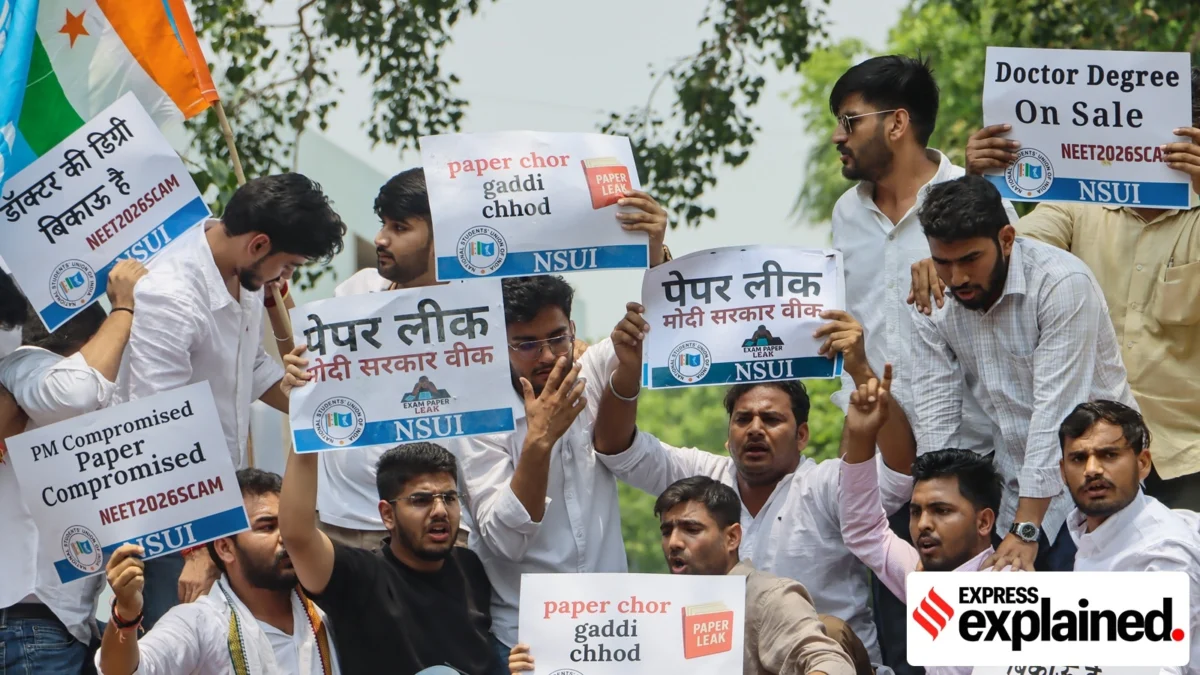
New Delhi, May 20, 2026 – In a significant gesture of support for students facing the rescheduled NEET-UG re-examination, the Punjab government has announced free travel on all Punjab Roadways buses for aspirants. This initiative aims to alleviate financial burdens for students, particularly those from economically weaker sections, who may struggle with transportation costs to reach their examination centers on the designated dates. The re-examination, a consequence of widespread allegations of paper leaks in the previous attempt, is slated to be held on June 21, 2026.
The decision, revealed through an official statement from the state government, will allow NEET candidates to travel free of charge on June 20, 21, and 22. All that is required to avail this facility is the presentation of a valid NEET admit card to the bus conductor. This move underscores the government’s commitment to ensuring that no student is disenfranchised due to financial constraints, especially during a critical juncture in their academic journey.
The announcement comes in the wake of numerous student concerns regarding the financial strain associated with attending the examination. Many aspiring medical professionals, hailing from humble backgrounds, find it challenging to arrange for the necessary fare to travel to distant examination venues. The Punjab government’s intervention is a direct response to these apprehensions, which were reportedly brought to the forefront during an interaction with Chief Minister Arvind Kejriwal. The statement explicitly highlighted the plight of "poor students" who often lack the basic means to reach their exam centers, emphasizing the government’s resolve to remove such obstacles.
A Timeline of Events Leading to the NEET Re-examination and Punjab’s Support
The current situation surrounding the NEET-UG examination is the culmination of a series of events marked by controversy and subsequent corrective measures. Understanding the timeline provides crucial context for the Punjab government’s proactive stance:
- May 2026: Widespread allegations of paper leaks surface concerning the NEET-UG examination conducted earlier in the month. Investigations are launched, leading to mounting pressure on the National Testing Agency (NTA) and the Ministry of Education.
- Late May 2026: The Union government, acknowledging the gravity of the allegations, announces the cancellation of the NEET-UG examination for the affected candidates. This decision sparks a mix of relief and anxiety among students and their families.
- May 20, 2026: The Punjab government, under Chief Minister Arvind Kejriwal, announces free travel for NEET aspirants on Punjab Roadways buses on June 20, 21, and 22, requiring only the presentation of their admit card. This announcement comes concurrently with the official confirmation of the re-examination date.
- June 21, 2026: The NEET-UG re-examination is scheduled to be conducted. The NTA and the Ministry of Education assure the implementation of stringent security measures to prevent any recurrence of malpractices.
This sequence of events highlights the dynamic and often challenging nature of large-scale examinations in India. The NEET-UG, being a gateway to medical education for thousands of aspirants, carries immense weight, and any disruption or irregularity has far-reaching consequences. The Punjab government’s decision to provide free transport is a compassionate and practical measure designed to ease the pressure on students facing this unprecedented situation.
Addressing Financial Barriers: Supporting Economically Weaker Sections
The Punjab government’s decision to offer free bus travel directly addresses the financial challenges faced by a significant segment of NEET aspirants. The medical entrance examination, renowned for its competitive nature, attracts a vast number of students from diverse socio-economic backgrounds across the country. For many, particularly those from rural areas or economically disadvantaged families, the cost of travel to examination centers can be a substantial hurdle.
"Many poor students take the NEET exam. They don’t even have money for the fare to get to the exam center," the state government’s statement poignantly noted. This sentiment reflects a deep understanding of the realities on the ground. The expense of a bus ticket, especially for journeys spanning multiple hours or even days, can be prohibitive for families struggling to make ends meet. The cancellation of the exam and the subsequent need for a re-examination only exacerbate this financial strain, as students may have already incurred travel and accommodation expenses for the original test.
By waiving bus fares, the Punjab government is not merely offering a subsidy; it is actively removing a tangible barrier to educational opportunity. This initiative ensures that a student’s economic status does not dictate their ability to appear for a crucial examination. The gesture is particularly significant as it comes from a state government, demonstrating a localized yet impactful approach to supporting national-level aspirations. The inclusion of three days – the day before, the day of, and the day after the examination – further demonstrates a comprehensive consideration for the students’ logistical needs, allowing for travel and potential return journeys without additional cost.
Official Responses and Government Assurances
The proactive step taken by the Punjab government is a part of a broader national response to the NEET-UG crisis. Following the cancellation and the announcement of a re-examination, Union Education Minister Dharmendra Pradhan has been vocal about the government’s commitment to supporting the affected students.
Minister Pradhan has repeatedly emphasized that the government will not allow students to bear any additional financial burden due to the rescheduling. This includes assurances that no extra examination fee will be levied for the retest. Furthermore, recognizing the potential inconvenience caused by the re-examination, candidates have been granted the option to choose their preferred examination city again. This flexibility aims to accommodate any changes in their circumstances or location since the initial examination was announced.
The Punjab government’s free travel initiative aligns perfectly with these national assurances. It demonstrates a coordinated effort between state and central governments to address the multifaceted challenges posed by the NEET-UG paper leak scandal. The decision by Punjab reflects a spirit of collaboration and a shared responsibility to uphold the integrity of the examination system while ensuring that students are not unduly penalized.
The statement from the Punjab government, referencing the interaction with Chief Minister Arvind Kejriwal, suggests that the decision was a direct response to student feedback and concerns. This citizen-centric approach to policy-making is a hallmark of the current administration, aiming to be responsive to the needs and anxieties of the populace.
Implications for the Future of NEET and Examination Security
The recent NEET-UG controversy has not only led to a re-examination but has also spurred significant discussions and policy shifts regarding the examination’s future. Union Education Minister Dharmendra Pradhan has announced a pivotal change: from next year onwards, NEET-UG will transition to a computer-based test (CBT) format. This marks a departure from the traditional pen-and-paper mode that has been in practice for years.
The proposal to shift NEET to a CBT format is not new. It was previously recommended by a seven-member committee led by former ISRO chief K Radhakrishnan. This committee was constituted in the wake of concerns regarding paper leaks and examination security that emerged in 2024. The committee’s recommendations were aimed at bolstering the integrity and robustness of the examination process. The current paper leak incident has evidently accelerated the implementation of these recommendations.
The transition to a CBT format is expected to enhance examination security through several mechanisms. Digitalization can allow for better control over question paper distribution, real-time monitoring of examination centers, and advanced security features to prevent unauthorized access and manipulation. While the pen-and-paper format has served the purpose for a long time, the evolving landscape of technological vulnerabilities and the increasing scale of examinations necessitate such forward-thinking changes.
The upcoming June 21 re-examination is expected to be conducted under significantly enhanced security and monitoring protocols. Students are being advised to stay updated through the official NEET portal for any further announcements regarding admit cards, examination city slips, and revised guidelines. The NTA and the Ministry of Education are under immense pressure to ensure that this re-examination is conducted flawlessly, thereby restoring public trust in the examination system.
The Punjab government’s decision to provide free bus travel is a testament to the fact that addressing the fallout from examination irregularities requires a multi-pronged approach. It involves not only strengthening examination security and processes but also offering tangible support to the students who are at the receiving end of these disruptions. As India continues to grapple with the complexities of conducting large-scale competitive examinations, initiatives like the one taken by Punjab serve as a crucial reminder of the human element and the need for empathetic governance in the pursuit of educational equity. The journey to medical school is arduous, and the Punjab government’s gesture, however localized, offers a ray of hope and relief to those embarking on this critical path.
