

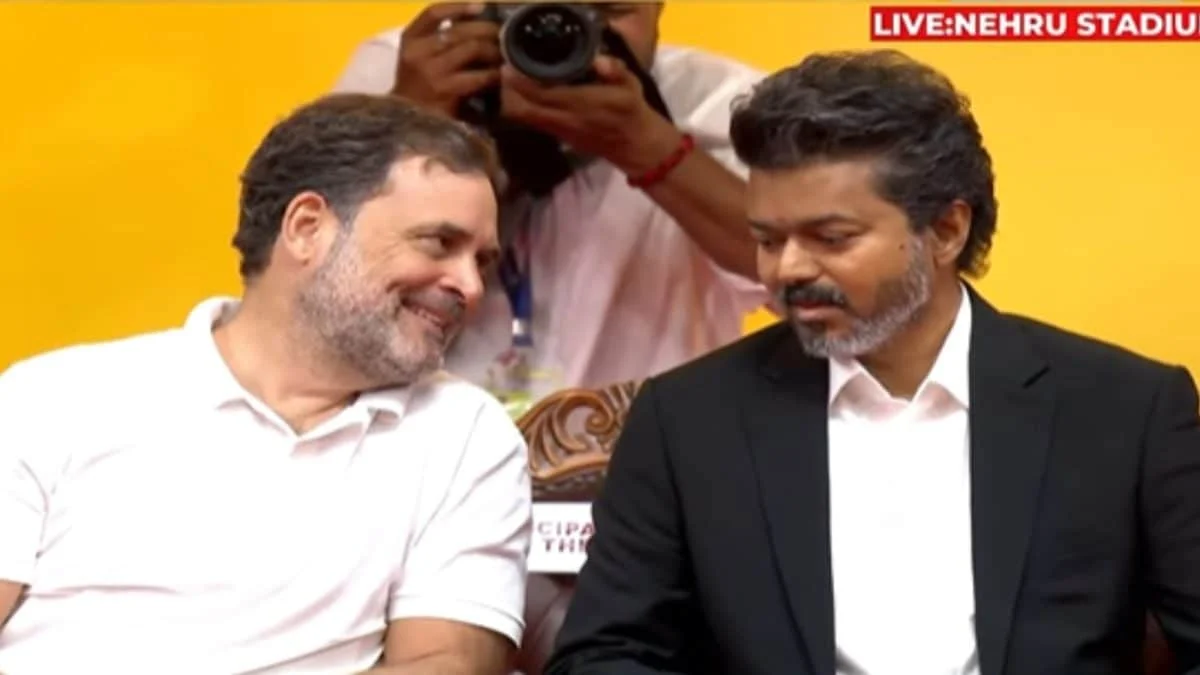
The announcement, made by Congress general secretary (Organisation) K. C. Venugopal, has sent ripples across the political spectrum, signaling not just a personal victory for the incoming ministers but a strategic triumph for the grand old party. It underscores a newly forged alliance that has successfully navigated the complexities of post-election coalition formation, breaking away from traditional alignments with the dominant Dravidian parties that have historically governed Tamil Nadu. The inclusion of Congress representatives is widely interpreted as a recalibration of political power and an ambitious move to broaden the coalition’s appeal and administrative capacity.
Main Facts: Congress Breaks Decades-Long Cabinet Drought
The core of this significant political development lies in the impending induction of two Congress legislators, Rajesh Kumar and P. Vishwanathan, into the Tamil Nadu cabinet. This move effectively ends a 59-year period during which the Indian National Congress, despite its national stature and historical roots in the state, remained outside the direct administrative machinery of Tamil Nadu. The swearing-in ceremony, scheduled for Thursday, will see these two individuals take their oaths under the leadership of Chief Minister C. Joseph Vijay, who heads the newly formed coalition government.
This inclusion is not merely a symbolic gesture; it signifies a substantive shift in the power-sharing dynamics within the state. For decades, the Congress party, while often a part of various electoral alliances, particularly with the Dravida Munnetra Kazhagam (DMK) or occasionally the All India Anna Dravida Munnetra Kazhagam (AIADMK), had been relegated to a supportive role, its MLAs rarely, if ever, being offered ministerial berths. This long-standing arrangement meant that despite contributing to coalition victories, the party had no direct hand in policy formulation or executive implementation at the state level.
The current situation, however, is fundamentally different. The Tamilaga Vettri Kazhagam (TVK), led by C. Joseph Vijay, emerged as the single largest party in the recent assembly elections but fell short of a clear majority. This necessitated the formation of a broad-based coalition, where the Congress party’s support, alongside that of the CPI, CPI(M), Indian Union Muslim League (IUML), and Viduthalai Chiruthaigal Katchi (VCK), became crucial for forming a stable government. By granting ministerial positions to its allies, the TVK-led coalition not only ensures its legislative majority but also fosters greater unity and shared responsibility among its constituent parties. The specific portfolios to be allocated to Rajesh Kumar and P. Vishwanathan are eagerly anticipated, as they will define the scope and impact of Congress’s renewed administrative engagement in Tamil Nadu. This strategic move aims to leverage the experience and ideological perspective of the Congress within the new government, promising a more diverse and inclusive approach to governance for the people of Tamil Nadu.
Chronology: A Half-Century of Absence and the Path to Inclusion
The journey to this historic moment is paved with nearly six decades of political maneuvering, strategic alliances, and a consistent absence from the direct levers of power for the Congress party in Tamil Nadu. Understanding this chronology is crucial to grasping the profound significance of the current development.
The Long Hiatus: A Legacy of Alliance Politics (1967-2026)
The last time the Indian National Congress held direct ministerial positions in Tamil Nadu was prior to 1967. That year marked a watershed moment in the state’s political history, as the Dravidian movement, spearheaded by the DMK under C.N. Annadurai, swept to power, ending the Congress’s long dominance. The Congress, which had been a formidable force in the state, boasting leaders like K. Kamaraj, gradually ceded ground to the burgeoning Dravidian ideology. After 1967, the political landscape became largely bipolar, dominated by the DMK and later the AIADMK.
For the subsequent 59 years, the Congress primarily functioned as a junior partner in various alliances. Its role was often limited to lending support to one of the Dravidian majors, contributing its vote bank and national appeal to bolster the coalition’s chances. However, this support rarely translated into direct participation in the state cabinet. The reasons for this consistent exclusion were multi-faceted:
- Dominance of Dravidian Narratives: The DMK and AIADMK, deeply rooted in regional identity, language, and social justice movements, preferred to keep key ministries within their own ranks, ensuring the propagation of their core ideologies.
- Strategic Seat Sharing: In alliance negotiations, Congress often secured a limited number of seats, primarily to boost the overall coalition strength, rather than to stake a claim for significant ministerial berths. The larger partner often dictated the terms, reserving portfolios for its own senior leaders.
- Perceived National Focus: While Congress had a national footprint, its regional strength in Tamil Nadu waned, leading to a perception that it was more focused on central politics rather than asserting strong administrative claims at the state level.
- Alliance Dynamics: Both DMK and AIADMK, when in power, demonstrated a preference for maintaining tight control over the executive, often offering only symbolic positions or chairmanships of state corporations to smaller allies, if any.
This period saw several Congress leaders rise in stature, but their influence was largely exerted through the legislative assembly or within the party structure, never from a cabinet office in Fort St. George. The political narrative of Tamil Nadu became inextricably linked with Dravidian leadership, pushing national parties like the Congress to the periphery of direct governance.
The Shifting Sands of 2026: A New Coalition Emerges
The 2026 assembly elections, however, proved to be a turning point. The political landscape, already in flux, witnessed the emergence of C. Joseph Vijay’s Tamilaga Vettri Kazhagam (TVK) as a significant force. The TVK, campaigning on a platform of fresh governance and people-centric policies, managed to garner substantial public support, making it the single largest party in the 234-member Tamil Nadu Assembly.
Despite this impressive performance, the TVK fell short of the absolute majority mark of 118 seats, securing 108 seats. This created a hung assembly situation, necessitating coalition formation. Unlike previous elections where alliances were often predetermined between the traditional Dravidian blocs and their junior partners, the 2026 outcome opened the door for new permutations.
It was in this crucial post-election phase that the Congress party, under a renewed strategic vision, broke away from its long-standing alignment with the established Dravidian majors. Recognizing the opportunity to gain direct administrative experience, the Congress leadership engaged in extensive negotiations with the TVK. Alongside the Congress, other parties including the Communist Party of India (CPI), Communist Party of India (Marxist) (CPI(M)), Indian Union Muslim League (IUML), and Viduthalai Chiruthaigal Katchi (VCK) also extended their crucial support to the Vijay-led government.
This multi-party coalition, comprising the TVK, Congress, CPI, CPI(M), IUML, and VCK, collectively achieved the requisite numbers to form a stable administration. The decision by Chief Minister-designate C. Joseph Vijay to offer ministerial berths to the Congress, a departure from the historical norm, reflects a pragmatic approach to coalition building and a recognition of the Congress’s significant contribution to securing the majority. This strategic inclusion not only solidifies the government’s legislative base but also represents a conscious effort to bring diverse perspectives and broader representation into the state’s executive branch, signaling a new era of collaborative governance in Tamil Nadu.
Supporting Data and Context: The Architecture of a New Alliance
The formation of the Vijay-led coalition government and the subsequent inclusion of Congress ministers are rooted in a complex interplay of electoral dynamics, strategic calculations, and a shared vision for Tamil Nadu. Understanding the underlying data and context helps illuminate the architecture of this unprecedented alliance.
Electoral Dynamics and Mandate (2026 Assembly Elections)
The 2026 Tamil Nadu Assembly elections delivered a nuanced mandate, signaling a public appetite for change while denying any single party an overwhelming majority. The Tamilaga Vettri Kazhagam (TVK), a relatively newer force in the state’s political landscape, emerged as the single largest party, securing 108 out of the 234 seats. While an impressive debut, this tally was 10 seats short of the 118 required for a simple majority. This result underscored a fragmented electorate and the need for collaborative governance.
The Congress party, which contested a significant number of seats as part of the broader anti-incumbency sentiment, managed to secure 15 seats. While not a dominant force, these 15 seats proved to be absolutely critical in bridging the gap for the TVK. Along with the Congress, the Communist Party of India (CPI) won 4 seats, the Communist Party of India (Marxist) (CPI(M)) secured 5 seats, the Indian Union Muslim League (IUML) added 3 seats, and the Viduthalai Chiruthaigal Katchi (VCK) contributed 2 seats.
Collectively, the TVK (108) and its allies – Congress (15), CPI (4), CPI(M) (5), IUML (3), VCK (2) – reached a formidable total of 137 seats. This comfortably surpassed the majority mark of 118, providing a stable legislative base for the new government. The vote share analysis further revealed a diverse support base for this coalition, cutting across various demographics and geographical regions, indicating a broader mandate for inclusive governance. The Congress’s performance, particularly in urban and semi-urban constituencies, coupled with its historical appeal, made it an indispensable component of the nascent alliance. Its 15 MLAs, a significant bloc among the supporting parties, naturally warranted a greater say in the government’s formation and composition, including direct ministerial representation.
The New Political Calculus: Mutual Benefits and Strategic Objectives
The decision to include Congress members in the cabinet is a meticulously calculated move, offering strategic benefits to both the TVK and the Congress.
For the TVK and Chief Minister C. Joseph Vijay:
- Consolidation of Power: By offering ministerial berths, Vijay ensures the unwavering support of his crucial allies, stabilizing the government and minimizing the risk of defections or dissent.
- Demonstrating Broad-Based Support: The inclusion of parties like Congress, CPI, CPI(M), IUML, and VCK showcases the TVK’s ability to forge a diverse and inclusive alliance, projecting an image of broad representation beyond its core voter base.
- Leveraging Experience: Congress, despite its recent state-level absence, brings decades of national political experience and a network that can be beneficial for federal coordination and policy implementation.
- Mitigating Opposition Criticism: A broad coalition makes it harder for the opposition to label the government as narrow or unrepresentative.
For the Indian National Congress:
- Re-entry into Direct Governance: This is the most significant gain. After 59 years, Congress MLAs will directly participate in policy-making and executive decisions, providing invaluable governance experience to its leaders and cadres.
- Boosting Morale and Relevance: Direct participation in government significantly boosts the morale of party workers and leadership, signaling the party’s continued relevance and potential for power beyond mere electoral support.
- Showcasing an Alternative Model: By partnering with the TVK, Congress demonstrates its flexibility and willingness to explore new alliances, potentially serving as a template for other states where it seeks to revive its fortunes.
- Delivering on "Pro-People Governance": Having ministers in the cabinet provides a direct platform to implement policies aligned with the party’s ideology, particularly those focused on welfare and inclusive development, as highlighted by Rahul Gandhi.
While specific portfolios are yet to be officially announced, informed sources suggest that Rajesh Kumar and P. Vishwanathan are likely to be entrusted with key ministries that align with Congress’s traditional strengths and the coalition’s shared agenda. Potential portfolios could include:
- Rural Development and Panchayati Raj: To focus on grassroots empowerment and welfare schemes, a traditional Congress strength.
- Social Welfare and Empowerment: To address issues concerning marginalized communities, women, and children, aligning with Congress’s inclusive vision.
- Minorities Affairs: Given the diverse nature of the coalition, a portfolio addressing the concerns of minority communities would be strategic.
- Forests and Environment: Reflecting a contemporary focus on sustainable development and ecological balance.
These allocations would not only empower the Congress ministers to make tangible policy contributions but also serve as a visible manifestation of the party’s renewed commitment to direct public service in Tamil Nadu.
Official Responses and Reactions: A Chorus of Optimism and Strategic Vision
The announcement of Congress’s re-entry into the Tamil Nadu cabinet has been met with a wave of enthusiastic responses from within the party and its allies, while the opposition is likely to observe the developments with a cautious eye. The official statements reflect a blend of historical pride, strategic foresight, and a commitment to public service.
Congress Leadership Hails Milestone
K. C. Venugopal, the Congress general secretary (Organisation), was unequivocal in his assessment, describing the development as a "historic moment" and a "historic occasion" for the party. His sentiments were echoed across the Congress leadership, underscoring the significance of ending a nearly six-decade-long wait. "This marks a historic occasion for us, as the Congress joins the Tamil Nadu cabinet after a long gap of 59 years," Venugopal stated, encapsulating the profound relief and pride felt within the party ranks.
He extended his "best wishes" to the incoming ministers, Rajesh Kumar and P. Vishwanathan, expressing profound confidence in their abilities. "We are confident that they will deliver on the hopes and aspirations of the people of Tamil Nadu, and will work to realise the bold vision of welfare and pro-people governance laid down by Leader of Opposition Rahul Gandhi ji," Venugopal added. This statement is particularly insightful, as it frames the state-level inclusion within the broader national narrative of the Congress, linking the Tamil Nadu government’s agenda to the ideological blueprint championed by Rahul Gandhi. It suggests that the party views this as an opportunity to demonstrate its governance model and commitment to social justice on a tangible platform. The approval from Hon’ble INC President Sh. Mallikarjun Kharge ji further solidifies the party’s unified stance and strategic endorsement of this crucial move.
Statements from New Ministers (Anticipated)
While formal statements from Rajesh Kumar and P. Vishwanathan are expected closer to their swearing-in, their initial reactions have reportedly been characterized by humility, gratitude, and a strong sense of purpose. Sources close to the incoming ministers indicate their profound appreciation for the trust placed in them by the party high command and Chief Minister Vijay.
Rajesh Kumar is expected to emphasize his commitment to addressing the needs of the common people, stating, "This is an immense responsibility, and I am deeply humbled. My priority will be to ensure that government schemes reach every deserving citizen and that their voices are heard in the corridors of power."
P. Vishwanathan is likely to highlight the collaborative spirit of the new government. "We are committed to working hand-in-hand with Chief Minister Vijay and all our alliance partners to deliver transparent, efficient, and pro-people governance. This is an opportunity to prove that collective leadership can bring about transformative change," he might articulate, signaling a cooperative approach within the coalition.
Reactions from Other Coalition Partners
The other constituents of the TVK-led coalition have largely welcomed the inclusion of Congress ministers, viewing it as a move that strengthens the alliance and broadens its appeal. Leaders from the CPI, CPI(M), IUML, and VCK have publicly expressed their support.
A senior leader from the CPI stated, "The Congress’s direct participation in the cabinet is a positive step. It demonstrates the inclusive nature of our coalition and our shared commitment to a progressive agenda for Tamil Nadu."
Similarly, a representative from the VCK remarked, "This multi-party government reflects the true democratic spirit. With Congress bringing its experience, we are confident of providing a stable and effective administration that truly represents the diverse aspirations of our state." These statements highlight the sense of unity and shared purpose within the nascent government, essential for its stability and successful functioning.
Opposition’s Stance (Anticipated)
The traditional Dravidian parties, particularly the DMK and AIADMK, now finding themselves in opposition, are expected to react cautiously, possibly seeking to downplay the significance of the development or raise questions about the long-term stability of the new alliance. While refraining from outright condemnation, their rhetoric might focus on potential policy differences within the coalition or challenge the efficacy of a multi-party government.
A spokesperson from one of the major opposition parties might comment, "While we respect the formation of any elected government, we will closely monitor the performance of this new coalition. The real test will be their ability to deliver on promises amidst potentially divergent ideologies within the cabinet." Such statements would indicate a wait-and-watch approach, coupled with an eagerness to identify any cracks in the coalition’s unity or policy implementation.
Implications and Future Outlook: Reshaping Tamil Nadu’s Political Future
The induction of Congress ministers into the Tamil Nadu cabinet transcends a mere change in governmental composition; it is a pivotal event with far-reaching implications for the state’s political landscape, the trajectory of the Congress party, and potentially, the broader national political narrative. This move signals a conscious effort to redefine alliances, power structures, and the very nature of governance in Tamil Nadu.
Impact on Tamil Nadu Politics
This development heralds a significant departure from the established political order in Tamil Nadu. For decades, the state’s politics have been dominated by the Dravidian ideological framework, largely championed by the DMK and AIADMK. The Congress, despite its historical presence, has been an ancillary player. Its direct entry into the cabinet challenges this duopoly and introduces a new dimension to state governance.
- Diversification of Governance: The coalition, with the TVK at its helm and a diverse set of allies including the Congress, CPI, CPI(M), IUML, and VCK, promises a more varied approach to policy-making. This could lead to a broader range of perspectives influencing state policies, potentially moving beyond purely Dravidian-centric agendas to incorporate national priorities and a wider spectrum of social and economic issues.
- Long-Term Prospects for Congress: For the Congress in Tamil Nadu, this is an unprecedented opportunity for revival. Direct participation in governance allows the party to rebuild its grassroots connect, demonstrate its administrative capabilities, and cultivate a new generation of leaders with executive experience. If the Congress ministers perform well and the coalition delivers on its promises, it could significantly strengthen the party’s base and influence in future elections, potentially allowing it to emerge as a more substantial force rather than just an alliance partner.
- Impact on Future Alliances: This new alliance model, with the TVK successfully integrating national parties like Congress into direct governance, could set a precedent. It might encourage other regional parties to consider similar power-sharing arrangements, fostering a more fluid and flexible alliance system, particularly in states where single-party majorities are becoming rarer.
- Coalition Management: The challenge for Chief Minister Vijay and his team will be to effectively manage a multi-party coalition with potentially diverse ideological leanings. Policy disagreements, resource allocation, and maintaining internal cohesion will require astute leadership and continuous dialogue among the partners. The success of this government will largely depend on its ability to forge consensus and present a united front on key issues.
National Ramifications
The Tamil Nadu development also carries weight for the Congress party’s national strategy, particularly under the leadership of Rahul Gandhi.
- Strengthening National Position: A successful governance stint in Tamil Nadu can bolster Congress’s image as a credible national alternative capable of forming and running stable coalition governments. It provides a tangible example of Congress translating its alliance politics into direct power, which can be leveraged in other states and at the national level.
- Validation of Rahul Gandhi’s Vision: K.C. Venugopal’s direct reference to Rahul Gandhi’s "bold vision of welfare and pro-people governance" suggests that the Tamil Nadu experiment is viewed as a practical application of the party’s national agenda. If the Congress ministers contribute effectively to implementing this vision, it could strengthen Rahul Gandhi’s leadership and strategic direction within the party.
- Precedent for Other States: The Tamil Nadu model could inspire Congress units in other states where they traditionally play a junior role. It might encourage them to negotiate for direct cabinet participation, rather than merely offering external support, thereby increasing the party’s administrative footprint across the country.
Challenges and Opportunities
The road ahead for this new government and the Congress ministers is fraught with both challenges and immense opportunities.
- Challenges:
- Policy Harmonization: Reconciling the policy priorities and ideological nuances of multiple parties within a single cabinet could be complex.
- Managing Expectations: The long wait for Congress to join the cabinet will raise high expectations among its cadres and supporters, demanding tangible results.
- Opposition Scrutiny: The opposition, particularly the seasoned Dravidian parties, will relentlessly scrutinize the coalition’s performance, seeking any opportunity to highlight internal discord or governance failures.
- Delivery on Promises: Ultimately, the success of the government and the Congress’s role within it will be judged by its ability to deliver on welfare schemes, economic development, and effective administration for the people of Tamil Nadu.
- Opportunities:
- Demonstrating Effective Governance: This is a golden chance for Congress to showcase its administrative capabilities and prove that it can contribute meaningfully to state development.
- Expanding Party Base: By actively participating in governance, Congress ministers can reach out to new constituencies, expand the party’s footprint, and rejuvenate its organizational structure.
- Providing Alternative Leadership: This coalition offers an alternative to the traditional Dravidian dominance, potentially attracting voters looking for fresh leadership and governance models.
The role of the new ministers, Rajesh Kumar and P. Vishwanathan, will be critical. Their performance in their allocated portfolios, their ability to collaborate with alliance partners, and their commitment to public service will not only shape the fate of the TVK-led government but also determine the future trajectory of the Indian National Congress in Tamil Nadu. As they prepare to take their oaths, all eyes are on Chennai, witnessing a significant chapter unfold in the state’s vibrant political history.
