NEW DELHI – In a significant move that underscores the accelerating pace of electric vehicle (EV) adoption in the Indian subcontinent, BYD India, a subsidiary of the world’s leading manufacturer of new energy vehicles, has officially crossed the milestone of 20,000 passenger vehicle deliveries. This achievement was commemorated with a high-profile handover ceremony for the 20,000th customer at the PPS BYD dealership in Delhi, attended by the company’s senior leadership.
This milestone is particularly noteworthy not just for the volume it represents, but for the velocity at which it was achieved. BYD India recorded its 10,000th delivery in September 2025; doubling that figure to 20,000 in just over a year signals a exponential growth trajectory that challenges the traditional dominance of internal combustion engine (ICE) manufacturers and domestic EV players alike.
Chronology of Growth: From Niche Entrant to Market Disruptor
BYD’s journey in India has evolved through distinct phases of market penetration. Initially entering the market with the e6 MPV—primarily targeted at the B2B and corporate fleet segments—the company spent its early years building a reputation for battery reliability and long-range performance.
The pivot to the B2C (business-to-consumer) segment began in earnest with the launch of the Atto 3, a "born-EV" SUV that introduced Indian consumers to the company’s proprietary e-Platform 3.0. By September 2025, the brand had established a firm foothold, reaching its first 10,000 customers.
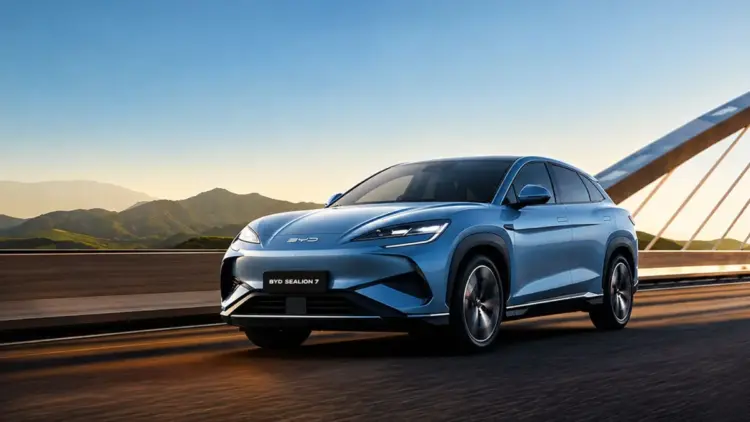
The subsequent 12 to 14 months have seen an aggressive product offensive. The introduction of the Seal—a premium performance sedan—and the Sealion 7—a sport-oriented SUV—coupled with the refresh of the e6 into the eMAX 7, has allowed BYD to cover multiple price points and body styles. This diversification is the primary driver behind the most recent 10,000 deliveries, reflecting a transition from a single-model success story to a comprehensive portfolio-led growth strategy.

Supporting Data: Analyzing the Sales Mix and Technical Prowess
A granular look at the delivery figures reveals that BYD’s success is anchored by two heavy hitters. The BYD Atto 3 remains the cornerstone of the brand’s Indian operations, having surpassed 9,000 individual deliveries. Positioned as a sporty, premium SUV, the Atto 3 has resonated with urban buyers looking for a blend of avant-garde design and practical range (ARAI-tested at 521 km).
The BYD Sealion 7 has emerged as a rapid secondary volume driver, crossing the 5,000-delivery mark in a relatively short window since its launch. Together, these two models account for 14,000 units—or 70%—of the total 20,000-unit milestone. While specific figures for the Seal sedan and the eMAX 7 MPV were not disclosed, their presence in the luxury and family-mover segments respectively has bolstered the brand’s premium image.
Technical Foundations: The Competitive Moat
BYD’s ability to command premium pricing in a price-sensitive market like India stems from its vertical integration. Unlike many competitors who source battery cells and software, BYD’s Indian portfolio is built on three pillars of in-house technology:
- The Blade Battery: Utilizing Lithium Iron Phosphate (LFP) chemistry, the Blade Battery is engineered to pass the rigorous "nail penetration test" without catching fire. Its structural design also allows for higher energy density in a compact form factor.
- Cell-to-Body (CTB) Integration: Found in models like the Seal and Sealion 7, this technology integrates the battery pack into the vehicle’s floor as a structural component. This increases torsional rigidity, improves safety, and lowers the center of gravity for better handling.
- e-Platform 3.0: A dedicated EV architecture that optimizes space and efficiency. Unlike "converted" EVs (ICE vehicles modified to fit batteries), this platform allows for shorter overhangs and a longer wheelbase, maximizing interior cabin space.
Performance and Range Metrics
The Indian portfolio showcases a wide spectrum of performance:
- Sealion 7: The Performance variant utilizes a dual-motor setup to achieve 0–100 km/h in just 4.5 seconds.
- Seal: As the brand’s aerodynamic flagship (0.219 Cd), the Premium variant offers an NEDC-tested range of 650 km, while the Performance variant clocks a 0–100 km/h sprint in a staggering 3.8 seconds.
- eMAX 7: Targeting the multi-row segment, it offers 6 and 7-seater configurations with an NEDC range of up to 530 km in its Superior variant, addressing the "range anxiety" often associated with larger, heavier family vehicles.
Infrastructure and Network Expansion
A critical component of BYD’s 20,000-delivery milestone is its physical footprint. Selling premium EVs requires a high-touch customer experience and a robust after-sales network. Currently, BYD India operates 51 showrooms across 40 cities.

This geographical spread is strategic, moving beyond Tier-1 metros like Delhi, Mumbai, and Bengaluru into emerging EV hubs. By establishing a presence in 40 cities, BYD has mitigated one of the primary barriers to EV adoption: the fear of inadequate service support. While the company has not yet announced a specific target for further showroom additions, the focus remains on deepening the "ownership experience" to maintain high customer satisfaction scores.
Official Responses: A Vision for Sustainable Mobility
Speaking at the milestone event, Shrirang Joshi, Vice President and National Sales Head of BYD India, expressed gratitude to the growing community of "BYD-ers."
"We are grateful to our customers for the trust they have placed in BYD and for being part of our journey in India," Joshi stated. "Reaching 20,000 customer deliveries is an important milestone and reflects the growing acceptance of our products and technology. The ATTO 3 has surpassed 9,000 deliveries, while the SEALION 7 has crossed 5,000 customer deliveries, highlighting the strong response to our electric vehicle portfolio."
Joshi further emphasized the company’s future-looking stance: "As we look ahead, our vision is to reach more customers, strengthen our dealership network and ownership experience, and make advanced and sustainable mobility accessible to a wider audience across India."
Strategic Implications: Denza and the Ultra-Luxury Pivot
The achievement of the 20,000-delivery mark coincides with BYD’s most ambitious move in the Indian market to date: the introduction of Denza. As BYD’s global luxury sub-brand, Denza is positioned to compete with established European luxury marques in the ultra-luxury mobility segment.

With the debut of the Denza Z9 GT (a high-performance shooting brake) and the Denza D9 (a luxury MPV), BYD is signaling that it no longer views itself as merely a mass-market EV player. The move into ultra-luxury serves two purposes:
- Brand Halo Effect: The cutting-edge technology in Denza models trickles down to the perception of the standard BYD range.
- Market Share in High-Margin Segments: As the Indian affluent class seeks sustainable alternatives to traditional luxury cars, Denza provides a high-tech, "clean" alternative that does not compromise on status or comfort.
The Broader Impact on the Indian EV Landscape
BYD’s rapid ascent to 20,000 units carries several implications for the Indian automotive industry:
1. Validation of the Premium EV Segment:
Previously, the Indian EV market was bifurcated between low-cost commuters and ultra-expensive luxury imports. BYD has successfully carved out a "premium-accessible" niche (the ₹30 lakh to ₹60 lakh bracket), proving that there is a significant audience willing to pay for dedicated EV platforms and superior battery tech.
2. Pressure on Domestic Manufacturers:
As BYD scales, domestic giants like Tata Motors and Mahindra & Mahindra face increased pressure to accelerate their "born-EV" programs. While domestic brands currently hold a volume lead in the sub-₹20 lakh segment, BYD’s dominance in the mid-to-high range sets a technological benchmark that competitors must meet.
3. Supply Chain and Local Investment:
While BYD currently operates under various import and assembly structures, reaching the 20,000-unit threshold often serves as a tipping point for global manufacturers to consider deeper localization. Increased volumes could lead to more significant investments in local assembly or component sourcing, aligning with India’s ‘Make in India’ and ‘PLI’ (Production Linked Incentive) ambitions, despite the complex geopolitical landscape.

4. Infrastructure Pull:
Every 10,000 new BYD cars on the road create a proportional demand for high-speed DC charging. BYD’s growth is a catalyst for third-party charging providers to expand their networks, further easing the transition for all EV users across the country.
Conclusion
The delivery of the 20,000th vehicle is more than just a sales statistic for BYD India; it is a proof of concept. It demonstrates that the Indian consumer is ready for sophisticated, high-performance electric mobility when backed by reliable technology and a growing service network.
As the company integrates the Denza brand and continues to expand its 51-showroom network, the focus will shift from "introduction" to "consolidation." With the next 10,000 units likely to arrive even faster than the last, BYD is firmly positioned as a primary architect of India’s electric future. The automotive industry will be watching closely to see how the company navigates the next phase of its Indian odyssey—balancing luxury aspirations with the need for continued volume growth.