
The Indian automotive landscape continues to evolve at a rapid pace, with the mid-size SUV segment—specifically vehicles measuring between 4.2 and 4.5 meters—emerging as the primary engine of growth for the domestic market. In October 2026, this category achieved a significant milestone, recording total sales of 94,940 units. This figure represents a robust year-on-year (YoY) growth of 20.53% compared to the 78,766 units sold in October 2025.
The momentum was not merely confined to annual comparisons; monthly volumes also saw a substantial uptick. Compared to September 2026’s 82,179 units, the segment grew by 15.53% in October. This surge highlights a clear consumer preference shift, as Indian buyers increasingly look beyond the sub-4-meter "compact" SUVs toward the more premium, spacious, and feature-rich offerings in the 4.2m–4.5m bracket.
Main Facts: The Battle for Market Leadership
The narrative of October 2026 is dominated by the narrowing gap between the perennial leader, the Hyundai Creta, and its most formidable challenger, the Maruti Victoris. While Hyundai has long held the crown in this segment, the competitive heat is reaching a boiling point.
Hyundai Creta: Maintaining the Throne
The Hyundai Creta continues to be the benchmark for the segment. In October 2026, the nameplate registered combined sales of 17,955 units. This performance secured an 18.91% market share for the South Korean manufacturer. Despite the onslaught of new competitors, the Creta’s diverse powertrain options—spanning petrol, diesel, and turbo variants—along with its established brand equity, have allowed it to maintain its position as the top-selling model in the category.
Maruti Suzuki’s Aggressive Ascent
The most striking story of the month is the rise of the Maruti Victoris. Selling 16,792 units, the Victoris recorded a YoY growth of 24.42% and a month-on-month (MoM) increase of 28.08%. More importantly, the gap between the Creta and the Victoris has shrunk dramatically. In September, the Creta led by 4,546 units; by the end of October, that lead had been slashed to just 1,163 units.
When looking at Maruti Suzuki’s total footprint in this segment, the numbers are even more imposing. By combining the sales of the Victoris (16,792), the Grand Vitara (11,200), and the newly launched electric eVitara (2,015), Maruti Suzuki’s total contribution to the 4.2m–4.5m SUV segment reached a staggering 30,007 units. This collective volume places Maruti Suzuki as the dominant corporate entity in the mid-size SUV space, even as Hyundai holds the single-model lead.
Chronology: From Festive Slump to October Surge
To understand the October 2026 figures, one must look at the trajectory of the market over the preceding twelve months.

- October 2025: The segment was healthy but relatively stable, with 78,766 units sold. At this time, several next-generation models were still in the testing phase.
- Early 2026: The introduction of new electric variants (EVs) and "lifestyle" SUVs like the Mahindra Thar ROXX began to diversify the segment’s appeal.
- September 2026: The market saw a temporary plateau with 82,179 units. This was attributed to a "wait-and-watch" approach by consumers anticipating festive season offers.
- October 2026: The "Big Bang" month. Total sales surged to nearly 95,000 units. The 15.53% MoM growth suggests that the festive season—traditionally a peak buying period in India—provided the necessary tailwinds to clear inventory and drive new registrations.
Supporting Data: Winners, Losers, and the Recovery of the Underdogs
Beyond the top two players, the data reveals a complex web of market dynamics involving Kia, Toyota, Honda, and the domestic giants, Tata and Mahindra.
Kia Seltos: The Volume Gainer
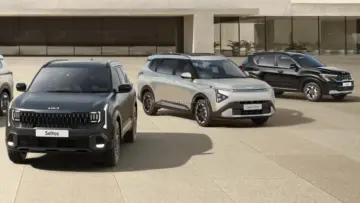
Kia Seltos secured the third position with 13,423 units. This is an 88.26% increase over the 7,130 units sold in October 2025. In terms of sheer volume gain, the Seltos added 6,293 units compared to the previous year—the largest YoY volume jump for any established model in the category. This suggests that Kia’s recent refreshes and feature updates are resonating strongly with the tech-savvy urban demographic.
The Toyota-Maruti Synergy
Toyota’s Urban Cruiser Hyryder maintained its steady performance, finishing in fifth place with 7,797 units. The Hyryder, which shares its platform with the Maruti Grand Vitara, continues to benefit from Toyota’s reputation for reliability and its strong hybrid technology, which remains a popular alternative to full electrification.
The Honda Elevate’s Miraculous Recovery
One of the most noteworthy data points in the October report is the performance of the Honda Elevate. In September 2026, the Elevate had slumped to a low of just 599 units. However, October saw a sharp recovery to 3,673 units—a staggering 513.19% MoM increase. This recovery suggests that Honda successfully addressed supply chain bottlenecks or launched a highly effective tactical marketing campaign to reclaim its eighth-place ranking.
Tata and Mahindra: The Domestic Duel
- Tata Motors: The Tata Sierra (including the Sierra EV) recorded 7,205 units, holding steady from its September performance. Meanwhile, the Tata Curvv and Curvv EV combined for 2,377 units. While the Curvv saw a 65.99% YoY increase, it experienced an 8.93% MoM decline, indicating that the initial launch hype may be stabilizing into a consistent sales baseline.
- Mahindra & Mahindra: The Thar ROXX recorded ,551 units. While this was an 11.44% decline YoY, it was a 16.46% improvement over September. The Mahindra BE 6, part of the brand’s "Born Electric" lineup, registered 1,717 units, showing that Mahindra is beginning to find its footing in the premium EV SUV space.
Official Responses and Industry Sentiment
While specific quotes from company CEOs were not included in the raw data, the sales trends allow us to synthesize the prevailing industry sentiment.
Hyundai India remains focused on "premiumization." Sources close to the company suggest that while the gap with Maruti is narrowing, Hyundai is less concerned with volume leadership and more focused on maintaining high average selling prices (ASPs) through its top-end "Knight Edition" and ADAS-equipped variants.
Maruti Suzuki has clearly pivoted its strategy. Historically known as the king of small cars, Maruti’s aggressive push into the 4.2m–4.5m segment with the Victoris and eVitara signals a long-term commitment to capturing the "aspirational Indian" market. Industry analysts suggest that Maruti’s ability to leverage its massive dealer network is the primary driver behind the Victoris’s 28% MoM growth.

European Manufacturers (Skoda/VW): The data shows a cooling trend for the Skoda Kushaq (1,097 units, -10.01% YoY) and Volkswagen Taigun (939 units, -39.81% YoY). Industry experts believe these brands are facing stiff competition from the feature-heavy Korean and Indian models, necessitating a potential mid-cycle refresh or a pricing realignment to stay relevant.
Implications: Where is the Market Heading?
The October 2026 sales figures provide a roadmap for the future of the Indian automotive industry. Several key implications can be drawn:
1. The Electrification Tipping Point
The inclusion of models like the eVitara, Curvv EV, Sierra EV, and MG ZS EV in the top rankings shows that electrification is no longer a niche experiment. While the MG ZS EV saw a sharp decline to just 43 units (down 92.94% YoY), this is largely interpreted as consumers shifting toward newer, more modern EV architectures like the Tata Curvv or Maruti eVitara. The segment is transitioning from "ICE-first" to a "multi-powertrain" reality.
2. The Decline of the "Small" SUV?
As the 4.2m–4.5m segment grows by 20%, it is likely cannibalizing sales from both the sub-4m compact SUVs and the D-segment SUVs. Consumers are finding that the "mid-size" SUV offers the perfect balance of city maneuverability and highway stability, making it the "sweet spot" of the Indian market.
3. The Return of Legacy Names
The Renault Duster’s appearance with 601 units (up 29.25% MoM) signals a revival for the brand that originally pioneered this segment in India. If Renault can scale production, the Duster could become a significant "dark horse" in 2027.
4. Competitive Volatility
The massive fluctuations seen in models like the Honda Elevate and the VinFast VF6 (which grew 269.93% YoY to 566 units) suggest that brand loyalty is becoming more fluid. Modern consumers are willing to switch brands based on immediate availability, technological features, and safety ratings.
Conclusion
October 2026 has been a landmark month for India’s mid-size SUV segment. With 94,940 units sold, the industry is on track to see this category exceed one million annual units in the near future. While the Hyundai Creta remains the individual leader, the collective might of Maruti Suzuki and the rapid rise of Kia and Mahindra indicate that the battle for the Indian driveway is more intense than ever. As the market heads into the final quarter of the year, all eyes will be on whether the Maruti Victoris can finally unseat the Creta, and whether the surge in EV adoption will continue to reshape the leaderboard.