

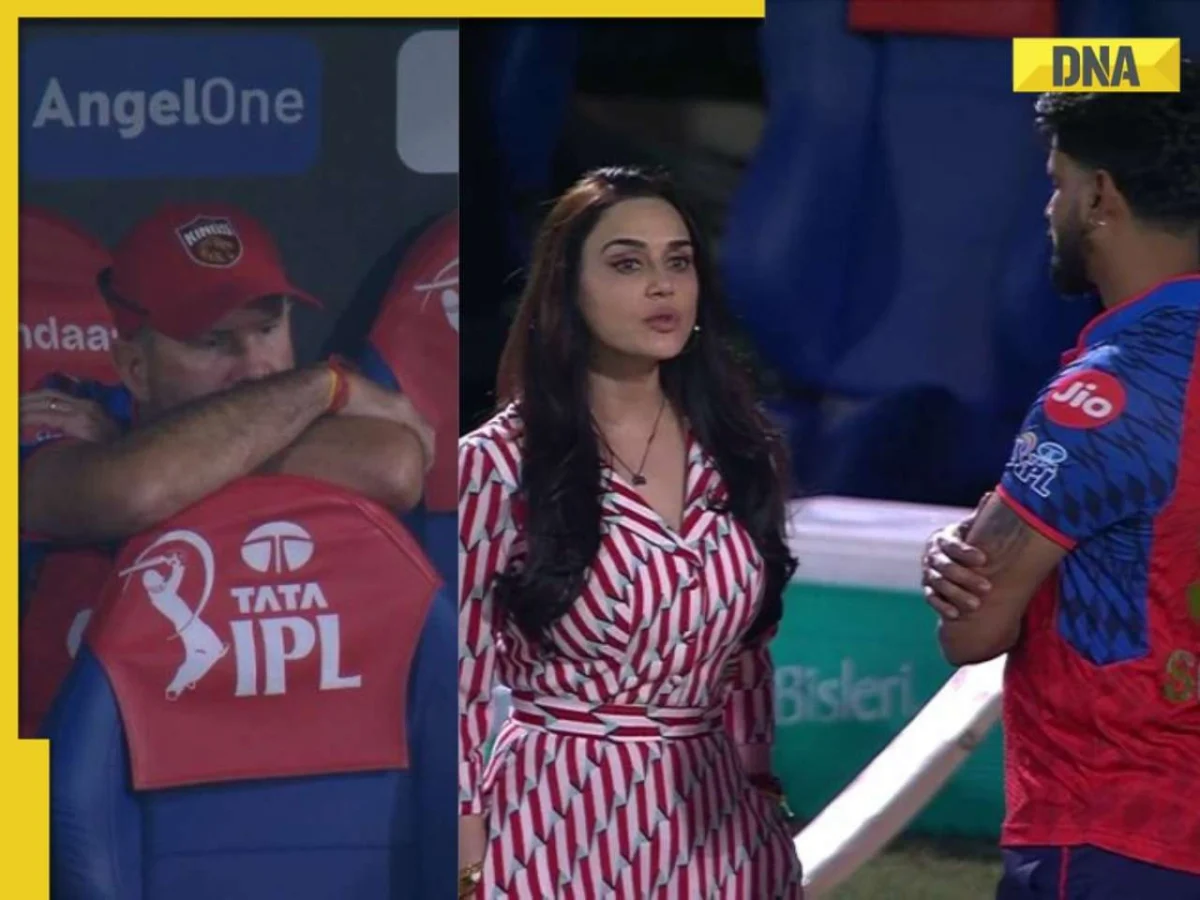
MOHALI, INDIA – May 17, 2026 – The dream of an elusive Indian Premier League (IPL) trophy for the Punjab Kings (PBKS) appears to be slipping further away as the franchise endures a catastrophic collapse, marked by their sixth consecutive defeat. The latest loss against a resurgent Royal Challengers Bengaluru (RCB) has plunged the team into a state of profound dejection, visibly impacting figures from the dugout to the ownership box. Head coach Ricky Ponting, a man synonymous with on-field aggression and tactical brilliance, was captured in a rare moment of quiet despair, his face etched with frustration. Simultaneously, a highly scrutinised interaction between captain Shreyas Iyer and co-owner Preity Zinta underscored the escalating tension and profound disappointment permeating the Punjab Kings camp.
What began as a campaign brimming with promise has devolved into a desperate struggle for survival, leaving PBKS clinging to the slimmest of mathematical possibilities for playoff qualification. The stark contrast with the jubilant RCB, who clinched their playoff berth with a dominant performance, highlighted the diverging fortunes of the two franchises and amplified the growing crisis within the Kings’ ranks.
Main Facts: The Unraveling of a Promising Season
The Punjab Kings are currently mired in a severe crisis, their aspirations for the IPL 2026 playoffs all but extinguished after suffering their sixth consecutive defeat. This latest setback came at the hands of Royal Challengers Bengaluru, a team that has found its rhythm at the critical juncture of the tournament. The loss not only diminished PBKS’s already faint playoff hopes but also exposed deep-seated issues within the squad, both on and off the field.
The emotional toll of this relentless losing streak was palpable. Ricky Ponting, renowned for his fiery demeanor and unwavering intensity, was observed sitting alone in the dugout, his usual animated presence replaced by a somber stillness. His visible dejection served as a powerful symbol of the team’s collective despair and the crushing weight of unfulfilled expectations. This image quickly circulated across social media, resonating with fans who have long yearned for PBKS to break their trophy drought.
)
Adding to the drama, a seemingly tense exchange between captain Shreyas Iyer and co-owner Preity Zinta captured significant attention. Zinta, a constant and passionate presence at PBKS matches, was seen in an animated discussion with Iyer, raising questions about the nature of their conversation amidst the team’s dire situation. This interaction, coming on the heels of such a significant defeat, highlighted the intense pressure on both the leadership and ownership to navigate this unprecedented slump.
While the Punjab Kings grappled with their internal turmoil, the Royal Challengers Bengaluru celebrated a commanding victory that secured their spot in the IPL playoffs. Their clinical performance, led by a dazzling unbeaten 73 from Venkatesh Iyer and a fluent 58 from Virat Kohli, offered a stark reminder of what a cohesive, in-form team can achieve, further accentuating PBKS’s current predicament.

Chronology of Collapse: From Dominance to Despair
The narrative of the Punjab Kings’ IPL 2026 campaign is a tale of two halves, a dramatic pendulum swing from early dominance to a catastrophic late-season collapse. Understanding this chronology is crucial to grasping the depth of their current crisis.
The Promising Start: A Season of High Hopes
The IPL 2026 season began with an aura of renewed optimism for the Punjab Kings. Under the guidance of head coach Ricky Ponting and the captaincy of Shreyas Iyer, the team showcased an impressive display of talent and cohesion in the initial phase. They roared out of the blocks, securing six victories and a tie in their first seven matches. This blistering start positioned them comfortably at the top end of the points table, igniting hopes among their fervent fan base that this, finally, could be their year.
)
The team’s early success was built on a combination of explosive batting, spearheaded by key international and domestic players, and a bowling attack that found ways to pick up crucial wickets. There was a visible synergy within the squad, and the players seemed to be executing their plans with precision and confidence. The atmosphere around the team was vibrant, reflecting the genuine belief that they were on a path to break their long-standing trophy drought. Media pundits and fans alike lauded their aggressive brand of cricket, predicting a deep run into the playoffs, possibly even a maiden championship title.
The Turning Point: Momentum Evaporates
While no single match can be pinpointed as the absolute "turning point," the momentum began to visibly shift after their impressive initial run. Following their seventh game, the team’s performance began to plateau, and then, inexorably, decline. The early season swagger gave way to a creeping uncertainty. Perhaps it was the increased pressure of maintaining their top position, or perhaps opponents began to decipher their strategies, but the Kings started to look less invincible.
)
The initial signs of trouble appeared subtle – a narrow loss here, a dropped catch there, a slight dip in batting form from a crucial player. These isolated incidents, which might have been brushed off during their winning streak, started to accumulate, chipping away at the team’s morale and confidence. The once-dominant fast bowling, a cornerstone of their early success, began to concede runs at critical junctures, particularly in the death overs. The team’s ability to close out tight games, a hallmark of champions, suddenly seemed to desert them.
The Downward Spiral: Six Consecutive Defeats
What followed the initial wobble was an unprecedented and devastating downward spiral: six consecutive defeats. Each loss seemed to compound the previous one, deepening the team’s woes and exposing their vulnerabilities. The nature of these defeats varied, but a pattern emerged:
)
- Batting Collapses: Often, strong starts were squandered in the middle overs, leading to sub-par totals or failing to chase achievable targets. The once-reliable middle order struggled to maintain consistency under pressure.
- Bowling at the Death: This became a glaring Achilles’ heel. Even when bowlers performed well for the majority of the innings, they consistently failed to contain opposition batsmen in the final overs, conceding crucial boundaries and allowing targets to swell or be chased down.
- Fielding Errors: The usually sharp fielding began to show cracks, with misfields and dropped catches costing valuable runs and wickets, further demoralizing the bowling unit.
- Lack of Killer Instinct: The ability to seize critical moments and dominate opponents, evident in their early games, completely vanished. The team often found themselves in winning positions only to let the game slip away in the crucial stages.
The "vibe around the team," as noted in the original article, underwent a profound transformation. The infectious enthusiasm was replaced by an air of despondency. The players, once brimming with confidence, now appeared to be playing under immense pressure, making uncharacteristic errors and struggling to find answers.
The RCB Match: The Final Nail in the Coffin
The latest defeat against Royal Challengers Bengaluru served as a poignant encapsulation of PBKS’s current plight and perhaps the final nail in the coffin for their playoff aspirations. RCB, batting first, unleashed a relentless assault, posting a formidable total of 222 for 4. Venkatesh Iyer was the chief architect, smashing an unbeaten 73 off just 40 balls, displaying a blend of power and precision. He was ably supported by the evergreen Virat Kohli, who continued his stellar form with a fluent 58 off 37 deliveries. Devdutt Padikkal and Tim David then provided the finishing touches with quickfire cameos, ensuring RCB reached an imposing total.
)
In response, Punjab Kings’ chase never truly ignited. Despite a spirited and commendable 56 from Shashank Singh, who offered a glimmer of hope with his aggressive stroke play, the rest of the batting lineup faltered under the weight of the enormous target and the relentless pressure from RCB’s bowlers. The chase fizzled out at 199 for 8, a respectable total in isolation but woefully short of what was required. The innings was a microcosm of PBKS’s recent struggles: flashes of individual brilliance and fighting spirit, but ultimately, a collective failure to sustain momentum and finish the job. The defeat not only gifted RCB a playoff spot but also left the Punjab Kings facing the grim reality of an almost certain early exit from the tournament.
Supporting Data and Analysis: Dissecting the Decline
To truly understand the depth of the Punjab Kings’ collapse, a closer look at the numbers and tactical decisions is imperative. The shift in performance is not just anecdotal; it is starkly reflected in their statistics.
)
Statistical Breakdown of the Slump
Comparing PBKS’s performance in the first half of the season to their current losing streak reveals a dramatic deterioration across key metrics:
- Wins/Losses: From 6 wins and 1 tie in 7 games (a winning percentage of approximately 85.7%) to 6 consecutive losses (0% winning percentage in the current phase). This drastic swing is almost unprecedented in the league’s history for a team that started so strongly.
- Net Run Rate (NRR): While specific NRR figures for each phase aren’t provided, it’s clear that their strong start would have built a healthy NRR, which has now undoubtedly plummeted with each heavy defeat, further complicating any slim playoff qualification scenarios.
- Batting Performance:
- Powerplay: In their initial winning phase, PBKS often capitalized on the powerplay restrictions, posting high scores and setting aggressive tones. During the slump, they have frequently lost early wickets or failed to accelerate, putting pressure on the middle order.
- Middle Overs (7-15): This phase, crucial for consolidating and building, has seen a struggle for boundary hitting and consistent strike rotation, leading to increased dot ball percentages.
- Death Overs (16-20): While capable of explosive hitting, the consistent loss of wickets has often prevented them from maximizing the death overs, leading to lower-than-expected totals.
- Bowling Performance:
- Wicket-Taking Ability: The initial phase saw their bowlers regularly picking up wickets, especially in the powerplay and middle overs. During the slump, the ability to take crucial wickets has diminished, allowing opposition partnerships to flourish.
- Economy Rates: Crucially, their economy rates, particularly for fast bowlers in the death overs, have skyrocketed. This is explicitly mentioned as "the real issue has been their fast bowling," indicating a consistent inability to contain runs when pressure mounts.
- Individual Player Performance during the Slump:
- Shreyas Iyer: While a strong leader, his own batting form may have suffered under the collective pressure, impacting the team’s overall stability. A captain struggling with personal form while the team collapses can be a double blow.
- Fast Bowling Unit: The collective failure of the fast bowlers to close out games or contain runs at the death is a significant statistical anomaly compared to their early season output. This suggests either a dip in form, injury concerns, or a tactical misjudgment.
Tactical Missteps: Questioning the Strategy
The dramatic shift in fortunes also invites scrutiny of the team’s tactical approach and execution.
)
- Coaching Staff Decisions (Ricky Ponting): Ponting’s reputation as a tactical mastermind is formidable, but the sustained slump raises questions about the strategies employed. Were there inflexibilities in game plans? Did the team fail to adapt to opponents’ counter-strategies once they started losing? The visible dejection of Ponting suggests he, too, is grappling with the inability to find a winning formula.
- Captaincy Decisions (Shreyas Iyer): Under immense pressure, Iyer’s on-field decisions would have been magnified. Were bowling changes effective? Was the field placement optimal in critical moments? The constant pressure of chasing games or defending low totals often forces captains into defensive mindsets, which can further exacerbate problems.
- Team Composition and Selection: While the initial team selection appeared robust, the slump might indicate underlying issues with squad depth or specific player roles. Were there key players who were overplayed or underutilized? Did the team miss a crucial all-rounder or a death-overs specialist when it mattered most? The article mentions the fast bowling as an issue, suggesting either a lack of quality, poor form, or perhaps an unsuitable deployment of existing resources.
Psychological Impact: The Unseen Battle
Beyond the statistics and tactics, the psychological toll of a six-match losing streak is immense and often underestimated.
- Loss of Confidence: The "momentum has vanished" and the "vibe around the team has shifted" are direct indicators of a severe erosion of confidence. Players who once played freely now appear tentative, second-guessing their actions.
- Increased Pressure: Each subsequent loss piles on more pressure, creating a vicious cycle. The fear of failure can paralyze players, leading to errors that further perpetuate the losing streak.
- Demoralization: The image of Ricky Ponting sitting dejected is not just about him; it reflects the collective demoralization of the entire squad. When a leader, typically a source of inspiration, appears so visibly affected, it speaks volumes about the team’s emotional state.
- Team Cohesion: While not explicitly stated, a prolonged slump can test the bonds within a team. Tense interactions, like the one between Iyer and Zinta, suggest that the emotional stakes are incredibly high, potentially impacting internal dynamics. What once felt like a united front charging towards a goal has now fractured into a "desperate fight for survival," both individually and collectively.
Official Responses and Reactions: Navigating the Storm
In times of crisis, the reactions and responses from key figures within a franchise offer crucial insights into the internal dynamics and the coping mechanisms employed. The Punjab Kings’ current predicament has elicited a range of emotions and statements, highlighting the complex blend of disappointment, defiance, and enduring hope.
)
Ricky Ponting’s Dejection: A Portrait of Despair
The image of Ricky Ponting, head coach of the Punjab Kings, sitting alone in the dugout, his face a canvas of frustration and disappointment, became one of the defining visuals of their latest defeat. Ponting, a legendary figure known for his aggressive captaincy and animated presence on the boundary line, is rarely seen in such a state of quiet despair. This profound dejection speaks volumes about the emotional weight of the team’s performance.
His body language communicated more than words ever could. It signified the immense pressure he shoulders, not just as a coach, but as a figure entrusted with transforming the fortunes of a perennially underperforming franchise. The hopes that were "sky-high" at the start of the season have now evaporated, replaced by the grim reality of another campaign likely ending in disappointment. Ponting’s visible struggle suggests a deep personal investment in the team’s success and a profound frustration at their inability to convert potential into performance, especially after such a promising start. It is a stark reminder that even the most decorated individuals in sport are not immune to the crushing blow of repeated failure.
)
Shreyas Iyer’s Optimism: A Captain’s Resilience
In stark contrast to the visible dejection of his coach, captain Shreyas Iyer offered a remarkably optimistic and resolute front in his post-match interview. Despite the crushing defeat and the dire playoff scenario, Iyer refused to allow the results to dictate his outlook. He told broadcasters, "I’m always positive irrespective of the results. It doesn’t dictate how my personality is, and I always approach with a strong attitude, and I’m not someone who dwells too much in the past. This is over, this is gone. Tomorrow again, I’m going to see the sunrise and there’s always light at the end of the tunnel."
This statement is a classic example of a leader attempting to project strength and maintain morale amidst adversity. It can be interpreted in several ways:
)
- Genuine Optimism: Iyer might genuinely possess an unwavering positive mindset, a trait crucial for any captain.
- Leadership Facade: It could also be a conscious effort to protect his team from further demoralization, to project an image of resilience and prevent the team from completely capitulating. A captain cannot afford to show despair, even if he feels it internally.
- Refusal to Dwell: His emphasis on not dwelling in the past and looking forward ("Tomorrow again, I’m going to see the sunrise") is a tactical psychological move to encourage his players to move on quickly from the defeat and focus on the remaining games, however slim the chances.
While commendable, the effectiveness of such optimism can be tested by the reality of consistent losses. For a team deep in a slump, words alone often aren’t enough; they need tangible changes and victories to rekindle belief.
Preity Zinta’s Involvement: Owner’s Passion and Pressure
Preity Zinta, co-owner of the Punjab Kings, is renowned for her unwavering passion and consistent presence with the team. She has "stuck with the side all season, traveling and staying involved," embodying the dedication of the franchise ownership. Her animated discussion with Shreyas Iyer after the match drew significant attention, underscoring the high emotional stakes involved.
)
Such an interaction, particularly under these tense circumstances, could encompass several possibilities:
- Concern and Support: Zinta, as an owner, would naturally be deeply concerned about the team’s performance and playoff hopes. Her conversation could have been an expression of support for her captain, urging him to remain strong.
- Strategic Discussion: It might have involved a discussion about the team’s performance, potential strategies for the remaining matches, or even a review of tactical decisions. Owners, especially those as involved as Zinta, often seek direct feedback and input from their leadership.
- Expression of Disappointment: While likely professional, there would undoubtedly be an underlying current of disappointment from the owner’s perspective, reflecting the millions invested and the dreams tied to the team’s success. The pressure on ownership to deliver results is immense, and such conversations are a natural outlet for that pressure.
The sight of an owner engaging in such a visible and animated discussion with the captain post-match is rare and speaks volumes about the depth of the crisis and the collective effort to find answers, even if they remain elusive.
)
Fan and Media Reactions: A Chorus of Disappointment
Beyond the internal reactions, the broader cricketing world has responded with a mix of disappointment, frustration, and a sense of déjà vu. Fans, who had dared to hope after the Kings’ strong start, are now expressing their anguish on social media, questioning player performances, coaching strategies, and the team’s perennial inability to sustain momentum. Hashtags and memes reflecting their despair have become common. Media outlets, too, have begun to dissect the collapse, with analytical pieces scrutinizing every aspect of the team’s performance, from individual player form to management decisions. The consensus is a blend of sympathy for the players’ visible struggle and a critical assessment of how a team with so much potential has once again found itself at the bottom of the heap.
Implications and Future: The Long Road Ahead
The Punjab Kings’ catastrophic mid-season collapse carries significant implications, not only for the remainder of their IPL 2026 campaign but also for the long-term trajectory of the franchise. The dream of lifting the IPL trophy, which has eluded them for so long, appears more distant than ever, triggering difficult questions about accountability, strategy, and the very foundation of the team.
)
Playoff Scenarios: A Slim, Mathematical Hope
Following their sixth consecutive defeat, the Punjab Kings’ playoff hopes are now hanging by the thinnest of threads, requiring a confluence of improbable events. The original article correctly states they are "clinging to the slimmest chance, needing a win in every match and still relying on other teams to slip up just to stay in contention." This means:
- Winning All Remaining Matches: This is the absolute prerequisite. Even one more loss would definitively eliminate them. Given their current form, winning every match is a monumental task.
- Net Run Rate (NRR) Improvement: Even if they win all remaining games, their NRR would likely be severely impacted by their previous losses. They would need not just wins, but dominant wins, to significantly boost their NRR and potentially edge out other teams on that tie-breaker.
- Reliance on Other Teams’ Failures: Crucially, they need several other teams currently above them in the points table to lose their remaining matches comprehensively. This involves specific teams like Rajasthan Royals, Sunrisers Hyderabad, and Chennai Super Kings (or whoever is in contention) to falter dramatically.
The mathematical possibility, while technically present, is akin to finding a needle in a haystack. The psychological burden of such a scenario often proves too heavy for teams already struggling with confidence.
)
The Weight of Expectations: A Familiar Narrative
For the Punjab Kings, this season’s unraveling feels like a familiar, painful narrative. Historically, the franchise has often started well, showcasing glimpses of brilliance, only to falter in the crucial latter stages of the tournament. This pattern has created a unique "weight of expectations" on the team – not just to perform, but to finally break free from this historical trend of underachievement. "It’s been another season where expectations were sky-high," the article notes, perfectly capturing this recurring theme. The constant anticipation, followed by repeated disappointment, creates a cycle that can be incredibly difficult to break, affecting fan morale, player confidence, and ultimately, the franchise’s brand.
Potential Changes and Repercussions: A Looming Overhaul
The magnitude of this collapse will undoubtedly lead to serious introspection and potentially significant changes within the Punjab Kings franchise ahead of the next IPL season.
)
- Coaching Staff: Ricky Ponting’s position as head coach will inevitably come under scrutiny. While his pedigree is unquestionable, the team’s inability to maintain momentum and their dramatic slump will force the management to evaluate whether a change in leadership is needed to inject fresh tactical perspectives and renewed energy.
- Captaincy: Shreyas Iyer’s leadership, despite his optimistic post-match comments, will also be reviewed. While he leads from the front, the team’s consistent inability to close out games and the visible breakdown of collective performance will raise questions about his effectiveness in galvanizing the squad during prolonged adversity.
- Player Retention and Auctions: The upcoming mega-auction (if scheduled for the next season) or even mini-auction will see a major overhaul of the squad. Key players who underperformed during the slump, or those deemed to not fit the long-term vision, might be released. The franchise will need to critically assess its core group and identify players who can consistently perform under pressure. The issues highlighted with fast bowling and batting consistency suggest targeted recruitment will be a priority.
- Franchise Vision: Beyond personnel, the entire strategic vision of the franchise might be re-evaluated. This could involve changes in scouting, player development, and the overall team culture to foster a more resilient and consistent performance ethic.
The Road Ahead: An Uphill Battle
The immediate future for the Punjab Kings is an uphill battle. They must somehow find the motivation and mental fortitude to perform in their remaining matches, not just for the faint playoff hope, but for pride and to end the season on a less disheartening note. Beyond this season, the task is even greater: to analyze what went wrong, make tough decisions, and rebuild a squad capable of sustained success. The "light at the end of the tunnel" that Shreyas Iyer spoke of will require not just optimism, but a fundamental shift in approach and execution to transform the Punjab Kings into the championship contender their fans so desperately crave. The journey from dejection to resurgence will be long and arduous, but for a franchise steeped in passion, it is a challenge they must now confront head-on.
