

The Indian automotive landscape has undergone a seismic shift over the last decade. Where the "budget hatchback" segment was once defined solely by fuel economy and basic utility, modern consumers now demand a sophisticated blend of aesthetics, high-end technology, and uncompromising safety. Standing at the forefront of this transformation is the Tata Tiago. Since its inception, the Tiago has been a pivotal product for Tata Motors, and its latest iteration signals a move toward a more mature, premium presence that challenges the traditional boundaries of the A-segment.
The updated Tiago range—spanning Petrol, iCNG, and Electric (EV) powertrains—represents more than just a seasonal facelift. It is a strategic realignment designed to offer a "segment-above" experience. By integrating features previously reserved for luxury sedans and SUVs, Tata Motors is attempting to prove that small cars no longer need to feel small.
Main Facts: A Triple-Threat Strategy
The core of the Tiago’s current market strategy lies in its "Power of Choice" philosophy. Unlike many of its competitors who have abandoned diesel or shied away from the complexities of multi-fuel platforms, Tata has doubled down on versatility.
1. The Multi-Powertrain Approach
The Tiago is one of the few vehicles in the Indian market available in three distinct avatars:
- The Revotron Petrol: A refined 1.2-litre engine catering to the traditional urban commuter.
- The iCNG: A pioneer in the segment featuring "Twin-Cylinder" technology that preserves luggage space—a historical pain point for CNG owners.
- The Tiago.ev: An accessible entry point into the world of electric mobility, offering two battery configurations to suit different range requirements.
2. Premium Features as Standard
The latest update introduces several segment-first features. Most notably, the inclusion of a 360-degree High-Definition Surround View Camera and a Blind View Monitor marks a significant leap in urban driving assistance. Furthermore, the standardization of six airbags across the entire lineup underscores a shift in the brand’s "Safety First" mandate.

3. Aesthetic Maturity
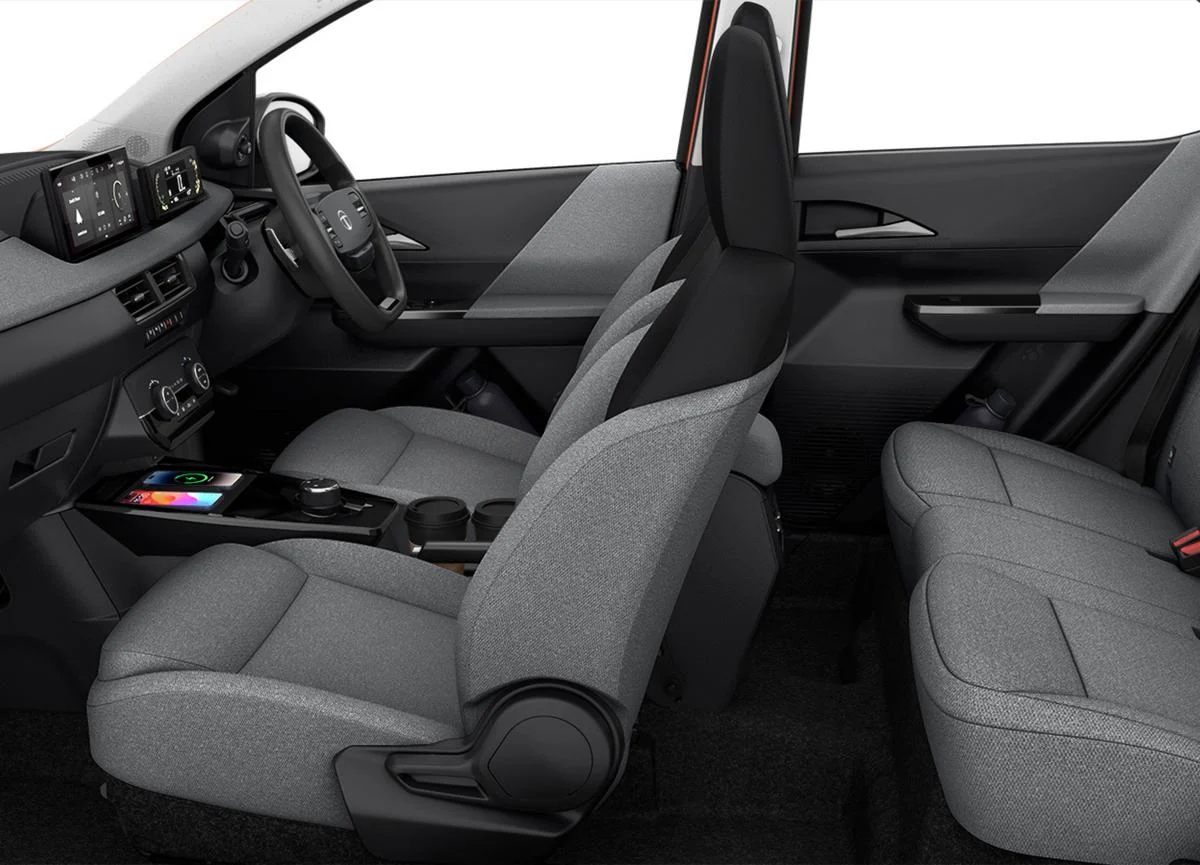
The design language has evolved from "youthful and peppy" to "sharp and sophisticated." Key additions include Lux Beam LED headlamps, the signature "Halo" Lightbar tail lamps, and the "Fabricia Luxe" interior treatment, which elevates the cabin’s perceived quality.
Chronology of Evolution: From 2016 to the Present
To understand the significance of the current Tiago, one must look at its trajectory. Launched in 2016, the Tiago was the first product to showcase Tata’s "Impact Design" language. It was tasked with the monumental job of reviving Tata’s reputation in the passenger vehicle segment.
- 2016–2018: The Tiago established itself as a sturdy, well-built alternative to the segment leaders. It gained a reputation for having a "big car" feel in a compact footprint.
- 2020: The transition to BS6 norms saw the Tiago receive a significant facelift, aligning its front fascia with the Altroz and Nexons of the time. This era also saw the introduction of a 4-star Global NCAP safety rating, a first for the segment.
- 2022–2023: Tata introduced the iCNG with industry-first features like direct-start in CNG mode and the revolutionary twin-cylinder tanks. Shortly after, the Tiago.ev was launched, democratizing EVs for the Indian masses.
- 2024–Current: The latest update focuses on "Luxe" and "Tech." By adding HD touchscreens, 360-degree cameras, and premium interior textures, the Tiago has moved from being a "value-for-money" choice to an "aspirational" choice.
Supporting Data and Technical Specifications
The Tiago’s appeal is backed by robust engineering data that caters to three very different types of drivers.
The Internal Combustion Engine (ICE) Performance
The 1.2-litre Revotron petrol engine remains the heart of the range.
- Output: 86 PS of power and 113 Nm of torque.
- Transmission: Available in 5-speed Manual and 5-speed AMT (Automated Manual Transmission).
- CNG Variation: In CNG mode, the output adjusts to 73.5 PS and 95 Nm. However, the use of a powerful ECU allows the car to climb inclines in CNG mode without the "lag" typically associated with aftermarket kits.
The Electric Performance (Tiago.ev)
The EV variant utilizes the Ziptron architecture, which is a permanent magnet synchronous motor.

- Battery Options: 19.2 kWh (Medium Range) and 24 kWh (Long Range).
- Performance: The 24 kWh version delivers 114 Nm of instant torque, enabling a 0-60 km/h sprint in just 5.7 seconds.
- Real-World Range: While ARAI figures are higher, real-world testing suggests 160–170 km for the smaller pack and 205–215 km for the larger pack, making it ideal for the 40-50 km daily urban commute.
- Charging: DC fast charging can add 100 km of range in 18 minutes, addressing "range anxiety" for occasional inter-city trips.
Dimensions and Utility
Despite the premium additions, the Tiago retains its "easy-to-live-with" dimensions:
- Length: ~3.7 meters (ideal for tight Bengaluru or Mumbai parking).
- Boot Space (CNG): Thanks to the twin-cylinder layout, the Tiago iCNG offers a usable luggage area, a feat previously thought impossible in this segment.
Official Context: Tata’s Philosophy on Safety and Tech
While specific executive quotes vary by launch event, Tata Motors’ corporate strategy for the Tiago reflects a broader industry response to "Premiumization." The brand’s official stance emphasizes that safety should not be a luxury.
Democratizing Safety
By making six airbags standard, Tata is responding to both upcoming government regulations and a shift in consumer sentiment. The inclusion of the Electronic Stability Program (ESP) and Hill Hold Control across the range indicates an "Official Response" to the rising demand for active safety features in entry-level cars.
The Digital Island Concept
Tata’s interior design team has officially transitioned to the "Digital Island" cluster concept. This involves grouping the 26.03 cm HD touchscreen and the digital instrument cluster into a cohesive visual unit. This design choice is intended to reduce driver distraction while providing a high-tech "cockpit" feel that mirrors the interiors of the Safari or Harrier.
The Driving Experience: A Comparative Analysis
Urban Nimbleness vs. Highway Stability
The Tiago has always been praised for its suspension tuning. On the broken surfaces of Indian metros, the hatchback "punches above its weight." The dampers are tuned to absorb expansion joints and potholes without sending a jarring thud into the cabin.

In the Petrol variant, the steering is light, making it effortless to weave through traffic. The EV variant, however, offers a different sensation. The low center of gravity—due to the floor-mounted battery pack—makes the Tiago.ev feel more planted around corners compared to its ICE siblings.
The CNG Breakthrough
Historically, CNG cars were viewed as "compromised" vehicles—slow and lacking space. The Tiago iCNG refutes this. The "Twin-Cylinder" technology is a masterclass in packaging. By using two smaller tanks instead of one large one, the floor of the boot remains flat. Furthermore, the AMT option in the CNG variant is a segment-first, catering to the driver who wants maximum economy without the fatigue of a manual clutch in stop-and-go traffic.
Implications: Setting a New Benchmark for the Indian Market
The evolution of the Tiago has significant implications for the Indian automotive sector and its competitors (such as the Maruti Suzuki Celerio and the Hyundai Grand i10 Nios).
1. The End of the "Basic" Hatchback
The Tiago’s feature list—wireless charging, 360-degree cameras, and premium upholstery—suggests that the era of the "basic" hatchback is over. Competitors will now be forced to upgrade their technology suites to remain relevant.
2. The Acceleration of EV Adoption
By offering the Tiago.ev with a price range that overlaps with mid-to-high-spec petrol cars, Tata is lowering the barrier to entry for electric vehicles. As charging infrastructure grows, the Tiago.ev acts as a "gateway car" that familiarizes the Indian public with electric propulsion.

3. Safety as a Competitive Edge
Tata’s insistence on high safety standards (IP67-rated batteries for the EV and 6 airbags for the ICE) has shifted the conversation from "Mileage" to "Protection." This shift is likely to influence insurance premiums and resale values in the long term, as safety-conscious buyers enter the used car market.
4. Economic Versatility
With a price range of INR 4.69 lakh to 8.55 lakh, the Tiago covers a massive economic spectrum. It appeals to the first-time buyer on a budget, the environmentally conscious urbanite, and the cost-sensitive commuter alike.
Verdict: A Mature Contender
The new Tata Tiago range is a testament to how much a vehicle can evolve within a single generation. It has transitioned from a budget-friendly newcomer to a sophisticated, multi-faceted range that refuses to be pigeonholed. Whether it is the eager response of the Tiago.ev, the practicality of the twin-cylinder iCNG, or the refined simplicity of the Revotron petrol, the Tiago proves that "small" is no longer a synonym for "less."
In a market that is increasingly leaning toward SUVs, the Tiago makes a compelling case for the hatchback. It offers the tech, the safety, and the "presence" of a larger car, while retaining the agility and efficiency that Indian cities demand. For the modern Indian consumer, the choice is no longer about what they must settle for, but rather which version of excellence they prefer to drive.
