

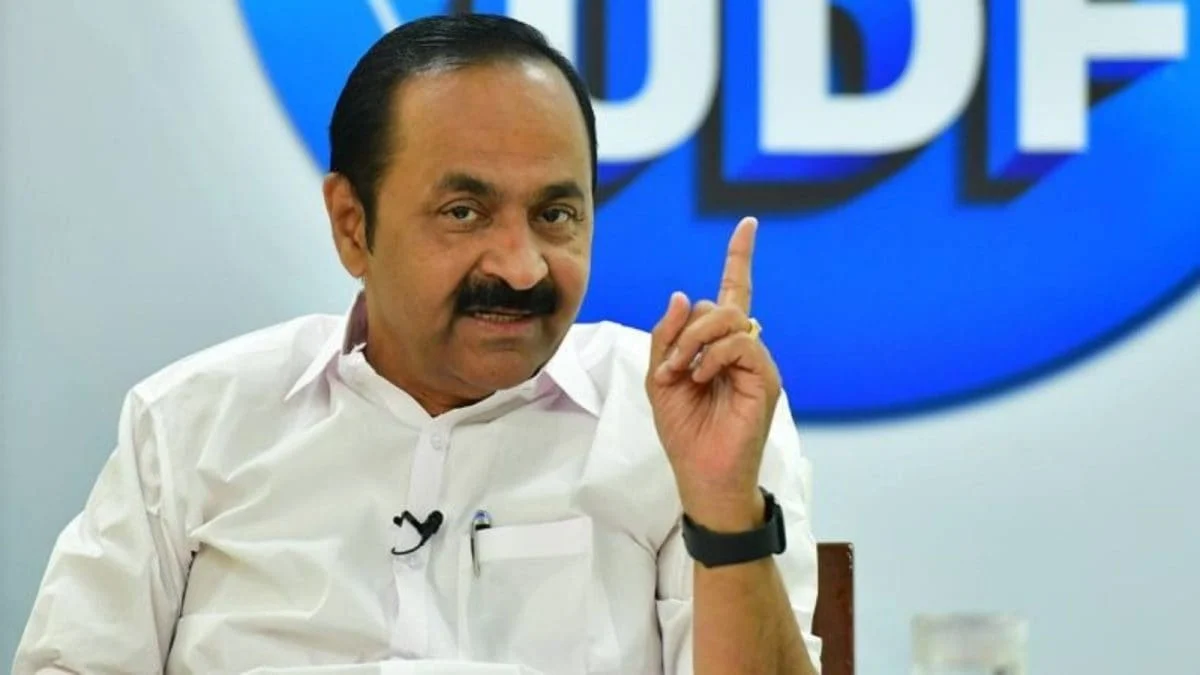
New Delhi, India – In a political drama that captivated Kerala and the national Congress high command, the gavel has finally fallen, naming VD Satheesan as the state’s next Chief Minister. The decision, a culmination of intense internal deliberations and a nail-biting leadership tussle, was announced on May 14, 2026, marking a new chapter for the United Democratic Front (UDF) in the southern state. While celebrations are undoubtedly echoing across Kerala, Satheesan’s ascension to the top post is not merely a triumph but the beginning of an arduous journey through a minefield of political, communal, and institutional challenges that threaten to define or derail his tenure.
Satheesan inherits not just a mandate from the electorate but a complex web of expectations, deep-seated factionalism, and a state grappling with a severe fiscal crisis. The overarching question looming over his administration is whether he can successfully navigate these formidable obstacles, survive a wounded Left opposition and a resurgent Bharatiya Janata Party (BJP), and ultimately pass the crucial 2029 Lok Sabha litmus test.
Last Updated: May 14, 2026, 16:19
First Published: May 14, 2026, 15:40
Main Facts: A Path Paved with Peril
VD Satheesan, a seasoned legislator, steps into the Chief Minister’s office without prior ministerial experience, a unique situation for a leader tasked with steering a politically vibrant and socially complex state like Kerala. His appointment comes after a hard-fought internal battle within the Congress, where he reportedly garnered less support from MLAs than his rival, KC Venugopal. This internal division, coupled with external pressures, sets a challenging precedent for his governance.
His immediate challenges are multifaceted:
- The Communal Conundrum: Allegations of an alliance with the controversial Jamaat-e-Islami.
- Balancing Act: Managing the demands of key UDF ally, the Indian Union Muslim League (IUML), while appeasing alienated Hindu community organizations like the Nair Service Society (NSS) and Sree Narayana Dharma Paripalana Yogam (SNDP).
- Internal Dissent: Taming the powerful factions within the Congress party and asserting his authority.
- Electoral Pressure: Delivering a strong performance in the 2029 Lok Sabha elections, replicating the UDF’s 2024 success.
- Economic Crisis: Tackling a staggering state debt, potential foreign remittance shocks, and industrial stagnation amidst anticipated protests from the Left.
- Personal Scrutiny: Facing an ongoing Vigilance probe related to irregularities in the Punarjani project.
These six trials represent a formidable gauntlet that will test Satheesan’s political acumen, leadership skills, and ability to forge consensus in a deeply polarized environment.
Chronology of Key Events Shaping Satheesan’s Ascendancy
Satheesan’s journey to the Chief Minister’s chair and the challenges awaiting him are rooted in a series of recent events and long-standing political dynamics:
- 2018 Kerala Floods: The devastating floods led to the launch of the Punarjani project in Satheesan’s Paravur constituency, which is now at the center of a Vigilance probe.
- February 2026: Satheesan openly defended Jamaat-e-Islami against accusations of being "communal" by former law minister AK Balan, drawing significant media attention and criticism.
- January 2026: Shaikh Muhammed Karakunnu, a supreme leader of Jamaat-e-Islami in Kerala, controversially called for the establishment of an Islamic Republic, further fueling debates around the organization’s ideology. Concurrently, the Pinarayi Vijayan-led government recommended a CBI probe into the Punarjani project.
- 2024 Lok Sabha Elections: The UDF achieved a sweeping victory in Kerala, securing an impressive 18 out of 20 parliamentary seats, setting a high bar for Satheesan’s administration in the upcoming 2029 elections.
- May 2026: Intense internal lobbying within the Congress culminates in Satheesan being chosen as Chief Minister, despite reports that a majority of MLAs favored KC Venugopal. The IUML vociferously backed Satheesan, while NSS General Secretary Sukumaran Nair publicly criticized the Congress for allowing "disproportionate influence" to the League in the selection process.
These events provide crucial context for understanding the deep-seated issues Satheesan must address.
Trial 1: The Communal Conundrum – Jamaat-e-Islami’s Shadow
Satheesan’s political ascent has been consistently shadowed by allegations of a tactical understanding, if not an outright deal, with the Jamaat-e-Islami, a socio-religious organization often viewed with suspicion across the political spectrum in Kerala. Unlike many political leaders who would distance themselves from such a controversial group, Satheesan has not shied away from openly accepting their support, going as far as to issue a "secular certificate" in their defense. This stance was prominently highlighted in February 2026, when he publicly rebuked former law minister AK Balan for labeling Jamaat "communal."
The implications of this association are profound. Jamaat-e-Islami, whose supreme leader in Kerala, Shaikh Muhammed Karakunnu, even advocated for an Islamic Republic as recently as January 2026, represents a conservative, often Islamist, strand of thought. Engaging in a "dangerous tactical dance" with such a group, as critics have described it, presents Satheesan with a formidable challenge to his secular credentials. While this alignment may have helped consolidate Muslim votes for the UDF in certain pockets, it simultaneously risks alienating other crucial demographics.
Satheesan now faces the unenviable task of balancing this perceived relationship with Jamaat-e-Islami against the expectations of Samastha, the supreme Sunni body in Kerala, which also lent him implicit support but often stands in ideological opposition to Jamaat. Furthermore, the rising influence of Muslim community organizations, particularly those with a conservative bent, is viewed with alarm by a significant section of Hindu voters. Simultaneously, moderate and reformist Muslim voices within the state are also wary of Jamaat’s growing sway. Satheesan’s inability to deftly manage this delicate equilibrium could lead to a significant erosion of trust and a deepening of communal fissures, undermining the social fabric of the state.
Trial 2: Navigating the Coalition – IUML’s Influence and Hindu Discontent
The Indian Union Muslim League (IUML) emerged as Satheesan’s most vocal champion during the Chief Ministerial selection process, playing a pivotal role in securing his position. The League’s consistent ability to deliver crucial victories for the Congress in seats where the latter lacks a robust organizational presence grants them significant leverage within the UDF. As expected, the IUML is now poised to demand its "pound of flesh," with whispers already turning into growing calls for key ministerial portfolios, including the powerful Deputy Chief Minister and Education Ministry. This is not merely about political appointments but about shaping policy and asserting community influence within the government.
However, this reliance on the IUML comes with a significant political cost. Satheesan has, in the past, demonstrated an unequivocal refusal to pander to the egos of prominent Hindu community organizations such as the Nair Service Society (NSS) and the Sree Narayana Dharma Paripalana Yogam (SNDP). Their palpable chagrin at his selection, evident in the 11th-hour criticism from NSS General Secretary Sukumaran Nair, who slammed Congress for "allowing the League a disproportionate influence in CM selection," highlights a brewing storm.
Satheesan, himself a Nair, faces the risk of a dramatic realignment of social coalitions that could permanently erode the UDF’s traditional Hindu vote bank. If the NSS and SNDP feel betrayed or perceive Satheesan as capitulating to the IUML’s demands, it could trigger a massive exodus of Hindu voters towards the BJP. With the Left Democratic Front (LDF) currently seen as a spent force, these powerful community organizations, traditionally kingmakers in Kerala politics, might increasingly look to the BJP, the party in power at the Centre, to assert their say in state affairs. This would not only weaken the UDF but also provide the BJP with the social capital it desperately needs to establish a stronger foothold in Kerala.
Trial 3: The Internal Battleground – Taming Congress Factions
The Congress party is infamous for its deep-seated factionalism, and Kerala is no exception. Reports indicated that a substantial 46 out of 63 Congress MLAs had backed KC Venugopal for the top post, leaving Satheesan to inherit a legislature party where a significant number of members did not initially support his leadership. The powerful factions led by Venugopal and veteran leader Ramesh Chennithala are unlikely to recede into the background. Historically, internal dissent and leadership crises have plagued Congress governments, often leading to policy paralysis and constant "backstabbing."
Satheesan’s primary challenge will be to ensure the unwavering loyalty of a solid majority of legislators. Failure to do so would leave him isolated within his own party, rendering him a "lame duck" Chief Minister. Such a scenario would force him to rely heavily on coalition partners to prop up his government, further eroding his authority and making it difficult to implement his vision or policy initiatives. The constant threat of rival factions undermining his public standing and policy decisions at every turn could consume valuable administrative energy, distracting the government from critical governance issues. Establishing a unified front and building trust across these entrenched camps will be crucial for the stability and effectiveness of his administration.
Trial 4: The Electoral Crucible – The 2029 Lok Sabha Mandate
As the Leader of Opposition, VD Satheesan’s primary mandate was to dismantle the Pinarayi Vijayan government, a task in which he enjoyed the implicit trust and support of the party machinery. However, the recent leadership tussle exposed cracks within the ranks, with even the Kerala Pradesh Congress Committee (KPCC) president, Sunny Joseph, reportedly throwing his weight behind Venugopal, deviating from the traditional role of a neutral referee.
Satheesan now inherits a party organization that may not be entirely in sync with his leadership, a recipe for administrative and organizational paralysis. He must ensure that rival factions, even if outwardly supportive, do not covertly undermine his policy initiatives and public standing, especially as the next major electoral test approaches.
The 2029 Lok Sabha election will serve as the monumental litmus test for Satheesan’s leadership. In 2024, the UDF achieved a spectacular victory, securing 18 out of 20 parliamentary seats in Kerala. With Satheesan now at the helm as Chief Minister, expectations for a repeat performance are astronomically high. Anything less than a resounding victory in 2029 will be immediately weaponized by his detractors, both within and outside the party. Such an outcome could trigger growing calls for him to step down halfway through his term, jeopardizing his political future and the stability of the UDF government. His ability to galvanize the party, reconcile factions, and translate governance into electoral success will be the ultimate measure of his tenure.
Trial 5: Economic Tempest – Debt, Remittances, and Industrial Revival
Perhaps the most immediate and daunting task for Chief Minister Satheesan is to rescue Kerala from a severe fiscal abyss. He inherits a state treasury nearing a staggering Rs 4.5 lakh crore in debt, a consequence of what critics describe as five years of "Left misrule." The previous LDF administration’s KIIFB (Kerala Infrastructure Investment Fund Board)-led development model has been heavily criticized for bypassing traditional budgetary scrutiny and pushing the state deeper into a debt trap. Now, the bill for this ambitious yet financially precarious model will come due, and Satheesan is left holding it.
Adding to this domestic economic quagmire is a looming global crisis. Experts have forecast a potential 20 percent drop in foreign remittances, a lifeline for Kerala’s economy, heavily dependent on its vast diaspora, particularly in West Asia. The ongoing conflict in the region compounds this problem, threatening to undermine consumption and the real estate sector, which are key growth drivers for the state. This "remittance shock" could have cascading effects, impacting household incomes, local businesses, and overall economic stability.
Furthermore, Kerala’s industrial sector has long demanded radical policy reforms and a firm crackdown on militant unionism, which has historically deterred investment and stifled growth. An out-of-power Left, true to its historical character, has already signaled its intent to usher in an "era of protests." Every significant economic reform, every attempt to attract investment or streamline industrial processes, is almost guaranteed to face fierce opposition and disruption from Left cadre, making the path to economic recovery exceedingly difficult.
Lacking an adept and experienced minister of finance, such as the late KM Mani, the burden of choosing the right economic path, balancing fiscal prudence with the UDF manifesto’s "Indira promises" (like free bus travel for women and a minimum income scheme), will be Satheesan’s greatest cross to bear. Delivering on populist promises while simultaneously stabilizing the state’s finances and fostering industrial growth requires a delicate touch and robust economic stewardship.
Trial 6: The Unsettling Past – The Punarjani Probe
Unlike many of his contemporaries who arrive at the Chief Minister’s office with a track record of ministerial experience, VD Satheesan enters without such a credential. This lack of prior executive experience, while not insurmountable, makes him particularly vulnerable to scrutiny, especially regarding an ongoing probe that threatens to overshadow his administration.
The "Punarjani" project, launched in his home constituency of Paravur following the devastating 2018 Kerala floods, is at the heart of this controversy. A Vigilance probe initiated under the previous Pinarayi Vijayan government recommended a CBI inquiry in January 2026, alleging significant violations of the Foreign Contribution (Regulation) Act (FCRA). The allegations center on funding reportedly received from a British Muslim Charity by the Manappattu Foundation, the Corporate Social Responsibility (CSR) arm of a corporate entity owned by one Ameer Ahamed.
The specter of this probe, with its implications of financial irregularities and potential breaches of foreign funding regulations, will undoubtedly be a potent weapon in the Opposition’s arsenal. The constant threat of central agencies—the CBI being a prime example—knocking on his door could hang like a Damocles sword over Satheesan’s head throughout his tenure. This not only poses a direct threat to his personal integrity but also risks diverting administrative focus, undermining public confidence, and providing ammunition for political attacks, making it challenging for him to establish a credible and transparent government.
Implications: A Defining Moment for Kerala and Congress
The six trials awaiting VD Satheesan are not merely personal challenges; they carry profound implications for the future of Kerala and the broader trajectory of the Congress party. His ability to navigate the complex communal landscape will dictate the social harmony and political stability of a state known for its unique pluralism. How he manages the demands of allies and the discontent of alienated communities will redefine the UDF’s social base and potentially open new avenues for the BJP in a state where they have traditionally struggled.
Internally, his success in taming Congress’s entrenched factions will be a bellwether for the party’s capacity for cohesive governance, a quality often questioned at the national level. Economically, his administration’s response to the fiscal crisis, global headwinds, and industrial demands will shape Kerala’s developmental path for years to come. Finally, his handling of the Punarjani probe will be a critical test of his commitment to transparency and accountability.
As the 2026 mandate finally translates into the daily grind of governance, VD Satheesan stands at a pivotal juncture. The path ahead is undeniably thorny, laden with political traps, economic pitfalls, and social fault lines. The question is not just whether he will survive these trials, but whether he will emerge as a resilient leader capable of uniting a fractured party, balancing diverse community interests, and steering Kerala towards prosperity, thereby defining his legacy and potentially rejuvenating the Congress in the south.
