

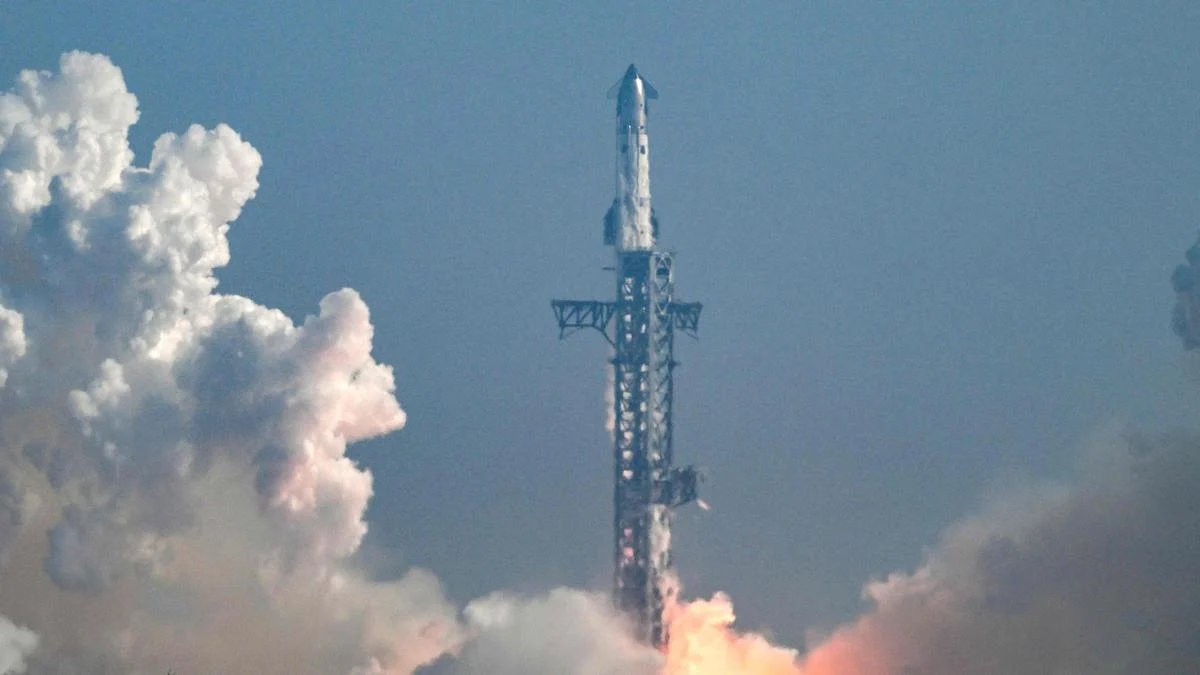
BOCA CHICA, TEXAS – May 23, 2026 – In a spectacle of raw power and technological ambition, SpaceX successfully launched its most formidable Starship iteration to date, the Starship 39, from its Starbase facility at the southern tip of Texas. This twelfth test flight, conducted on Friday, May 22, 2026, marks a pivotal moment in humanity’s renewed quest for lunar exploration and future interplanetary travel, with NASA heavily relying on this redesigned mega-rocket to ferry astronauts to the Moon.
The launch, visible from South Padre Island, sent the towering 124-meter vehicle roaring skyward, carrying 20 mock Starlink satellites destined for deployment halfway around the world. This demonstration of enhanced capability comes just two days after SpaceX CEO Elon Musk made the momentous announcement that he plans to take the private aerospace company public, a move poised to reshape the financial landscape of the burgeoning space industry.
This latest success is a critical step in the iterative development of Starship, a vehicle Musk envisions as the primary means to establish human settlements on Mars. However, its immediate and most pressing mission lies closer to home: serving as the human landing system for NASA’s ambitious Artemis program, which aims to return astronauts to the lunar surface for the first time in over half a century.
The Dawn of Starship V3: A Leap Forward in Design and Power
The launch of Starship 39 represents a significant generational leap in SpaceX’s rapidly evolving rocket development program. Dubbed "V3," this third-generation Starship is not merely an incremental upgrade but a comprehensively souped-up version, boasting enhanced capabilities and a robust new launch infrastructure. It blasted off from a brand-new launch pad at Starbase, a site that has become synonymous with the relentless pursuit of space exploration frontiers. The successful liftoff came after a slight delay, as last-minute pad issues had thwarted a launch attempt on Thursday evening, underscoring the complex and often challenging nature of pushing the boundaries of rocket science.
SpaceX, under Musk’s visionary leadership, has adopted an aggressive, rapid-prototyping approach to Starship’s development. This methodology, characterized by frequent test flights and immediate incorporation of lessons learned, stands in stark contrast to traditional aerospace development cycles. While this approach has accelerated progress, it has also led to a series of spectacular, albeit planned, "fireworks" and "midair explosions" during earlier test flights. Recalling the dramatic incidents of last year, where previous Starship iterations ended their flights in fiery detonations, raining wreckage down on the Atlantic, the company was undoubtedly hoping for a smoother trajectory this time. Indeed, the successful ascent of Starship 39 represents a testament to the engineers’ ability to refine and reinforce the colossal vehicle.
The last of the older, space-skimming Starships had lifted off in October, paving the way for the debut of this more advanced model. The V3’s increased height of 124 meters, several feet taller than its predecessors, is indicative of its expanded fuel capacity and payload volume. This added stature is complemented by a substantial boost in engine thrust, though specific figures for the V3’s enhanced Raptor engines were not immediately disclosed, the sheer power was evident in its thunderous climb.
Technical Prowess: Innovations Underpinning Starship 39
The Starship V3 incorporates a multitude of engineering enhancements designed to improve performance, reliability, and future reusability. Among the most notable modifications are its revamped booster and spacecraft components.
Booster Innovations: The Super Heavy booster, the first stage of the Starship system, now sports fewer but significantly larger and stronger grid fins. These crucial control surfaces are vital for steering the booster back to Earth with precision after liftoff, guiding its descent for a controlled landing. The increased robustness of these fins suggests improved aerodynamic control and resilience during re-entry. Furthermore, a larger and more robust fuel transfer line has been integrated to efficiently feed the 33 main Raptor engines that power the booster. This critical component is of monumental scale, comparable in size to the entire first-stage booster of SpaceX’s workhorse Falcon 9 rocket, underscoring the immense fuel flow required for Starship’s unprecedented thrust.
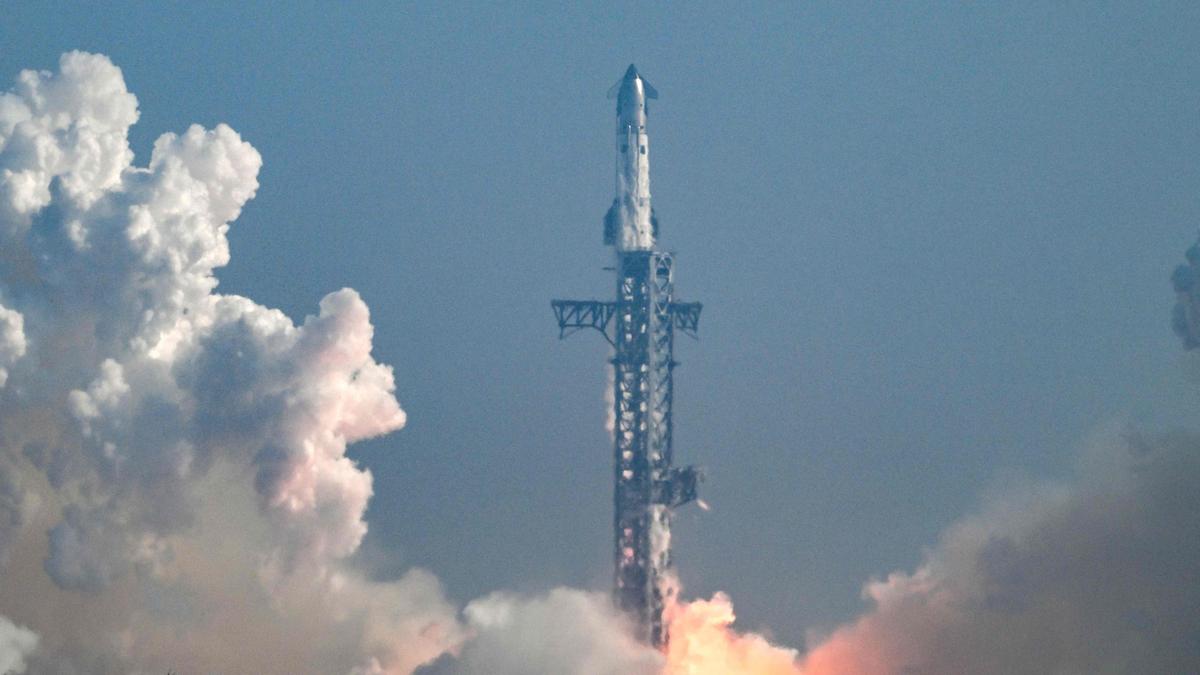
Spacecraft Upgrades: The retro-looking, gleaming stainless steel spacecraft, which forms the upper stage, has also received comprehensive upgrades. It now features an expanded array of cameras, providing more comprehensive telemetry and visual data during flight. Navigation and computer power have been significantly augmented, ensuring more precise trajectory control and autonomous capabilities. Crucially for its future role in deep-space missions, the V3 spacecraft is equipped with docking cones, essential for future rendezvous maneuvers in orbit and, critically, for linking up with lunar gateways or other spacecraft during moon missions.
Reusability: The Ultimate Goal (and Current Reality): The fundamental design philosophy behind Starship is full reusability, a principle that has revolutionized the economics of spaceflight with the Falcon 9 and Falcon Heavy rockets. The ultimate vision involves giant mechanical arms at the launch pads, aptly named "Mechazilla," designed to "catch" the returning Super Heavy booster and potentially the Starship upper stage, allowing for rapid turnaround and minimal refurbishment. However, this twelfth test flight, while showcasing advanced capabilities, did not attempt such a recovery. Instead, the mission profile dictated a controlled disposal: the Super Heavy booster concluded its journey in the Gulf of Mexico, while the Starship upper stage, after deploying its mock Starlink satellites, was directed for an unrecovered splashdown in the Indian Ocean. This strategy is typical for early, high-risk test flights, prioritizing data acquisition over hardware preservation as engineers push the operational envelope. The data gathered from this flight will be instrumental in refining the systems necessary for eventual full reusability, which remains central to SpaceX’s long-term cost-reduction strategy for space access.
NASA’s Artemis Program: Starship’s Lunar Destiny
The successful launch of Starship 39 is more than just a win for SpaceX; it’s a critical milestone for NASA’s Artemis program. The U.S. space agency is making a multi-billion-dollar bet on commercial partners, including SpaceX and Jeff Bezos’ Blue Origin, to provide the crucial lunar landers that will return American astronauts to the Moon’s surface. Starship’s immense payload capacity and envisioned reusability make it a cornerstone of NASA’s strategy to establish a sustainable human presence on the Moon.
The competition between these aerospace giants is intense, with both companies scrambling to be the first to deliver a reliable lunar landing system. While Starship has repeatedly reached the fringes of space, conducting multiple flights that lasted up to an hour, Blue Origin’s "Blue Moon" lander has yet to achieve orbital flight. However, a prototype of Blue Moon is reportedly being readied for a moonshot later this year, signaling the escalating pace of the lunar race.
Artemis Mission Progression:
NASA’s Artemis program is unfolding in a series of increasingly complex missions:
- Artemis I (completed): An uncrewed test flight of the Orion capsule around the Moon, successfully validating the Space Launch System (SLS) rocket and Orion spacecraft systems.
- Artemis II (completed in April): A successful lunar flyaround by four astronauts, marking a crucial step in preparing humans for deep-space travel. This mission provided invaluable data on human performance and spacecraft systems in a deep-space environment.
- Artemis III (planned for next year): This mission will involve a critical docking trial run in Earth orbit. Astronauts aboard the Orion capsule will practice docking with either Starship, Blue Moon, or potentially both, simulating the crucial maneuver required for lunar surface operations. This mission is designed to validate the rendezvous and docking procedures and ensure the compatibility of the Orion capsule with the chosen Human Landing System (HLS).
- Artemis IV (as early as 2028): This will be the landmark mission, aiming for a moon landing by two astronauts. It represents NASA’s first crewed lunar landing since Apollo 17 in 1972. The choice between Starship and Blue Moon for this mission will hinge on which lander proves safer, more reliable, and ready first. The ultimate goal of Artemis IV and subsequent missions is not just to plant flags but to establish a permanent moon base near the lunar south pole, a region believed to harbor water ice in shadowed craters, vital for long-duration missions and potential resource utilization. This base will be staffed by a rotating crew of astronauts, working alongside advanced robots to conduct scientific research, test new technologies, and prepare for future missions to Mars.
Beyond the Moon: Commercial Ventures and Interplanetary Dreams
SpaceX’s ambitions extend far beyond the Moon, with Starship envisioned as the vehicle that will make humanity a multi-planetary species. The company is already actively taking reservations for private flights, offering affluent individuals the chance to experience lunar flybys and even journeys to Mars.
Dennis Tito’s Lunar Voyage: The world’s first space tourist, California businessman Dennis Tito, made headlines three and a half years ago when he and his wife signed up for a flight around the Moon aboard Starship. Tito, who paid Russia $20 million for a trip to the International Space Station in 2001, has long been a proponent of private space travel. While the exact timing of his Starship lunar voyage remains uncertain, his commitment underscores the growing interest from private citizens in deep-space tourism. His participation lends significant credibility to SpaceX’s commercial aspirations, demonstrating that there is a market for experiences that transcend conventional orbital tourism.
Chun Wang’s Mars Ambition: This week brought another major announcement in the realm of space tourism: Chinese-born bitcoin investor Chun Wang declared his intention to fly to Mars on Starship’s inaugural interplanetary mission. Wang is no stranger to private spaceflight; he previously chartered a SpaceX polar flight in a Dragon capsule last year, becoming, along with his hand-picked crew, the first to orbit directly above both the North and South Poles. This pioneering journey highlighted the unique capabilities of SpaceX’s commercial spacecraft and Wang’s adventurous spirit. While no price tag or definitive date was revealed for his ambitious Mars cruise, his willingness to commit to such a monumental journey signals a new era where private capital is directly enabling humanity’s most audacious space exploration goals.

These commercial endeavors, coupled with NASA’s strategic reliance on Starship, illustrate the dual-track approach to space exploration taking shape in the 21st century. Governments and private entities are increasingly collaborating and competing to push the boundaries of what is possible, accelerating technological development and expanding access to space.
Broader Implications and Future Outlook
The successful launch of Starship 39 carries profound implications across multiple domains, from technological innovation to global economics and the very future of human civilization.
Technological Revolution: Starship represents a paradigm shift in rocket design, emphasizing full reusability and massive payload capacity. If SpaceX can achieve its ambitious goals for rapid reusability and cost reduction, it could dramatically lower the cost of launching anything into space, from satellites to scientific probes and human crews. This would unleash an unprecedented era of space activity, enabling new industries, scientific discoveries, and potentially even space-based manufacturing. The sheer scale and power of Starship open up possibilities for missions that were previously deemed too complex or expensive, such as direct journeys to Mars with large payloads or the construction of orbital infrastructure on a grand scale.
Economic Impact: Elon Musk’s announcement to take SpaceX public is a game-changer. It signals a maturation of the commercial space industry and could unlock significant capital for further research, development, and expansion. A publicly traded SpaceX would allow a broader investor base to participate in the burgeoning space economy, potentially leading to increased investment in related sectors, from materials science to advanced computing. The economic ripple effect could be substantial, creating new jobs, fostering innovation, and cementing the United States’ leadership in the commercial space sector. The value proposition of a company aiming to make humanity multi-planetary is immense, and its public offering will be closely watched by financial markets worldwide.
Humanity’s Future in Space: Beyond the immediate financial and technological aspects, Starship embodies a fundamental shift in humanity’s relationship with space. It is designed not just to visit, but to enable sustained presence. The vision of a moon base, the potential for resource extraction, and ultimately, the establishment of a self-sustaining city on Mars, are no longer confined to science fiction. Starship is the tangible vehicle intended to realize these dreams. This transition from fleeting visits to permanent settlement has profound implications for our species, offering new frontiers for scientific discovery, mitigating existential risks by diversifying human presence, and inspiring future generations to look beyond Earth.
Challenges Ahead: Despite the recent success, significant challenges remain. Achieving the full reusability of both stages with rapid turnaround times is an engineering feat of immense complexity. Ensuring the safety and reliability required for human spaceflight, particularly for deep-space missions, will necessitate rigorous testing and certification. Regulatory hurdles, environmental considerations related to frequent launches, and the sheer financial investment required for large-scale interplanetary colonization are all formidable obstacles. However, SpaceX’s track record of overcoming seemingly insurmountable challenges suggests that these hurdles, while significant, are not insurmountable.
The launch of Starship 39 is more than just another test flight; it is a powerful affirmation of humanity’s enduring drive to explore, innovate, and expand its reach into the cosmos. As the world watches, SpaceX continues to write the next chapter in space exploration, bringing the dream of a multi-planetary future ever closer to reality.
