

Introduction: A New Chapter for the Alliance in India
The Indian automotive landscape in 2026 continues to be defined by a fierce appetite for SUVs and versatile family movers. Amidst this backdrop, the Renault-Nissan Alliance has emerged as a significant protagonist, showcasing a remarkable year-on-year (YoY) recovery. May 2026 served as a pivotal month for both manufacturers, as they capitalized on a refreshed product portfolio to drive substantial volume growth compared to the previous year.
The resurgence is primarily anchored by two critical catalysts: the triumphant return of the Renault Duster and the market penetration of the Nissan Gravite. While the month-on-month (MoM) figures suggest a cooling period following the initial launch euphoria of April, the broader trajectory indicates that the alliance is successfully clawing back market share in one of the world’s most competitive auto markets.
Main Facts: The Statistical Breakdown of May 2026
The performance of Renault and Nissan in May 2026 reveals a tale of two trajectories: explosive annual growth tempered by a short-term monthly correction.
Renault’s Performance Metrics
Renault India reported total domestic sales of 4,113 units in May 2026. This represents a staggering 64.39% YoY growth compared to the 2,502 units sold in May 2025. However, the brand faced a significant 24.02% MoM decline from the 5,413 units moved in April 2026.
The portfolio distribution for Renault was as follows:
- Renault Triber: 1,890 units (45.95% share)
- Renault Duster: 1,267 units (30.8% share)
- Renault Kiger: 656 units (15.95% share)
- Renault Kwid: 300 units (7.3% share)
Nissan’s Performance Metrics
Nissan India’s growth story was even more dramatic in percentage terms. The company sold 2,948 units in May 2026, marking a 117.73% YoY increase over the 1,354 units sold in May 2025. Like its alliance partner, Nissan saw a slight MoM dip of 7.96% from April’s 3,203 units.
The sales split for Nissan included:
- Nissan Magnite: 1,665 units (56.48% share)
- Nissan Gravite: 1,283 units (43.52% share)
Chronology: The Road to the 2026 Resurgence
The seeds of this growth were sown in early 2025, when the Renault-Nissan Alliance announced a renewed investment strategy for the Indian subcontinent, focusing on localized platforms and a "SUV-first" approach.

- Q3 2025 – The Announcement: The alliance confirmed the return of the "Duster" moniker and the development of a new C-segment SUV for Nissan (later named the Gravite).
- Q1 2026 – The Product Blitz: Renault officially launched the third-generation Duster, utilizing the CMF-B platform. Simultaneously, Nissan introduced the Gravite to compete in the mid-size SUV segment.
- April 2026 – Peak Launch Momentum: Both brands saw record-breaking numbers as initial bookings for the Duster and Gravite were converted into deliveries. This created a high baseline, making the May MoM decline appear more pronounced than a standard market correction.
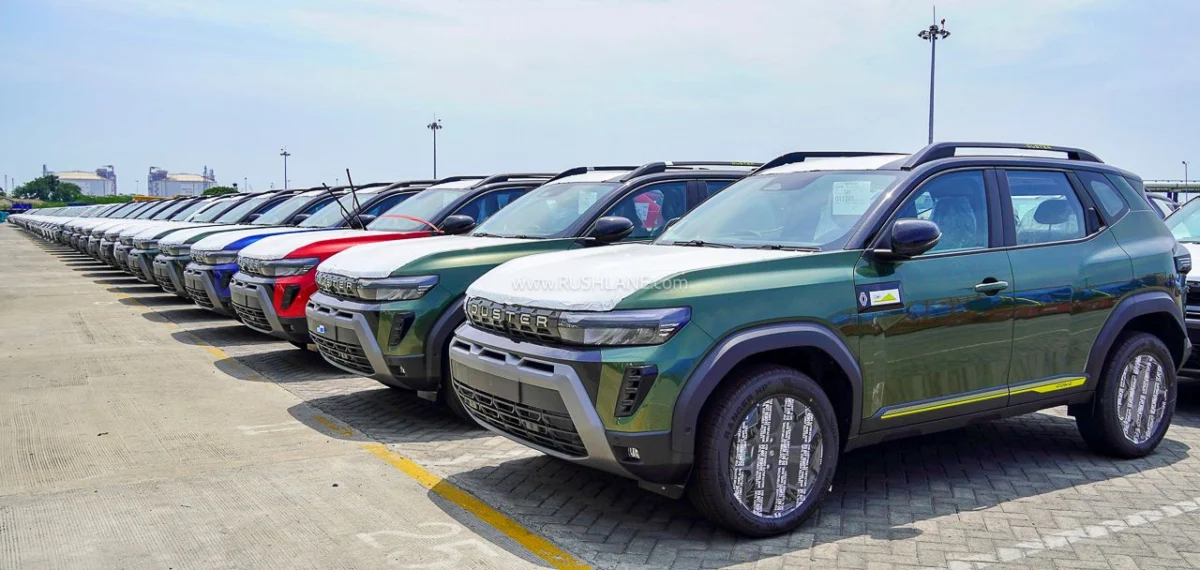
- May 2026 – Stabilization and Export Focus: As domestic deliveries stabilized, Renault began ramping up export operations for the Duster (as evidenced by recent shipping manifests), positioning India as a global manufacturing hub for the model.
- July 2026 (Upcoming): Nissan is set to unveil the "Tekton," a rugged SUV positioned as a "Baby Patrol," aiming to disrupt the premium lifestyle SUV segment.
Supporting Data: Deep Dive into Model Performance
Renault: The Duster Effect and the Triber’s Consistency
The Renault Triber continues to be the unsung hero of the French automaker’s Indian operations. By selling 1,890 units, it maintained its position as the brand’s volume driver. Its unique value proposition—a sub-four-meter seven-seater with a modular interior—remains unchallenged in its price bracket.
However, the spotlight remains on the Duster. In its first full months of sales, the Duster has already secured nearly 31% of Renault’s total volume. This suggests that the brand equity of the Duster nameplate remains potent among Indian consumers who recall the original model as the pioneer of the compact SUV segment.
Conversely, the Renault Kwid is facing an existential crisis. With only 300 units sold (a 44.44% YoY drop), the entry-level hatchback is struggling against the market’s aggressive shift toward micro-SUVs and the increasing popularity of electric vehicles in the urban commute segment.
Nissan: The Magnite’s Resilience and Gravite’s Gain
For Nissan, the Magnite remains the bedrock of its Indian presence. Contributing over 56% of total sales, the Magnite has proven that a well-packaged, safety-rated, and affordably priced compact SUV can sustain long-term demand.
The Gravite has successfully filled the void in Nissan’s portfolio above the Magnite. By contributing 1,283 units, it has effectively doubled Nissan’s floor volume. The Gravite’s success is critical as it allows Nissan to compete with heavyweights like the Hyundai Creta and Kia Seltos, providing a more sophisticated alternative to the Magnite.
Official Strategy: Navigating the Competitive Landscape
While official statements from the Alliance leadership emphasize "sustainable growth" over "market share at any cost," the underlying strategy is clear: Premiumization and Platform Sharing.
The alliance has moved away from the "badge engineering" of the past (e.g., Pulse/Micra, Sunny/Scala) in favor of distinct brand identities built on shared modular platforms. This allows for significant R&D cost savings while offering consumers unique aesthetic and functional choices.
Renault’s recent move to add new variants to the Kiger (the Evolution range) is a tactical response to the intensifying competition in the sub-compact SUV space. By adjusting price points and feature lists, Renault aims to revitalize interest in the Kiger, which saw a modest but steady 19.06% YoY growth this month.
Nissan’s strategy is increasingly focused on "Aspiration." The upcoming Tekton (Baby Patrol) is not just another SUV; it is a brand-building exercise designed to link Nissan’s Indian portfolio with its global heritage of rugged, go-anywhere vehicles.

Implications: What This Means for the Indian Market
The May 2026 sales data carries several implications for the broader automotive industry:
1. The Death of the Entry-Level Hatchback?
The continued decline of the Renault Kwid is a canary in the coal mine for the entry-level segment. As consumers prioritize safety, road presence, and ground clearance, the traditional small car is being squeezed out. Renault may need to consider an electric "Kwid E-Tech" or a total redesign to save the nameplate.
2. India as an Export Hub
The mention of Duster exports starting in June 2026 is a major win for the "Make in India" initiative. By leveraging the CMF-B platform for both domestic and international markets, the Alliance can achieve the economies of scale necessary to remain profitable despite the high cost of modern automotive technology.
3. The "SUV-ification" of the Mid-Market
With the Duster and Gravite combined contributing 2,550 units, it is evident that the ₹12 lakh to ₹20 lakh price bracket is where the volume growth lies. The Alliance is now better positioned to challenge the dominance of Maruti Suzuki and Hyundai in this lucrative space.
4. Anticipation for the Nissan Tekton
The upcoming July 9th unveil of the Nissan Tekton is expected to act as a "halo" product. If priced correctly, it could draw footfall into showrooms, benefiting the Magnite and Gravite through the "halo effect." Industry analysts predict that the Tekton could push Nissan’s monthly volumes past the 4,000-unit mark by late 2026.
Conclusion: A Balanced Outlook
Renault and Nissan’s performance in May 2026 reflects a successful pivot toward a more modern, SUV-centric lineup. The massive YoY gains prove that the Indian consumer is willing to return to these brands if the product is right.
While the MoM decline suggests that the initial "honeymoon phase" of the new launches is stabilizing, the foundation is significantly stronger than it was a year ago. As Renault expands the Kiger lineup and Nissan prepares for the Tekton’s debut, the Alliance is no longer just surviving in India—it is actively competing for a seat at the high table of the Indian automotive industry. The focus must now remain on service network expansion and maintaining the momentum of the Duster and Gravite to ensure that this growth is not merely a flash in the pan.
