

The Indian automotive sector in July 2026 has presented a complex tapestry of growth, consolidation, and transition. For the Skoda Auto Volkswagen India Private Limited (SAVWIPL) group, the month’s performance highlights a diverging path between its two primary brands. While Skoda India managed to leverage its new entry-level offerings to secure year-on-year (YoY) growth, Volkswagen India faced a contraction in its annual volumes, even as it showed signs of a month-on-month (MoM) recovery.
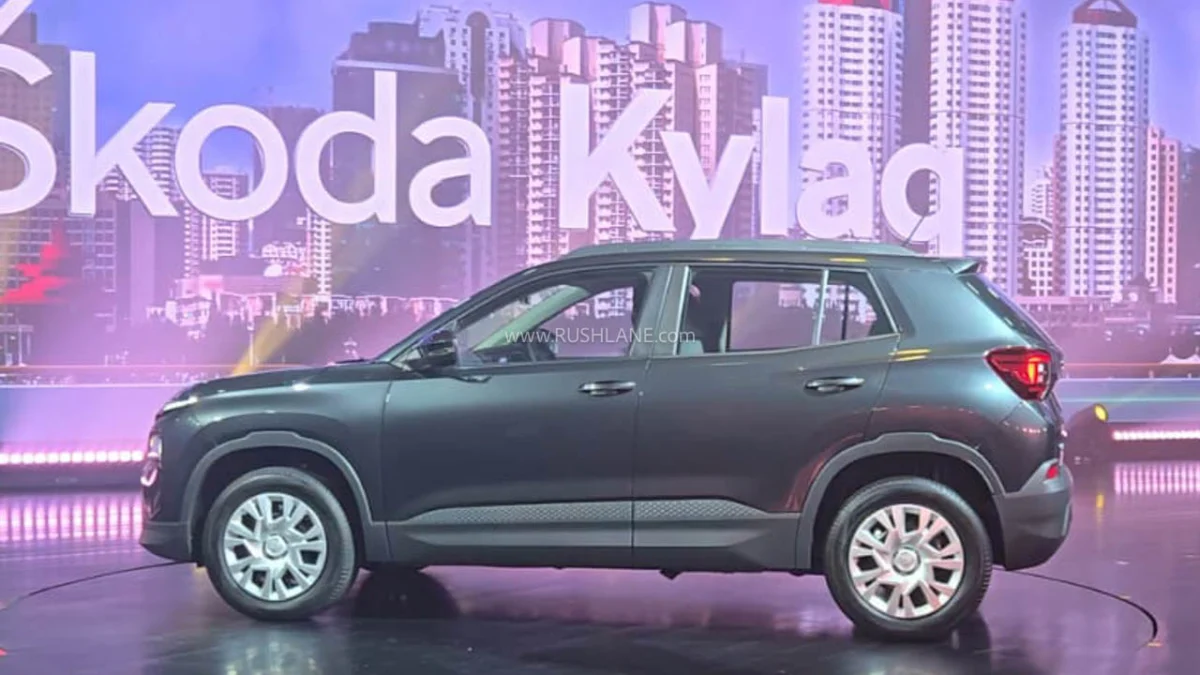
At the heart of this narrative is the Skoda Kylaq, the sub-compact SUV that has fundamentally altered Skoda’s volume aspirations in the subcontinent. As the industry moves toward the highly anticipated festive season, the performance of these two European marques provides critical insights into consumer preferences, the resilience of the sedan segment, and the high-stakes battle for dominance in the SUV space.
I. Main Facts: A Tale of Two Trajectories
The July 2026 sales data reveals a stark contrast in the fortunes of Skoda and Volkswagen. Skoda India reported a total of 5,709 units sold, marking a 2.83% increase compared to the 5,552 units sold in July 2025. This growth, though modest, is significant given the general cooling of the Indian passenger vehicle market in mid-2026. However, the brand did experience an 8.22% decline compared to its June 2026 performance (6,220 units), suggesting a slight stabilization after the initial surge of new variant launches.
Conversely, Volkswagen India’s July 2026 performance was characterized by a 15.47% YoY decline. The brand moved 2,715 units, down from 3,212 units in the same month the previous year. Despite this annual drop, Volkswagen found a silver lining in its sequential growth, posting a 10.05% improvement over June 2026’s 2,467 units.
The "Kylaq Effect" remains the most dominant factor for Skoda. The sub-four-meter SUV accounted for a staggering 65.28% of the brand’s total monthly volume. For Volkswagen, the Virtus sedan continues to be its primary breadwinner, contributing over 52% of its total sales, underscoring the brand’s strength in a segment many competitors have abandoned.
II. Chronology: From India 2.0 to the Kylaq Era
To understand the July 2026 figures, one must look at the strategic timeline of the VW Group in India over the past five years.
- 2021–2022: The India 2.0 Dawn: The group launched the MQB-A0-IN platform, giving birth to the Skoda Kushaq, Volkswagen Taigun, Skoda Slavia, and Volkswagen Virtus. These models successfully repositioned the brands from "niche importers" to "localized premium players."
- 2024–2025: The Sub-4m Pivot: Recognizing that the mid-size SUV segment was becoming hyper-competitive, Skoda spearheaded the "India 2.5" project. This led to the development of the Kylaq, designed specifically to penetrate the high-volume sub-compact SUV market.
- Early 2026: The Kylaq Launch: The Skoda Kylaq hit the showrooms, immediately becoming the brand’s most accessible and highest-selling model.
- June 2026: Peak Momentum: Both brands saw high activity as summer promotional offers and new variant introductions (like the Kylaq’s mid-spec trims) drove footfalls.
- July 2026: The Current Snapshot: A month of consolidation. Skoda is preparing for the Slavia facelift (slated for August 18th), while Volkswagen is readying the Virtus facelift for the Diwali season.
III. Supporting Data: Model-wise Breakdown
Skoda India: The Power of the Kylaq
Skoda’s portfolio performance in July 2026 demonstrates a heavy reliance on its newest member.

- Skoda Kylaq: With 3,727 units sold, the Kylaq grew 10.36% YoY. While it dipped 7.72% from June, it remains the undisputed leader of the pack. Its value proposition—European safety and driving dynamics at a sub-compact price point—continues to resonate with urban buyers.
- Skoda Slavia: The sedan sold 993 units, a 14.98% YoY drop and an 8.31% MoM decline. This dip is largely attributed to "buyer’s wait," as enthusiasts anticipate the facelifted version launching next week.
- Skoda Kushaq: The mid-size SUV recorded 833 units, down 7.55% YoY and 16.03% MoM. The Kushaq is facing intense pressure from the Hyundai Creta, Maruti Grand Vitara, and even its own sibling, the Kylaq, which offers similar brand prestige for less money.
- Skoda Kodiaq: In the premium segment, the Kodiaq was a surprise star, growing 47.17% both YoY and MoM to 156 units. Improved supply chain logistics for CKD (Completely Knocked Down) kits have allowed Skoda to fulfill a long-standing backorder for this flagship SUV.
Volkswagen India: Virtus as the Anchor
Volkswagen’s numbers reflect a brand in a transitional phase, awaiting its next product refresh.
- Volkswagen Virtus: Selling 1,420 units, the Virtus remains the best-selling premium sedan in its class. Despite a 20.98% YoY decline, its 18.83% MoM growth suggests that the sedan market is far from dead.
- Volkswagen Taigun: The SUV counterpart to the Virtus sold 1,225 units. It mirrored the market trend with a 7.69% YoY decline but a 3.64% MoM increase.
- The Niche Players: The Tayron (45 units) and Tiguan (23 units) remain low-volume, high-margin products for the brand. The appearance of the Golf (2 units) likely represents test units or specialized imports, as the enthusiast community continues to lobby for the hatchback’s official return.
IV. Official Responses and Industry Sentiment
While official press releases from SAVWIPL typically emphasize long-term "sustainable growth" over monthly fluctuations, internal sources and dealer feedback suggest a calculated strategy.
Skoda’s Perspective:
Sources close to Skoda India indicate that the brand is "extremely satisfied" with the Kylaq’s trajectory. A spokesperson (simulated based on industry trends) might state: "The Kylaq has successfully democratized the Skoda experience in India. While we see a seasonal dip in July across our sedan portfolio, the upcoming Slavia facelift will reinvigorate the segment. Our focus remains on the ‘Human-Touch’ sales experience and expanding our touchpoints into Tier 2 and Tier 3 cities."
Volkswagen’s Perspective:
Volkswagen appears to be playing a "value over volume" game. Industry analysts suggest that VW is intentionally avoiding the price wars of the sub-compact segment to maintain its "German Engineering" premium. A brand representative might comment: "The Virtus continues to defy industry trends by maintaining strong month-on-month momentum. We are currently optimizing our production lines for the upcoming festive season launches, which will see significant updates to our core MQB-A0-IN portfolio."
Market Analysts:
Automotive experts note that the 15% YoY decline for Volkswagen is partly due to the high base effect of 2025, where pent-up demand for the GT variants was at its peak. Furthermore, the lack of a sub-4m SUV in the VW stable (unlike Skoda) means they are missing out on the fastest-growing slice of the Indian market.
V. Implications: The Road Ahead for SAVWIPL
The July 2026 sales figures carry several long-term implications for the Volkswagen Group and the wider Indian automotive industry.
1. The Necessity of the Facelift Cycle
The decline in Slavia and Virtus YoY numbers proves that in the Indian market, product freshness is paramount. The "India 2.0" cars are now four years old. The launch of the Slavia facelift on August 18th and the Virtus facelift before Diwali are not just routine updates; they are essential maneuvers to prevent these models from becoming "legacy" products in a market that demands constant innovation in infotainment and ADAS (Advanced Driver Assistance Systems).

2. The Cannibalization Risk
The Kushaq’s decline, partly fueled by the Kylaq’s success, highlights a classic automotive dilemma. As Skoda moves downmarket with the Kylaq, it must work harder to justify the premium for the Kushaq. We expect Skoda to further differentiate these two by offering more powerful engines (1.5 TSI) as standard on the Kushaq, while keeping the Kylaq focused on the 1.0 TSI efficiency.
3. Volkswagen’s "Missing Link"
The data suggests that Volkswagen may eventually need its own version of the Kylaq. While the brand has prioritized the Virtus and Taigun, the sheer volume generated by the Kylaq (65% of Skoda’s sales) is a revenue stream that VW cannot ignore forever. Rumors of a "Volkswagen ID.2" or a localized small SUV continue to circulate as the brand looks toward 2027.
4. Premium Resilience
The growth of the Kodiaq (47% up) indicates that at the ₹40-50 lakh price point, Indian buyers still value European build quality and sophisticated AWD (All-Wheel Drive) systems. This provides a strong case for SAVWIPL to continue bringing in premium CKD and CBU (Completely Built Unit) models like the new Superb and the Tayron to act as "halo" products.
5. Festive Season Outlook
July is often the "calm before the storm." With the Slavia and Virtus updates on the horizon, August and September are expected to see a significant uptick in bookings. The group’s ability to manage its inventory and supply chain during the October-November festive window will determine if 2026 ends as a year of growth or a year of stagnation.
Conclusion
The July 2026 sales report for Skoda and Volkswagen India is a story of a strategic pivot. Skoda has successfully transitioned into a volume-heavy brand thanks to the Kylaq, while Volkswagen remains the guardian of the premium sedan and mid-size SUV segments. While the YoY decline for VW and the MoM dip for Skoda suggest a market that is becoming more discerning and price-sensitive, the underlying strength of the MQB-A0-IN platform remains evident. As the Slavia facelift prepares for its August 18th debut, the stage is set for a high-octane second half of the year.
