

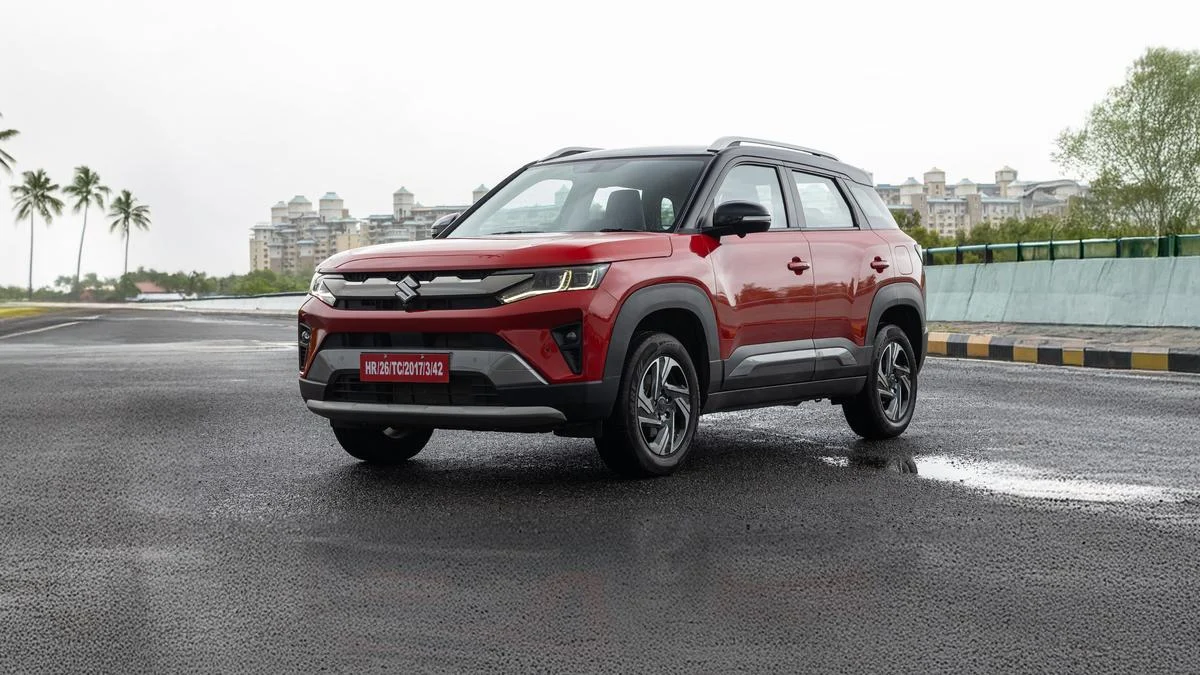
Introduction: The Evolution of a Segment Leader
The Maruti Suzuki Brezza has long served as the cornerstone of the company’s Arena portfolio. Since its inception as the Vitara Brezza, it has played a pivotal role in transforming Maruti Suzuki from a manufacturer of budget hatchbacks into a formidable contender in the SUV space. For years, the Brezza’s formula was simple yet effective: an upright SUV stance, a frugal engine, and the peace of mind offered by India’s largest service network.
However, the automotive landscape of 2024 is vastly different from that of 2016. The compact SUV segment—once a niche—has become the most crowded and technologically advanced category in the Indian market. Today’s buyers are no longer satisfied with mere "practicality"; they demand turbocharged performance, "five-star" safety credentials, and a cabin experience that rivals luxury segments.
In response to these shifting tides, Maruti Suzuki has introduced the 1.0-litre Boosterjet turbo-petrol engine to the Brezza lineup. This move is more than just a mechanical update; it is a strategic "course correction" designed to bridge the gap between Maruti’s traditional reliability and the modern demand for spirited driving and high-tech features.

1. Main Facts: The Heart of the Matter – The 1.0L Boosterjet
The headline of this update is undoubtedly the powertrain. Maruti Suzuki has reached into its global parts bin to reintroduce the 1.0-litre, three-cylinder Boosterjet turbo-petrol engine to the Indian market. This engine, which previously saw a brief stint in the Baleno RS, has been refined and integrated into the Brezza to provide a more contemporary driving experience.
Key Specifications:
- Engine Type: 1.0-litre Turbocharged Boosterjet Petrol
- Maximum Power: 110.12 PS
- Peak Torque: 170 Nm
- Transmission: 6-speed Manual Gearbox
- Safety Rating: 5-star Bharat NCAP (Applicable across variants)
- Price Range: ₹7.40 lakh to ₹11.31 lakh (Ex-showroom, Delhi)
While the naturally aspirated 1.5-litre K15C engine continues to serve the needs of the "mileage-conscious" buyer and those preferring an automatic transmission, the 1.0 Turbo is aimed squarely at the enthusiast and the urban commuter who desires more "punch" during overtakes and highway cruising.
2. Chronology: From Utility to Lifestyle
To understand the significance of the 1.0 Turbo, one must look at the Brezza’s evolutionary timeline.
- 2016 – The Inception: The Vitara Brezza launched exclusively with a 1.3-litre DDiS diesel engine. It capitalized on the "diesel craze" and Maruti’s reputation for low maintenance, quickly becoming the segment leader.
- 2020 – The Petrol Shift: With the implementation of BS6 norms, Maruti Suzuki famously exited the diesel market. The Brezza transitioned to a 1.5-litre K-series petrol engine. While smooth and reliable, it lacked the "kick" that rivals like the Tata Nexon and Hyundai Venue offered through their turbocharged units.
- 2022 – The Major Overhaul: Maruti dropped the "Vitara" prefix, calling it simply the Brezza. This generation introduced a more premium interior, a sunroof (a first for a Maruti SUV), and a 6-speed automatic transmission.
- 2024/2025 – The Turbo Era: Recognizing that rivals like the Mahindra XUV 3XO and the upcoming Skoda Kylaq are pushing performance boundaries, Maruti has integrated the 1.0 Turbo to ensure the Brezza remains relevant to a younger, more demanding demographic.
3. Supporting Data: Performance, Safety, and Interior Sophistication
Performance and Drivability
The 170 Nm of torque produced by the Boosterjet engine is a significant jump over the 136.8 Nm of the naturally aspirated 1.5-litre engine. More importantly, the torque is delivered much earlier in the rev range. In real-world conditions, this translates to a "mid-range surge" that makes the SUV feel significantly lighter on its feet.

The 6-speed manual gearbox is calibrated to exploit this torque spread, reducing the need for frequent downshifts in city traffic. However, it is a notable strategic choice that the Turbo is currently restricted to a manual transmission, leaving the 1.5-litre engine to handle automatic duties.
The Five-Star Safety Milestone
Safety has historically been a point of contention for Maruti Suzuki. The company has moved to silence critics with the new Brezza, which recently secured a prestigious 5-star rating from Bharat NCAP.
- Structural Integrity: The rating reflects improvements in the TECT platform and the inclusion of safety features like six airbags on higher trims, ESP (Electronic Stability Program), and Hill Hold Assist.
- Certification: While the test was conducted on the 1.5-litre automatic variant, Bharat NCAP has confirmed that the certification extends to the 1.0 Turbo variants, providing a unified safety front for the model.
A Tech-Forward Cabin
The interior of the Brezza has been "premiumized" to compete with the likes of the Kia Sonet.
- Infotainment: A new 10.1-inch SmartPlay Pro+ touchscreen dominates the dashboard, offering wireless Apple CarPlay and Android Auto.
- Comfort Features: For the first time, the Brezza offers ventilated front seats—a necessity in India’s tropical climate—alongside wireless charging, a 360-degree camera, and a Head-Up Display (HUD).
- Aesthetics: Ambient lighting and a redesigned dual-tone dashboard move the cabin away from its "budget" roots toward a more sophisticated, "lifestyle" feel.
4. Competitive Landscape: The Battle for the Compact Crown
The Brezza no longer operates in a vacuum. It faces a multi-front war from domestic and international manufacturers:

- Tata Nexon: The segment pioneer in safety. The Nexon’s constant updates and multiple powertrain options (Petrol, Diesel, EV, and iCNG) make it a versatile rival.
- Hyundai Venue & Kia Sonet: These Korean siblings focus on "feature-richness" and sophisticated transmissions like the 7-speed DCT. They appeal to the tech-savvy urbanite.
- Mahindra XUV 3XO: The latest disruptor. With a Level 2 ADAS suite and the most powerful engines in the segment, it has forced every other manufacturer to rethink their value proposition.
- Skoda Kylaq: The newest entrant, bringing European driving dynamics and "solid" build quality to the sub-4-meter segment.
Against this backdrop, the Brezza 1.0 Turbo doesn’t necessarily aim to be the fastest or the most feature-laden. Instead, it aims to be the most balanced—offering "enough" performance and "enough" tech, backed by the "most" reliable service network.
5. Official Context: Maruti’s Ownership Proposition
While Maruti Suzuki has not released a traditional "official response" to the turbo-petrol trend, their product strategy speaks volumes. The company’s leadership has often emphasized "Total Cost of Ownership" (TCO) as their primary advantage.
Maruti’s network remains an insurmountable "moat." With over 4,000 touchpoints across India, a Brezza owner in a remote Himalayan village has the same access to genuine parts and trained technicians as an owner in Mumbai. This "peace of mind" factor is a data point that doesn’t show up on a spec sheet but heavily influences the final purchase decision for Indian families.
Furthermore, the pricing strategy for the 1.0 Turbo is aggressive. By starting the Turbo range at ₹7.40 lakh, Maruti is positioning it as an accessible upgrade rather than a luxury performance variant. This ensures high volume, which in turn ensures that spare parts remain affordable and readily available.

6. Implications: What This Means for the Future
The introduction of the Brezza 1.0 Turbo has several long-term implications for the Indian automotive market:
For Maruti Suzuki:
This is a signal that the company is willing to abandon its "safe" conservative approach to engines. If the 1.0 Boosterjet is successful in the Brezza, we can expect it to proliferate across other models like the Fronx, Swift, or even the Grand Vitara, potentially replacing the older naturally aspirated units entirely.
For the Segment:
The "Turbo-Petrol" is now the baseline. With the market leader adopting this technology, naturally aspirated engines in the compact SUV segment may soon be relegated to entry-level "budget" trims only. This raises the bar for engineering across the board.
For the Consumer:
The Indian consumer is the ultimate winner. The Brezza 1.0 Turbo offers a blend of performance that was previously missing, without sacrificing the reliability and resale value that Maruti is famous for. It simplifies the choice for a buyer who wants a "modern" car but is wary of the high maintenance costs or sparse service networks of some rivals.

Conclusion: The Sensible Choice, Now with Soul
The Maruti Suzuki Brezza 1.0 Turbo is not a reinvention; it is a refinement. It retains the upright, "no-nonsense" SUV silhouette that Indian buyers love but adds the necessary "muscle" and "brain" to compete in a digital-first era.
By combining a 5-star safety rating, a punchy turbocharged engine, and a premium feature list with an unmatched service network, Maruti Suzuki has created a compelling value proposition. In a segment where every manufacturer is trying to outdo the other with gimmicks, the Brezza 1.0 Turbo stands out as perhaps the most sensible, well-rounded choice for the modern Indian family. It is a car that finally matches its performance to its reputation.
Reporting by Motorscribes, in association with The Hindu. For more automotive insights and reviews, follow @motorscribes on Instagram.
