

The global automotive landscape is currently navigating a complex transition, caught between the traditional internal combustion engine (ICE) and the rapid push toward full electrification. In this high-stakes environment, Suzuki Motor Corporation has unveiled a comprehensive new powertrain roadmap that promises to redefine its trajectory, particularly within its most critical market: India.
Through its Indian subsidiary, Maruti Suzuki, the company has long dominated the entry-level and compact segments. However, as consumer expectations evolve and regulatory pressures regarding emissions mount, the "small car specialist" is pivoting toward a multi-pathway strategy. This roadmap introduces a tiered approach to electrification and performance, ranging from 48V hybrid systems for "mini" cars to advanced series-hybrid configurations for compacts and a high-performance direct-injection turbo-petrol (DITC) engine for the burgeoning SUV segment.
Main Facts: A Triple-Threat Powertrain Strategy
Suzuki’s new technical direction is built upon three distinct pillars, each tailored to a specific vehicle segment and consumer need. While specific model applications for the Indian market remain under official wraps, the technological architecture provides a clear blueprint for the future of the Maruti Suzuki portfolio.
1. The 48V P2 Hybrid System for Mini Vehicles
Suzuki is developing a 48V P2 hybrid system specifically designed for its "mini" vehicle category. In the Indian context, this encompasses the Alto and S-Presso—the bedrock of the country’s entry-level car market. The P2 (Position 2) architecture places the electric motor between the engine and the transmission.
This system aims to deliver a 15% reduction in CO2 emissions compared to 2022 benchmarks. By utilizing a 48V setup rather than a full high-voltage system, Suzuki intends to keep the purchase price manageable for budget-conscious buyers while providing tangible improvements in fuel economy and low-end acceleration.

2. Series Hybrids and REEV Light for Compact Cars
For the "compact" segment—home to the Swift, Baleno, and Dzire—Suzuki is moving toward a Series Hybrid system. In this configuration, the petrol engine does not drive the wheels directly; instead, it acts as a generator to charge a battery, which then powers an electric motor that drives the vehicle. This provides an "EV-like" driving experience without the range anxiety or the need for a massive, expensive battery pack.
Furthermore, Suzuki is evolving this into a "REEV Light" (Range Extended Electric Vehicle). This system adds a plug-in capability, allowing owners to charge the vehicle for short electric-only commutes while retaining the internal combustion engine for longer journeys. Suzuki estimates this technology can reduce CO2 emissions by approximately 29%.
3. The DITC (Direct Injection Turbo Charger) Engine
Addressing a long-standing critique of its larger vehicles, Suzuki is developing a new generation of turbo-petrol engines. Labeled DITC, these engines are specifically earmarked for "growth markets," with India explicitly named as a primary destination. This engine is designed to provide the torque and horsepower necessary for larger SUVs, such as the Grand Vitara and the rumored upcoming three-row SUV derivatives, ensuring they can compete with high-output rivals.
Chronology: From Frugal ICE to Multi-Electrified Solutions
The evolution of Suzuki’s powertrain strategy reflects the changing maturity of the Indian automotive market.
- The Early 2000s – 2015: Suzuki focused almost exclusively on naturally aspirated K-Series engines. These engines became legendary for their reliability and fuel efficiency, propelling Maruti Suzuki to a near 50% market share.
- 2015 – 2022: The introduction of "Smart Hybrid" (SHVS) technology. This was a mild-hybrid system (12V or 24V) that used an Integrated Starter Generator (ISG) to assist the engine during start-stop cycles. While it offered marginal fuel gains, it was largely a bridge technology.
- 2022 – 2023: The launch of the Grand Vitara marked Suzuki’s first foray into Strong Hybrid (HEV) technology in India, developed in partnership with Toyota. This proved there was a significant appetite for high-efficiency hybrids in the premium segments.
- 2024 and Beyond: The current roadmap signals a departure from "off-the-shelf" shared tech toward Suzuki’s proprietary, segment-specific solutions. The shift from mild hybrids to series hybrids and REEVs represents a massive technological leap intended to future-proof the brand against upcoming CAFE (Corporate Average Fuel Economy) III norms.
Supporting Data: Efficiency vs. Performance
The data provided by Suzuki highlights a calculated balance between environmental responsibility and market competitiveness.

Emission Reductions
Suzuki’s internal comparisons against their 2022 fleet standards show significant progress:
- Mini-vehicle Hybrid (48V): ~15% CO2 reduction.
- Compact-car Hybrid (Series/REEV): ~29% CO2 reduction.
The SUV Power Gap
The necessity of the new DITC engine is best illustrated by the current competitive landscape in India’s C-SUV segment.
- Maruti Suzuki Grand Vitara (Current): 1.5L Naturally Aspirated – ~103 PS / 137 Nm.
- Hyundai Creta / Kia Seltos (Competitors): 1.5L Turbo Petrol – ~160 PS / 253 Nm.
The data shows a nearly 60-horsepower deficit for the Maruti flagship. The introduction of the DITC engine is a direct response to this data point, aimed at regaining "enthusiast" buyers who currently migrate toward Korean or European rivals for better highway performance and towing capacity.
Thermal Efficiency Goals
Beyond hybridization, Suzuki is conducting fundamental research into ICE physics. The company has set a research target of 50% thermal efficiency. For context, most modern petrol engines operate at 30% to 35% efficiency. Achieving 50% would involve a radical reduction in friction, heat loss, and pumping losses, potentially making Suzuki’s future ICE engines the most efficient in the world.
Official Responses and Strategic Philosophy
While Maruti Suzuki India Limited (MSIL) has not yet provided specific launch dates for these technologies, the overarching philosophy of the parent company, Suzuki Motor Corporation, is clear.

Suzuki’s leadership has emphasized the concept of "Sho-Sho-Kei-Tan-Bi" (Smaller, Fewer, Lighter, Shorter, Beauty). This Japanese manufacturing philosophy dictates that technology should not be added for the sake of complexity, but to provide maximum value with minimum waste.
In a recent briefing, Suzuki officials noted that India is no longer just a market for "cheap" cars but a "growth market" requiring "high-value technology." The inclusion of India in the DITC engine’s primary roadmap confirms that the Japanese headquarters views MSIL as the central pillar of its global operations. Suzuki’s strategy avoids the "one-size-fits-all" approach of going purely electric, instead opting for the "Right Tech for the Right Market" at the "Right Price."
Implications: How This Changes the Indian Market
The rollout of this roadmap will have profound implications for consumers, competitors, and the environment.
For the Entry-Level Consumer
The 48V hybrid system for the Alto and S-Presso could be a game-changer. As battery costs remain high, full EVs are still out of reach for the sub-5 lakh to 7 lakh INR segment. By introducing a "mini-hybrid," Maruti Suzuki can offer a 25-30 km/l fuel efficiency figure at a price point that remains accessible. This will likely secure their dominance in rural and semi-urban markets where charging infrastructure is non-existent.
For the Compact Segment (Swift/Baleno)
The Series Hybrid and REEV Light technologies will position the Swift and Baleno as high-tech alternatives to the growing crop of small electric SUVs (like the Tata Punch EV). By offering the smoothness of an electric drive with the convenience of a 5-minute petrol refill, Maruti can appeal to urban commuters who want "green" credentials without the "range anxiety" of a pure BEV.

For the SUV and Premium Segment
The DITC engine is perhaps the most critical component for Maruti’s brand image. For years, Maruti has been viewed as a brand for "sensible" buyers. A high-performance turbo-petrol engine in the Grand Vitara or the upcoming 7-seater SUV (codenamed Y17) would allow the brand to compete for the "aspirational" buyer. It bridges the gap between efficiency and emotion.
Regulatory and Environmental Impact
India’s CAFE norms are becoming increasingly stringent. By diversifying their powertrain mix, Maruti Suzuki can offset the higher emissions of their larger SUVs with the ultra-low emissions of their hybrid hatchbacks. This ensures they avoid heavy penalties while continuing to offer a wide variety of vehicle types.
Competitive Pressure
This roadmap puts significant pressure on rivals like Tata Motors and Mahindra, who have bet heavily on pure EVs. If Suzuki can deliver Series Hybrids at a price parity with current diesels or top-end petrols, they may capture a "middle ground" of buyers who are hesitant to go fully electric.
Conclusion
Suzuki’s new powertrain roadmap is a sophisticated acknowledgement that the path to carbon neutrality is not a straight line, especially in a diverse economy like India. By segmenting their technology—48V for the masses, Series Hybrids for the urban elite, and DITC Turbo for the performance-oriented—Suzuki is preparing a comprehensive defense of its Indian kingdom.
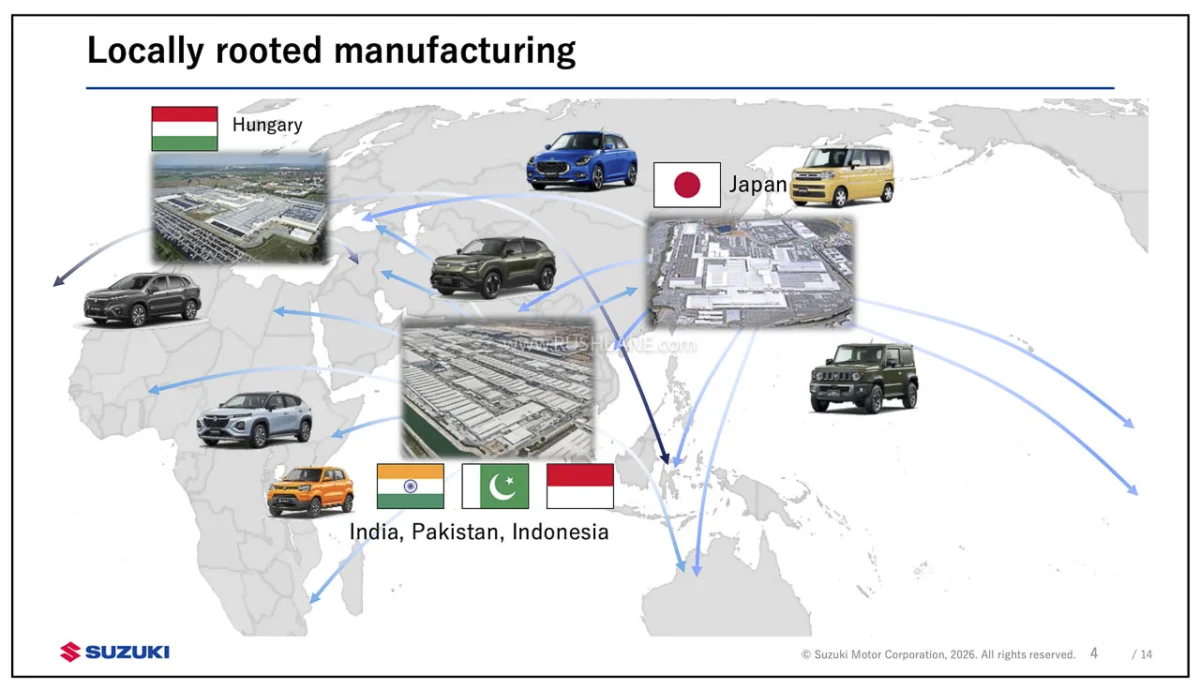
The success of this strategy will ultimately depend on local manufacturing and cost control. If Maruti Suzuki can localize the production of 48V motors and Series Hybrid components, they will not only maintain their market share but potentially set a new global standard for affordable, electrified mobility. For the Indian car buyer, the message is clear: the era of the "simple" Maruti is ending, and an era of high-tech, multi-pathway efficiency is about to begin.
