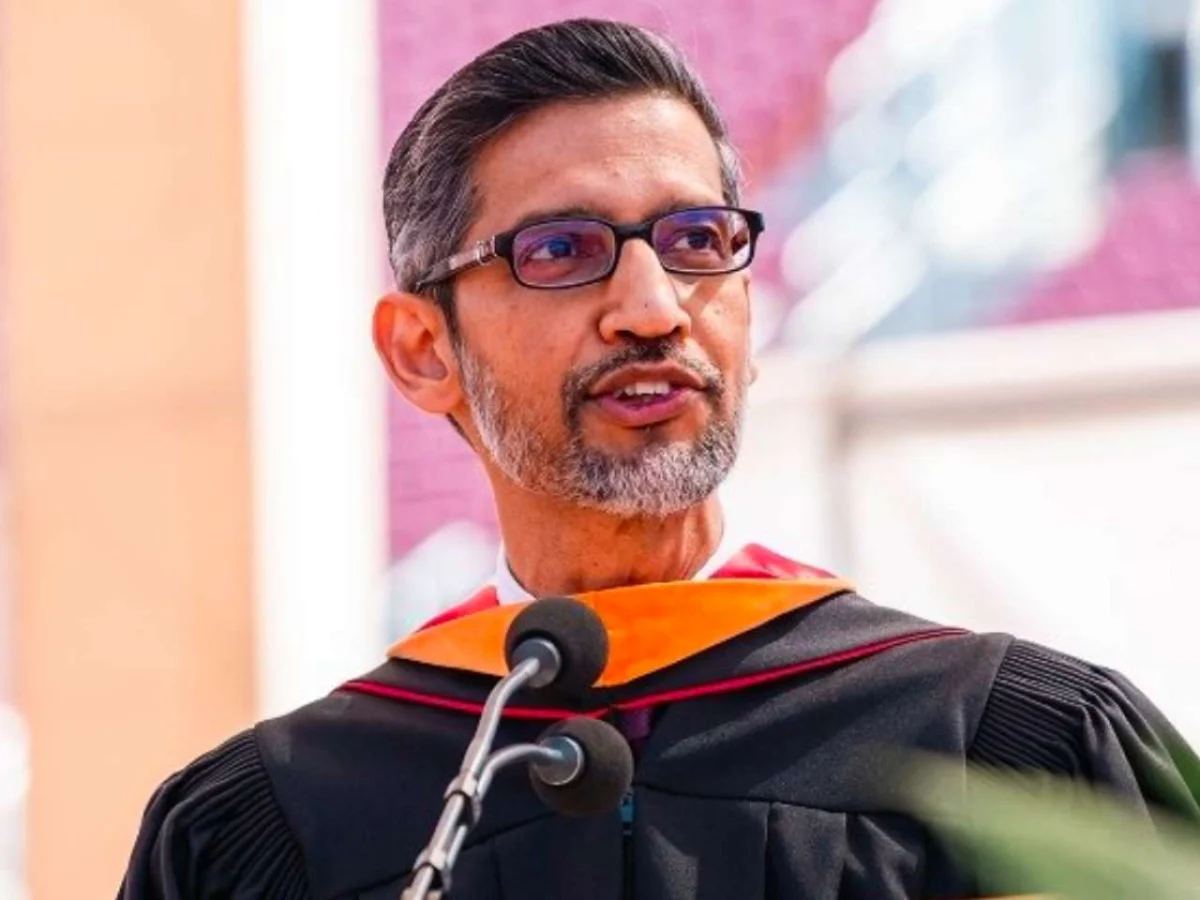
STANFORD, CA – June 15, 2026 – A highly anticipated graduation ceremony at Stanford University took an unexpected turn today as a group of students staged a coordinated walkout during Google CEO Sundar Pichai’s keynote address. The dramatic demonstration was aimed at protesting Google’s controversial contracts with various government and defense entities, including the Israeli military (IDF), the US Department of Homeland Security (DHS), and Immigration and Customs Enforcement (ICE). The incident underscored the escalating tensions on American university campuses regarding the ethical responsibilities of major technology companies and their involvement in projects deemed contentious by a significant segment of the student body.
Pichai, a distinguished Stanford alumnus who has led Google since 2015, continued his speech despite the disruption, opting for a lighthearted and personal tone that largely avoided the pressing technological and ethical debates currently dominating the industry. The protest, organized by prominent activist groups such as Students for Justice in Palestine and No Tech for Apartheid, highlighted the persistent calls for transparency and accountability from tech giants whose innovations increasingly intersect with complex geopolitical and humanitarian issues.
Main Facts: A Graduation Interrupted
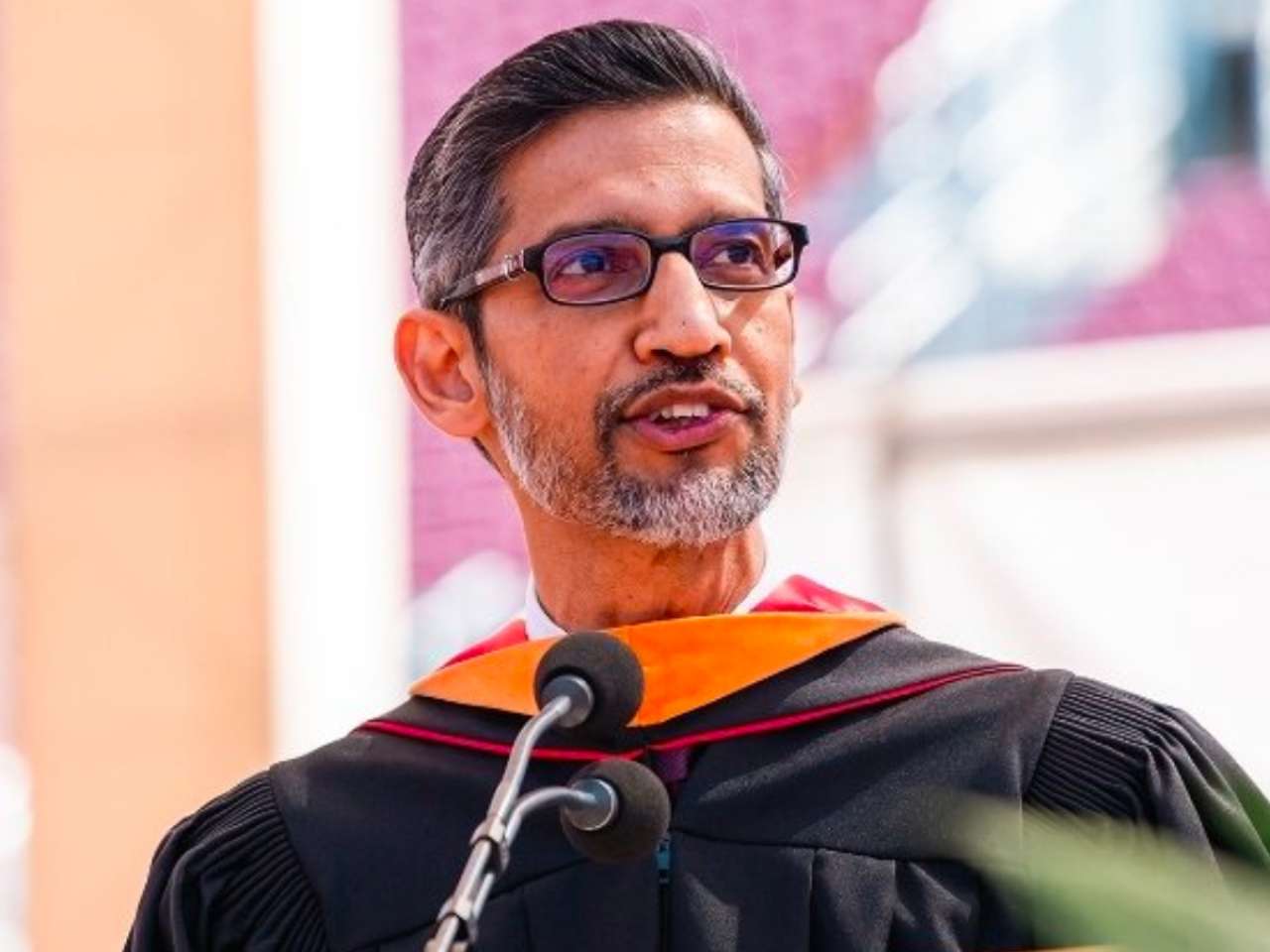
The serene atmosphere of Stanford University’s 2026 commencement ceremony was abruptly shattered when a contingent of graduating students rose from their seats and exited the venue en masse as Sundar Pichai began his address. The walkout, a carefully planned act of dissent, served as a stark visual statement against Google’s alleged complicity in human rights abuses and surveillance activities through its government and defense contracts.
The students’ grievances are rooted in Google’s deep engagement with governmental bodies, most notably its involvement in Project Nimbus, a substantial cloud computing contract with the Israeli government and its military. Activist organizations contend that this and other contracts with agencies like DHS and ICE contribute to systems of oppression and surveillance, directly conflicting with the ethical principles they believe tech companies should uphold. The protest on such a public and prestigious platform aimed to amplify these concerns, placing them squarely in the spotlight of academic discourse and public awareness.
)
Despite the highly visible disruption, Sundar Pichai maintained his composure, proceeding with his speech that was notably devoid of references to artificial intelligence, geopolitical tensions, or the future of technology – topics he frequently discusses in other public forums. Instead, he chose to impart personal anecdotes and optimistic advice to the graduating class, a choice that some observers interpreted as a deliberate attempt to de-escalate the charged atmosphere, while others saw it as a missed opportunity to address the very real concerns being raised. The incident at Stanford adds a significant chapter to the ongoing national conversation about corporate ethics, free speech, and the role of technology in a rapidly changing world.
Chronology of the Event: From Anticipation to Activism
The seeds of the Stanford walkout were sown weeks, if not months, prior to the graduation ceremony. Student activist groups, particularly Students for Justice in Palestine and No Tech for Apartheid, had been actively campaigning against Google’s contracts, leveraging social media and campus forums to raise awareness and garner support for their cause. The choice of Sundar Pichai’s graduation speech as the focal point for their protest was strategic, aiming for maximum visibility and impact given the global prominence of both Pichai and Google, as well as the high-profile nature of a Stanford commencement.
)
Leading up to June 15th, online forums and encrypted messaging apps buzzed with discussions about the impending demonstration. Organizers shared details, prepared banners, and coordinated the timing of the walkout, ensuring a unified and impactful display of dissent. The prevailing sentiment among the participating students was one of deep conviction regarding Google’s ethical responsibilities and a strong desire to hold the tech giant accountable for its alleged role in controversial government operations. A post widely shared on platforms like X (formerly Twitter) on the day of the event underscored the international reach of the sentiment: "I laureati della Stanford University durante il discorso del CEO di Google Sundar Pichai, lasciano la cerimonia per protestare contro i contratti di Google con IDF e ICE. Loro sono attrezzati benissimo per distorcere la realtà , ma oramai tutti sanno chi sono." This message, initially in Italian, resonated globally, highlighting the students’ perception of Google’s alleged obfuscation and the growing public awareness of these issues.
As Sundar Pichai approached the podium to deliver his address, an undercurrent of anticipation mixed with tension was palpable in the air. Moments into his speech, as he began to share his initial remarks, a significant number of graduates, many wearing sashes or carrying signs subtly, stood in unison. Without shouting or creating a chaotic scene, they began to file out of the venue in a calm yet determined procession. The act was synchronized and disciplined, designed to convey a message of resolute protest rather than disruptive chaos. The sight of dozens of caps and gowns moving steadily towards the exits created a powerful visual spectacle, momentarily overshadowing the commencement proceedings.

Pichai, a seasoned public speaker accustomed to navigating complex corporate and public relations challenges, reacted with remarkable composure. He paused briefly as the students began their exit, acknowledging the disruption with a subtle shift in his gaze, but quickly resumed his address. His subsequent remarks focused on themes of optimism, open-mindedness, and personal growth, drawing from his own experiences as an immigrant and a technologist. He shared anecdotes about his early days in California and the importance of perspective, even interjecting a lighthearted joke about his surname: "People thought it would be really difficult for me. It is the last two letters of my last name, after all." This pivot towards a more introspective and non-controversial narrative was widely noted, contrasting sharply with the political undertones of the protest.
In the immediate aftermath of the walkout, the atmosphere within the venue remained charged, though the ceremony continued. Outside, the protesting students gathered, continuing their demonstration and engaging with media representatives and supporters. The incident quickly became a dominant topic on social media, with videos and images of the walkout circulating widely, sparking intense debate across various platforms. Stanford University officials, while acknowledging the students’ right to peaceful protest, generally maintained a stance of upholding the decorum of the ceremony, without directly intervening in the students’ departure. The precision and visibility of the walkout ensured that it would be a defining moment of the 2026 Stanford graduation, echoing far beyond the confines of the university campus.
)
Supporting Data and Context: The Roots of Dissent
The Stanford walkout is not an isolated incident but rather a potent manifestation of a broader, intensifying movement challenging the ethical frameworks and corporate practices of major technology companies. At the heart of the protest lies the "No Tech for Apartheid" campaign, a coalition of activist groups, including Students for Justice in Palestine, that has systematically targeted tech giants like Google and Amazon for their involvement in contracts with the Israeli government and military.
Project Nimbus: The cornerstone of the activists’ critique against Google is Project Nimbus. In 2021, Google and Amazon Web Services (AWS) secured a joint $1.2 billion contract to provide cloud computing services to the Israeli government and its military. Project Nimbus aims to build a comprehensive cloud-based data center in Israel, offering advanced AI and machine learning capabilities. While Google maintains that the services provided are for general-purpose cloud infrastructure and adhere to its acceptable use policies, activists argue that the technology can be, and likely will be, used to expand surveillance, data collection, and military operations in ways that violate human rights, particularly against Palestinians. Concerns include the potential for facial recognition, sentiment analysis, and automated targeting systems that could exacerbate conflict and deepen existing inequalities. For activists, participating in Project Nimbus makes Google complicit in policies they describe as apartheid.
)
US Government Contracts (DHS and ICE): Beyond Project Nimbus, Google’s extensive contracts with US government agencies like the Department of Homeland Security (DHS) and Immigration and Customs Enforcement (ICE) have also drawn significant fire. Critics argue that providing cloud services, AI tools, and data analytics to these agencies contributes to controversial immigration policies, including mass surveillance, detention, and deportation practices. Organizations like Mijente and the American Civil Liberties Union (ACLU) have frequently highlighted the ethical dilemmas posed by tech companies facilitating government functions that have demonstrable human rights impacts. The ethical questions raised center on whether tech companies should profit from contracts that are perceived to enable or perpetuate discriminatory or harmful state actions. The students at Stanford extended their protest to these contracts, viewing them as part of a larger pattern of Google prioritizing profit over human rights.
Broader Campus Activism: The Stanford walkout aligns with a growing wave of student activism across US campuses. In recent years, universities have become crucial battlegrounds for debates on social justice, corporate ethics, and geopolitical issues. Students are increasingly demanding that their institutions, and the companies they partner with, align with progressive values. This trend has seen protests against fossil fuel investments, demands for ethical sourcing in supply chains, and boycotts of companies perceived to be complicit in human rights abuses. The tech industry, once largely insulated from such ethical scrutiny, is now firmly in the crosshairs, particularly as its products and services become deeply intertwined with government and military operations. Students, often the early adopters and future workforce of these companies, are leveraging their collective voice to pressure corporations to reconsider their partnerships and prioritize ethical considerations. This mirrors historical precedents where student movements have been pivotal in driving social and political change, from the Civil Rights movement to anti-apartheid campaigns.
)
The protest at Stanford is thus not merely about Google, but about the very definition of corporate responsibility in the 21st century. It highlights a generational divide in perceptions of technology: while companies often tout innovation and progress, a segment of the younger generation is increasingly wary of the potential for technology to be weaponized or used to perpetuate injustice, demanding a more proactive and transparent approach to ethical governance from tech leaders.
Official Responses and Stakeholder Perspectives
In the wake of the Stanford walkout, various stakeholders have responded, albeit with varying degrees of directness, reflecting the complexity and sensitivity of the issues at hand.
)
Google’s Stance: While Google did not issue an immediate, specific statement regarding the Stanford protest, the company has consistently defended its government and defense contracts, including Project Nimbus, in the past. Google’s standard position is that it provides general-purpose cloud computing services that are available to all customers, including governments, and that these services adhere to the company’s "AI Principles" and acceptable use policies. The company often emphasizes that its contracts are designed to improve efficiency and modernize public services, not to directly engage in warfare or human rights abuses. For instance, in previous statements concerning Project Nimbus, Google has asserted that the contract is for commercial services and does not involve "sensitive or classified workloads" or "highly sensitive data." They have also maintained a clear policy against using their AI for weapons or surveillance that violates international norms. However, activists argue that even general-purpose tools can be misused and that Google bears a moral responsibility to scrutinize its clients and the potential applications of its technology more rigorously.
Stanford University’s Position: Stanford University, like many academic institutions, typically navigates such protests by balancing the principles of free speech and academic freedom with the need to maintain order and the integrity of official ceremonies. While no specific official statement was released immediately after the walkout, universities often issue general statements reaffirming their commitment to open dialogue and the right to peaceful protest, while also emphasizing respect for the ceremonial nature of events like graduation. The university’s primary concern during the event would have been the safety and smooth continuation of the ceremony for the majority of attendees. Their approach is usually to allow students to express dissent within reasonable boundaries, without actively endorsing or condemning the content of the protest.
)
Student Activist Statements: The organizing groups, Students for Justice in Palestine and No Tech for Apartheid, were quick to articulate their motivations and demands. Representatives reiterated their call for Google to terminate Project Nimbus and other contracts with entities like DHS and ICE. They emphasized that their protest was a moral imperative, a stand against what they perceive as Google’s complicity in human rights violations. "We cannot stand by silently while our future employers profit from oppression," stated a spokesperson for the student activists, adding, "This walkout is a clear message that the next generation of tech leaders demands an ethical industry, one that does not fuel conflict or surveillance." They highlighted the importance of using their platform as graduating students to advocate for corporate accountability and ethical technology development.
Pichai’s Implied Response: Sundar Pichai’s decision to maintain a lighthearted and personal tone during his speech, despite the walkout, can be interpreted in several ways. It could be seen as a strategic move to de-escalate the tension, preventing the protest from completely derailing the ceremony and his message. By focusing on universal themes of optimism and resilience, he effectively bypassed the contentious political issues, perhaps aiming to unite the audience rather than further divide it. Alternatively, it might reflect a pre-planned speech that he chose not to alter, prioritizing the traditional message of encouragement for graduates. His brief, self-deprecating joke about his name further suggested a desire to maintain a warm and approachable persona, rather than engaging directly with the protestors’ grievances from the podium. This approach, while maintaining decorum, also meant that the CEO of one of the world’s most influential tech companies did not publicly address the significant ethical questions raised by a segment of his future workforce.
)
Implications and Future Outlook: A Shifting Landscape
The Stanford walkout, while a localized event, carries significant implications for Google, the broader tech industry, and the evolving dynamics between corporations, academia, and activism. It serves as a powerful indicator of a shifting landscape where ethical considerations are increasingly intertwined with business operations and public perception.
Impact on Google’s Reputation and Talent Acquisition: For Google, the protest poses a challenge to its reputation, particularly among younger generations who are highly attuned to social justice issues. Universities like Stanford are prime recruiting grounds for top tech talent. Incidents like this can make it harder for Google to attract and retain employees who prioritize ethical work environments and corporate social responsibility. Prospective hires, especially those with strong ethical convictions, might view Google’s defense contracts as a deterrent, potentially leading to a "brain drain" towards companies perceived as more ethically aligned. This reputational damage, though difficult to quantify immediately, can have long-term consequences for a company that relies heavily on innovation and human capital.
)
Future of Tech-Ethics Debates: The walkout invigorates the ongoing debate about the ethical responsibilities of tech giants. It underscores the growing demand for tech companies to not only innovate but also to critically evaluate the societal impact of their products and partnerships. The discussion will likely intensify around questions of accountability, transparency, and the potential for dual-use technologies (technologies that can serve both benign and malicious purposes). This incident will fuel calls for more robust ethical guidelines, independent oversight, and greater transparency in government and defense contracts within the tech sector.
Campus Activism Trends: This event signals a likely continuation, and possibly an escalation, of campus activism targeting corporate ethics. Students, emboldened by successful actions and amplified by social media, are increasingly leveraging their unique position to exert pressure on powerful institutions. Future protests may move beyond walkouts to more direct actions, shareholder activism, or concerted campaigns to influence university investment policies or corporate partnerships. The focus will likely remain on tech companies’ involvement in military, surveillance, and immigration-related projects.
)
AI and the Broader Scrutiny of Tech: It’s noteworthy that Pichai chose to keep his speech light, avoiding deep dives into artificial intelligence, a topic he frequently champions. This choice comes at a time when concerns about AI’s societal impact, particularly on the job market, are a major talking point. Leaders like Sam Altman of OpenAI and Dario Amodei of Anthropic have warned about AI’s potential to displace entry-level jobs, while Jensen Huang of Nvidia has pushed back, suggesting AI is sometimes an easy scapegoat for layoffs. Pichai himself has previously described AI as one of the biggest technological shifts of this generation. The juxtaposition of the protest against Google’s government contracts and the underlying anxieties about AI’s future role highlights a broader public scrutiny of the tech industry. It suggests that the public, and particularly the younger generation, is not only concerned with what technology can do, but who it serves and how it impacts society. The silence on AI from Pichai during the protest could be interpreted as an acknowledgment of the charged atmosphere, or perhaps a desire to avoid adding another layer of complex ethical debate to an already tense situation.
Long-term Consequences: The long-term consequences of such protests could be multifaceted. They might prompt some tech companies to re-evaluate their contract portfolios, potentially leading to more stringent ethical vetting processes or even the divestment from certain controversial projects. Universities might face increased pressure to implement ethical guidelines for corporate partnerships and to provide platforms for robust debate on these issues. Ultimately, the Stanford walkout serves as a powerful reminder that the ethical dimension of technology is no longer a peripheral concern but a central challenge that will continue to shape the industry’s trajectory and its relationship with society for years to come.