

Chennai, India – May 8, 2026 – Tamil Nadu finds itself engulfed in a vortex of political uncertainty and intense negotiations, as the fledgling Tamilaga Vettri Kazhagam (TVK), led by actor-turned-politician Vijay, grapples to secure the elusive majority required to form the next government. Days of high-stakes parleys and a series of meetings with Governor Rajendra Vishwanath Arlekar have yet to yield a breakthrough, leaving the state in a precarious state of political deadlock. The much-anticipated swearing-in ceremony of Vijay, tentatively scheduled for May 9, now hangs in the balance, a stark symbol of the ongoing impasse.
The political landscape of Tamil Nadu, long dominated by Dravidian majors, has been dramatically reshaped by the recent assembly elections. The TVK, a relatively new entrant, defied conventional wisdom by emerging as the single largest party, securing an impressive 108 seats in the 234-member Assembly. This historic performance, which saw party chief Vijay himself victorious from two constituencies – Tiruchirappalli (East) and Perambur – marked a significant shift in the state’s political narrative. However, the path to power remains fraught with challenges, as the party still falls short of the magic number of 118 seats needed to command a clear majority.
The Numbers Game: A Tightrope Walk to Power
The arithmetic of government formation in Tamil Nadu has become a complex puzzle, with every seat and every alliance partner carrying immense weight. The TVK’s 108 seats, while a remarkable feat, are insufficient on their own. The party’s efforts to cobble together a coalition have seen a flurry of activity, drawing in some unexpected allies while facing resistance from others.
The first significant breakthrough came from the Congress party, which, in a surprising move, announced its support for the TVK. This decision marked a notable departure from its long-standing alliance with the Dravida Munnetra Kazhagam (DMK) in the state. With its five legislators, the Congress’s backing pushed the TVK-led coalition’s strength to 113 seats. This initial boost, however, still left the coalition five seats shy of the majority mark.
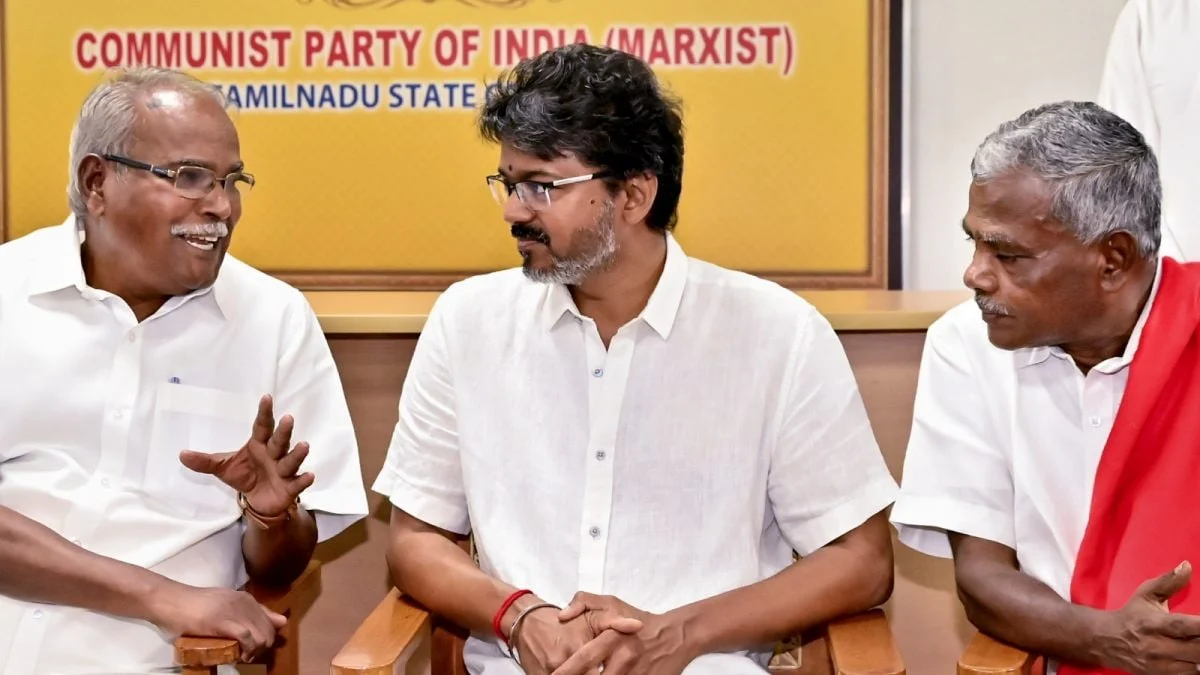
Further momentum was gained with the unconditional support extended by the Communist Party of India (CPI) and the Communist Party of India (Marxist) (CPI(M)). The Left parties, while pledging their legislative backing, clarified their intent to not be part of the Cabinet, opting instead to "externally" assist the TVK to ensure political stability in the state. While the exact number of seats held by the Left parties isn’t explicitly detailed in the initial reports, the collective support from Congress, CPI, and CPI(M) reportedly brought the coalition’s total to 116 members. This meant the TVK-led bloc was now just two seats away from forming the government.
Chronology of Confusion: A Day of Deliberation and Deadlock
Friday, May 8, proved to be another day of high drama and persistent uncertainty. The day began with a palpable sense of anticipation, fueled by earlier reports that the swearing-in ceremony was being planned for the following day. However, as the hours ticked by, the mood shifted from hopeful expectation to growing apprehension.
Morning: Vijay made his third visit to Governor Rajendra Vishwanath Arlekar, reportedly presenting letters of support from the CPI and CPI(M). He also, according to sources from the Lok Bhavan (the Governor’s official residence), assured the Governor that he would soon secure the backing of the Viduthalai Chiruthaigal Katchi (VCK) and the Indian Union Muslim League (IUML), which would comfortably take his tally beyond the majority mark.
Afternoon: Initial reports suggested that the VCK was indeed inclined to support Vijay, potentially adding their seats to the coalition and pushing the total to 118 MLAs – the magic number. This led to a brief period of optimism within TVK circles and among Vijay’s fervent fanbase. However, this optimism was short-lived.
Late Afternoon/Evening: A significant complication emerged as the VCK clarified its position. Sources close to CNN-News18 revealed that the VCK had made a specific demand: the Deputy Chief Minister’s post for its seasoned leader, Thol. Thirumavalavan, as a condition for joining the TVK-led alliance. This unexpected demand introduced a new layer of complexity, putting a temporary halt to the VCK’s unconditional support and deferring their final decision to Saturday. The VCK’s move immediately cast doubt on Vijay’s earlier assurance to the Governor about securing their support.
Simultaneously, another potential ally, the Indian Union Muslim League (IUML), which was also initially rumored to be leaning towards the TVK, issued a definitive statement that dashed any hopes of their support. The IUML firmly declared its unwavering commitment to the DMK-led alliance. "As far as IUML is concerned, we support the DMK. We were with them yesterday, we are with them today, and we will be with them tomorrow too," the party asserted in a public statement, effectively closing the door on any negotiations with the TVK. This clarification left the TVK once again scrambling for crucial numbers.
As the day drew to a close, the Governor’s office remained tight-lipped, having yet to extend the formal invitation to Vijay to form the government. The constitutional imperative for the Governor is to ensure that the party or coalition invited to form the government can demonstrably prove its majority on the floor of the House. Without this tangible proof, the Governor’s office has maintained its cautious stance, contributing significantly to the prevailing uncertainty.
Supporting Data: The Shifting Sands of Alliances
The core data points underscore the precariousness of the situation:
- Total Assembly Seats: 234
- Majority Mark: 118 seats
- TVK’s Tally: 108 seats (Single largest party)
- Congress Support: 5 seats (Total: 113)
- CPI & CPI(M) Support (External): Reports indicate this brought the total to 116. (This implies 3 seats for the Left parties combined, based on 108 + 5 + 3 = 116).
- VCK’s Stance: 4 seats (If they had joined, the tally would be 116 + 4 = 120, securing a comfortable majority. However, their demand for Deputy CM has put this on hold).
- IUML’s Stance: 2 seats (Their firm decision to remain with DMK eliminates their potential support).
This arithmetic clearly shows that as of Friday evening, the TVK-led coalition, with confirmed support, stands at 116 members, still two short of the 118-seat majority. The VCK, with its four seats, holds the key to breaking the deadlock, but its demand for a Deputy CM position has introduced a new layer of political bargaining.
Official Responses and Unofficial Maneuvers
The political atmosphere in Chennai is thick with official statements, veiled remarks, and frantic behind-the-scenes negotiations.
Governor’s Office: Governor Rajendra Vishwanath Arlekar’s office has consistently maintained a stance of constitutional propriety, demanding concrete proof of majority before extending an invitation. This adherence to protocol, while necessary, has frustrated the TVK camp and its supporters who believe that as the single largest party, they should be given the first opportunity. The Governor’s insistence on a clear numerical majority, rather than an assurance, highlights the delicate balance of power and the constitutional checks in place.
TVK Chief Vijay: Despite the setbacks, Vijay has maintained a determined posture, expressing confidence in his ability to secure the necessary numbers. His repeated visits to the Governor underscore the urgency and the pressure he is under. The planned swearing-in ceremony, though now uncertain, reflects the party’s initial optimism and strategic planning. The presence of national leaders like Rahul Gandhi and Mallikarjun Kharge at the anticipated event would have lent significant political weight to the TVK’s new government, a prospect now clouded by the ongoing deadlock.
Congress Party: The Congress’s decision to support the TVK, breaking ranks with the DMK, is a significant development. While not explicitly stated, this move could be interpreted as an attempt by the national party to assert its independence in state politics and perhaps position itself for future alignments. Their quick extension of support signaled a readiness to be part of a non-DMK/AIADMK government.
Left Parties (CPI, CPI(M)): The CPI and CPI(M)’s "unconditional external support" is a nuanced political maneuver. By supporting the TVK from outside the cabinet, they avoid direct responsibility for policy decisions while still contributing to political stability. This stance allows them to maintain their distinct ideological identity while preventing a potential collapse of the nascent government.
VCK Leader Thol. Thirumavalavan: The VCK’s demand for the Deputy Chief Minister’s post for Thol. Thirumavalavan is a clear assertion of their political significance and a strategic move to secure a prominent role in the new administration. Thirumavalavan, a prominent Dalit leader, carries considerable political weight, and his party’s support is crucial for the TVK. This demand transforms a simple alliance into a negotiation for power-sharing, a common feature in coalition politics. The VCK’s internal deliberations on Saturday will be keenly watched.
IUML: The IUML’s unequivocal declaration of loyalty to the DMK alliance is a testament to long-standing political relationships and ideological alignment. Their decision removes any ambiguity and highlights the challenges faced by the TVK in wooing traditional allies of the established Dravidian parties.
Implications: A State in Limbo
The protracted political deadlock carries profound implications for Tamil Nadu, affecting governance, public sentiment, and the future trajectory of state politics.
Governance Vacuum: The primary concern is the potential for a governance vacuum. Without a clear majority and a formally sworn-in government, crucial policy decisions, administrative actions, and the implementation of welfare schemes could be stalled. This uncertainty can have a direct impact on the state’s economy and the daily lives of its citizens.
Public Frustration and Fan Sentiment: The article noted "thousands of fans left stranded in Chennai" amidst the uncertainty surrounding Vijay’s swearing-in. This highlights the immense public expectation and the personal connection many have with the actor-turned-politician. The ongoing suspense could lead to growing frustration among his supporters, who have eagerly awaited his ascension to power. The enthusiasm generated by his electoral success could wane if the political impasse continues.
Constitutional Crisis: While not immediately imminent, a prolonged deadlock could inch the state towards a constitutional crisis. If no party or coalition is able to demonstrate a stable majority, the Governor might explore other options, including inviting the second-largest party (if any, though not explicitly mentioned here) or, in an extreme scenario, recommending President’s Rule. However, such drastic measures are usually reserved as a last resort.
Reshaping Alliances: The current scenario is forcing a re-evaluation of existing political alliances and forging new ones. The Congress breaking away from the DMK and the Left parties offering external support to the TVK are significant shifts. The VCK’s negotiation for a Deputy CM post also indicates a move towards more transactional politics, where power-sharing becomes a key element of alliance formation. This dynamic could set a precedent for future coalition governments in Tamil Nadu.
The Future of Dravidian Politics: Vijay’s emergence and the TVK’s strong performance signal a potential weakening of the traditional Dravidian political hegemony of the DMK and AIADMK. Should Vijay successfully form the government, it would mark a historic moment, ushering in a new era where a non-Dravidian party leads the state. However, the current struggles underscore the deep-rooted nature of these established political structures and the challenges faced by new entrants in navigating their complexities. The ability of TVK to consolidate its position and deliver stable governance will be crucial in determining the long-term impact on Tamil Nadu’s political landscape.
The Road Ahead: Uncertainty Persists
As Tamil Nadu collectively holds its breath, the focus now shifts to Saturday. The VCK’s decision regarding the Deputy Chief Minister’s post will be critical. If they agree to support the TVK, even with conditions, it could provide the much-needed numbers to cross the majority threshold. However, if the VCK’s demands prove insurmountable, or if they decide to abstain or oppose, the TVK will be back to square one, desperately seeking two more MLAs.
The suspense over Vijay’s swearing-in ceremony continues to stretch on, mirroring the broader uncertainty that grips the state. The coming hours and days will be crucial in determining whether Tamil Nadu will finally see a new government formed under the leadership of Vijay, or if the political deadlock will force further rounds of negotiations, or even more drastic political maneuvers. The saga of government formation in Tamil Nadu is far from over, and Vijay, the political newcomer, will indeed have to fight another day to realize his ambition of becoming the Chief Minister.
