

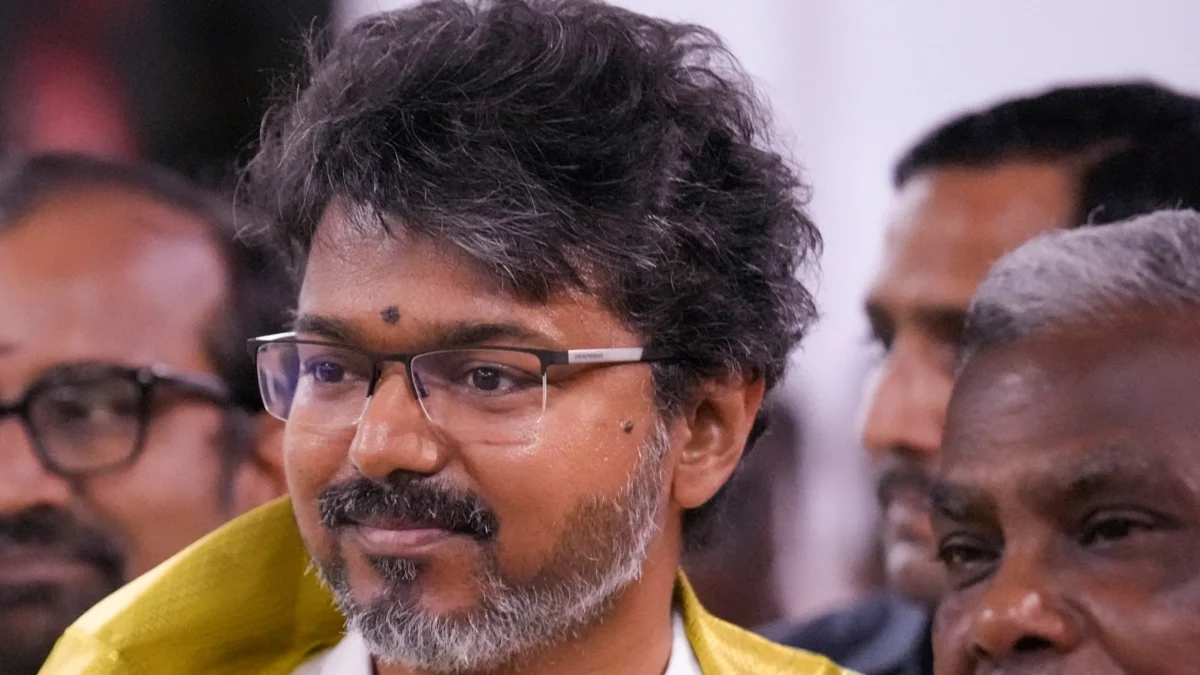
Chennai, Tamil Nadu – May 8, 2026 – What began as a day of fervent celebration and seemingly assured triumph for actor-turned-politician Vijay’s Tamilaga Vettri Kazhagam (TVK) devolved into a nail-biting political drama late on Friday evening. The much-anticipated formation of the TVK government, initially expected to culminate in a swift swearing-in ceremony on Saturday, ground to an abrupt halt as a crucial letter of support from the Viduthalai Chiruthaigal Katchi (VCK) failed to materialise. This unforeseen delay, coupled with explosive allegations of horse-trading and a missing Member of Legislative Assembly (MLA), plunged Tamil Nadu into a fresh wave of political uncertainty, testing the resolve of nascent alliances and reigniting the strategic machinations of the state’s seasoned political players.
The day had dawned with an air of buoyant expectation. TVK cadres, buoyed by the party’s strong performance in the recent 2026 Assembly elections and the publicly declared support from key allies, had already begun preparations for a grand inauguration. Firecrackers illuminated the skies outside Vijay’s Panayur residence, and party workers, brimming with confidence, openly spoke of a historic swearing-in ceremony within hours. However, as the sun set over Chennai, the celebratory mood gave way to palpable tension, transforming what was believed to be a ‘done deal’ into a precarious political standoff.
The arithmetic, once seemingly settled, began to wobble precariously. While the Congress, CPI, and CPI(M) had formally extended their backing, pushing TVK tantalisingly close to the 118-seat majority mark, the absence of a formal declaration from VCK chief Thol Thirumavalavan proved to be the critical missing piece. Despite his earlier public pronouncements that VCK would align with the decision of the Left parties – who had already committed to TVK – the crucial letter of support to Governor Rajendra Arlekar remained unsubmitted late into Friday night. This oversight left Vijay’s camp technically short of the required numbers, throwing the entire government formation process into disarray and setting the stage for a dramatic nocturnal political spectacle.
A Day of Shifting Sands: Chronology of May 8, 2026
The political landscape of Tamil Nadu witnessed a dizzying array of events on May 8, 2026, marked by initial euphoria, escalating suspense, and a dramatic late-night intervention.
Morning Hopes and Celebrations
The early hours of Friday were dominated by an infectious optimism within the TVK ranks. Following the 2026 Assembly election results, which saw Vijay’s party emerge as a formidable force, expectations were sky-high. TVK leaders and cadres were confident that with the pledged support of the Congress, CPI, and CPI(M), along with anticipated backing from the VCK and Indian Union Muslim League (IUML), they had comfortably surpassed the 118-seat majority threshold needed to form the government. The atmosphere outside Vijay’s Panayur residence was electric, with supporters bursting firecrackers, distributing sweets, and engaging in jubilant celebrations. The nascent party’s leadership had reportedly already begun making preliminary arrangements for a swearing-in ceremony, tentatively scheduled for Saturday morning, signalling their belief that the path to power was clear.
A significant gesture of alliance-building occurred when TVK chief Vijay personally visited the headquarters of the CPI and CPI(M) in Chennai. Accompanied by senior party functionaries, Vijay was warmly welcomed by CPI(M) Tamil Nadu state secretary P. Shanmugam and other veteran Left leaders. The visits were framed as a gesture of gratitude, with Vijay publicly thanking the Left parties for their crucial support in forming the government. This public display of unity further cemented the perception that the TVK-led alliance was robust and ready to take the reins of power, adding to the day’s initial wave of confidence.
The Afternoon’s Growing Unease
As the day progressed, a subtle shift in the political mood began to emerge. While the celebrations continued, a quiet undercurrent of anxiety started to permeate the TVK camp. The official letter of support from the VCK, a critical component for cementing the majority, remained conspicuously absent. This delay, initially dismissed by some as a procedural formality, began to raise eyebrows as the afternoon wore on. Political analysts and journalists tracking the developments noted the unusual silence from VCK chief Thol Thirumavalavan, especially given his earlier public commitment to follow the Left parties’ lead.
By late afternoon, the initial certainty began to erode. Sources within the Governor’s office discreetly indicated that during a meeting with TVK representatives, the official tally of MLAs supporting Vijay stood at 116. This figure, while substantial, was two seats short of the magic number of 118. The discrepancy highlighted the crucial nature of VCK’s pending support and underscored the fragility of the perceived majority. The absence of Thirumavalavan’s formal letter meant that, on paper, TVK had not yet demonstrated the numerical strength required to stake a definitive claim to government formation. The "arithmetic," as the article stated, was indeed "wobbling again."
Night of Intense Deliberations
The evening hours transformed into a period of intense, closed-door negotiations and frantic political manoeuvring. VCK chief Thirumavalavan became the focal point of this nocturnal drama. Despite his earlier public statement endorsing the Left parties’ stance, he had refrained from making a final decision or submitting the formal letter of support. Reports indicated that Thirumavalavan held a series of marathon meetings throughout the night, engaging with representatives from not only TVK but also the formidable Dravidian rivals: the All India Anna Dravida Munnetra Kazhagam (AIADMK) led by Edappadi K. Palaniswami (EPS) and the Dravida Munnetra Kazhagam (DMK) under outgoing Chief Minister M.K. Stalin.
These multi-party deliberations hinted at a deeper game being played, suggesting that Thirumavalavan was strategically leveraging his pivotal position to extract maximum concessions or explore alternative political alignments. The suspense escalated further when, even after telling reporters that VCK would stand with the Left, Thirumavalavan made a late-night visit to outgoing Chief Minister M.K. Stalin’s residence. Discussions at Stalin’s abode continued past 10 PM, fuelling intense speculation about the nature of these conversations and the potential for a last-minute shift in alliances. The VCK, a key Dalit-centric party, suddenly found itself holding the decisive swing vote, its leader engaging in high-stakes parleys with all major political players.
The Dhinakaran Bombshell and Governor’s Intervention
Just as the political rumour mill was working overtime, a bombshell dropped that further complicated the already volatile situation. T.T.V. Dhinakaran, chief of the Amma Makkal Munnetra Kazhagam (AMMK) and an existing NDA ally, visited Governor Rajendra Arlekar after 9 PM. Dhinakaran’s visit was not to pledge support but to lodge a serious complaint. He accused Vijay’s TVK of engaging in horse-trading, alleging that his party’s sole MLA, Kamaraj, was missing.
"My MLA is not picking up my phone, or he has been taken in custody, and his phone has been snatched. My MLA Kamaraj is missing. I demanded an immediate investigation by the Governor," Dhinakaran reportedly stated, his words sending shockwaves through political circles. This serious accusation, implying unlawful detention and attempts to sway legislative support through unethical means, demanded immediate attention. The Governor, seized of the gravity of the situation, acted swiftly. Within moments of Dhinakaran’s complaint, Governor Arlekar issued urgent orders to the state Director General of Police (DGP) to trace the missing MLA. More significantly, the Governor called off all plans to hold the swearing-in ceremony on Saturday, citing the unprecedented circumstances and the need to ensure the integrity of the government formation process. This decisive intervention effectively put the brakes on TVK’s immediate aspirations for power, transforming the celebratory atmosphere into one of deep apprehension and uncertainty.
The Numbers Game: Understanding the Political Chessboard
The dramatic events of May 8, 2026, underscore the precarious nature of government formation in a fragmented electoral landscape. The 2026 Tamil Nadu Assembly election results, while marking a significant entry for TVK, did not yield an outright majority for any single party or pre-poll alliance. This outcome necessitated complex post-election negotiations, elevating the role of smaller parties and individual MLAs to unprecedented importance.
The 2026 Mandate and TVK’s Challenge
While the exact seat tally for TVK was not explicitly detailed, the narrative clearly indicates they emerged as a strong contender, likely the single largest party, but fell short of the 118-seat majority. This deficit forced Vijay’s party to actively seek coalition partners, a new experience for a party making its debut. The Congress, CPI, and CPI(M) had committed their support, demonstrating a willingness to align with the new political force. The anticipated backing from IUML and VCK was crucial to bridge the gap. The Governor’s office confirming 116 MLAs on record for Vijay meant that the VCK’s support (assuming they hold more than one seat, as is typical for a party of their stature) was indispensable. This situation turned a celebratory march to power into a tense negotiation.
VCK’s Strategic Leverage
Thol Thirumavalavan, the charismatic leader of the Viduthalai Chiruthaigal Katchi (VCK), found himself holding the decisive swing vote. As a prominent Dalit-centric party, VCK has historically played a significant role in Tamil Nadu politics, often aligning with the larger Dravidian parties. Thirumavalavan’s public statement that VCK would follow the Left parties’ decision indicated an initial inclination towards TVK. However, his subsequent delay in submitting the formal letter, coupled with his marathon meetings with DMK and AIADMK leaders, suggests a calculated move to maximise his party’s leverage.
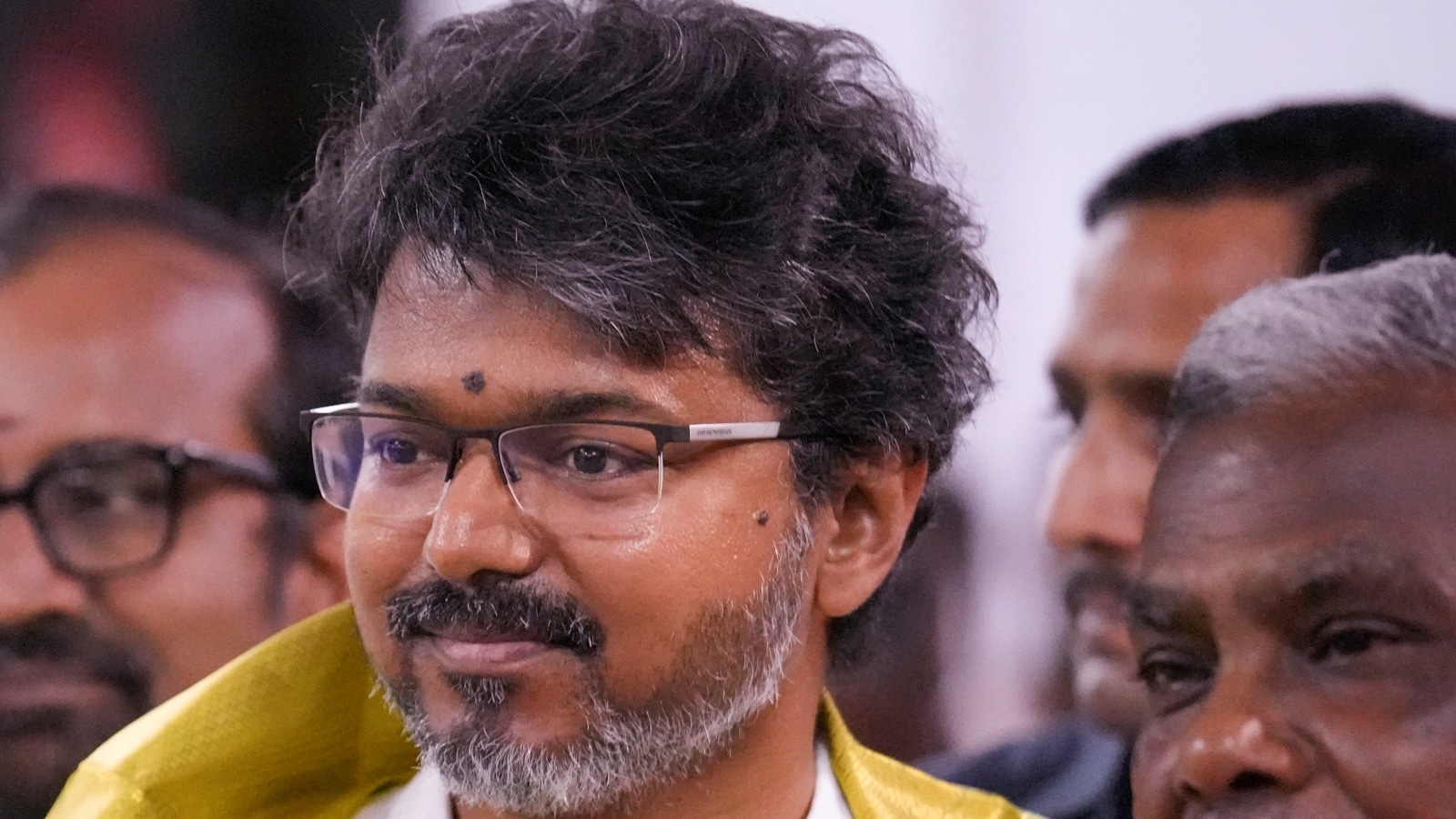
For VCK, this moment presented an opportunity to secure better terms, policy commitments, or even ministerial berths in the new government. The political chess game allowed Thirumavalavan to position himself as a kingmaker, potentially extracting concessions that could benefit his party’s electoral prospects and social agenda in the long run. His arrival at Stalin’s residence late at night, despite his earlier public stance, was a clear signal that all options were on the table, and VCK was not merely a rubber stamp for the Left’s decision.
The Dravidian Giants’ Shadow Play
The involvement of outgoing Chief Minister M.K. Stalin (DMK) and former Chief Minister Edappadi K. Palaniswami (AIADMK) in the late-night deliberations with Thirumavalavan speaks volumes about their vested interests. For both established Dravidian parties, the rise of TVK represents a significant challenge to their decades-long duopoly. A smooth and swift government formation by Vijay’s party would solidify its position and potentially reshape the state’s political landscape permanently.
Therefore, it is highly probable that both DMK and AIADMK were actively engaged in strategies to either prevent TVK’s immediate ascent or, at the very least, complicate its path to power. The rumour circulating from VCK circles about Thirumavalavan himself emerging as a "consensus Chief Ministerial face" under an arrangement explored by EPS and Stalin, while unverified, highlights the desperation and fluidity of the situation. Such a move, if feasible, would be a stunning development, designed to thwart Vijay’s chief ministerial ambitions and maintain the influence of the traditional Dravidian forces, even if it meant a temporary, unlikely alliance between the DMK and AIADMK.
The Role of the Governor
Governor Rajendra Arlekar’s role became paramount in this unfolding drama. In a hung assembly, the Governor, as the constitutional head of the state, plays a critical role in inviting the single largest party or a coalition to form the government, ensuring they demonstrate a clear majority. The Governor’s office, by officially recording 116 MLAs for TVK, confirmed the numerical shortfall and highlighted the need for VCK’s formal support.
His swift response to TTV Dhinakaran’s allegations of horse-trading and a missing MLA was crucial for upholding democratic principles and the integrity of the electoral process. Ordering the DGP to trace the missing MLA and subsequently calling off the swearing-in ceremony demonstrated the Governor’s commitment to due process and prevention of unconstitutional practices. This intervention not only stalled TVK’s progress but also sent a strong message against any attempts at unethical legislative manipulation, asserting the constitutional authority in a time of political flux.
Allegations and Rumours: Beneath the Surface of Official Statements
In the highly charged atmosphere of a hung assembly, where political futures hang in the balance, rumours and unverified claims often proliferate faster than official statements. The events of May 8, 2026, were no exception, revealing the intricate web of speculation that underscores Tamil Nadu politics.
The "Consensus CM" Whispers
One of the most startling rumours to emerge from VCK circles was the suggestion that EPS and Stalin were exploring an arrangement under which Thol Thirumavalavan himself could emerge as a consensus Chief Ministerial face. This claim, if true, would represent an extraordinary political manoeuvre. It would imply a temporary, strategic alignment between the arch-rivals DMK and AIADMK, united by a common interest: to prevent the immediate rise of Vijay’s TVK. For Thirumavalavan, such an offer, even if short-lived, would be an unprecedented elevation, placing a Dalit leader at the helm of Tamil Nadu’s government, albeit through an unconventional route. While highly speculative and lacking concrete evidence, the very existence of such a rumour highlights the desperation and willingness of established parties to consider radical options to protect their dominance against a new formidable challenger. It also underscores Thirumavalavan’s enhanced bargaining power in the current scenario.
Horse Trading Allegations
TTV Dhinakaran’s explosive accusation of horse-trading against Vijay’s TVK added a sinister dimension to the political crisis. Allegations of MLAs being ‘taken into custody’ or their phones being ‘snatched’ are serious charges that strike at the heart of democratic integrity. Horse-trading, the practice of inducing elected representatives to switch allegiance through bribery or other illicit means, is a recurring dark stain on Indian parliamentary democracy, particularly prevalent in hung assembly situations. While Dhinakaran’s claim about his single AMMK MLA, Kamaraj, remains to be investigated, it immediately cast a shadow over TVK’s efforts to secure a majority. Such accusations not only undermine public trust in the political process but also can lead to legal complications and further delays in government formation. The Governor’s immediate order for an investigation signals the seriousness with which such allegations are treated and the potential legal ramifications for any party found to be involved.
Unverified Claims and Political Spin
The entire day was a testament to how information, and misinformation, can spread rapidly in a volatile political environment. From the initial certainty of a Saturday swearing-in to the dramatic late-night developments, the narrative shifted constantly. Political camps were likely engaged in strategic leaks, rumour-mongering, and calculated silences to shape public perception and influence the actions of rivals. The lack of clear, official statements from all parties involved, particularly from VCK about their final decision, further fuelled the speculation. In such an environment, the media, too, plays a crucial role in distinguishing between verified facts and unconfirmed rumours, a challenging task when the stakes are so high and information is tightly controlled by the political players. The incident served as a stark reminder of the opaque nature of coalition politics and the strategic use of ambiguity in the pursuit of power.
Implications and the Road Ahead
The dramatic turn of events on May 8, 2026, carries profound implications for TVK, VCK, the established Dravidian parties, and the future political landscape of Tamil Nadu. The stalled government formation has initiated a period of intense uncertainty and strategic recalibration.
For TVK and Vijay
For Vijay, this episode marks a challenging "baptism by fire" in his political debut. What was envisioned as a triumphant entry into the Chief Minister’s office has been met with unexpected resistance and complex political manoeuvring. The delay in government formation tests his leadership skills, his ability to negotiate intricate alliances, and his capacity to maintain cohesion within his nascent party. The allegations of horse-trading, even if unproven, could potentially tarnish TVK’s image as a fresh alternative, especially if the party fails to provide transparent responses. Vijay’s ability to navigate this crisis, secure the necessary support, and project an image of stability will be crucial for his long-term political credibility and the future of TVK. This unexpected hurdle demands not just numerical strength but also strategic acumen and resilience.
For VCK and Thirumavalavan
Thol Thirumavalavan and the VCK find themselves at a crossroads of immense political leverage and ethical scrutiny. His prolonged indecision, while strategically advantageous for extracting concessions, also risks alienating potential allies like the Left parties, who had expected him to follow their lead. His late-night meetings with DMK and AIADMK leaders, and the subsequent rumours of a "consensus CM" offer, place him in a delicate position. Thirumavalavan must now carefully weigh the political gains of playing kingmaker against the potential damage to his party’s reputation for alliance loyalty and ethical conduct. His final decision will not only determine the immediate fate of the Tamil Nadu government but also significantly impact VCK’s standing and future political alignments.
For Tamil Nadu’s Political Future
The current impasse signals a period of heightened instability for Tamil Nadu’s political future. The possibility of a minority government, a fragile coalition, or even fresh elections cannot be ruled out if a stable majority cannot be formed. The episode underscores the changing dynamics of Dravidian politics, where the traditional dominance of DMK and AIADMK is now being challenged by new forces like TVK. The willingness of the established parties to potentially align against a common challenger, even briefly, indicates a fundamental shift in political strategies. The coming days will reveal whether Tamil Nadu will witness a stable coalition, an era of political instability, or a complete re-evaluation of the electoral mandate. The fragmentation of the assembly demands greater consensus-building and coalition management skills, which could redefine the nature of governance in the state.
Constitutional and Democratic Concerns
The allegations of horse-trading and the disappearance of an MLA raise serious constitutional and democratic concerns. Such practices undermine the will of the electorate and corrode public faith in the democratic process. The Governor’s swift action to order an investigation and halt the swearing-in ceremony was critical in asserting the constitutional framework. The integrity of the legislative assembly and the electoral process hinges on transparent and ethical conduct from all political actors. Depending on the outcome of the investigation into the missing MLA, this incident could set an important precedent regarding the Governor’s role in addressing allegations of impropriety during government formation and ensuring that elected representatives are free from undue influence.
In conclusion, the night of May 8, 2026, transformed a seemingly straightforward path to power for TVK into a convoluted political maze. The absence of a critical letter of support, coupled with explosive allegations and last-minute manoeuvring by seasoned players, has plunged Tamil Nadu into a state of acute political suspense. As the state awaits Thirumavalavan’s final decision and the outcome of the investigation into the missing MLA, the high stakes and shifting alliances promise an unpredictable and defining chapter in Tamil Nadu’s rich political history. The coming days will undoubtedly shape the contours of the state’s governance for years to come.
