

Introduction: A Strategic Leap in the Entry-Level EV Segment
In a decisive move to consolidate its dominance in the Indian electric vehicle (EV) market, Tata Motors has officially launched the 2026 Tata Tiago EV. This latest iteration of India’s most popular electric hatchback is not merely a cosmetic update; it represents a fundamental shift in how affordable electric mobility is packaged and sold in the subcontinent. With a starting price of Rs 6.99 lakh (ex-showroom), the 2026 Tiago EV brings sophisticated technology, enhanced safety, and a revolutionary ownership model to the masses.

The launch comes at a critical juncture when the Indian automotive landscape is witnessing a surge in urban EV adoption. By integrating its innovative Battery-as-a-Service (BaaS) program, Tata Motors has effectively lowered the entry barrier for first-time EV buyers, bringing the upfront cost down to an unprecedented Rs 4.69 lakh (plus battery rental). This strategic pricing directly challenges internal combustion engine (ICE) counterparts and positions the Tiago EV as a formidable rival to the MG Comet EV and the Citroen eC3.
Chronology: The Evolution of the Tiago EV
The journey of the Tiago EV began in late 2022, when it was introduced as the electric avatar of Tata’s successful entry-level hatchback. It quickly became the catalyst for the "EV revolution" in India, offering a practical range and a familiar form factor.

By 2024, the Tiago EV had secured a massive market share, but the entry of competitors like the MG Comet necessitated a refresh. Throughout 2025, Tata worked on integrating feedback from thousands of early adopters, focusing on interior quality, infotainment tech, and safety. The 2026 facelift is the culmination of this development cycle, introducing a more premium aesthetic and a feature list previously reserved for higher-segment vehicles like the Nexon EV. The introduction of the BaaS model in 2026 marks the third phase of Tata’s EV strategy: making the "green" choice the most economically logical choice for the average Indian commuter.
Main Facts: Pricing, Variants, and Aesthetics
The 2026 Tata Tiago EV is structured across three primary trim levels—Smart, Pure+, and Creative+—offered with two distinct battery pack options to suit different range requirements.

Pricing Structure and the BaaS Advantage
The traditional ownership model sees the Tiago EV priced between Rs 6.99 lakh and Rs 9.99 lakh. However, the BaaS model is the highlight of this launch:
- Upfront Entry Price: Rs 4.69 lakh.
- Battery Rental: Rs 2.6 per km.
- Target Audience: High-mileage urban commuters who prefer lower initial capital expenditure.
Dimensions and Design Language
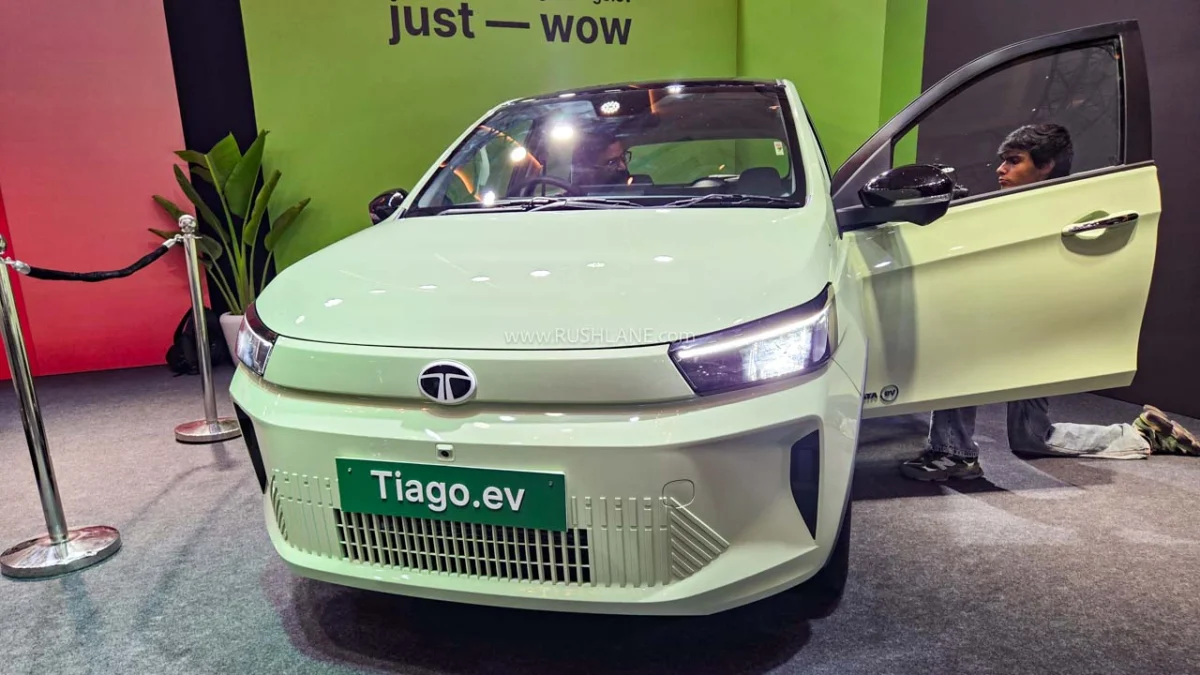
Maintaining its nimble urban footprint, the Tiago EV measures 3,825 mm in length, 1,684 mm in width, and 1,562 mm in height, with a wheelbase of 2,400 mm. The 2026 facelift introduces a refreshed color palette inspired by Indian landscapes, including:

- Dehradun Dew (A soft, earthy green)
- Pangong Pulse (A deep, vibrant blue)
- Sobo Surge (A modern, electric hue)
- Matheran Monsoon, Pure Grey, and Pristine White.
The exterior design is characterized by a "closed-off" body-colored grille, signifying its electric heart, and new "Lux Beam" LED headlamps that provide superior illumination for night driving.
Supporting Data: Comprehensive Variant Breakdown
Tata Motors has meticulously curated the feature list for each variant to ensure value at every price point.

1. The Smart 19 (Base Variant)
The Smart 19 is designed for the budget-conscious buyer who does not want to compromise on the core EV experience.
- Interior: Features the "Fabrica Luxe" dashboard finish and Melange fabric upholstery, giving the cabin a surprisingly premium feel for a base trim.
- Convenience: Includes fully automatic climate control as standard, a rotary drive selector, and multi-level regenerative braking.
- Connectivity: Surprisingly, even the base variant receives the iRA.ev connected car suite, offering over 40 features including remote geofencing and vehicle health alerts.
- Safety: 6 Airbags, ABS with EBD, and ISOFIX child seat mounts are standard across the range.
2. The Pure+ 19 / Pure+ 24 (The Mid-Range Choice)
The Pure+ trim acts as the volume driver, balancing cost and modern amenities.

- Infotainment: A 20.32 cm (8-inch) touchscreen infotainment system with wireless Android Auto and Apple CarPlay.
- Exterior: Adds R14 wheel covers, a shark fin antenna, and electrically adjustable ORVMs with integrated turn indicators.
- Practicality: Includes a rear defogger, all four power windows, and USB Type-C fast charging ports.
3. The Creative+ 24 (The Flagship Experience)
The Creative+ 24 is aimed at tech-savvy buyers who want a "big car" experience in a compact hatch.
- Display: A massive 26.03 cm (10.25-inch) HD touchscreen infotainment system.
- Safety Tech: A 360-degree Surround View System (SVS) HD camera, providing 2D and 3D views, along with a Blind View Monitor.
- Premium Touches: Soft-touch fabric inserts on the doors, "Hyperstyle" wheels, and a connected tail lamp setup that spans the width of the rear.
- Assistance: Automatic headlamps, rain-sensing wipers, and Electronic Stability Program (ESP) with Hill Hold Assist.
Technical Specifications: Performance and Range
The 2026 Tiago EV utilizes Tata’s proven Ziptron technology, optimized for Indian driving conditions.

Battery and Motor Performance
- 19.2 kWh Battery: Paired with a 45 kW permanent magnet synchronous motor. It produces 110 Nm of torque and achieves 0-60 km/h in 6.2 seconds. This variant offers an MIDC-claimed range of 226 km.
- 24 kWh Battery: Paired with a more powerful 55 kW motor, producing 114 Nm of torque. It sprints from 0-60 km/h in just 5.7 seconds. This variant offers a claimed range of 285 km.
Charging Capabilities
Both battery packs are designed for rapid replenishment. Using a DC fast charger, the Tiago EV can juice up from 10% to 80% in approximately 35 minutes, making inter-city dashes feasible with minimal downtime. For home charging, Tata provides a standard 3.3 kW AC charger, with an optional 7.2 kW fast AC home charger for the larger battery variants.
Official Responses and Warranty: The Fine Print
Tata Motors has been vocal about its commitment to long-term EV reliability. A spokesperson for Tata Passenger Electric Mobility stated at the launch, "The 2026 Tiago EV is a testament to our philosophy of democratizing technology. By introducing the Lifetime Battery Warranty, we are removing the final vestige of ‘range and reliability anxiety’ from the consumer’s mind."

The "Lifetime" Warranty Explained
The much-touted lifetime HV battery warranty is a industry-first but comes with specific caveats to ensure fair usage:
- Eligibility: Valid only for the 24 kWh battery variants.
- Duration: Defined as 15 years from the date of first registration.
- Ownership: Primarily for private individual registrations. If the car is sold, the new owner must register the transfer with Tata within a specified window to retain the warranty.
- Usage: The warranty covers "fair personal usage." Commercial use (taxis/fleet) or "extraordinary usage patterns" are excluded to prevent abuse of the system.
Implications: How the 2026 Tiago EV Changes the Market
The arrival of the 2026 Tata Tiago EV has several profound implications for the Indian automotive sector:

1. The Death of the "Second Car" Syndrome
Previously, EVs were viewed as secondary vehicles for short city runs. With the 285 km range and improved fast-charging, the Tiago EV is increasingly capable of serving as a primary vehicle for small families, especially in Tier-1 and Tier-2 cities.
2. Mainstreaming of Safety in Small Cars
By offering 6 airbags, ESP, and a 360-degree camera in a hatchback, Tata is forcing competitors to upgrade their safety suites. This "safety-first" approach is likely to improve the overall crash-test standards of the Indian entry-level segment.

3. The BaaS Disruption
The Battery-as-a-Service model shifts the cost of the most expensive component of an EV—the battery—from a capital expense to an operational expense. If successful, this model could be the blueprint for all future mass-market EVs in developing economies, as it mirrors the "pay-as-you-go" logic that consumers are already comfortable with in the smartphone and utility sectors.
4. Urban Infrastructure Pressure
With the Tiago EV likely to sell in significant volumes, the pressure on urban charging infrastructure will increase. This launch will likely spur further investment from private charging point operators (CPOs) who see a growing "captive audience" of Tiago EV owners.

Conclusion
The 2026 Tata Tiago EV facelift is more than a mid-life update; it is a comprehensive re-imagining of the entry-level electric car. By blending premium features like a 360-degree camera and a 10.25-inch screen with a disruptive pricing model (BaaS), Tata Motors has built a bridge between the present and an all-electric future. As it hits showrooms across India, the Tiago EV stands as a benchmark of how local manufacturers can innovate to meet the unique economic and aspirational needs of the Indian consumer.
