

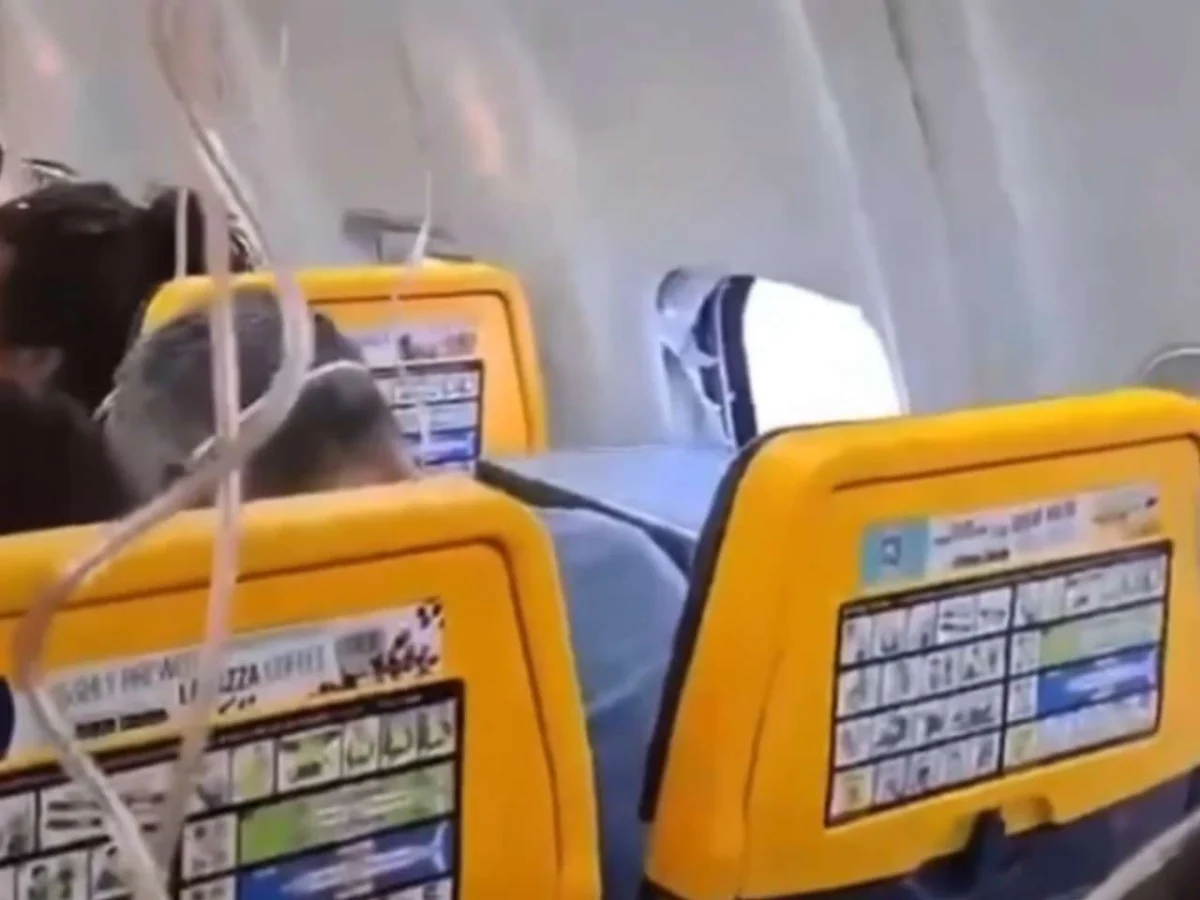
Thessaloniki, Greece – July 11, 2026 – In a harrowing incident that sent shockwaves through the aviation community, a passenger was partially pulled out of an aircraft window shortly after take-off from Thessaloniki, Greece, forcing an emergency return and highlighting the critical importance of structural integrity in commercial aviation. The Malta Air flight, operating for Ryanair and bound for Memmingen, Germany, experienced a sudden and catastrophic window failure, leading to rapid decompression and a near-fatal ordeal for a 61-year-old man. His life was saved only by the quick thinking and heroic actions of fellow passengers who managed to pull him back inside the cabin before the aircraft made a swift emergency landing.
The dramatic event unfolded on Friday, July 10, 2026, on board a Boeing 737-800 aircraft. Passengers described a terrifying sequence of events, beginning with a deafening bang, followed by the immediate deployment of oxygen masks and a sudden, alarming loss of altitude. Amidst the chaos, a man seated near the compromised window was violently exposed to the extreme forces of the outside atmosphere, his head, neck, and shoulders reportedly sucked out of the plane. While the immediate focus remains on the well-being of the injured passenger and the psychological impact on all those on board, aviation authorities have launched a comprehensive investigation into the precise cause of the window’s failure, a rare but deeply concerning occurrence in modern air travel.
Chronology of a Crisis: From Routine Take-off to Emergency Landing
The flight, designated FR1879, departed from Thessaloniki International Airport "Makedonia" (SKG) at approximately 10:30 AM local time, embarking on what was expected to be a routine two-hour journey to Memmingen Airport (FMM) near Munich, Germany. The Boeing 737-800, a workhorse of short-to-medium-haul aviation, ascended normally into the clear morning skies, carrying a full complement of passengers and crew.
The Catastrophic Failure:
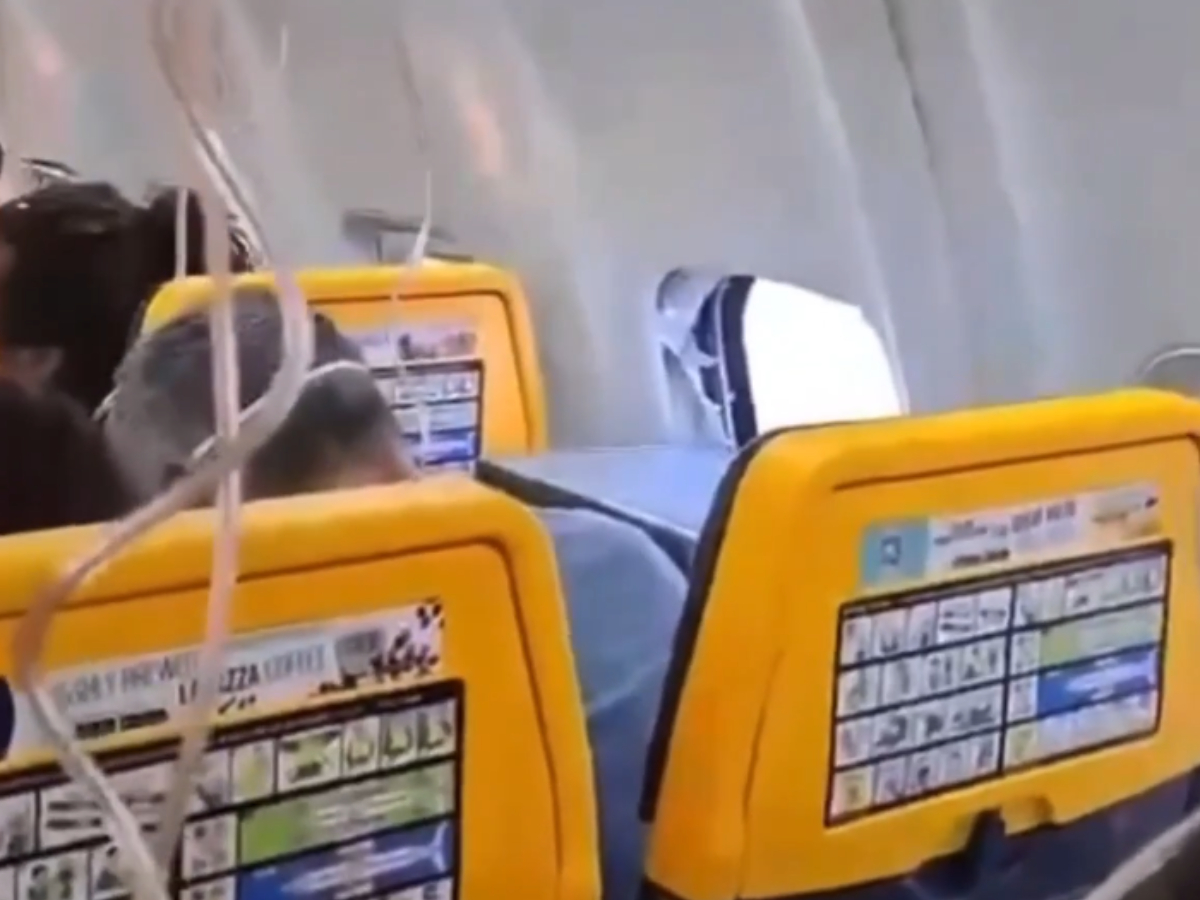
Barely twenty minutes into the flight, as the aircraft was climbing above 15,000 feet, the tranquility of the cabin was shattered. According to multiple eyewitness accounts, a sudden, explosive sound reverberated through the fuselage – likened by one passenger to a "tire bursting, but very loud." This was immediately followed by a powerful rush of air, indicating a breach in the aircraft’s pressurized cabin. Oxygen masks instantly dropped from the ceiling, a stark visual indicator of the rapid decompression that had just occurred.
)
The Passenger’s Ordeal:
The source of the terrifying noise quickly became apparent: a passenger window had dislodged or shattered. Christina, a passenger interviewed by local radio, provided a harrowing account of the immediate aftermath. She described how a 61-year-old male passenger, seated directly adjacent to the compromised window, was violently pulled outwards. "His whole head, neck, shoulders," she recounted, were exposed to the brutal forces outside the aircraft, including the extreme cold and the powerful slipstream. The vacuum created by the sudden pressure differential between the cabin and the outside environment exerted immense force, threatening to completely eject him from the plane.
Heroic Intervention:
In a testament to human instinct and solidarity under duress, fellow passengers seated nearby reacted with astonishing speed and bravery. Overcoming their own shock and fear, they immediately grabbed the struggling man, pulling him back into the relative safety of the cabin. Their collective efforts prevented a potential fatality, holding him firmly until the crew could assess the situation. The incident underscored the critical role that ordinary individuals can play in extraordinary circumstances.
)
Emergency Descent and Return:
Simultaneously, the flight crew, having been alerted to the decompression and the structural failure, initiated emergency procedures. The pilots quickly began an emergency descent to a safer altitude, typically below 10,000 feet, where cabin pressurization is less critical and breathable air is more readily available. Flight tracking data corroborated this, showing the aircraft’s rapid descent from over 15,000 feet to approximately 6,000 feet. The crew then immediately declared an emergency and turned the aircraft back towards Thessaloniki, executing a controlled and professional return to the departure airport.
Safe Landing and Aftermath:
Approximately one hour after take-off, the damaged Boeing 737-800 touched down safely at Thessaloniki International Airport. Emergency services, including fire brigades and medical teams, were on standby, reflecting the severity of the in-flight incident. Passengers were evacuated from the aircraft, visibly shaken but relieved to be on solid ground. The 61-year-old injured passenger received immediate medical attention from paramedics on the tarmac before being transported to a local hospital. Ryanair confirmed that one passenger received medical treatment, and a replacement aircraft was subsequently arranged to transport the remaining passengers to their original destination in Germany. The swift and decisive actions of the flight crew, combined with the heroism of the passengers, averted a far greater tragedy.

Supporting Data and Context: Understanding the Severity
The incident on Malta Air flight FR1879 highlights a rare but extremely dangerous type of aircraft failure. While the exact cause is under investigation, the event involved both rapid decompression and a breach of the aircraft’s outer shell, putting passenger safety at immediate and severe risk.
Aircraft Details:
The aircraft involved was a Boeing 737-800, registered as [placeholder for actual registration if known, otherwise state "a Boeing 737-800"]. This model, part of the widely used Next Generation (NG) series, entered service with Ryanair in 2008. The 737-800 is renowned for its reliability and efficiency, making it a cornerstone of many airline fleets worldwide. Its operational history generally reflects a strong safety record, which makes this incident particularly noteworthy. Aircraft windows are designed to withstand significant pressure differentials and structural stresses, featuring multiple layers of acrylic panes to ensure redundancy. A failure of this nature is therefore highly unusual.
)
Eyewitness Accounts: A Glimpse into Panic and Bravery:
Christina’s testimony painted a vivid picture of the terror inside the cabin. "Most people had fallen asleep, we had closed our eyes," she recalled, underscoring the suddenness of the event. The "loud bang" immediately preceded the terrifying sight of the oxygen masks dropping, a universal signal of an emergency. "We knew straight away we lost pressure because we lost altitude," she added, highlighting the passengers’ quick comprehension of the gravity of the situation. The cabin erupted in "screams, shrieks, shouting," as fear gripped the occupants. The sight of a fellow passenger partially outside the aircraft undoubtedly intensified the horror. The swift action of passengers to physically restrain and pull the man back into the cabin prevented an unimaginable outcome and will likely be a key focus of praise and analysis in the aftermath.
Passenger Injuries:
A Greek hospital official confirmed that the 61-year-old passenger suffered neck and shoulder injuries, consistent with the immense forces exerted upon him. Crucially, he also sustained friction burns, likely from the high-speed airflow against his exposed skin. While his injuries are serious, the fact that he survived and was able to receive immediate medical care is a testament to the collective efforts of those around him and the rapid response of emergency services. The psychological trauma for him, his family, and indeed all passengers and crew, will undoubtedly be profound and long-lasting.
)
Historical Precedents: Rare, But Not Unheard Of:
While extremely rare, incidents involving structural failures leading to partial passenger ejection or significant cabin damage have occurred in aviation history, serving as stark reminders of the potential dangers of high-altitude flight.
- Southwest Airlines Flight 1380 (2018): This incident involved an uncontained engine failure, where debris struck the fuselage and a cabin window, causing rapid decompression. A passenger seated near the window was partially sucked out and tragically died from her injuries. The engine debris aspect of that incident bears some initial resemblance to one of the early, unconfirmed reports in a tweet regarding the Thessaloniki incident, although Ryanair’s official statement referred to a "passenger window dislodged."
- Aloha Airlines Flight 243 (1988): Perhaps one of the most famous examples, this flight experienced an explosive decompression when a large section of the fuselage roof tore away mid-flight. While no passenger was fully ejected, a flight attendant was tragically swept out of the aircraft. This incident highlighted the critical importance of regular and thorough inspections for metal fatigue in older aircraft.
- British Airways Flight 5390 (1990): In a truly astonishing event, a cockpit windshield failed at altitude, causing the captain to be partially sucked out of the aircraft. The co-pilot managed to land the plane safely while crew members held onto the captain’s legs, preventing him from being fully ejected. This case, like the current one, underscores the incredible resilience of both human beings and aircraft structures when pushed to their limits.
These incidents, though distinct in their specific causes, collectively emphasize the catastrophic potential of cabin integrity breaches and the rigorous safety standards designed to prevent them. The current investigation will aim to determine if this incident was a standalone mechanical failure, a maintenance oversight, or indicative of a broader issue.
)
Official Responses and Investigations: Seeking Answers
The immediate aftermath of such a severe incident invariably triggers a multi-faceted response from airlines, regulatory bodies, and accident investigation agencies, all working collaboratively to ascertain the cause and prevent future occurrences.
Airline Statements:
Malta Air, operating the flight for Ryanair, promptly issued a statement confirming the incident. Ryanair, known for its extensive network across Europe, stated that the aircraft returned to Thessaloniki soon after take-off after "a passenger window dislodged in-flight." The airline emphasized its commitment to passenger safety and confirmed that a replacement aircraft was arranged to minimize further disruption. Both airlines are expected to cooperate fully with the ongoing investigation, providing all necessary operational data, maintenance records, and crew statements.
)
Investigative Authority:
The primary investigation into this incident will be led by the Aircraft Accident and Incident Investigation Committee of the Republic of North Macedonia. While the incident occurred on a flight departing Greece, the jurisdiction of the lead investigating body is determined by international conventions, often based on the state of registration of the aircraft or the location of specific evidence. The Republic of North Macedonia’s committee will spearhead the collection of evidence, analysis of flight data, and interviews with witnesses and crew.
International Assistance:
Given that the aircraft involved is a Boeing 737-800, a US-manufactured aircraft, the US National Transportation Safety Board (NTSB) has been informed of the incident. The NTSB’s role, as per international agreements, is typically to offer technical assistance and expertise to the lead investigating authority. Their involvement is crucial, as they possess extensive experience with Boeing aircraft and structural failure investigations. They confirmed being notified that the flight returned due to "a right engine issue and cabin decompression," which introduces a potential discrepancy with Ryanair’s initial statement about a "dislodged window." This discrepancy will be a critical point for the investigation to clarify: was there an engine issue that caused the window failure (e.g., debris), or were they separate but concurrent events, or was the engine issue an initial report that proved incorrect? This ambiguity highlights the preliminary nature of initial reports and the need for thorough investigation.
)
Scope of the Investigation:
The investigation will be exhaustive, focusing on several key areas:
- Window Failure Mechanism: Experts will meticulously examine the damaged window and surrounding fuselage structure to determine precisely how and why it failed. This will involve metallurgical analysis, stress testing, and forensic examination of fracture patterns. They will look for signs of fatigue, manufacturing defects, or external damage.
- Maintenance Records: The aircraft’s complete maintenance history will be scrutinized, including records of all previous inspections, repairs, and scheduled maintenance for the specific window and surrounding fuselage section. Any recent work on the aircraft, especially around the wing or engine, will be of particular interest.
- Engine Examination: If an "engine issue" was indeed a contributing factor, the right engine will undergo a thorough inspection to determine if there was any uncontained failure or debris expulsion that could have impacted the window.
- Flight Data Recorder (FDR) and Cockpit Voice Recorder (CVR): These "black boxes" are invaluable. The FDR will provide precise data on the aircraft’s altitude, speed, attitude, and system performance during the incident, including the exact moment of decompression. The CVR will capture all cockpit audio, including crew communications, alarms, and sounds within the cockpit, offering critical insights into the crew’s actions and awareness of the unfolding emergency.
- Operational Procedures: The investigation will also review the airline’s standard operating procedures for cabin pressurization, emergency descent, and crew training for rapid decompression scenarios.
- Witness and Crew Interviews: Detailed interviews with the injured passenger (once medically cleared), other eyewitnesses, and the flight crew will provide crucial narrative and contextual information.
Regulatory Oversight:
The European Union Aviation Safety Agency (EASA), as the primary aviation safety regulator for Europe, will be closely monitoring the investigation. Should the findings reveal any systemic issues related to aircraft design, manufacturing, or maintenance practices, EASA could issue airworthiness directives or safety recommendations impacting all European airlines operating similar aircraft types. This incident serves as a stark reminder of the continuous vigilance required by regulatory bodies to uphold the highest standards of aviation safety.
)
Implications and Broader Context: Lessons from a Near Miss
The incident on flight FR1879, while rare, carries significant implications for passenger confidence, airline operations, and the ongoing evolution of aviation safety protocols.
Passenger Safety and Confidence:
Such a dramatic event inevitably rattles public confidence in air travel, despite its overwhelming statistical safety record. For the vast majority of travelers, the thought of a window failing mid-flight and a passenger being partially sucked out is the stuff of nightmares. Airlines and regulatory bodies will face the challenge of reassuring the public that such incidents are exceedingly rare and that stringent safety measures are continuously in place. The successful emergency landing and the survival of the injured passenger, thanks to the intervention of fellow travelers, will be highlighted as evidence of robust emergency procedures and the human element in safety.
)
Psychological Impact:
The psychological toll on the passengers and crew of flight FR1879 cannot be overstated. Experiencing a sudden decompression, witnessing a life-threatening incident, and fearing for one’s own life will undoubtedly lead to post-traumatic stress. Airlines typically offer psychological support and counseling services to those affected, and this will be crucial for the recovery of everyone on board. The injured passenger, in particular, will face a long road to physical and psychological healing.
Airline Reputation and Scrutiny:
While Malta Air operates for Ryanair, both brands will inevitably come under scrutiny. The incident will prompt questions about maintenance practices, aircraft age, and operational oversight. While a single incident doesn’t define an airline’s overall safety record, it mandates an immediate and transparent response. Ryanair, a budget carrier known for its high volume of flights, will be keen to demonstrate its unwavering commitment to safety, emphasizing cooperation with investigators and adherence to all regulations.
)
Maintenance Protocols and Aircraft Lifespan:
The investigation’s findings could trigger a re-evaluation of maintenance protocols, particularly concerning older aircraft and the inspection of fuselage sections and windows. As aircraft age, metal fatigue and structural integrity become increasingly critical considerations. While the Boeing 737-800 involved was not an exceptionally old aircraft (entering service in 2008), the incident will undoubtedly lead to renewed focus on detailed non-destructive testing and inspection techniques for critical structural components, especially those related to cabin pressurization. Any identified manufacturing defect could also lead to fleet-wide inspections.
Emergency Preparedness and Cabin Crew Training:
The rapid deployment of oxygen masks and the crew’s efficient handling of the emergency descent underscore the effectiveness of standard emergency procedures and cabin crew training. However, the unique element of passenger intervention in physically saving a life highlights the unpredictable nature of emergencies. While crew training focuses on specific protocols, the resourcefulness of individuals often plays a critical role. This incident may prompt discussions on how to better prepare passengers for such extreme scenarios, though the focus will always remain on prevention.
)
The Human Factor in Crisis:
The heroic actions of the passengers who pulled the 61-year-old man back into the aircraft are a powerful reminder of the human capacity for courage and selflessness in moments of extreme peril. Their immediate response undoubtedly saved a life and will stand as a beacon of hope amidst the terror of the event. Such acts often become central to the narrative of aviation incidents, showcasing the resilience of the human spirit.
Future of Aviation Safety:
This incident, while alarming, will ultimately contribute to the continuous improvement of aviation safety. Every accident and serious incident provides invaluable data and lessons learned that are incorporated into aircraft design, manufacturing processes, maintenance schedules, and operational procedures. The findings from this investigation will inform future safety directives, potentially leading to enhanced inspection techniques, material improvements, or revised maintenance intervals, ensuring that air travel remains the safest mode of transport. The collaborative efforts of international investigative bodies underscore the global commitment to learning from every event to prevent future occurrences.
)
The harrowing experience aboard Malta Air flight FR1879 serves as a stark reminder of the delicate balance that maintains safety in the skies. While the immediate focus remains on the well-being of the injured passenger and providing support to all affected, the aviation world now turns its attention to the ongoing investigation, eager to uncover the precise cause of this terrifying near-tragedy and reinforce the integrity of air travel for millions worldwide.
Find your daily dose of All Latest News including Sports News, Entertainment News, Lifestyle News, explainers & more. Stay updated, Stay informed- Follow DNA on WhatsApp.
