

KACHCHH, GUJARAT — In the sprawling, salt-dusted plains of the Banni grasslands in Gujarat’s Kachchh district, a decades-old environmental mistake is being rebranded as a high-tech climate solution. Large multinational corporations, led by Google and Microsoft, are pouring millions of dollars into "biochar" credits—a carbon removal strategy that turns invasive trees into a charcoal-like substance intended to be buried in the soil.
However, a closer look at the ground level reveals a complex web of ecological contradictions, water scarcity, and scientific skepticism. While tech giants use these credits to offset their ballooning carbon footprints, the local ecosystem and the pastoralist communities who call it home are finding that the "cure" for their invasive species problem may be as problematic as the original ailment.
Main Facts: The Business of Turning Wood to Carbon
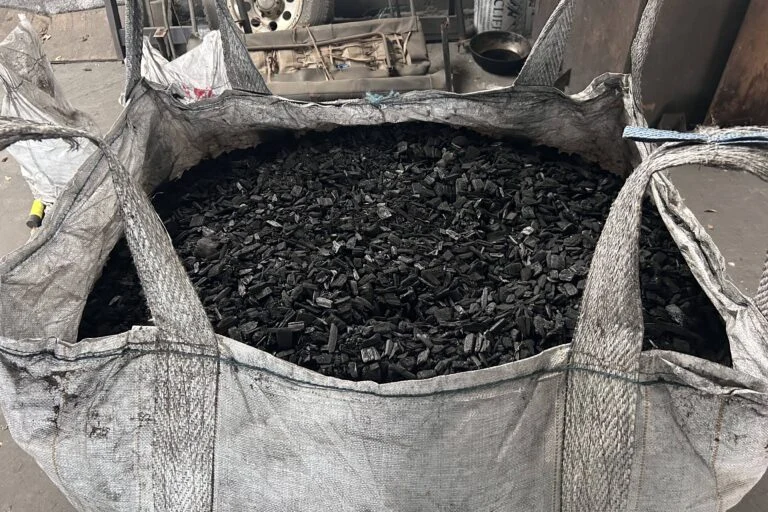
The core of this initiative lies in the conversion of Prosopis juliflora—locally known as gando baval or "the mad tree"—into biochar. Biochar is created through pyrolysis, a process where organic matter is heated in low-oxygen environments. The resulting carbon-rich material can, in theory, store carbon in the soil for centuries, preventing it from entering the atmosphere as carbon dioxide.

In January 2025, Google announced a landmark deal to purchase 100,000 tonnes of carbon dioxide removal (CDR) credits from Varaha ClimateAg Private Limited, a Gurugram-based climate tech startup. This was followed in January 2026 by a similar agreement with Microsoft, alongside other global players like Lufthansa, Swiss Re, and Capgemini. These companies are under intense pressure to reach "Net Zero" goals, especially as the energy demands of Artificial Intelligence (AI) cause their emissions to soar.
Varaha’s project in Kachchh is positioned as a "win-win": it removes an invasive species that has choked the native grasslands and creates a durable carbon sink. Yet, field reports suggest a disconnect between the digital ledgers of carbon registries and the physical reality of the Banni landscape.
Chronology: From "Green Desert" to Carbon Market
The story of the Banni grasslands is one of unintended consequences.
- The 1960s: To combat desertification and the ingress of the Rann of Kachchh, the Indian government aerial-seeded Prosopis juliflora. The tree, native to South and Central America, was intended to stabilize the soil.
- 1970s–1990s: The "mad tree" lived up to its name, spreading aggressively. By 1999, fodder production in the grasslands—essential for the local Maldhari pastoralists—had plummeted from 4,000 kg per hectare to just 620 kg.
- Late 2022: As the global voluntary carbon market (VCM) surged, private developers approached Sahjeevan, a local NGO, with a proposal to link ecosystem restoration to carbon credits.
- 2023–2024: A pilot project was launched in Dedhiya village using Kon-Tiki kilns. The pilot processed 800 tonnes of wood, generating roughly 2,000 carbon credits sold on European markets for approximately $120 per credit.
- 2025–2026: Google and Microsoft signed massive offtake agreements, scaling the project from a local pilot to a major international carbon removal operation.
Supporting Data: The Ecological and Economic Friction
The viability of biochar as a carbon removal tool rests on three pillars: durability in the soil, net-positive ecological impact, and transparency. In Banni, each of these pillars is under strain.

The Soil Chemistry Conflict
The primary claim of biochar developers is that the substance improves soil health. However, Shailesh Vyas, an agriculture expert who conducted trials in Kachchh, found the opposite. "The results were entirely negative," Vyas noted. "The soil in Kachchh is naturally alkaline. Biochar, produced by burning wood, is also alkaline. Adding it to the soil increased the pH levels further, causing crop production to drop compared to control plots."
Furthermore, while Varaha claims biochar is mixed with manure to enhance fertility, critics argue this masks the biochar’s true effect. If a farmer sees a benefit from a 1:1 mix of biochar and cow dung, the benefit likely stems from the dung—a globally recognized fertilizer—rather than the carbonized wood.
The Water Scarcity Dilemma
Kachchh is an arid region where drinking water is a precious commodity. The Kon-Tiki kilns used to produce biochar require significant amounts of water to "quench" or douse the burning biomass. Estimates from field researchers suggest each kiln cycle requires 500 to 600 liters of water.
Gafur Mutva, a contractor who managed 20 kilns simultaneously, reported needing 12,000 liters of water per day. In a region where livestock and humans rely on a single pipeline from the Narmada River, the diversion of thousands of liters of fresh water to produce carbon credits for Silicon Valley has raised ethical alarms.

The Persistence of the "Mad Tree"
The invasive Prosopis juliflora is notoriously difficult to eradicate. Local pastoralists like Kaiyan Rabari point out that simply cutting the trees for biochar does not stop the invasion. Without the financial support to uproot the stumps and manage "new recruits" (saplings), the trees grow back denser within two years.
Khyati Thacker, a botanist working in the region, warns that this creates a "perverse incentive." If the goal is to produce biomass for biochar, developers might eventually prefer a steady regrowth of Prosopis rather than a full restoration of native grasses, effectively turning a restoration project into a biomass plantation.
Official Responses: Developers vs. Watchdogs
Varaha ClimateAg’s Position:
In responses to inquiries, Varaha defended its operations, stating that its systems are designed with rigorous safeguards. The company maintains that biochar never leaves production sites without being mixed with manure and that all applications are tracked. They emphasize that their projects undergo annual validation by independent bodies and that they operate under the principle of Free, Prior, and Informed Consent (FPIC) with local panchayats. Regarding water, Varaha claims they attempt to recycle quench water by digging trenches, though contractors on the ground describe this as "theoretically possible but practically unworkable."
The Corporate Buyers:
Google has publicly backed biochar due to its "ability to scale." However, the company’s environmental report reveals a jarring statistic: Google’s greenhouse gas emissions increased by 81% between 2019 and 2025, largely due to the energy-intensive nature of data centers. For Google, biochar represents a "durable" removal method that helps bridge the gap between their climate targets and their actual emissions trajectory.

The Critics:
Carbon Market Watch and other international observers are less optimistic. They argue that offsetting allows companies to "pay to pollute" rather than making the hard changes needed to reduce absolute emissions. A July 2025 paper from the University of Pennsylvania further highlighted structural flaws in the auditing process, noting that because project developers pay the auditors, there is an inherent conflict of interest that may lead to over-crediting.
Implications: The Future of Carbon Markets in India
The Banni biochar project is a microcosm of the global "Green Rush." As India prepares to formalize its own domestic carbon market, the lessons from Kachchh are vital.
1. Transparency and Equity:
There remains a significant gap in transparency regarding how much of the $120-per-credit revenue actually reaches the local communities. While Sahjeevan reported that community institutions were paid roughly ₹7.2 per kg of biochar, the margins kept by tech startups and intermediaries remain opaque. For the pastoralists providing the labor and the land, the "carbon wealth" appears to be flowing upward.
2. The Risk of Greenwashing:
If the biochar is not being applied to the soil correctly, or if it is harming the local ecology by increasing soil alkalinity and depleting water, the "carbon removal" claim becomes a fiction. When a company like Microsoft or Google buys these credits, they are essentially buying a promise. If that promise is buried in a stockpile on the outskirts of a village—as reported in Sangnara—the atmosphere receives no benefit, but the corporate balance sheet looks "green."

3. Ecological Integrity over Carbon Accounting:
The Banni grasslands are a unique ecosystem, home to the Great Indian Bustard and the desert fox. Restoration should mean the return of native grasses like Cenchrus ciliaris, not just the temporary removal of wood for industrial processing. If the carbon market prioritizes "tonnes of CO2" over "hectares of healthy grass," the Banni may lose its identity to a new kind of industrialization.
Conclusion:
In the Banni, the monsoon is currently bringing fresh life to the plains. But among the native shoots, the gando baval is also rising again, its roots deep and its resilience legendary. The attempt to turn this invasive pest into a global climate solution is a bold experiment in market-based conservation. However, as long as the process consumes scarce water, ignores soil chemistry, and lacks transparency for the local people, it remains a fragile solution to a massive problem. For the tech giants in California, biochar is a line on a spreadsheet. For the people of Kachchh, it is a matter of survival in an increasingly thirsty land.
