

In the traditional kitchens of South India, there was once a vegetable known as mookuthi avarai—the clove bean. Its name, a poetic reference to its resemblance to a delicate nose-pin, is etched into the pages of S. Meenakshi Ammal’s 1951 culinary masterpiece, Samaithu Paar (Cook and See). Yet, despite its historical prominence, the clove bean has largely vanished. It is not a true bean but a relative of the morning glory, a perennial vine that once offered both beauty and sustenance. Today, it is a ghost in the machine of modern agriculture, a symbol of a broader, silent crisis: the rapid homogenization of India’s vegetable biodiversity.
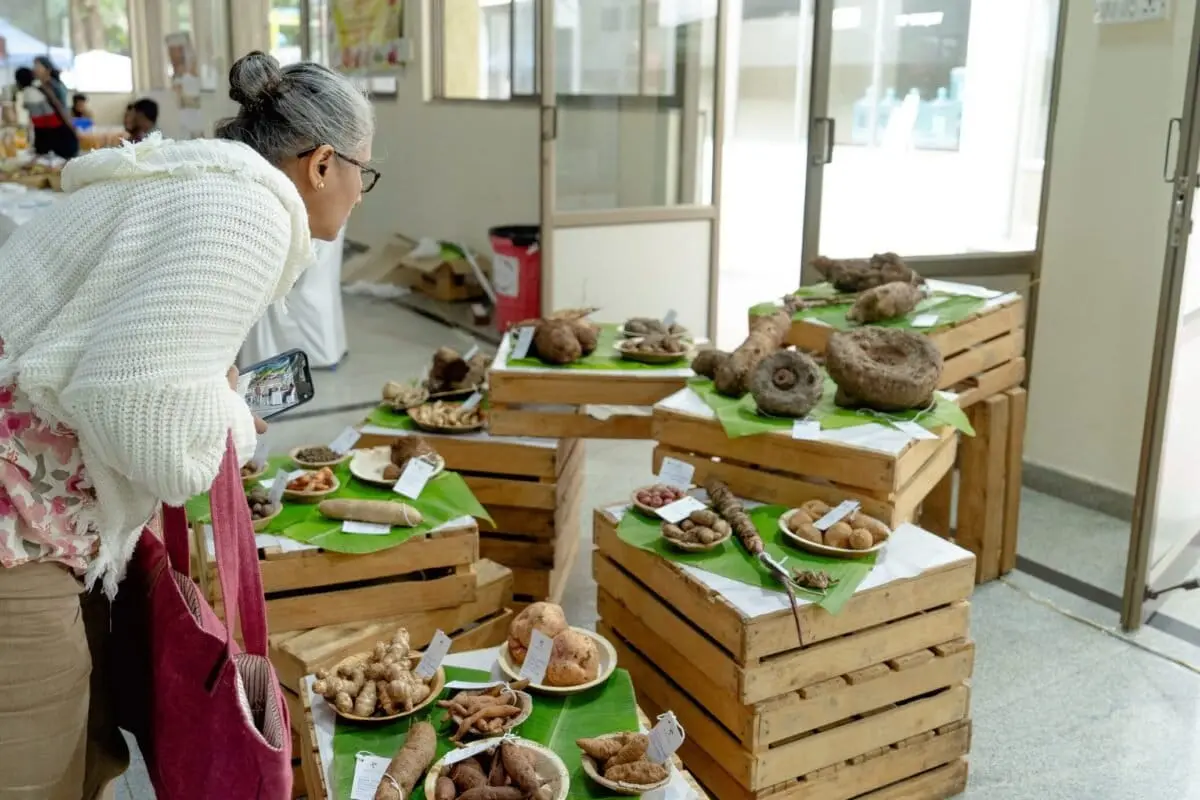
As the global food system prioritizes yield and shelf-life over variety and nutrition, thousands of heirloom vegetables are sliding toward extinction. From the Yerengere white long eggplant of Karnataka to the diverse tubers of the Northeast, the genetic heritage of India’s food system is being replaced by a handful of standardized hybrids.

Main Facts: The Homogenization of the Indian Plate
The crisis of vegetable biodiversity is defined by a paradox of plenty. While supermarkets appear stocked with abundance, the actual genetic variety of those vegetables is shrinking. According to a recent perspective article published in the Proceedings of the National Academy of Sciences (PNAS), researchers warn that vegetable biodiversity is under severe threat from land-use changes, market homogenization, and the extinction of native wild species.
The PNAS study highlights a staggering statistic: over the last century, approximately 24% of the wild relatives of 79 major vegetable species have come under threat of extinction. While the authors created a Global Vegetable Species Dataset listing 1,482 vegetables, they admit the true number of species is likely much higher, as many local and wild varieties are absent from standard botanical references.
In India, the transition is palpable. Prabhakar Rao, a landscape architect turned natural farmer and founder of Hariyalee Seeds, observes this daily on his farm in Bengaluru. Rao specializes in "heirloom" seeds—open-pollinated varieties passed down through generations. Unlike hybrids, which are crossbred for specific traits and often produce sterile or inconsistent seeds in the second generation, heirloom seeds allow farmers to maintain genetic continuity.

"People are all eating the same few vegetables," Rao laments. "The loss of vegetable biodiversity has not received a lot of attention because every vegetable you use at home—the tomato, the onion, the potato—is available in abundance. But we are losing the sub-varieties that provided unique flavors, medicinal properties, and climate resilience."
Chronology: From Culinary Staple to Seed Bank Rarity
The decline of vegetable diversity in India follows a timeline of agricultural industrialization and changing consumer habits:
- 1951: S. Meenakshi Ammal publishes Samaithu Paar, documenting a world of diverse vegetables like the clove bean that were common in domestic gardens and local markets.
- 1960s–1980s: The Green Revolution focuses heavily on staple cereal crops (wheat and rice). Vegetables are sidelined in policy, leading to a focus on a few high-yielding hybrid varieties of "TOP" crops (Tomato, Onion, Potato).
- 2011: Recognizing the rapid disappearance of local varieties, Prabhakar Rao founds Hariyalee Seeds in Bengaluru, beginning a decade-long journey to conserve hundreds of forgotten vegetable varieties from across the globe.
- 2020: The Indian Ministry of Food Processing Industries (MoFPI) expands "Operation Greens"—initially designed for TOP crops—to include all vegetables (TOP to Total) in an effort to stabilize supply chains. However, the focus remains on marketability rather than biodiversity.
- 2022: The North East Society for Agroecology Support (NESFAS) launches a community-led school meals program in 26 Meghalayan schools to reintroduce indigenous vegetables like taro stems and Indian pennywort to the younger generation.
- 2024–2025: Modern analysis reveals that despite being the world’s second-largest vegetable producer, India’s productivity remains the lowest among the top five producing nations, partly due to a lack of investment in diverse, resilient local landraces.
Supporting Data: The Nutritional and Ecological Cost
The loss of diversity is not merely an aesthetic or culinary concern; it is a public health and environmental issue.

The Nutritional Gap:
A 2020 study by researchers in London found that the average Indian consumes only 230g of fruits and vegetables per day. This is significantly lower than the 400g daily intake recommended by the FAO and World Bank. Experts argue that increasing vegetable biodiversity could address this gap by making vegetables more accessible, culturally relevant, and flavorful, thereby encouraging higher consumption.
The Resilience Factor:
Vegetables are often "dual-purpose" crops. As Maarten van Zonneveld, Head of Genebank at the International Potato Center, points out, crops like sweet potato and taro provide both calorie-rich roots and nutrient-dense leaves. This versatility is crucial for food security. Furthermore, the Crop Trust has identified 20 "Opportunity Crops"—including minor yams and pumpkins—that are exceptionally resilient to climate change but currently overlooked by mainstream agriculture.
Conservation Status:
While the World Vegetable Center (WorldVeg) Genebank holds over 65,000 genetic samples and India’s National Bureau of Plant Genetic Resources (NBPGR) stores 30,700 accessions of vegetables, many "landraces" (locally adapted traditional varieties) have never been documented. Rao notes that his work in saving hundreds of varieties is "just scratching the surface" of what has already been lost.

Official and Expert Responses: The "Under the Radar" Crisis
The primary challenge in saving vegetable biodiversity is its lack of visibility compared to "megafauna" conservation or staple crop preservation.
"Sadly, this loss is happening under the radar," says Rao. He points out that markets are now built around a specific visual aesthetic. Elizabeth Yorke, a chef and co-founder of Edible Issues, echoes this sentiment. "We associate quality with a certain visual—bright red tomatoes, perfectly round onions. Those references have eliminated the idea that tomatoes can be green, purple, or striped and still be delicious."
Yorke’s initiative, "Rooting for Tubers," seeks to restore "culinary confidence." She notes that even when diverse vegetables like various tubers are available, consumers often don’t know how to cook them or are intimidated by their processing needs. "The market demands uniformity because it’s easier for the supply chain," she adds.

Colin Khoury, Global Conservation Lead at Crop Trust, emphasizes the "push and pull" of the market. "The ‘pull’ is consumer demand—getting people to want these vegetables through education and chef-led movements. The ‘push’ is the supply side—ensuring farmers find it profitable to grow these varieties."
Government policy has attempted to intervene, but with mixed results. While "Operation Greens" was expanded to help farmers, the focus remains on price stabilization of high-volume crops. Rao argues that for small-scale farmers, growing diverse vegetables is currently a "hit or miss" financial risk. Without dedicated market linkages for biodiversity, farmers will continue to favor high-return, standardized crops like colored capsicums grown in polyhouses.
Implications: Climate Change and the Future of Food
The implications of continued biodiversity loss are profound, particularly in the face of a warming planet. Heirloom varieties and wild relatives of common vegetables often possess genes that allow them to thrive in poor soil, withstand droughts, or resist local pests without heavy chemical intervention. By losing these varieties, we are effectively "deleting" the biological backup files of our food system.

The success of the NESFAS program in Meghalaya provides a potential roadmap. By mapping underutilized local vegetables and partnering with parents and teachers to include them in school lunches, the program is fostering a new generation of consumers who value agrobiodiversity. This "bottom-up" approach ensures that traditional knowledge regarding the cultivation and preparation of wild edibles is not lost.
However, scaling these efforts requires a systemic shift. As Khoury notes, it is a matter of prioritizing vegetables within agricultural research, which has historically been dominated by cereal grains. "Vegetables occupy agroecological niches that are less conventional," Khoury says. "They are grown in backyards, on rooftops, and by women and the elderly. Embracing vegetable reality means supporting these overlooked systems."
To save the next "clove bean" from disappearing, India must bridge the gap between gene banks and dinner plates. This requires a multi-pronged approach: incentivizing farmers to grow heirloom varieties, educating consumers on the nutritional benefits of diversity, and ensuring that the "mookuthi avarai" is remembered not just as a footnote in a 70-year-old cookbook, but as a vibrant part of a resilient, healthy future.
