

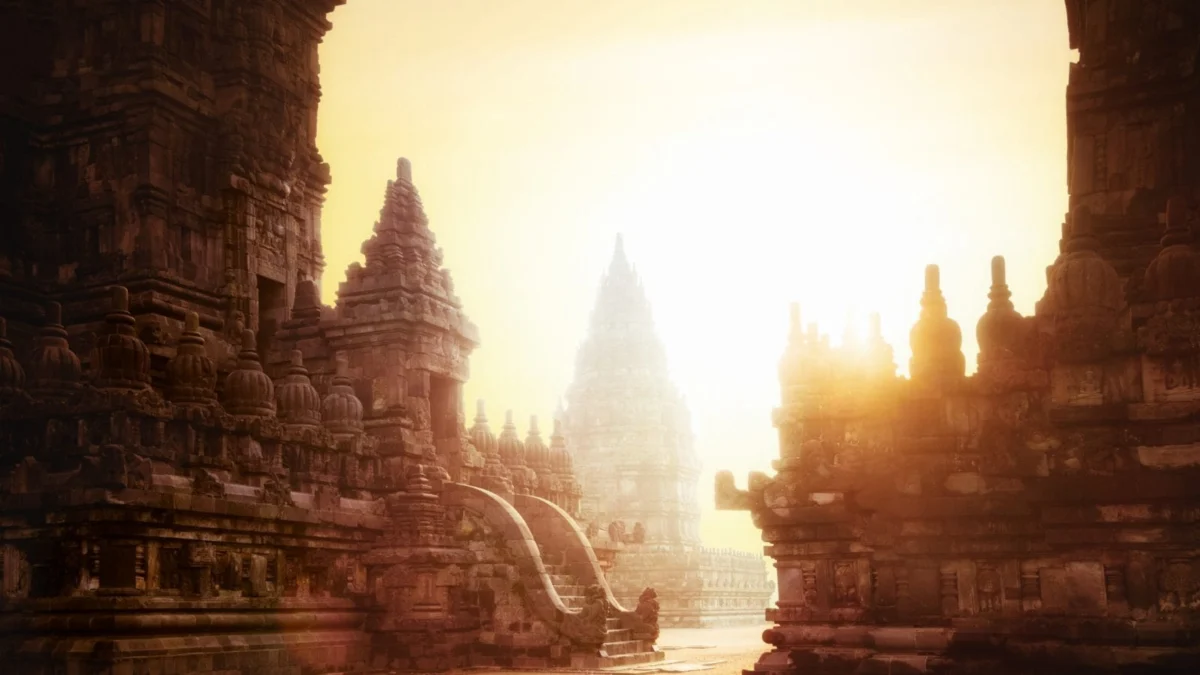
JAIPUR — At the 15th edition of the Jaipur Literature Festival (JLF), a session titled "The Ramayana in Indonesia" served as a profound reminder of the fluid boundaries of culture and the enduring power of ancient epics. Featuring a panel of distinguished historians—William Dalrymple, Malini Saran, and Vinod C. Khanna—the discussion delved into the deep-seated cultural roots that the Ramayana planted in the Indonesian archipelago over a millennium ago.
The conversation, centered on the seminal work The Ramayana in Indonesia co-authored by Saran and Khanna, unveiled a narrative that many in the Indian subcontinent remain surprisingly unaware of: that some of the most sophisticated expressions of Hindu and Buddhist civilization flourished not in the Gangetic plains, but across the Indian Ocean in the lush landscapes of Java and Bali.
Main Facts: A Transcreated Legacy
The primary focus of the discussion was the Kakawin Ramayana, an Old Javanese poem that stands as a masterpiece of world literature. Unlike many regional versions of the epic found within India, the Indonesian retelling is not a mere translation of Valmiki’s Sanskrit original. Instead, it is what Vinod C. Khanna describes as an "impressive transcreation."
Key highlights from the session included:
- The 9th Century Milestone: The Rama tale appeared in Central Java toward the end of the 9th century in two simultaneous forms: a monumental sculpted narration on temple walls and a sophisticated literary work in Old Javanese.
- The Bhattikavya Connection: While Valmiki is the traditional source of the Ramayana, the Javanese version draws its primary inspiration from the Bhattikavya, a 6th or 7th-century Sanskrit poem by the poet Bhatti.
- A Happy Ending: In a significant departure from the Valmiki tradition, the Javanese Ramayana (following the Bhattikavya) omits the Uttara Kanda—the final, tragic chapter of the epic. In the Indonesian consciousness, the story concludes with Rama and Sita returning to Ayodhya to live in eternal bliss, eschewing the later themes of exile and sorrow.
- Linguistic Sophistication: Despite belonging to an entirely different linguistic family (Austronesian), the Old Javanese Ramayana is remarkably rich in Sanskrit vocabulary, showcasing the deep intellectual exchange between the two regions.
Chronology: The Journey of an Epic Across the Seas
The presence of the Ramayana in Indonesia is the result of a centuries-long process of cultural diffusion that began at the dawn of the Common Era.
1st to 5th Century AD: The Early Contacts
Historians believe that Indian merchants, priests, and scholars traveled along maritime trade routes, bringing with them the Sanskrit language and Vedic traditions. This era saw the rise of "Indianized" kingdoms in Southeast Asia, where local rulers adopted Indian political and religious models to consolidate their power.
8th to 9th Century AD: The Golden Age of Central Java
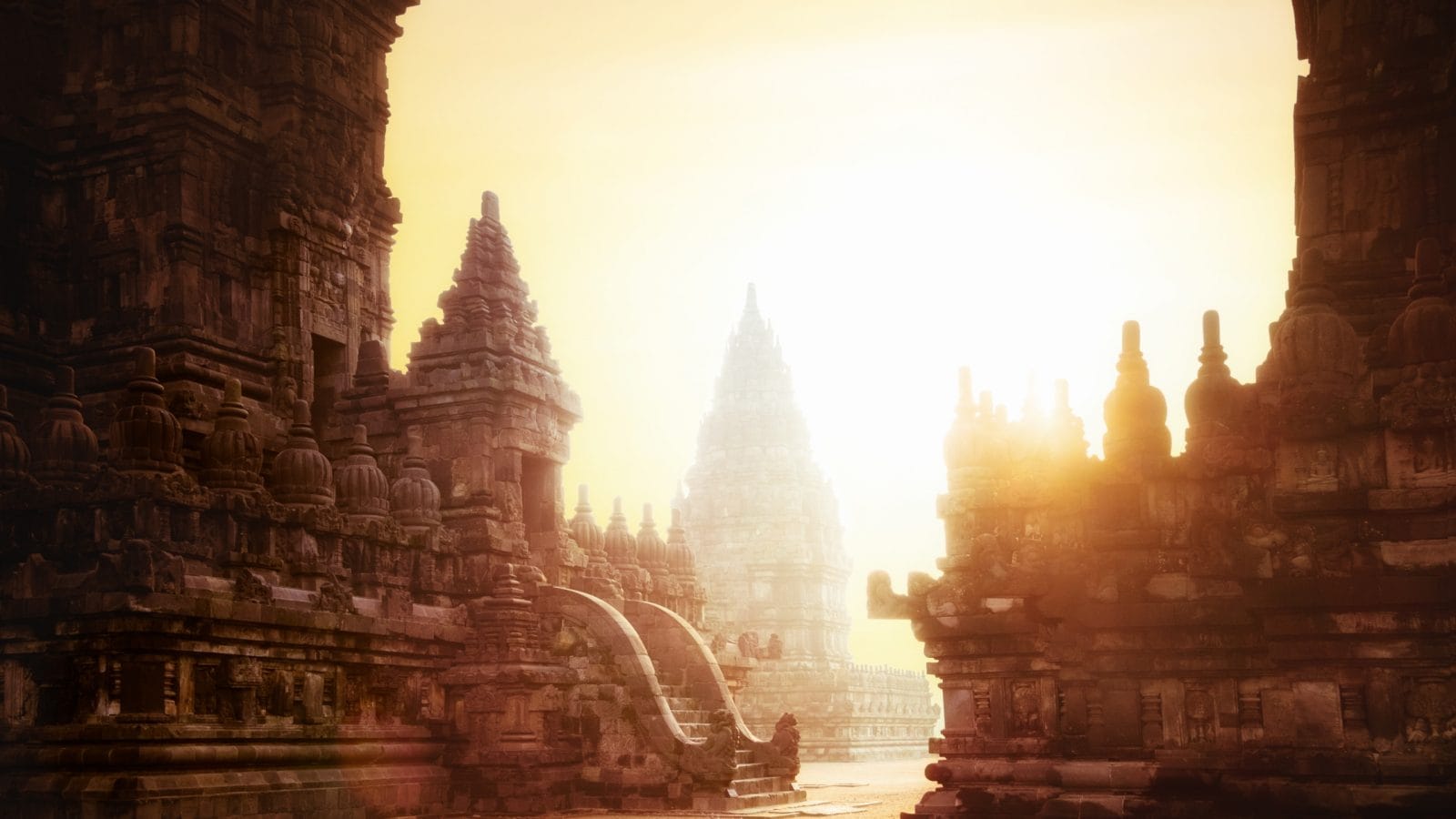
This period marked the zenith of Hindu-Buddhist architecture in Indonesia. The Shailendra and Sanjaya dynasties oversaw the construction of Borobudur (the world’s largest Buddhist monument) and the Prambanan temple complex. It was during this era, specifically around 850 AD, that the Kakawin Ramayana was composed. Simultaneously, the walls of the Shiva temple at Prambanan were adorned with exquisite bas-reliefs depicting the Ramayana, providing a visual "text" for the masses.
10th to 16th Century AD: Shift to East Java and Bali
As the political center of gravity shifted to East Java, the Ramayana was further localized. The Wayang Kulit (shadow puppetry) became a primary medium for storytelling. Following the Islamization of Java in the 15th and 16th centuries, the Hindu elites and artists fled to Bali, where they preserved the Kakawin manuscripts on lontar (palm leaves) with meticulous care.
19th Century to Present: Academic Discovery and Revival
Western and Indonesian scholars began translating the Kakawin in the late 19th century, recognizing its linguistic importance. Today, the Ramayana remains a living tradition in Indonesia, performed nightly at the Prambanan open-air theater and integrated into the daily religious life of Bali.
Supporting Data: Literary and Artistic Nuances
The panel at JLF 2022 provided fascinating data points regarding the structural integrity and artistic freedom of the Indonesian version.
Vinod C. Khanna noted that the author of the Kakawin Ramayana remains anonymous, though Balinese tradition often attributes the work to a sage named Yogeshwara. The poem consists of approximately 2,774 stanzas, utilizing a variety of Sanskrit meters (chandas), which indicates that the Javanese poet was an extraordinary scholar of Sanskrit prosody.
"The old Javanese poet was clearly a well-read Sanskrit scholar," Khanna remarked. "Although he follows Bhatti, in many parts he goes beyond him, deriving inspiration directly from Valmiki and using other Sanskrit classics freely and imaginatively. There is a heightened sense of drama in the Kakawin."
Malini Saran highlighted the visual data found in the Prambanan reliefs. These stone carvings do not just mirror the text; they interpret it through a Javanese lens. The flora, fauna, and architectural styles depicted in the reliefs are local, making the story of Rama feel native to the Javanese soil. Saran explained that the "malleability" of the Ramayana was its greatest strength, allowing local artists to "shape and interpret this material within the bounds of their artistic forms to make it their own."
Official Responses and Expert Commentary
William Dalrymple, a historian known for his work on the intersection of cultures, offered a broader perspective on the significance of these findings. He lamented the fact that many Indians are unaware of the scale of Hindu and Buddhist influence in Southeast Asia.
"It is a remarkable thing," Dalrymple said during the session. "Some of the most magnificent, sophisticated, and large monuments of both Hinduism and Buddhism lie very far from India, in Indonesia and Cambodia. The scale of the Prambanan temple or the Angkor Wat complex often dwarfs what remains in the Indian heartland from that same period."
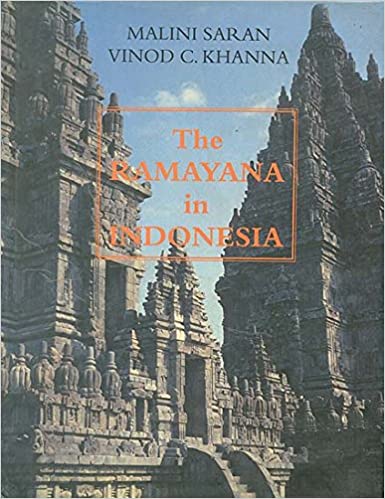
The authors of The Ramayana in Indonesia emphasized that the epic’s survival in a country that is now the world’s most populous Muslim-majority nation is a testament to its universal appeal. Malini Saran noted that the inherent qualities of the Ramayana—to entertain, instruct, and edify—ensured its special status in royal courts and village courtyards alike.
"It was through their portrayal in the robust and visual performing arts of Java and Bali that the stories of Ram, Sita, Ravan, and Hanuman lived on," Saran added. This "robustness" refers to the Wayang tradition, where the characters are not seen as foreign deities but as Javanese ancestors.
Implications: A Bridge Between Civilizations
The JLF session on the Indonesian Ramayana carries significant implications for modern diplomacy, cultural identity, and the study of global history.
1. Cultural Diplomacy (Soft Power):
The shared heritage of the Ramayana serves as a potent tool for "soft power" diplomacy between India and Indonesia. It provides a historical foundation for the "Act East" policy, fostering a sense of "civilizational brotherhood" that transcends modern political borders.
2. Redefining "Indian" Culture:
The existence of the Kakawin Ramayana challenges the notion that Indian culture is a static entity contained within the borders of the subcontinent. It suggests that "Greater India" or the "Indosphere" was a dynamic cultural zone where ideas were exported, modified, and sometimes preserved better than in their place of origin.
3. Religious Pluralism and Tolerance:
Indonesia’s embrace of the Ramayana is a global model for cultural pluralism. The fact that Muslim Javanese artists continue to perform the Ramayana and consider it part of their national identity proves that epic literature can serve as a secular ethical guide and a source of national pride, independent of religious affiliation.
4. Preservation of Heritage:
The session underscored the importance of the Balinese "Lontar" tradition. Without the centuries of labor by Balinese scribes who "laboriously copied and recopied it on palm leaf manuscripts," this branch of the Ramayana might have been lost to history. It highlights the need for international cooperation in digitizing and preserving these fragile manuscripts.
In conclusion, the discussion at the Jaipur Literature Festival 2022 was more than just a book launch; it was a revelation of a "mirror civilization." As Vinod C. Khanna and Malini Saran eloquently argued, the Ramayana did not just travel to Indonesia; it was reborn there, acquiring a new language, a new aesthetic, and a happy ending that continues to resonate across the Indonesian archipelago today. For the modern observer, it serves as a reminder that while empires crumble and borders shift, the stories we tell have the power to cross oceans and endure for eternity.
