

The year 1707 marked the end of an era with the death of Muhi-ud-Din Muhammad, better known as Aurangzeb ‘Alamgir, the sixth and last of the "Great Mughals." Yet, more than three centuries later, his name continues to resonate with a ferocity that few historical figures can command. In the contemporary socio-political landscape of South Asia, Aurangzeb is less a historical personage and more a Rorschach test for modern anxieties regarding identity, religion, and the state.
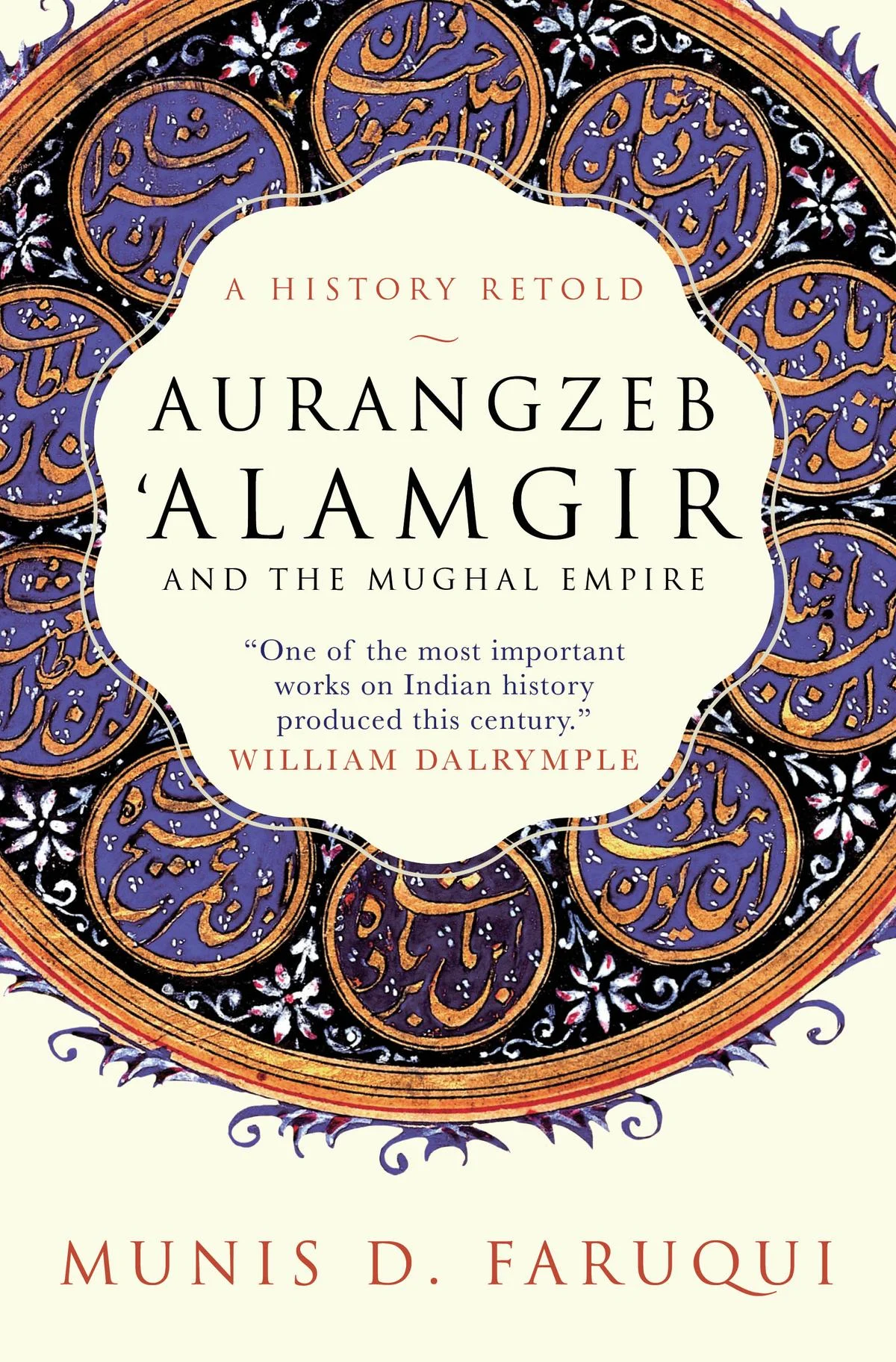
In his latest work, Aurangzeb ‘Alamgir and the Mughal Empire (Juggernaut Books), historian Munis D. Faruqui, a professor in the Department of South and Southeast Asian Studies at the University of California, Berkeley, seeks to dismantle the caricatures. Through a meticulous interrogation of the archives, Faruqui offers a portrait that is neither a hagiography nor a polemic, but a nuanced study of a man caught between the rigid requirements of his faith and the fluid pragmatism required to rule a sprawling, diverse empire.
Main Facts: A Ruler Beyond the Binary
The central thesis of Faruqui’s research suggests that the popular perception of Aurangzeb as a narrow-minded bigot is a reductive historical construct. While Aurangzeb was undeniably pious—distinguishing himself from his predecessors through a "legalistic" interpretation of Islam—his governance was often dictated by the harsh realities of imperial survival rather than religious dogma.
Faruqui argues that Aurangzeb’s relationship with religion was functional. He sought Islam-inspired solutions to administrative, financial, and political crises because he believed in their divine efficacy. However, when these solutions clashed with the stability of the empire, the Emperor frequently pivoted. The book highlights several key departures from the "bigot" archetype:
- Refusal of Forced Conversion: Despite his personal convictions, Aurangzeb recognized that forced mass conversions would lead to systemic instability.
- The Persistence of Imperial Rituals: He continued the practice of jharoka darshan (appearing before the public at the palace balcony) for years, despite its perceived conflict with Islamic orthodoxy, because it was a vital component of the Mughal "imperial script."
- Political Pragmatism: He reversed policies, such as offering conversion to prisoners of war to escape death sentences, upon realizing that religious change did not guarantee political loyalty.
Chronology: From Princely Success to the Deccan Quagmire
To understand Aurangzeb’s reign, one must view it as a trajectory of two distinct halves: the triumphant expansionist and the embattled veteran.
The Rise (1618–1658)
Aurangzeb’s early life was defined by his competence as a military commander and administrator. Unlike his brother Dara Shikoh, who was the favorite of their father Shah Jahan, Aurangzeb spent decades in the field, governing the Deccan and leading campaigns in Central Asia. His victory in the bloody war of succession (1657–1658) was not merely a religious triumph of "orthodoxy" over "liberalism," but the victory of a seasoned general over a court-bound intellectual.

The Imperial Zenith (1658–1681)
The first two decades of his reign saw the Mughal Empire reach its greatest territorial extent. Aurangzeb consolidated power, reformed the tax system, and maintained a court that remained multi-ethnic and multi-religious, with many Hindu generals and officials (such as Raja Jai Singh) holding high-ranking positions.
The Deccan Trap (1681–1707)
The final 26 years of Aurangzeb’s life were spent in the Deccan. What began as an attempt to finish the work started by Akbar—annexing the Sultanates of Bijapur and Golconda—turned into a "quagmire." By 1690, Aurangzeb appeared to have won, having executed the Maratha leader Sambhaji and dismantled the southern kingdoms. However, the victory was hollow. The resulting guerrilla warfare by the Marathas and the administrative neglect of Northern India led to the slow hemorrhaging of imperial resources.
Supporting Data: The Mechanics of a "Legalistic" State
Faruqui’s research provides significant data to challenge the notion that Aurangzeb’s conflicts were purely religious. He points to the cases of regional leaders like Durga Das Rathor and Chhatrasal Bundela. While these figures often used religious rhetoric to rally their troops against the "oppressive" Mughal center, their grievances were primarily political and land-based. Faruqui notes that once their political aspirations were accommodated or their territories secured, the religious vitriol vanished from their correspondence.
The Sikh-Mughal conflict is another area where Faruqui provides a fresh perspective. He argues that the friction was caused by the emergence of a Sikh identity that explicitly twinned spiritual autonomy with a rejection of Mughal political authority. From the imperial perspective, this was not a heresy to be suppressed but a rebellion to be crushed. The Mughals used persecutory tools not as an end in themselves, but as a means to re-establish state sovereignty—a tactic used against Muslim rebels as well.
Furthermore, the "downward mobility" of certain Muslim groups post-1707 played a massive role in how Aurangzeb was remembered. Fearing the loss of their status to rising groups like the Marathas, Jats, and Sikhs, these communities began writing hagiographies that emphasized Aurangzeb’s piety and "defense of the faith," creating a template for later communalist histories.
Official Responses and Historiography: The Invention of a Villain
The "official" record of Aurangzeb has been shaped by three centuries of varying agendas. Faruqui identifies the root of many distortions in the immediate post-Aurangzeb era.

- The Factional Narratives: Following his death, court factions sidelined by his successor, Bahadur Shah I, began a memorialization project. They painted Aurangzeb as a paragon of Islamic virtue to make his successors look weak and incompetent by comparison.
- The British Colonial Lens: British historians later seized upon these accounts to promote a "divide and rule" narrative. By portraying Aurangzeb as a tyrant who persecuted Hindus, they could position British rule as a necessary, neutral arbiter that rescued India from "despotic" religious conflict.
- Nationalist Reinterpretations: In the 20th century, both Muslim and Hindu nationalists used Aurangzeb as a symbol. For one side, he was the hero who tried to save Islam in India; for the other, he was the villain who destroyed the "syncretic" fabric of the nation.
Faruqui’s work is an "official response" from the academy, urging a return to the archives. He notes that if his research had uncovered evidence of systematic, forced mass conversions, he would have reported it. The absence of such evidence in the primary sources suggests that the modern narrative is largely a projection of later ideologies.
Implications: History as a Living Battleground
The publication of Aurangzeb ‘Alamgir and the Mughal Empire comes at a time when historical revisionism is at its peak. Faruqui’s engagement with this figure is not merely an academic exercise; it is an act of intellectual courage. During the interview process, Faruqui revealed that he was repeatedly advised by colleagues to avoid Aurangzeb, fearing that any attempt at a "dispassionate" account would lead to personal disparagement or even violence.
The implications of Faruqui’s work are profound for the study of South Asian history:
- De-communalizing the Past: By showing that the Mughal-Maratha or Mughal-Sikh conflicts were primarily about power, land, and sovereignty, Faruqui provides a framework to discuss history without the baggage of modern communalism.
- The Complexity of Power: The book serves as a reminder that rulers, no matter how religious, are often bound by the structural limitations of their states. Aurangzeb’s "failures" were less about his personal faith and more about "imperial overstretch"—a phenomenon that has brought down empires from Rome to the Soviet Union.
- The Danger of Hagiography: Faruqui warns that both the "demonization" and the "sanctification" of historical figures are equally dangerous. Both processes strip the subject of their humanity and their agency, turning them into puppets for modern political theater.
As Faruqui concludes, his book is intended to be an "opening, not the end, to an ongoing conversation." In a world increasingly dominated by black-and-white narratives, the "nuanced picture" of Aurangzeb ‘Alamgir reminds us that history is most accurately found in the shades of gray. The ghost of the emperor may never be fully laid to rest, but through scholarly rigor, we can at least begin to see the man behind the myth.
