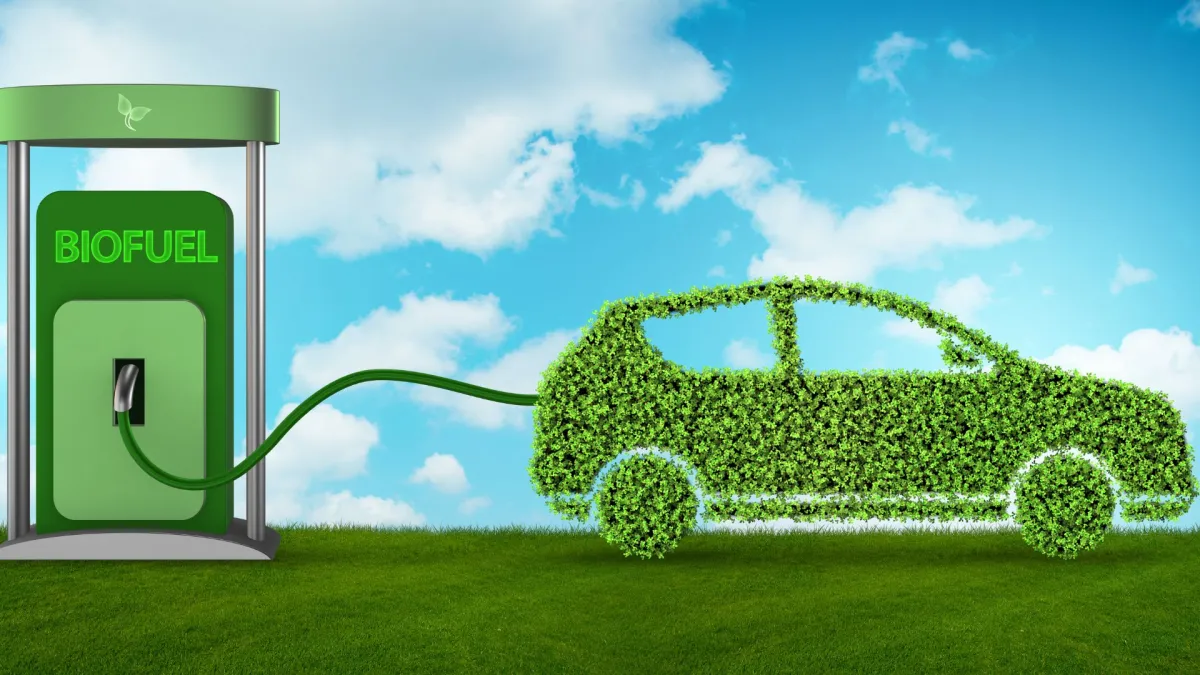
AHMEDABAD — India’s aggressive push toward a greener transport sector, spearheaded by the goal of blending 20% ethanol into petrol by 2025, has long been hailed as a cornerstone of the nation’s climate strategy. However, a comprehensive new study suggests that this transition could trigger a "perilous trade-off," potentially destabilizing food security, exhausting water reserves, and inadvertently increasing greenhouse gas emissions through agricultural intensification.
The research, a collaborative effort between the Indian Institute of Management (IIM) Ahmedabad, the Potsdam Institute for Climate Impact Research (PIK) in Germany, and the FABLE Consortium in France, warns that without a strategic pivot in feedstock selection and agricultural management, the quest for energy independence could leave the nation’s most vulnerable populations facing skyrocketing food costs.
Main Facts: The High Cost of 20% Blending
The study, published in the prestigious journal PLOS ONE, utilizes sophisticated computational modeling to project the long-term impacts of India’s National Policy on Biofuels. While the policy aims to reduce the nation’s staggering oil import bill and lower tailpipe carbon emissions, the researchers identified several critical risks:
- Food Inflation: The expansion of sugarcane cultivation to meet ethanol demand is projected to divert land away from essential food crops like cereals and pulses. This shift could lead to a significant rise in the price of basic groceries.
- Water Depletion: Sugarcane is one of the most water-intensive crops in India. The study estimates that agricultural water consumption could surge by nearly 140% by 2050 under the most intensive biofuel scenarios, putting immense pressure on already dwindling groundwater levels.
- The Nitrogen Paradox: To maximize yields for fuel production, fertilizer use could spike by up to 600%. This would lead to higher emissions of nitrous oxide—a greenhouse gas 300 times more potent than carbon dioxide—potentially negating the climate benefits of using biofuels.
- Sugar Surplus Crisis: If India continues to produce ethanol primarily from molasses (a byproduct of sugar refining), the country could face a massive surplus of 710 million tonnes of sugar by 2030, a volume far beyond what the global market can absorb.
Chronology: From 2018 Policy to the 2025 Deadline
The road to India’s current ethanol mandate has been characterized by rapidly accelerating timelines. Understanding the current crisis requires a look at the policy’s evolution:

- 2018: The National Policy on Biofuels: The Government of India originally set a target of 20% ethanol blending (E20) in petrol by 2030. The policy categorized feedstocks into "1G" (food-based sources like sugarcane juice, molasses, and damaged food grains) and "2G" (non-food sources like agricultural residue).
- 2021-2022: The Acceleration: Citing successful early blending milestones and the urgent need to reduce foreign exchange outflow, the government moved the E20 deadline forward by five years, from 2030 to 2025.
- 2023-2024: Implementation Hurdles: As oil marketing companies (OMCs) began rolling out E20-compatible fuel, the agricultural sector faced volatility. Fluctuating sugar production due to erratic monsoons forced the government to occasionally restrict the use of sugarcane juice for ethanol to prioritize domestic sugar supplies and control food inflation.
- The 2026 Perspective: The current study serves as a mid-decade "reality check," looking forward to 2050 to assess whether the infrastructure and land-use patterns established today are sustainable in the long run.
Supporting Data: Modeling the "MaGPIE" Scenarios
To reach their conclusions, the researchers employed the Model of Agricultural Production and its Impact on the Environment (MaGPIE). This framework allowed the team to simulate how global trade, domestic policy, and biophysical factors (like soil health and water availability) interact over the next three decades.
Land Use and Crop Competition
The model indicates that to meet E20 targets using current methods, land dedicated to sugarcane must expand by approximately 25%. In a country where arable land is a finite and shrinking resource, this expansion does not happen in a vacuum. It primarily cannibalizes land used for pulses and coarse cereals—staples that provide essential protein and nutrition for India’s lower-income demographics.
The Water-Energy-Food Nexus
India is already the world’s largest extractor of groundwater. The study’s projection of a 140% increase in agricultural water demand by 2050 is particularly alarming for states like Maharashtra and Karnataka, which are major sugar producers but frequently face severe droughts. The researchers argue that the "water footprint" of a liter of ethanol must be factored into its environmental value.
Fertilizer and Pollution
The study highlights a 600% potential increase in nitrogen-based fertilizer application. Beyond the atmospheric impact of nitrous oxide, excess nitrogen leaching into water bodies leads to eutrophication, destroying aquatic ecosystems and contaminating drinking water sources for rural communities.

Official Responses and the Industry Perspective
While the government has historically championed ethanol as a "win-win" for farmers and the environment, the findings of the IIM Ahmedabad-led study have prompted a more nuanced discussion among policymakers.
Government Stance:
Representatives from the Ministry of Petroleum and Natural Gas have previously emphasized that ethanol blending has already saved the country billions in oil imports and provided timely payments to sugarcane farmers. However, the Ministry of Consumer Affairs, Food and Public Distribution has remained cautious, occasionally intervening to halt ethanol production when sugar stocks dip, signaling an internal recognition of the "food vs. fuel" tension.
Industry Reaction:
The Indian Sugar Mills Association (ISMA) has long advocated for a stable, long-term ethanol pricing policy. Industry experts argue that the surplus sugar mentioned in the study is exactly why ethanol is needed—to provide an alternative vent for excess sugarcane production. However, they acknowledge that the transition from molasses-based ethanol to direct sugarcane juice ethanol requires significant capital investment in distillery capacity.
Academic Caution:
The study’s authors emphasize that their model primarily tracks "First Generation" (1G) biofuels. "The environmental benefits of biofuels are not guaranteed," the researchers noted. "They depend heavily on which part of the sugarcane plant is used. Shifting toward using sugarcane juice directly, rather than molasses, is a more sustainable path that reduces sugar surpluses and uses less water."

Implications: A Roadmap for Sustainable Biofuels
The findings of the study do not suggest that India should abandon its biofuel goals, but rather that it must adopt a more sophisticated, multi-pronged approach to avoid a food and environmental catastrophe.
1. Prioritizing Direct Sugarcane Juice
The research suggests that producing ethanol directly from sugarcane juice is more resource-efficient than the molasses route. By bypassing the sugar-crystallization process, the industry can meet fuel targets without creating a mountain of unexportable sugar surplus.
2. The Urgent Need for 2G Ethanol
The study points out that "Second Generation" (2G) biofuels—made from rice straw, corn cobs, and other agricultural waste—could solve many of the trade-offs. 2G ethanol does not compete with food crops for land and helps solve the problem of stubble burning. However, the technology is currently expensive and not yet operational at the scale required to meet the 2025 or 2030 targets. Increased government subsidies for 2G refineries are seen as a vital necessity.
3. Precision Agriculture and Fertilizer Management
To mitigate the 600% spike in fertilizer use, India must invest in precision agriculture. This includes soil-health-based application of nutrients and the promotion of "nano-urea," which has a lower environmental footprint. Without these interventions, the "green" fuel will have a "brown" nitrogen legacy.

4. Protecting the Vulnerable
Perhaps the most significant implication is the social one. As land is diverted to fuel, the resulting "food-price shocks" hit the poorest the hardest. The study concludes that the government must pair its energy targets with robust social safety nets and investments in agricultural technology to improve crop yields. If yield efficiency does not improve, the negative impacts on food prices will be even more severe than the model predicts.
Conclusion
India’s journey toward a low-carbon economy is a tightrope walk. The study from IIM Ahmedabad and its international partners serves as a vital warning: a singular focus on carbon emissions at the tailpipe can blind policymakers to the ecological and social costs at the farm level. To ensure that the "Green Revolution" of the 21st century does not compromise the nation’s food security or deplete its life-sustaining water, India’s biofuel policy must evolve from a simple blending mandate into a holistic resource-management strategy. By balancing the need for cleaner air with the necessity of affordable food, India can move toward a truly sustainable future that leaves no citizen behind.