

The Indian automotive landscape is currently navigating one of the most transformative eras since the introduction of the internal combustion engine. As the world’s third-largest automobile market, India finds itself at a critical crossroads, balancing the urgent need for decarbonization with the economic necessity of reducing its staggering dependence on imported crude oil. While the global narrative has largely been dominated by the rapid ascent of Battery Electric Vehicles (BEVs), India is pioneering a more diversified, "multi-pathway" approach to green mobility.
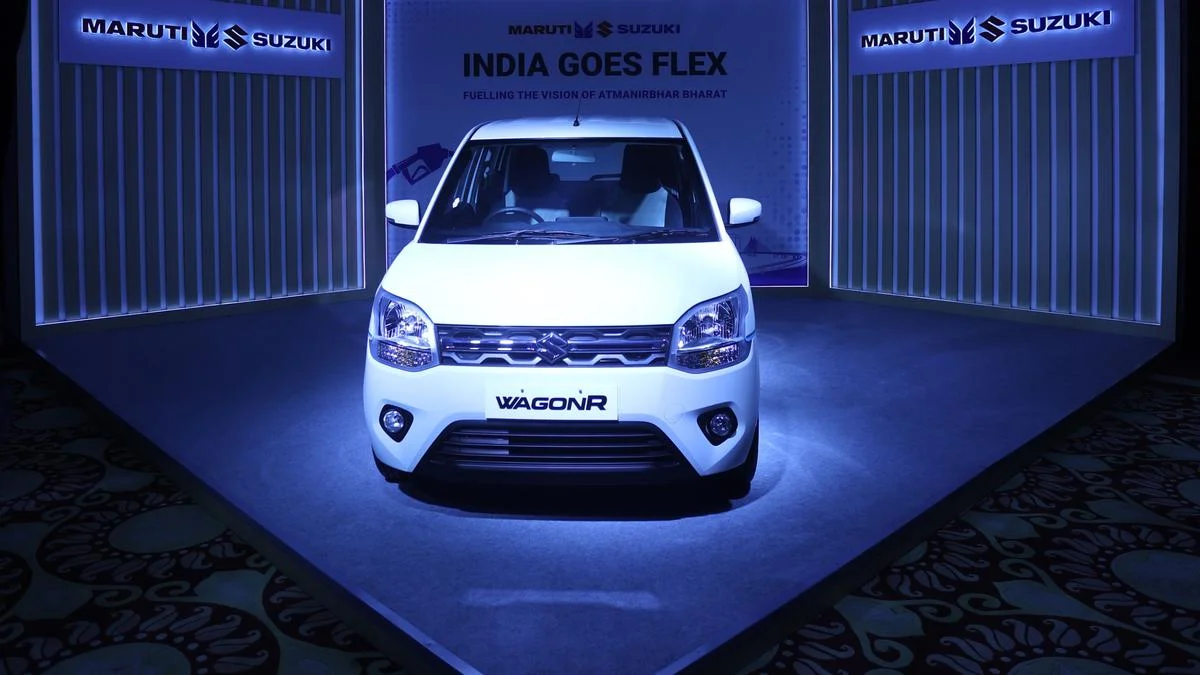
At the heart of this transition is the recent showcase of the Maruti Suzuki Wagon R Flex Fuel. While it may wear the familiar silhouette of India’s favorite tall-boy hatchback, this vehicle represents a sophisticated technological pivot. By choosing a mass-market icon rather than a niche luxury model to debut its flex-fuel capabilities, Maruti Suzuki has signaled that alternative fuels are no longer a laboratory experiment but a cornerstone of mainstream mobility.
Main Facts: Engineering the Future of Mass-Market Mobility
The Maruti Suzuki Wagon R Flex Fuel is a technical marvel hidden within a utilitarian frame. Unlike standard vehicles that are tuned for a specific fuel type, this prototype is engineered to operate on ethanol-petrol blends ranging from E20 (20% ethanol) all the way to E100 (100% anhydrous ethanol).
Advanced Engine Management
The primary technological hurdle in flex-fuel engineering is the inherent variability of the fuel. Ethanol has a lower energy density than petrol and different combustion characteristics. To manage this, Maruti Suzuki has equipped the Wagon R with an advanced Engine Control Unit (ECU). This system utilizes sophisticated sensors to detect the ethanol-to-petrol ratio in real-time. It then instantaneously adjusts ignition timing and fuel injection parameters to ensure optimal performance and fuel efficiency, regardless of the blend.
Material Durability and Modification
Ethanol is hygroscopic (it absorbs water) and can be corrosive to certain metals and rubber components found in traditional fuel systems. To achieve E100 compatibility, Maruti Suzuki’s engineers had to redesign several critical components:
- Fuel Pumps and Injectors: Upgraded to handle the different flow rates and chemical properties of high-ethanol blends.
- Fuel Lines and Tanks: Constructed from ethanol-resistant materials to prevent degradation over time.
- Engine Internals: Modification of valve seats and piston rings to withstand the unique combustion temperatures associated with ethanol.
By integrating these upgrades into the Wagon R—a vehicle synonymous with affordability and reliability—Maruti Suzuki is making a bold statement about the scalability of the technology. The expected price point of INR 7.50 – 8.00 lakh positions it within reach of the average Indian household, a demographic often priced out of the current EV market.

Chronology: India’s Accelerated Journey Toward Biofuels
The emergence of the Wagon R Flex Fuel is not an isolated event but the culmination of a decade-long policy push by the Government of India. Understanding the timeline of this transition is essential to grasping the vehicle’s significance.
- 2018: The National Policy on Biofuels: The government set an ambitious target of achieving 20% ethanol blending (E20) by 2030. This policy aimed to reduce import dependency and provide a boost to the agricultural sector.
- 2021: The Acceleration: Recognizing the dual benefits of carbon reduction and foreign exchange savings, the Prime Minister moved the E20 deadline forward by five years, from 2030 to 2025.
- 2022: The Prototype Phase: Maruti Suzuki, in collaboration with its parent company in Japan, began rigorous testing of flex-fuel engines tailored for Indian climatic conditions and driving cycles. The Wagon R Flex Fuel prototype was first showcased to demonstrate the brand’s readiness.
- 2023: The Global Biofuel Alliance: During its G20 Presidency, India spearheaded the Global Biofuel Alliance, positioning itself as a leader in the global South for sustainable fuel alternatives.
- 2024-2025: The Implementation Window: As oil marketing companies (OMCs) expand E20 availability across the country, manufacturers like Maruti Suzuki are preparing for the commercial rollout of flex-fuel compliant models.
Supporting Data: The Economic and Environmental Imperative
The push for flex-fuel technology is driven by data points that underscore India’s economic vulnerabilities and environmental commitments.
The Crude Oil Burden
India currently imports approximately 85% of its crude oil requirements. This creates a massive drain on the country’s foreign exchange reserves and leaves the domestic economy at the mercy of volatile geopolitical shifts in the Middle East and Eastern Europe. According to industry estimates, achieving E20 blending nationwide could save India over INR 30,000 crore (approximately $3.6 billion) annually in oil import bills.
The Agricultural Synergy
Unlike fossil fuels, ethanol is a renewable resource derived from agricultural feedstocks. India is one of the world’s largest producers of sugarcane and food grains.
- Sugarcane Excess: In years of surplus production, sugar prices often crash, hurting farmers. Diverting excess cane to ethanol production provides a "floor price" for farmers and ensures a steady income stream.
- Grain-Based Ethanol: The government has also approved the use of damaged food grains (unfit for human consumption) and maize for ethanol production, further diversifying the supply chain.
Emissions and Air Quality
From an environmental perspective, ethanol is a cleaner-burning fuel. E100 engines produce significantly lower levels of carbon monoxide (CO), particulate matter (PM), and nitrogen oxides (NOx) compared to traditional petrol engines. While not "zero-emission" like EVs at the tailpipe, the "well-to-wheel" carbon footprint of ethanol is substantially lower, especially when considering the carbon sequestration that occurs during the growth of the feedstock crops.
Official Responses: Industry and Policy Perspectives
The consensus among policymakers and industry leaders is that a "one-size-fits-all" approach to green mobility will not work for a country as vast and diverse as India.

Maruti Suzuki’s Stance:
The leadership at Maruti Suzuki has consistently advocated for a technology-agnostic approach. While the company is readying its first high-profile electric SUV for 2025, it maintains that internal combustion engines (ICE) powered by carbon-neutral fuels like ethanol and Compressed Natural Gas (CNG) will remain vital. A spokesperson noted that "flex-fuel technology allows us to decarbonize the existing parc of vehicles without requiring the massive, multi-billion dollar overhaul of the national power grid that a 100% EV transition would necessitate."
Government Perspective:
The Ministry of Road Transport and Highways (MoRTH), led by Minister Nitin Gadkari, has been a vocal proponent of flex-fuel. The Ministry’s view is that ethanol is not just a fuel but a tool for social engineering, shifting wealth from oil-exporting nations to the Indian hinterland. Government officials have frequently called upon automakers to "stop seeing ethanol as a secondary option and start seeing it as a national priority."
Implications: Challenges on the Road Ahead
Despite the technical readiness of the Wagon R Flex Fuel, the road to widespread adoption is fraught with systemic challenges that require more than just engineering solutions.
The Infrastructure Gap
While ethanol can leverage the existing fuel pump network, the storage and distribution of E100 require specialized infrastructure. Oil Marketing Companies must invest in dedicated tanks and dispensing units. Furthermore, ensuring a consistent supply of high-grade ethanol across all states remains a logistical hurdle.
The Consumer Confidence Deficit
There is a significant "awareness gap" among Indian car buyers. Many motorists associate ethanol with engine damage, citing concerns about moisture buildup and long-term durability. For flex-fuel vehicles to succeed, manufacturers and the government must launch comprehensive education campaigns to demystify the technology.
The Pricing Paradox
The most critical factor for the Indian consumer is the "running cost." Currently, the price of ethanol is regulated by the government to incentivize production. However, for a consumer to switch to a flex-fuel vehicle, the price of ethanol at the pump must be significantly lower than petrol to compensate for ethanol’s lower energy density (which results in a 15-25% drop in mileage compared to pure petrol). Without a clear and tangible financial benefit for the end-user, the Wagon R Flex Fuel risks remaining a "compliance car" rather than a market leader.

Maintenance and Resale
The long-term impact of high ethanol blends on the resale value of vehicles is yet to be determined. Maintenance schedules may also need to be adjusted, potentially increasing the total cost of ownership.
Conclusion: A Parallel Path to Progress
The Maruti Suzuki Wagon R Flex Fuel is more than just a new variant of a popular car; it is a symbol of India’s pragmatic approach to a greener future. It acknowledges that while the destination is a carbon-neutral society, the journey involves multiple lanes.
By bringing this technology to the mass market, Maruti Suzuki is challenging the notion that green mobility is a luxury reserved for the elite. However, the success of this endeavor does not rest solely on the shoulders of engineers. It requires a synchronized effort from the agricultural sector, oil companies, and policymakers to create an ecosystem where the consumer feels both confident and economically incentivized to make the switch.
As the Wagon R Flex Fuel prepares for its eventual commercial release, it stands as a testament to what is possible when industrial prowess meets national strategic interests. India’s mobility future will not be defined by a single "silver bullet" technology, but by a symphony of solutions—EVs, Hybrids, CNG, and Flex-Fuels—working in parallel to drive the nation toward energy independence.
Maruti Suzuki Wagon R Flex Fuel expected price: (INR 7.50 – 8.00 lakh)
Motorscribes, in association with The Hindu, brings you the latest in cars and bikes. Follow them on Instagram @motorscribes
