


In the evolving landscape of interior design, where the pendulum often swings between stark minimalism and cluttered maximalism, homeowners and designers are increasingly seeking a middle ground that offers both character and structural elegance. Enter wainscoting—a centuries-old architectural technique that has transitioned from a functional necessity to one of the most powerful tools in a decorator’s arsenal.
This report explores the resurgence of wainscoting, examining its historical roots, technical applications, and eight definitive design strategies that are currently redefining the "focal point" of the modern home.
1. Main Facts: The Functional Art of Wall Panelling
Wainscoting is fundamentally a decorative and protective treatment applied to the lower portion of interior walls. While traditionally crafted from solid wood, modern iterations utilize a variety of materials including Medium-Density Fibreboard (MDF), PVC, and polyurethane.

The primary appeal of wainscoting lies in its dual-purpose nature. Architecturally, it breaks up the monotony of flat drywall, adding depth, texture, and a sense of "gravity" to a room. Functionally, it serves as a shield for the most vulnerable part of a wall—the bottom half—protecting it from scuffs, furniture bumps, and the general wear and tear of high-traffic areas. In the current real estate market, wainscoting is often viewed as a "high-yield" upgrade, offering a significant boost to a property’s perceived value and craftsmanship without the cost of a full structural renovation.
2. Chronology: From Damp Protection to Design Statement
To understand the current trend, one must look at the historical trajectory of wall panelling:
- The 14th Century (Utility): The term "wainscot" likely derives from the Dutch wagenschot, referring to high-quality oak boards. In Medieval Europe, wainscoting was a survival tactic. Stone walls were notoriously damp and cold; wood panelling provided a layer of insulation and made grand halls habitable.
- The 18th & 19th Centuries (The Golden Age): During the Georgian and Victorian eras, wainscoting became a symbol of status. Ornate, hand-carved panels reflected the wealth of the homeowner. It was during this period that the "chair rail" became standardized—a horizontal molding designed to prevent the backs of chairs from damaging expensive plasterwork.
- The Mid-20th Century (The Decline): As mid-century modernism prioritized clean lines and industrial materials, traditional panelling was often seen as "fussy" or outdated.
- The 2020s (The Resurgence): Driven by the "Grandmillennial" and "Quiet Luxury" aesthetics, wainscoting has returned. Modern homeowners are leveraging CNC-cutting technology and moisture-resistant materials to bring these classic textures into kitchens, bathrooms, and contemporary living spaces.
3. Supporting Data: Materials and Installation Logic
For the modern homeowner, the "why" is often supported by the "how." Data from interior design surveys suggests that rooms with architectural molding sell faster than those with plain walls.
Material Comparison
| Material | Pros | Cons | Best For |
|---|---|---|---|
| Solid Wood | Authentic grain, high durability, eco-friendly. | Expensive, prone to warping in humidity. | Formal dining rooms, libraries. |
| MDF | Affordable, smooth for painting, won’t warp. | Not water-resistant unless treated. | Bedrooms, living areas. |
| PVC/Polymer | 100% waterproof, lightweight, easy DIY. | Can look "plastic" if not painted well. | Bathrooms, basements, kitchens. |
The "Rule of Thirds"
Designers typically follow the "Rule of Thirds" for classic wainscoting. For an 8-foot ceiling, the panelling usually sits at approximately 32 to 36 inches high. This proportion is mathematically pleasing to the human eye, creating a sense of balance that makes the ceiling appear higher rather than shorter.
4. Eight Definitive Wainscoting Design Strategies
As the industry shifts toward personalized interiors, these eight styles have emerged as the most influential in modern residential architecture.
I. The Classic Half-Wall Treatment
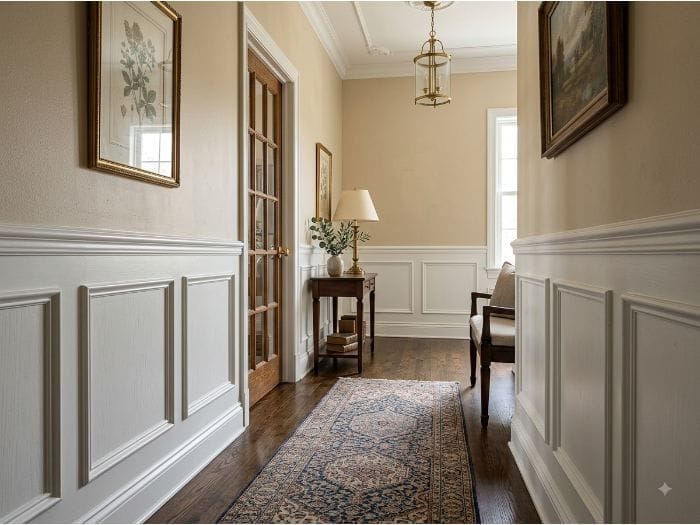
The quintessential wainscoting style, the half-wall, utilizes a horizontal chair rail and vertical panels. This design is highly effective in narrow corridors where the lower half is painted in a durable, easy-to-clean semi-gloss, while the upper half features a contrasting matte paint or luxury wallpaper.
- Impact: It anchors the room, providing a "grounded" feel.
II. Board and Batten: The Modern Farmhouse Staple
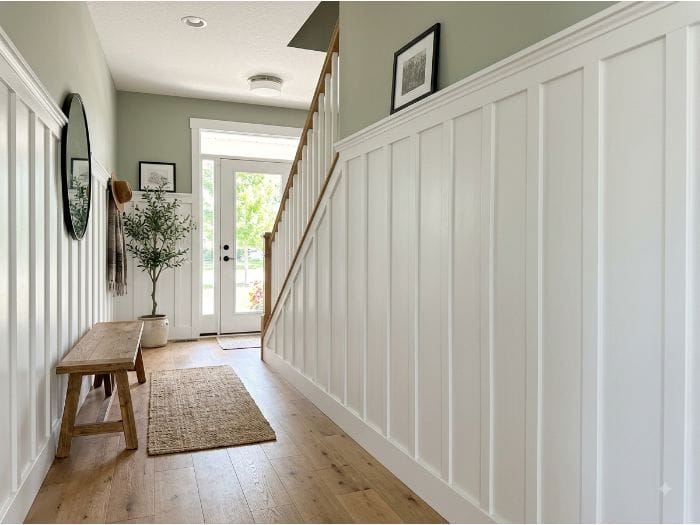
Board and batten consists of wide vertical boards joined by thin strips (battens) to hide the seams. Unlike traditional raised panels, this look is flat and structured.
- Why it works: It offers a clean, geometric rhythm. Wider spacing (12-18 inches) creates a relaxed, coastal vibe, while narrow spacing (6-8 inches) feels more formal and traditional.
III. Boxed (Picture Frame) Panelling
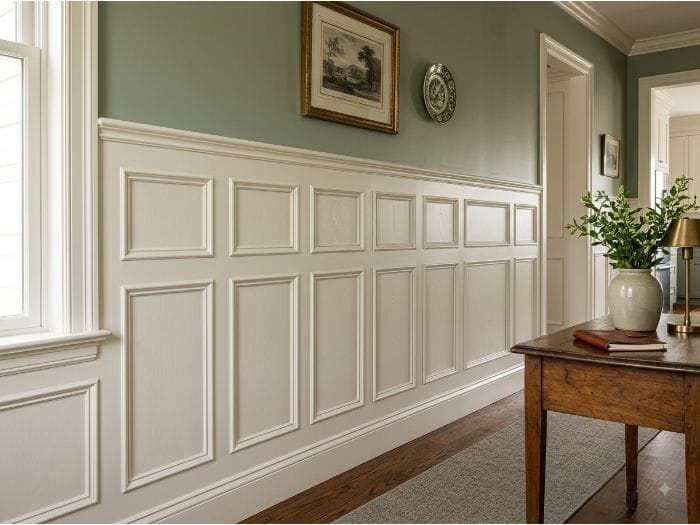
This technique involves applying molding in rectangular or square shapes directly onto the wall. It is the most cost-effective way to achieve a high-end look, as it uses minimal material to create the illusion of deep-set panels.
- Application: Ideal for staircases and formal foyers where the "frames" can follow the diagonal line of the stairs.
IV. Modern Geometric Arrangements
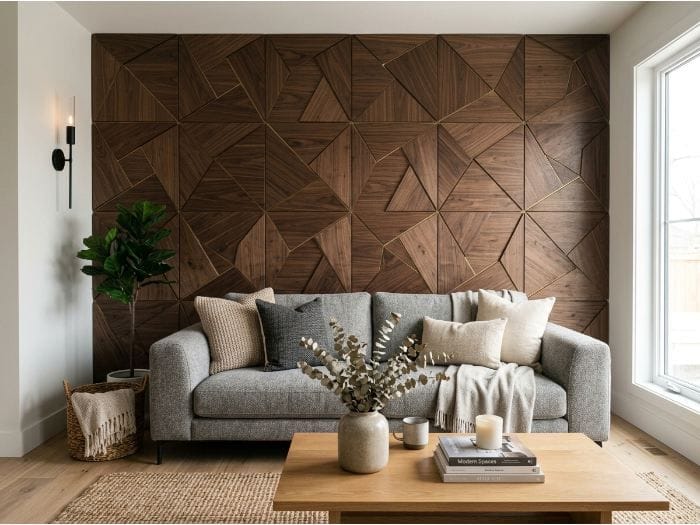
Breaking away from tradition, geometric wainscoting uses moldings to create honeycombs, chevrons, or asymmetrical patterns.
- Visual Interest: This is often used for "accent walls" in home offices or media rooms, providing a 3D texture that interacts dynamically with ambient lighting.
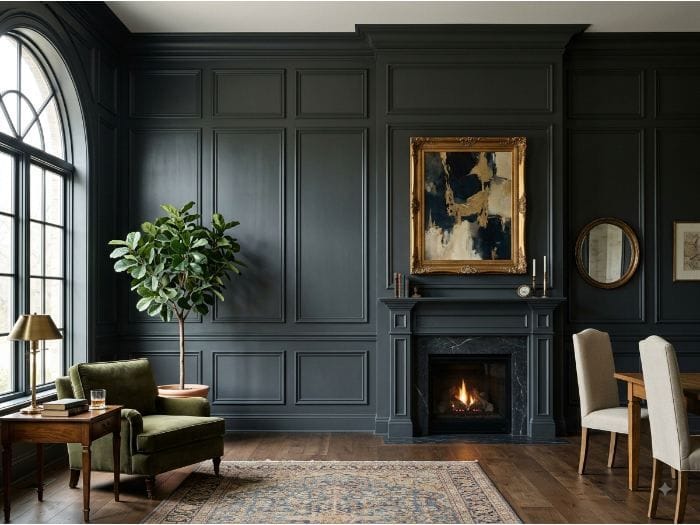
V. Full-Wall Immersion
In a bold departure from the "lower-third" rule, full-wall wainscoting extends from the floor to the ceiling (or crown molding).
- The "Library" Effect: When painted in deep, moody tones like charcoal, navy, or hunter green, full-wall panelling creates an immersive, cocoon-like atmosphere. It is the hallmark of the "Dark Academia" design trend.
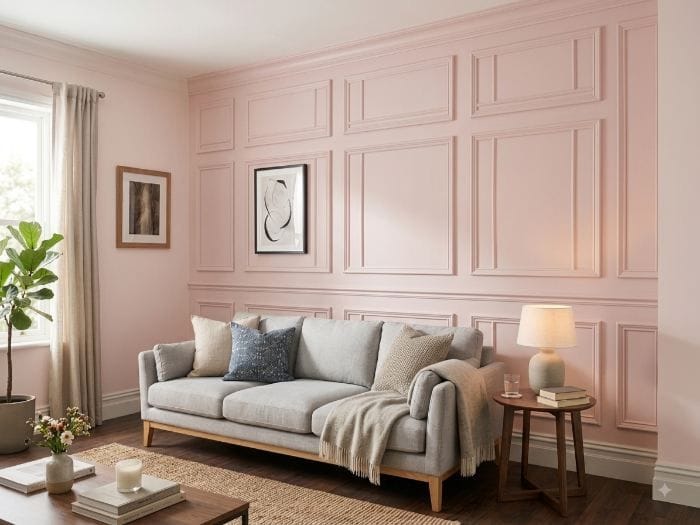
VI. The Strategic Feature Wall
Instead of wrapping a room, designers are now using wainscoting to highlight specific architectural features. Placing a detailed panel arrangement behind a bed’s headboard or a living room sofa eliminates the need for expensive artwork, as the wall itself becomes the art.
VII. Minimalist Flat Panels
For contemporary homes, "less is more." Minimalist wainscoting uses flat, recessed panels with no ornate routing.
- The Seamless Look: By painting the panelling, the baseboard, and the wall in the exact same shade (a technique known as "color drenching"), the texture becomes subtle and sophisticated rather than a loud statement.
VIII. Decorative & Ornate Layering
Reserved for luxury estates and period restorations, decorative wainscoting involves "layering" moldings—using a baseboard, a sub-base, the panel, and a multi-piece chair rail.
- The Premium Factor: This style requires professional carpentry but results in a level of architectural detail that defines a "legacy home."
5. Official Responses and Expert Opinions
Industry experts suggest that the move toward wainscoting is a reaction to the "disposable furniture" era.
Sarah Jenkins, Senior Interior Architect at Urban Design Collective, notes:
"We are seeing a massive shift away from ‘grey-box’ interiors. Clients want their homes to feel permanent. Wainscoting provides that structural ‘bones’ look. Even in a brand-new condo, adding board and batten gives the space an immediate history and a sense of architectural intent that paint alone cannot achieve."
Contractor Insight:
Professional installers emphasize that the most common mistake is incorrect scaling. "You have to account for electrical outlets and window trim," says Mike Rossi, a custom millwork specialist. "If your wainscoting cuts halfway through an outlet or a light switch, it ruins the illusion of quality. Planning the ‘boxes’ around the room’s existing features is 90% of the job."
6. Implications for the Future of Home Design
The widespread adoption of wainscoting has several long-term implications for the housing and renovation industries:
- Durability and Sustainability: As homeowners look for sustainable ways to maintain their properties, protective panelling reduces the frequency of wall repairs and repainting, leading to less material waste over the life of the home.
- The DIY Democratization: The availability of pre-cut kits and lightweight polyurethane moldings has moved wainscoting from the realm of "master carpenters only" to a weekend project for the ambitious DIYer. This has fueled the popularity of the trend on social media platforms like Instagram and TikTok.
- Acoustic Benefits: While not its primary purpose, the addition of wood or MDF panels adds mass to the walls, which can significantly improve the acoustic quality of a room by reducing echoes—a vital feature in the era of home offices and video conferencing.
Final Assessment
Wainscoting is far more than a "plain wall" solution; it is a versatile architectural tool that bridges the gap between historical elegance and modern functionality. Whether through the clean lines of board and batten or the dramatic heights of full-wall panels, this design choice remains a premier method for adding value, protection, and unparalleled character to the domestic environment. As we move further into the decade, expect to see wainscoting continue to evolve, integrating with smart home technology and sustainable composite materials to remain a staple of the sophisticated interior.
