

By [Your Name/Journalist Name]
The architectural landscape of the modern home is undergoing a silent but significant revolution. Once considered the exclusive domain of sprawling luxury villas and the Hollywood elite, the walk-in closet has transitioned from a symbol of excess to a functional necessity for the contemporary working-class professional. As urban living spaces evolve, the demand for organized, dedicated dressing areas has surged, reflecting a broader shift in how we perceive personal wellness and home efficiency.
The Main Facts: Defining the Modern Dressing Suite
A walk-in closet is no longer just a "large cupboard." In contemporary architectural terms, it is defined as a dedicated room or partitioned architectural space specifically engineered for the storage of apparel, footwear, jewelry, and personal accessories. Unlike traditional wardrobes, a walk-in closet is designed with a footprint large enough to allow a person to enter, circulate, and often utilize the space for grooming or dressing.
Industry data suggests that the "closet economy" is booming. Real estate developers are increasingly incorporating walk-in designs into mid-range apartments, recognizing that modern buyers prioritize storage and organization over raw square footage. This shift is driven by the "Marie Kondo effect"—a global movement toward mindful organization—and the rise of "capsule wardrobes," which require high-visibility storage solutions.
Walk-in Closet vs. Traditional Wardrobe: A Comparative Analysis
To understand the shift, one must analyze the structural differences between these two storage philosophies:
| Feature | Walk-in Closet | Traditional Wardrobe |
|---|---|---|
| Architectural Status | Separate room or enclosed architectural alcove | Freestanding or built-in furniture unit |
| Storage Capacity | High-volume; utilizes vertical and floor space | Limited by the dimensions of the unit |
| Layout Flexibility | Highly customizable; modular and adjustable | Usually fixed internal configurations |
| Multifunctionality | Can include seating, vanities, and mirrors | Primary function is strictly storage |
| Real Estate Impact | Increases premium perceived value of a home | Considered a standard utility feature |
Chronology and Evolution: From Royal Dressing Rooms to Modular Urbanity
The concept of a dedicated room for clothing dates back to the 17th and 18th-century European aristocracy, where "dressing rooms" served as private sanctuaries for the elite to be prepared by servants. However, the 20th century saw the rise of the "reach-in" closet as suburban housing boomed.
- The 1950s-70s: The standard reach-in closet became a staple of the American ranch-style home, focusing on hidden storage behind sliding or bifold doors.
- The 1980s-90s: The "Master Suite" concept emerged, introducing the walk-in closet as a luxury feature in "McMansions."
- The 2010s-Present: The "Democratization of Design." Companies like IKEA and specialized modular storage firms began offering high-end aesthetics at accessible price points. This era marked the transition of the walk-in closet into the urban flat, where clever engineering allows even a 50-square-foot space to function as a luxury dressing room.
Supporting Data: Top 10 Design Paradigms for the Modern Home
Interior designers today categorize walk-in closets into several distinct archetypes, each serving a specific demographic and spatial requirement.
1. The Luxury Hotel-Style Suite
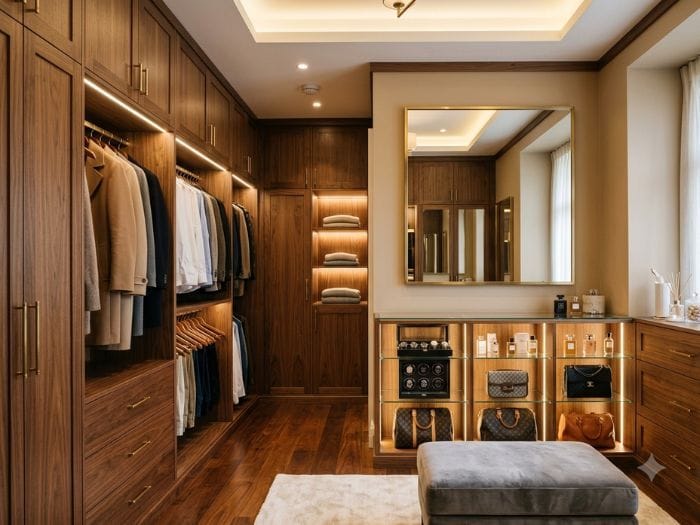
Inspired by high-end hospitality design, this style emphasizes "the experience." It utilizes warm wood finishes (such as walnut or mahogany), recessed LED strip lighting, and floor-to-ceiling cabinetry. These designs often incorporate velvet-lined drawers and glass-fronted display cases for watches and perfumes, mimicking the atmosphere of a premium boutique.
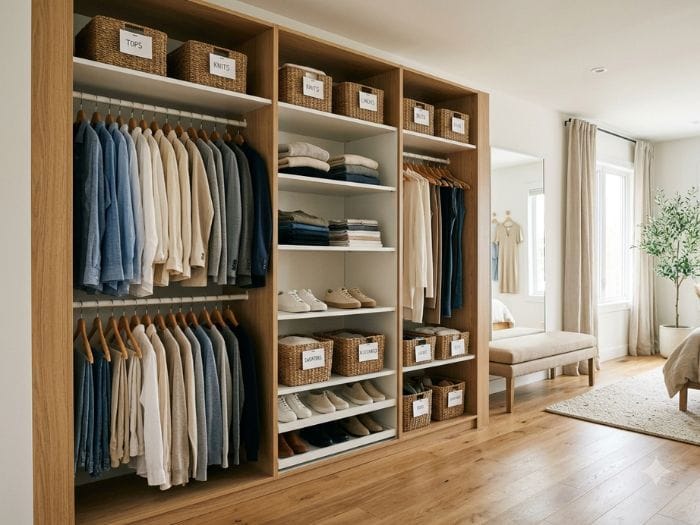
2. The Modular IKEA-Inspired Design
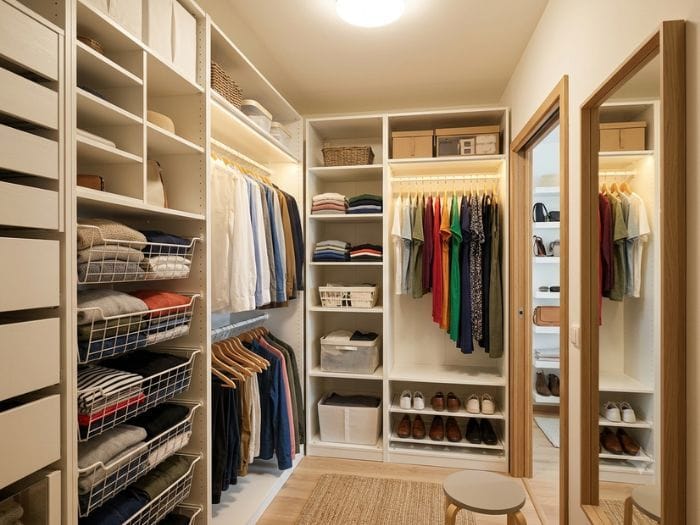
For the space-conscious urbanite, modularity is key. This approach focuses on "functional density." By using adjustable hanging rods, pull-out wire baskets, and slim-profile drawers, this design maximizes every cubic inch. It is the preferred choice for renters and homeowners in metropolitan hubs where space is at a premium.
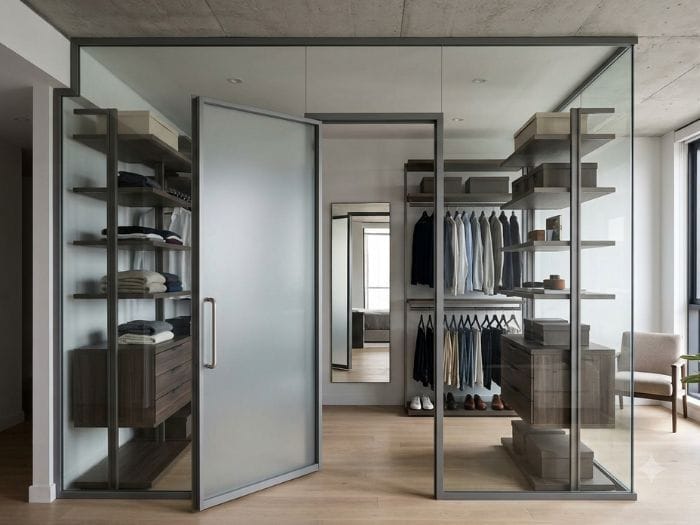
3. The Translucent Glass Concept
A rising trend in contemporary flats is the glass walk-in closet. Utilizing tinted, smoked, or frosted glass doors, this design creates a sense of visual depth. It protects garments from dust while allowing the owner to view their "inventory" at a glance, contributing to a clean, minimalist aesthetic.
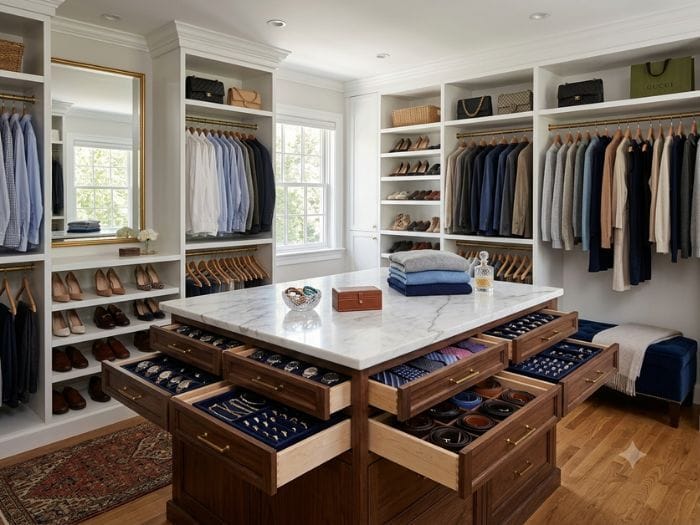
4. The Island Hub Layout
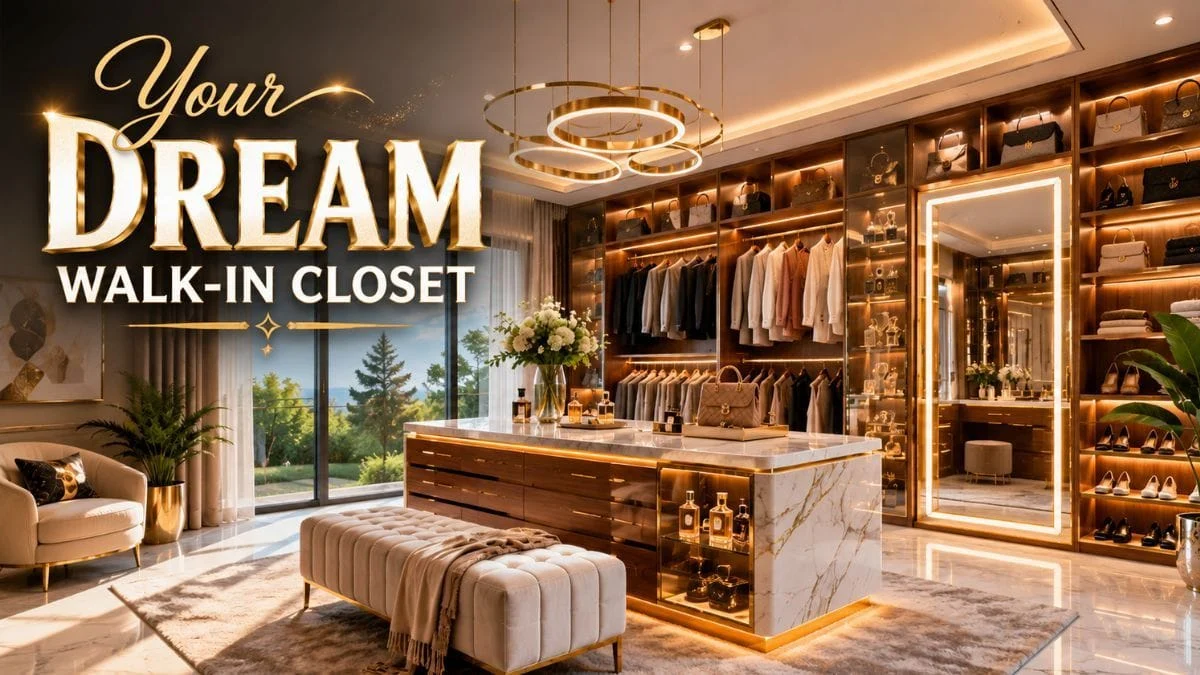
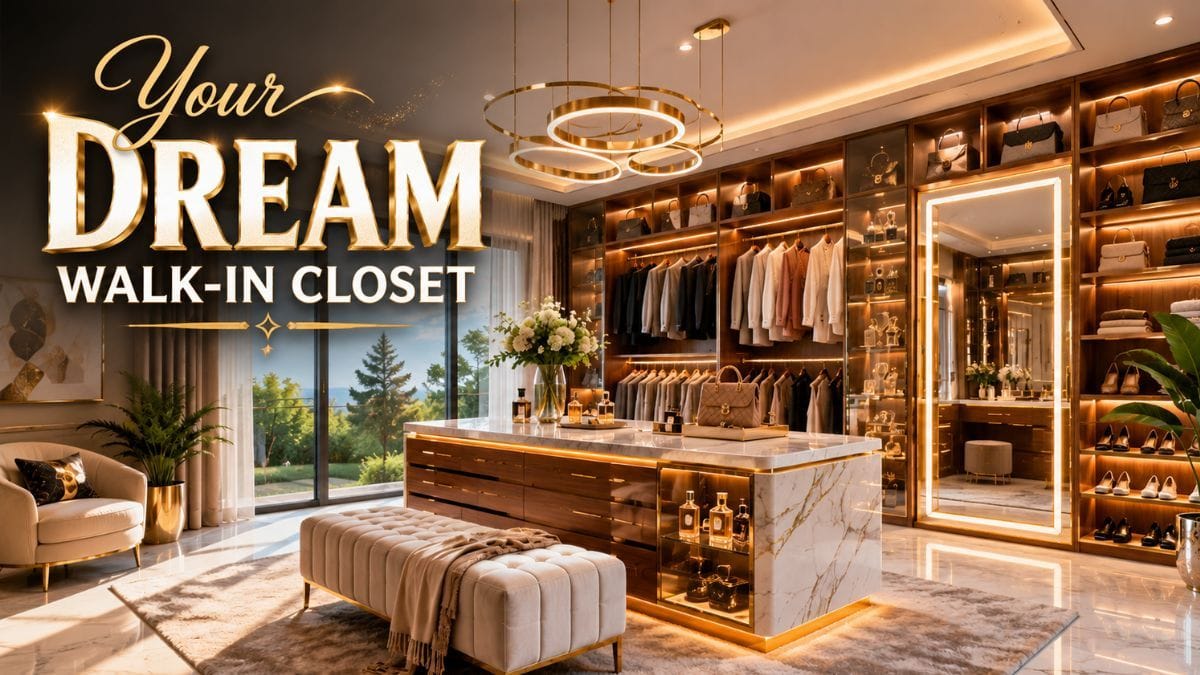
In larger residences, the "Closet Island" has become a centerpiece. Similar to a kitchen island, this central unit provides additional drawer space for accessories like ties, belts, and jewelry. The top surface, often finished in marble or quartz, serves as a staging area for outfit planning.
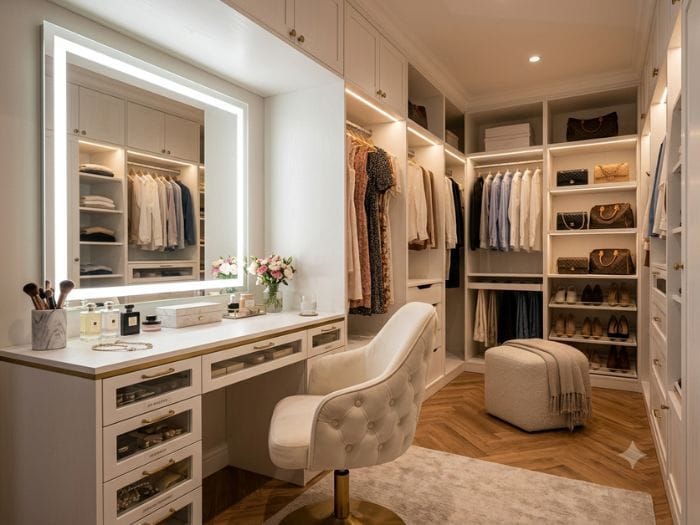
5. The Integrated Vanity/Dressing Table
Merging the bathroom’s vanity functions with the closet’s storage, this design creates a holistic "getting ready" zone. By installing a dedicated makeup station with professional-grade "Hollywood" lighting within the closet, the transition from showering to being fully dressed becomes seamless.
6. The Open-Concept Gallery
Removing doors entirely, the open-concept closet treats clothing as art. This requires a high level of discipline in organization but makes the room feel significantly larger. It is highly popular among minimalists who maintain a curated, color-coordinated wardrobe.
7. The L-Shaped Efficiency
Ideal for rectangular rooms or corner spaces, the L-shaped layout provides a clear division of storage. One axis is typically dedicated to long-hang items (dresses, coats), while the other focuses on shelving and drawers for folded items and shoes.
8. The U-Shaped Maximum Density
The U-shaped closet is the gold standard for storage volume. By wrapping storage around three walls, it creates an "enveloping" feel. This layout is perfect for couples sharing a space, as it allows for clear "his and hers" zones with a shared central walkway.
9. The Retro-Themed Sanctuary
Nostalgia in design has brought back 1970s aesthetics—think bold wallpapers, brass hardware, and plush carpeting. This style turns the closet into a "personality room," moving away from the sterile white-box look of the early 2000s.
10. The Ultra-Minimalist Monolith
Characterized by handle-less "push-to-open" cabinets and a monochromatic color palette, the minimalist walk-in closet hides all visual clutter. This design is focused on psychological calm, ensuring that the start of the day is free from visual "noise."
Official Responses and Expert Insights: Why Design Matters
Architects and real estate experts argue that the inclusion of a walk-in closet is no longer a "fringe" request.
"We are seeing a direct correlation between organized storage and mental well-being," says Sarah Jenkins, a senior interior consultant. "A cluttered bedroom leads to a cluttered mind. By moving the ‘chaos’ of clothing into a dedicated, organized walk-in space, the bedroom returns to being a sanctuary for sleep."
From a real estate perspective, market analysts from firms like Magicbricks suggest that a well-executed walk-in closet can increase a property’s resale value by 3% to 5%. In competitive markets, it is often the "tie-breaker" feature that sways a buyer’s decision.
Implications: Strategic Planning and Avoiding Common Pitfalls
While the benefits are clear, the execution of a walk-in closet requires technical precision. Homeowners are encouraged to consider several factors before breaking ground:
Essential Design Tips
- Lighting is Paramount: Use a high Color Rendering Index (CRI) for LEDs (90+) to ensure that the colors of your clothes look the same inside the closet as they do in daylight.
- Ventilation: Closets can become musty. Ensure there is adequate airflow or a small dehumidifier system to protect natural fibers like wool and silk.
- Verticality: Most people stop their shelving at 7 feet. Designers recommend going to the ceiling (10-12 feet) and using a "pull-down" rod system for seasonal items.
Common Mistakes to Avoid
- Ignoring Ergonomics: Hanging rods placed too high or drawers that are too deep can make daily use frustrating.
- Poor Corner Utilization: In L and U-shaped closets, corners often become "dead zones." Using "Lazy Susan" shoe racks or curved hanging rods can solve this.
- Inadequate Mirror Placement: A walk-in closet without a full-length mirror defeats the purpose of a dressing room. If space is tight, use mirrored cabinet doors.
Final Thoughts: The Future of the Dressing Room
The walk-in closet represents a broader trend in residential architecture: the specialization of space. As our lives become more digital and fast-paced, the physical environment of the home must work harder to provide order and efficiency.
Whether it is a luxury wood-paneled suite or a clever modular system tucked into a compact apartment, the walk-in closet is a testament to the fact that organization is the ultimate luxury. It is a space that allows for a moment of quiet preparation before facing the world—a small but vital engine of the modern lifestyle.
Disclaimer: This report provides information based on current industry trends and interior design standards. Readers are advised to consult with professional architects and contractors before undertaking structural home renovations. Magicbricks Realty Services and its affiliates are not liable for any loss or damage resulting from the use of this information.
