

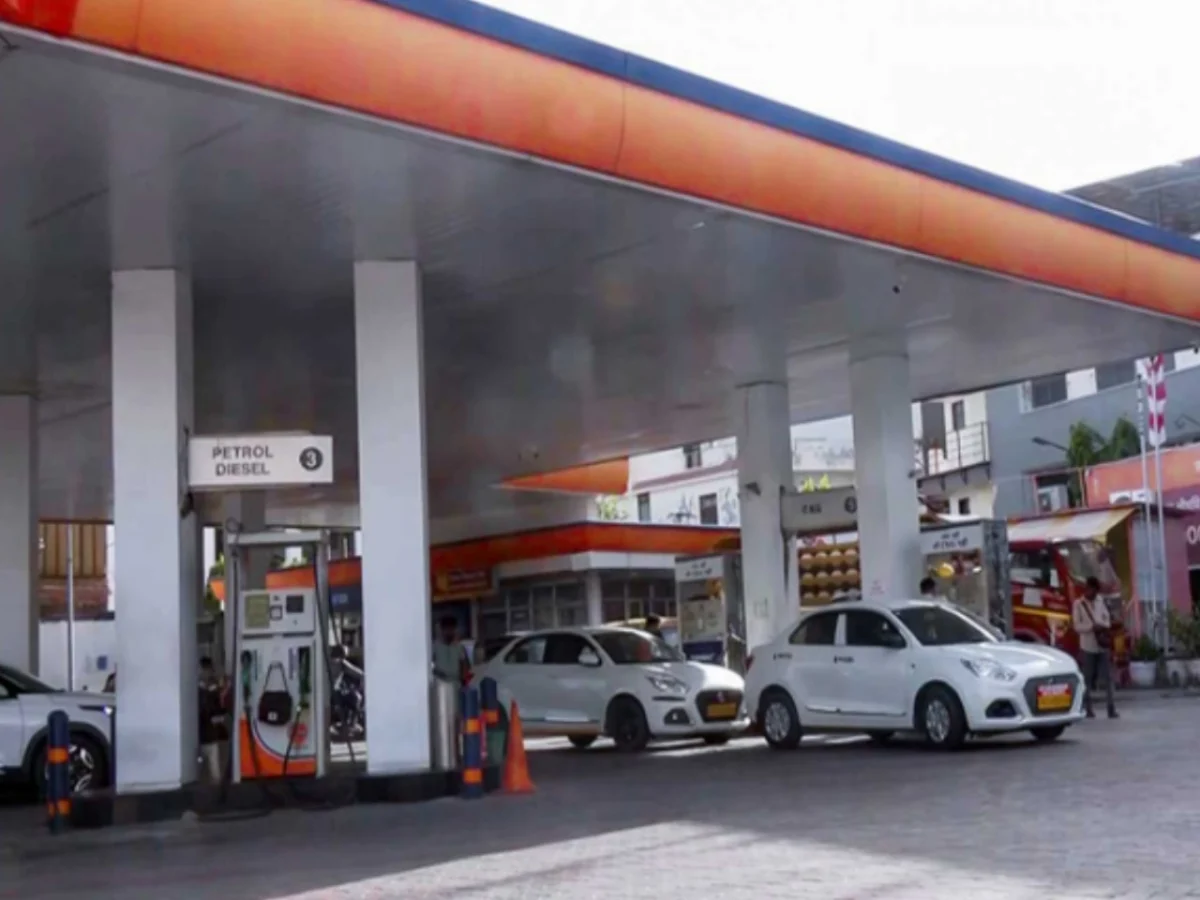
NEW DELHI – In a significant recalibration of its energy export policy, the Indian government has announced revised export levies on petroleum products, effective from August 15. The latest adjustments, part of a fortnightly review mechanism, bring the Special Additional Excise Duty (SAED) on petrol exports down to zero, while retaining levies on diesel and Aviation Turbine Fuel (ATF) at Rs 24 per litre and Rs 19.5 per litre, respectively. This move underscores the government’s dynamic approach to managing domestic energy security, incentivising exports when market conditions permit, and ensuring adequate supply within the nation amidst evolving global geopolitical and economic landscapes.
The decision, formalized through a notification issued by the Ministry of Finance’s Department of Revenue on Friday, August 14, reflects a meticulous balancing act between supporting domestic consumption, optimizing revenue generation, and enabling Indian refiners to capitalize on international market opportunities. The nil levy on petrol exports is particularly noteworthy, signaling a potential shift in the government’s stance for this specific fuel, possibly influenced by current international price differentials and domestic stock levels.
A Fortnightly Recalibration: Government Adjusts Export Levies on Petroleum Products
The Ministry of Finance’s Department of Revenue, in its August 14 notification, outlined the specific revisions to the export levies, also known as Special Additional Excise Duty (SAED). These rates are applicable for the fortnight commencing August 15 and concluding on August 31.
For petrol, the SAED and Road and Infrastructure Cess (RIC) on exports have been completely abolished, effectively setting the duty at nil. This marks a substantial reduction from previous rates, the exact figure of which was not specified in the original brief but implied to be non-zero. The removal of this levy is expected to make Indian petrol more competitive in the international market, potentially encouraging higher export volumes from domestic refiners.
In contrast, the SAED on diesel exports has been maintained at Rs 24 per litre. The notification clarified that no Road and Infrastructure Cess (RIC) would be applicable on diesel exports. Similarly, the SAED on Aviation Turbine Fuel (ATF) exports has been retained at Rs 19.5 per litre. These sustained levies indicate the government’s continued focus on either ensuring robust domestic supply of these crucial fuels or generating revenue from their overseas sales, particularly if international prices continue to offer significant margins.
The primary objective behind these fortnightly adjustments remains steadfast: to ensure the uninterrupted availability of petrol, diesel, and ATF for domestic consumption. These levies were initially introduced as a policy tool to discourage excessive exports, especially during periods of heightened global demand and price volatility, thereby safeguarding India’s energy security. The current revision, therefore, is not merely an administrative adjustment but a strategic response to the prevailing dynamics in global crude oil and refined product markets. It reiterates the government’s commitment to a flexible, market-responsive energy policy that adapts swiftly to international price fluctuations and geopolitical developments.
)
The Genesis of the Export Levy Policy: A Chronology of Market Interventions
The policy of imposing export levies on petroleum products is a relatively recent, yet critical, addition to India’s energy policy toolkit. It emerged as a direct response to unprecedented volatility in global energy markets and specific geopolitical developments that threatened domestic fuel availability and caused significant inflationary pressures.
Initial Introduction Amidst Global Turmoil (July 2022)
The Special Additional Excise Duty (SAED), often referred to as a "windfall tax" or export duty, was first introduced by the Indian government on July 1, 2022. This decisive action was taken against the backdrop of a surging global crude oil market, exacerbated by the Russia-Ukraine conflict and subsequent sanctions. International crude prices had soared, leading to substantial "windfall gains" for Indian refiners who were exporting refined products at elevated international prices while often procuring crude at discounted rates or from long-term contracts.
At its inception, the government imposed an SAED of Rs 6 per litre on petrol and ATF exports, and a more substantial Rs 13 per litre on diesel exports. Additionally, a cess was levied on domestically produced crude oil. The stated rationale was two-fold: firstly, to curb these windfall profits and channel a portion of them back into government coffers; and secondly, and perhaps more critically, to disincentivize excessive exports and ensure adequate availability of refined petroleum products for the domestic market. Many Indian refiners, particularly private players, were reportedly prioritizing highly lucrative international sales over domestic supply commitments, leading to concerns about potential shortages and price spikes within India.

The Fortnightly Review Mechanism: A Dynamic Approach
Recognizing the inherently volatile nature of global oil markets, the government instituted a unique fortnightly review mechanism for these levies. Unlike fixed taxes, the SAED rates are not static. Every two weeks, the Ministry of Finance, in consultation with relevant ministries and experts, assesses the average international prices of crude oil, petrol, diesel, and ATF prevailing during the preceding fortnight. This data-driven approach allows the government to adjust the levies dynamically, responding swiftly to changes in global market conditions.
This mechanism ensures that the policy remains relevant and effective. If international prices for refined products rise significantly, leading to higher export margins, the government can increase the SAED to capture a portion of these gains or further discourage exports. Conversely, if global prices fall or domestic availability stabilizes, the levies can be reduced or even abolished, as seen with the current petrol export duty.
Evolution and Previous Adjustments
Since its introduction in July 2022, the export levy policy has undergone numerous revisions. The initial rates were quite high, reflecting the extreme market conditions at the time. However, as global crude prices moderated and supply chains somewhat stabilized, the government progressively adjusted the duties. These adjustments have often been complex, involving differential rates for various products and sometimes distinguishing between different types of refiners (e.g., those with export obligations versus those primarily focused on domestic sales, though the SAED generally applies across the board).
)
The previous adjustment, referenced in the source article as occurring on August 3, serves as a recent example of this ongoing calibration. Each revision reflects the government’s continuous effort to fine-tune the balance between revenue generation, energy security, and the profitability of the crucial refining sector. The current August 15 revision for the fortnight is another iteration of this responsive and adaptive policy framework, directly influencing the economic calculus for Indian refiners engaged in international trade. The abolition of the petrol export levy, in particular, highlights a strategic decision based on the most recent market assessments.
Decoding the Numbers: Supporting Data and Economic Rationale
The government’s decision to revise export levies is not arbitrary but is deeply rooted in a complex interplay of international market data, domestic economic considerations, and strategic energy objectives. Understanding the supporting data and the underlying economic rationale is crucial to appreciating the nuances of this policy.
International Crude Oil Prices and Refining Margins
The cornerstone of the fortnightly review is the trend in international crude oil prices. Benchmarks like Brent Crude and West Texas Intermediate (WTI) are closely monitored. When crude prices are high, the cost of feedstock for refiners increases. However, the profitability of refiners largely depends on the "crack spread" – the difference between the price of crude oil and the price of the refined products (petrol, diesel, ATF) it yields. A wider crack spread indicates higher refining margins.
)
For instance, if crude oil prices are moderate but the demand for refined products globally is exceptionally high (e.g., due to supply disruptions or strong economic activity), crack spreads can widen significantly. This scenario leads to substantial profits for refiners, which the SAED aims to partially capture. Conversely, if crude prices are high but refined product demand is weak, crack spreads can narrow, making exports less lucrative and potentially prompting a reduction in levies. The nil levy on petrol exports suggests that, for this specific product, either the international crack spreads have tightened, making exports less profitable with a duty, or domestic stocks are ample, allowing for increased exports without jeopardizing local supply.
India’s Position as a Refining Hub
India is a major global refining hub, possessing significant refining capacity that often exceeds its domestic consumption needs. This surplus capacity allows India to be a net exporter of refined petroleum products. Major players like Reliance Industries, Nayara Energy (formerly Essar Oil), and public sector undertakings such as Indian Oil Corporation (IOC), Bharat Petroleum Corporation Limited (BPCL), and Hindustan Petroleum Corporation Limited (HPCL) operate large, sophisticated refineries.
These refiners play a crucial role in India’s economy, contributing to GDP, employment, and foreign exchange earnings through exports. However, the government’s primary responsibility is to its own citizens. Therefore, while encouraging exports is beneficial, ensuring domestic fuel security takes precedence. The levies act as a mechanism to balance these two objectives, ensuring that refiners do not excessively prioritize lucrative international markets at the expense of domestic supply.
)
Domestic Demand vs. Export Potential
India’s domestic demand for petrol, diesel, and ATF is substantial and growing, driven by a large vehicle fleet, industrial activity, and expanding aviation sector. Diesel, in particular, is the most consumed fuel, critical for transportation, agriculture, and power generation. ATF is vital for the burgeoning airline industry. Petrol consumption, while lower than diesel, is also significant.
The government continuously monitors domestic demand patterns, inventory levels, and refinery output. If domestic demand is robust and inventories are tightening, higher export levies can be maintained or increased to keep more product within the country. Conversely, if domestic demand is subdued or production outstrips local needs, reducing export levies, as seen with petrol, can help refiners offload surplus stock profitably in international markets, preventing oversupply and potential storage issues domestically.
Impact on Refiner Profitability and Government Revenue
The export levies directly impact the profitability of Indian refiners, especially those with significant export operations. Higher levies reduce their net realization from international sales. While public sector refiners might have a greater focus on domestic supply mandates, private refiners like Reliance and Nayara often have a stronger export orientation due to their scale and market flexibility. The removal of the petrol levy will be a welcome relief for refiners exporting petrol, improving their margins.
)
From the government’s perspective, the SAED is a significant, albeit variable, source of revenue. During periods of high international prices and wide crack spreads, these levies can generate substantial income, which can then be utilized for public welfare programs or to manage fiscal deficits. The dynamic nature of the levies means that revenue collection fluctuates, reflecting global market conditions. The current adjustments reflect a strategic choice to forego some potential revenue from petrol exports in favor of enhancing the competitiveness of Indian refiners in that segment, while continuing to draw revenue from diesel and ATF exports.
Energy Security and Macroeconomic Stability
Ultimately, these policy decisions are deeply intertwined with India’s broader energy security goals and macroeconomic stability. By ensuring adequate domestic availability of fuels, the government mitigates the risk of energy shortages, which can cripple economic activity and lead to social unrest. Moreover, by stabilizing domestic fuel prices (indirectly, as these levies don’t directly impact domestic retail prices but rather ensure supply), the government helps contain inflationary pressures, contributing to overall macroeconomic stability. The constant monitoring and fortnightly adjustments are critical tools in navigating the complex and often unpredictable global energy landscape.
Official Stance and Industry Perspectives: Navigating the Policy Landscape
The policy on export levies is a critical area where government objectives intersect with the commercial interests of the energy industry. Understanding the official rationale and how the industry perceives these changes provides a holistic view of the policy’s impact.
)
Government’s Official Rationale: A Balancing Act
The official position, consistently articulated by the Ministry of Finance and other government spokespersons, emphasizes the government’s dual responsibility. Firstly, ensuring energy security for the nation’s 1.4 billion people by guaranteeing sufficient and affordable supply of essential fuels. Secondly, fostering a robust and competitive domestic refining industry that can contribute to India’s economic growth and act as a reliable global supplier.
The introduction of the SAED in July 2022 was primarily justified as a measure to curb "windfall gains" by refiners when international prices were exceptionally high. This was seen as a way to ensure that a portion of these extraordinary profits, derived from global market conditions rather than increased efficiency, contributed to the national exchequer. Simultaneously, by making exports less attractive, the government aimed to redirect refined products towards the domestic market, thereby stabilizing supply and preventing potential shortages that could lead to price hikes for Indian consumers.
The clarification that there is "no change in the existing excise duty rates on petrol and diesel cleared for domestic consumption" is a crucial point. This highlights that the export levies are distinct from the taxes consumers pay at the pump. The SAED on exports does not directly translate into higher or lower retail prices for Indian consumers. Instead, its impact is indirect, primarily by influencing the availability of fuel in the domestic market and the profitability of refiners. The current adjustment, particularly the nil levy on petrol, demonstrates the government’s flexibility and willingness to ease the burden on refiners when market conditions or domestic supply warrant it, without necessarily impacting domestic retail prices.
)
Industry Perspectives: A Mixed Reception
The Indian refining industry, comprising both large public sector undertakings (PSUs) and agile private players, generally views these export levies with a degree of caution, though the recent changes might elicit a more positive response in certain segments.
For Private Refiners (e.g., Reliance Industries, Nayara Energy): These companies often have a significant export orientation and possess the flexibility to quickly adapt their crude sourcing and product output to global market dynamics. High export levies directly impact their export profitability and can force them to re-evaluate their sales strategies. The abolition of the petrol export levy will undoubtedly be welcomed by these players, as it enhances the competitiveness of their petrol exports and could boost their margins from this product. However, the continued levies on diesel and ATF, while potentially ensuring domestic supply, might still be seen as a constraint on maximizing export revenues if international crack spreads for these products are attractive.
For Public Sector Refiners (e.g., IOC, BPCL, HPCL): While they also engage in exports, PSUs have a primary mandate to ensure domestic fuel supply across the vast Indian geography. Therefore, their operations are often more geared towards meeting national demand. While they would also benefit from reduced export duties, their strategic focus might be less solely on maximizing export profits compared to private players. The policy, in essence, helps them fulfill their domestic supply obligations by discouraging others from diverting too much product abroad.
)
Industry Analysts and Experts: Analysts often point to the delicate balance the government tries to strike. While the levies help manage energy security and provide revenue, they can also potentially disincentivize investment in refining capacity if profitability becomes too unpredictable. However, the fortnightly review mechanism is often praised for its responsiveness, allowing the government to adapt quickly to dynamic global energy markets. Experts generally agree that such policies are a necessary evil in volatile times, allowing governments to protect domestic interests while trying to maintain a conducive environment for industry. The current nil levy on petrol is likely to be interpreted as a pragmatic adjustment reflecting current market realities for that specific fuel.
The dialogue between the government and the refining industry is ongoing, with both sides navigating the complexities of global energy markets and national economic imperatives. The recent revisions are a testament to this continuous adaptive process, aiming to optimize outcomes for all stakeholders.
Broader Implications: Economic Ripple Effects and Future Outlook
The latest revisions to India’s export levies on petroleum products carry significant implications, extending beyond the immediate financial impact on refiners to influence broader economic dynamics and India’s standing in the global energy market.
)
For Exporters and Refiners
The most immediate and direct implication is for Indian refiners. The abolition of the SAED on petrol exports makes overseas sales of petrol significantly more attractive. This could lead to:
- Increased Petrol Exports: Refiners might now find it more profitable to export petrol, potentially increasing their throughput and foreign exchange earnings from this product. This could also help them manage domestic inventory levels more efficiently.
- Improved Profitability for Petrol Segment: With no export duty, the net realization for refiners from petrol exports will increase, directly boosting their profit margins for this product.
- Strategic Re-evaluation: Refiners might re-evaluate their product mix and export strategies, potentially favoring petrol exports more, while still navigating the duties on diesel and ATF.
For diesel and ATF, the continued levies mean that these products will remain less attractive for export compared to a scenario with no duties. This implies:
- Prioritization of Domestic Supply: The levies will continue to incentivize refiners to prioritize the domestic market for diesel and ATF, ensuring stable supply for critical sectors like transportation, agriculture, and aviation.
- Revenue Generation: The government will continue to generate revenue from diesel and ATF exports, leveraging the ongoing demand and potentially robust international prices for these fuels.
For Domestic Consumers
While the export levies do not directly alter the retail prices of petrol and diesel for domestic consumers (as these are influenced by international crude prices, refining costs, central excise duties, and state VAT), their indirect impact is crucial. By discouraging excessive exports during periods of high demand, the policy aims to ensure adequate domestic availability. This stability in supply helps prevent potential shortages that could otherwise lead to price spikes or rationing, thereby contributing to overall consumer welfare and macroeconomic stability. The current adjustments, by allowing more flexible petrol exports, implicitly signal confidence in domestic petrol supply levels.
)
For Government Revenue
The revision will have a mixed impact on government revenue. The nil levy on petrol exports means a cessation of revenue collection from this segment. This could result in a marginal decrease in overall SAED collections, assuming petrol exports were generating revenue previously. However, the continued levies on diesel and ATF will ensure a steady stream of revenue from these products, especially if international crack spreads remain favorable. The government’s decision reflects a calculated trade-off: foregoing some revenue from petrol to boost industry competitiveness, while maintaining revenue streams from other key fuels. This dynamic adjustment mechanism allows the government to optimize its fiscal position in response to changing market realities.
For International Trade Dynamics and India’s Energy Diplomacy
India is a significant player in the global refined products market. Its refining capacity and strategic location make it a crucial supplier to various regions, particularly in Asia and Africa. The export levy policy positions India as a pragmatic and responsive participant in global energy trade. By selectively applying or removing duties, India can influence the flow of its refined products, responding to global demand signals while safeguarding its own interests. The flexibility demonstrated by the fortnightly review enhances India’s credibility as a reliable trading partner, capable of adapting to market fluctuations.
Future Outlook: A Landscape of Continued Vigilance
The future trajectory of these export levies will remain highly dependent on a multitude of factors, primarily:
)
- Global Crude Oil Prices: Continued volatility or sustained high prices for crude oil would likely necessitate ongoing scrutiny and potential adjustments to the levies.
- Refining Margins (Crack Spreads): The profitability of converting crude into refined products will be a key determinant. Wider crack spreads for diesel and ATF might lead to sustained levies, while narrowing spreads could prompt reductions.
- Geopolitical Stability: Any resurgence of major geopolitical crises (like the "West Asia crisis" mentioned in the original context, or other global conflicts) could disrupt supply chains and reignite inflationary pressures, influencing policy decisions.
- Domestic Demand Growth: As India’s economy grows, so will its demand for petroleum products. The government will continuously monitor this to ensure domestic supply remains paramount.
- Global Economic Health: A robust global economy typically drives higher demand for fuels, potentially leading to higher international prices and influencing export duty decisions.
The fortnightly review mechanism is inherently designed for agility, allowing India to respond quickly to these evolving conditions. The current adjustments are a testament to this adaptive policy framework, which aims to strike a delicate balance between national energy security, fiscal prudence, and the commercial viability of its vital refining sector in a dynamic global energy market. India’s energy policy will continue to be characterized by this blend of strategic foresight and tactical flexibility, ensuring that the nation remains resilient in the face of global energy uncertainties.
