INTRODUCTION: A Tale of Two Pumps
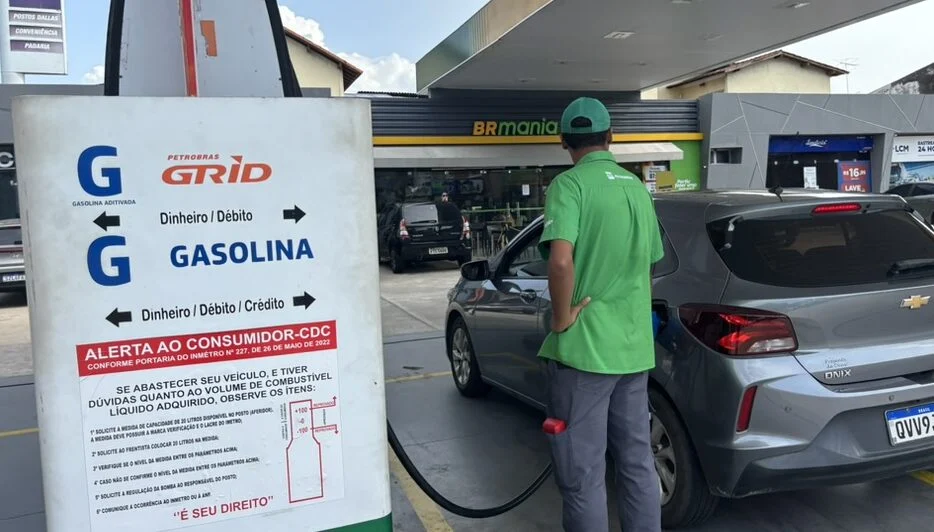
At Posto Dallas, a bustling fuel station in the northern Brazilian city of Belém, the ritual of refueling is a calculated economic decision. John, a 27-year-old attendant, watches as drivers pause before the large price boards. In Brazil, the choice is theirs: pure gasoline (which contains a mandatory 27–30% ethanol blend) or hydrous ethanol. Because 75% of the national fleet consists of flex-fuel vehicles, the decision usually comes down to a simple mathematical rule: if the price of ethanol is less than 70% of the price of gasoline, you fill up with the biofuel.
Nearly 15,000 kilometers away, at a petrol pump in the Katara Hills of Bhopal, India, the scene appears identical but the underlying reality is fundamentally different. Here, Priyanka Verma, a motorist who recently moved from Delhi, pulls up to the pump. She does not check a price board for ethanol versus petrol because, in India, there is no choice. Under the government’s accelerated Ethanol Blending Programme (EBP), 20% ethanol-blended petrol (E20) has become the default—and often only—option.
While India has looked to Brazil as the "gold standard" for its bioenergy roadmap, a deep dive into the two transitions reveals a stark divergence. Brazil’s journey has been a century-long marathon defined by consumer choice, flex-fuel dominance, and rigorous public testing. India’s transition, by contrast, is a high-speed sprint that has left many consumers grappling with falling mileage, compatibility concerns, and a lack of transparency.

I. MAIN FACTS: The Choice Paradox and Technical Divergence
The core difference between the two nations lies in the "Choice Paradox." Brazil has built a system around empowering the consumer, while India has built its system around a mandatory default.
The Brazilian Model: Flexibility as Standard
In Brazil, the transition was never just about the fuel; it was about the engine. The introduction of flex-fuel technology in 2003 was the "turning point," according to Rio de Janeiro-based journalist and motorist Nicola Pamplona. Brazilian drivers can toggle between fuels based on the sugarcane harvest season. When ethanol is cheap, they use it; when prices rise during the off-season, they switch back to the gasoline blend. This flexibility creates a natural market stabilizer and fosters consumer trust.
The Indian Model: The Mandatory Default
India’s approach is top-down. The government has mandated E20 as the standard fuel to reduce oil import bills and lower carbon emissions. However, unlike Brazil, India’s fleet is not yet "flex-ready." While newer vehicles are E20-compliant, millions of older cars and motorcycles on Indian roads were designed for E5 or E10. For drivers like Verma, the transition has manifested as a "hidden tax" in the form of reduced fuel efficiency. Verma reports that her car’s mileage dropped from 15 km/liter in Delhi’s heavy traffic to 11.5 km/liter in Bhopal’s lighter traffic—a staggering 23% decline she attributes to the mandatory E20 blend.
II. CHRONOLOGY: A Century vs. A Half-Decade
The timeline of these transitions explains the current friction in the Indian market. Brazil’s ethanol integration is a legacy project; India’s is a modern emergency.
Brazil’s Century of Adaptation:

- 1931: Brazil introduces its first mandatory ethanol blending mandate.
- 1975: In response to the global oil crisis, the "Proálcool" (National Alcohol Programme) is launched to subsidize production and develop ethanol-only engines.
- 2003: The commercial launch of Flex-Fuel Vehicles (FFVs) revolutionizes the market.
- 2024-2026: Brazil moves toward E30 and E32 blends, backed by decades of data and a fleet that is 75% flex-fuel compatible.
India’s Rapid Acceleration:
- 2001-2003: India launches pilot projects and a 5% blending mandate in select states.
- 2014: Ethanol blending stands at a mere 1.53%.
- 2021: NITI Aayog releases the "Roadmap for Ethanol Blending," prepared in just 75 days.
- 2022: India hits the 10% (E10) target five months ahead of schedule. The government advances the E20 deadline from 2030 to 2025-26.
- 2023: Public sector oil marketing companies (OMCs) begin the nationwide rollout of E20.
Luiz Augusto Horta Nogueira, a Brazilian bioenergy expert, notes the disparity: "We took almost a century to do that, and India has done it in five years."
III. SUPPORTING DATA: The Transparency Gap
A critical component of Brazil’s success has been the public availability of technical data to build consumer confidence. In India, much of the testing remains behind closed doors.
Technical Testing in Brazil
When Brazil moved to E27 and eventually E30, the process involved the National Agency of Petroleum (ANP), automakers, and academic institutions. The results—covering engine wear, cold-start performance, and material degradation—were published in the public domain. In July 2026, when the National Energy Policy Council approved a temporary increase to E32, it was cited as a strategic move to manage fuel prices, backed by technical viability reports that any citizen could access.
The Indian Information Vacuum
In India, the NITI Aayog roadmap was developed by an expert committee including the Automotive Research Association of India (ARAI) and the Society of Indian Automobile Manufacturers (SIAM). While these bodies claim to have conducted rigorous tests on emissions and durability, detailed vehicle-wise results are not available in a public government repository.

This lack of transparency fuels consumer skepticism. While the government acknowledges that E20 may cause a "marginal" reduction in fuel efficiency, users on the ground report much higher losses. Without public data to explain these discrepancies, the "greenlash"—a pushback against environmental policies—continues to grow among Indian motorists.
IV. OFFICIAL RESPONSES: Balancing Ambition with Reality
The Indian government and industry bodies have been forced to respond to mounting concerns over mileage and engine health.
The Government’s Stance
In a March 2025 reply to Parliament, the Ministry of Petroleum and Natural Gas admitted that E20 could result in a reduction in fuel efficiency for four-wheelers designed for E10 but calibrated for E20. However, they maintained that hardware changes and engine tuning by manufacturers could mitigate these losses. They emphasized that the E20 roadmap found no major issues regarding engine wear or oil deterioration.
The Industry Perspective
SIAM has defended the transition, calling it a "calibrated, standards-backed journey." Industry representatives argue that mileage depends on a multitude of factors, including driving habits, tire pressure, and vehicle maintenance, rather than just the fuel blend. Evandro Herrera Gussi, head of the Brazilian sugarcane association UNICA, who has consulted with Indian officials, argues that ethanol is often a "scapegoat" for problems related to aging vehicles or poor upkeep. "The truth about ethanol is it’s better for engines," Gussi insists, pointing to its higher octane rating and cleaner combustion.
The Brazilian Warning
Despite their support for India’s goals, Brazilian experts urge caution. Horta advised India to remain at E20 for the time being. "I feel that you [India] are safer. Go to E20, not beyond immediately," he warned, noting that higher blends like E30 or E85 require a level of vehicle preparation and consumer readiness that India has not yet achieved.

V. IMPLICATIONS: Trust, Logistics, and the Future of Mobility
The divergence between the Indian and Brazilian ethanol paths has profound implications for the future of sustainable transport.
1. The Trust Deficit
For any fuel transition to be successful, it must have the "buy-in" of the person behind the wheel. In Brazil, drivers like Nicola Pamplona choose ethanol because they feel it is a superior, environmentally friendly product, even if it costs slightly more. In India, the lack of choice makes the transition feel like an imposition. If drivers perceive E20 as a fuel that damages their engines or drains their wallets, the "green" brand of ethanol will be tarnished.
2. The Flex-Fuel Bridge
Brazil’s experience proves that the "bridge" to high ethanol use is the flex-fuel engine. India is currently pushing manufacturers to produce FFVs, but they remains a rarity on Indian roads. Until a significant portion of the fleet can choose its fuel, the government will remain locked in a cycle of mandates that may not align with market realities.
3. Economic and Logistical Predictability
Brazil’s "Fuel of the Future Law" ensures that any increase in blending is predictable, allowing distributors to invest in the necessary infrastructure. In India, the rapid advancement of targets has put immense pressure on oil marketing companies and the agricultural supply chain. Ensuring that ethanol production—primarily from sugarcane and food grains—does not conflict with food security remains a lingering concern.
Conclusion
India’s ethanol transition is a bold experiment in rapid decarbonization. By skipping the decades of gradual adaptation that Brazil underwent, India is attempting to leapfrog into a bioenergy future. However, as the experiences of drivers in Bhopal and Belém suggest, technology is only half the battle. The other half is winning the trust of the consumer. As India moves toward its 2025-26 E20 goal, the lessons from Brazil are clear: testing must be transparent, vehicles must be compatible, and ultimately, the driver should be the one holding the power of choice at the pump.