

KALYANSINGPUR, ODISHA – As the morning sun clears the jagged peaks of the Niyamgiri range, the quiet town of Kalyansingpur transforms into a cacophony of commerce. It is Monday, the day of the santha (weekly market), an event that serves as the economic heartbeat for the Dongria Kondh, one of India’s most reclusive and culturally distinct Particularly Vulnerable Tribal Groups (PVTGs).
On a dusty tarpaulin sheet, a trader meticulously sifts through a handful of dried mango slices, his eyes searching for the perfect golden-brown hue that signals quality. Surrounding him, the air is thick with the scent of wild forest produce and the rhythmic rise and fall of negotiations conducted in a mix of Kui, Odia, and Telugu. For the Dongria Kondh, this market is more than a place of exchange; it is a vital link between their secluded mountain existence and the sprawling markets of mainland India.
Main Facts: The Economic Pulse of the Foothills
The Kalyansingpur santha is a critical node in the regional economy of southwestern Odisha. By 10:00 AM, the market is a sea of activity. Sacks of dried mangoes—the season’s primary commodity—are piled high, waiting to be weighed on swinging scales that haven’t changed in design for decades.

The Dongria Kondh families, having trekked from villages perched high on the slopes of the Rayagada and Kalahandi districts, bring with them the bounty of the hills. Their produce is entirely organic, harvested from the wild or grown on the steep, "dongar" (hill) slopes using traditional shifting cultivation methods. The primary goods changing hands today include:
- Wild Mangoes: Sliced and sun-dried, these are the market’s current "gold."
- Native Millets: Specifically Ragi (finger millet), a staple of the tribal diet.
- Pulses: Native varieties of Tur Dal (pigeon pea) and black gram.
- Forest Produce: Tamarind, jackfruit, and seasonal berries.
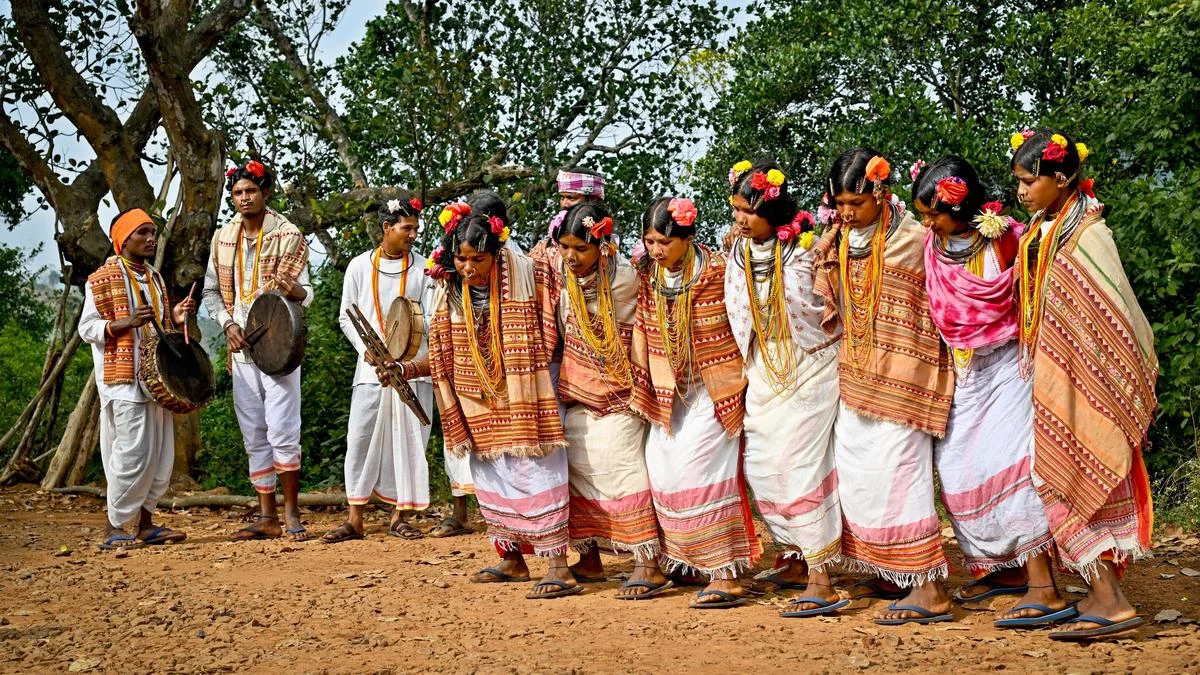
The Dongria Kondh women are the unmistakable protagonists of this market. Adorned with strands of colorful beads that drape across their chests and multiple metal rings piercing their ears and noses, they carry a quiet authority. Most striking is the small traditional dagger, or kapi, tucked discreetly into their tightly coiled hair buns. This tool is both a symbol of their cultural identity and a practical necessity for life in the rugged, leopard-inhabited terrain of the Niyamgiri hills.
Chronology: From Sacred Ancestry to Supreme Court Landmark
To understand the current state of the Niyamgiri hills, one must look back at the historical and legal battles that have defined the region over the last two decades.

The Ancestral Bond
The Dongria Kondh believe they are the descendants of the Niyam Raja, the King of the Hills. For centuries, they have lived in a symbiotic relationship with the 250-square-kilometer Niyamgiri massif. Their spiritual belief system dictates that the hills are a living deity, and the preservation of the forest is a religious mandate.
2003–2012: The Mining Conflict
The peace of the hills was disrupted in the early 2000s when plans were announced for a massive bauxite mining project. Vedanta Resources, a global mining giant, sought to extract the alumina-rich ore from the Niyamgiri top to feed its refinery in Lanjigarh. This sparked a decade-long David-vs-Goliath struggle. The Dongria Kondh, supported by international human rights groups, argued that mining would destroy the perennial springs that feed their crops and desecrate the home of their god.
2013: The Landmark Judgment
The conflict reached its zenith in April 2013. In a historic ruling, the Supreme Court of India declared that the tribal communities’ religious and cultural rights must be respected. The court mandated that the Gram Sabhas (village councils) would have the final say on whether mining could proceed.

Between July and August 2013, 12 villages held open-air meetings. In a unanimous and unprecedented show of resolve, all 12 Gram Sabhas rejected the mining proposal. This was the first time in Indian history that a tribal community was given the legal power to veto a multi-billion-dollar industrial project.
2014–Present: The Era of Autonomy
In the decade since the "Refusal of the Hills," the Dongria Kondh have focused on consolidating their traditional livelihoods while selectively adopting modern amenities. The Monday santha at Kalyansingpur stands as a testament to their continued economic independence.
Supporting Data: The Economics of the Wild Mango
The seasonal trade of dried mangoes provides a fascinating look into the volatility of forest-based economies. Unlike industrial crops, the yield of wild mangoes is entirely dependent on the whims of the monsoon and the health of the old-growth forest.

According to J. Bhaskar, a local wholesaler who has operated in the region for over twenty years, the 2024 season has seen a bumper harvest. However, this abundance has led to a significant price correction.
"Last year, the supply was limited, and dried mango sold for as high as ₹85 per kilogram," Bhaskar explains while checking a ledger. "This season, because the harvest has been so good and every village has brought sacks to the market, the price has stabilized around ₹45 per kilogram."
Despite the price drop, the volume of trade remains high. These dried slices are not just for local consumption; they are a sought-after ingredient for industrial food processors and pickle manufacturers. Once the consignments are consolidated at Kalyansingpur, they are loaded onto trucks destined for:

- Raipur (Chhattisgarh): A major hub for spice and condiment processing.
- Andhra Pradesh: Where they are used in traditional South Indian chutneys.
- Mumbai: Catering to the high demand for organic, forest-sourced ingredients in urban markets.
The window for this trade is incredibly narrow. The wild mangoes are only available in significant quantities during the month of June, making the Monday santhas of this month the most lucrative of the year for the hill tribes.
Official Responses and Community Perspectives
While the 2013 judgment secured the hills from mining, the community remains vigilant. The "Save Niyamgiri" sentiment is not a relic of the past but a living part of their daily discourse.
Babula, a resident of Phakeri village, reflects the general consensus of the hills. "The government and companies talk about ‘development’ in terms of money and roads," he says through a translator. "But look at our plates. Everything we eat comes from these hills. We have the mandia (ragi), the wild fruits, and the clean water from the streams. If the hills are broken for stones (ore), the water will disappear. No amount of money can buy back a dried-up stream."

Government officials from the Odisha PVTG Empowerment and Livelihoods Improvement Programme (OPELIP) note that while they provide support for modernizing agriculture and improving connectivity, they respect the community’s desire to maintain their traditional lifestyle.
"Our goal is to provide choices," says an official who requested anonymity. "We have installed solar panels in many remote hamlets and built concrete houses for those who want them. But we recognize that the Dongria Kondh’s strength lies in their connection to the forest. We are working on getting Geographical Indication (GI) tags for their unique products, like the Kapdaganda (hand-embroidered shawl), to ensure they get better value for their craft."
Implications: Tradition in the Age of Connectivity
The journey from the Rayagada plains into the heart of Niyamgiri reveals a society in a delicate state of transition. As the road winds upward, the landscape shifts from the flat, monotonous paddy fields of the lowlands to a vertical world of jackfruit, tamarind, and mango trees.

The modern world is making inroads, but on the Dongria Kondh’s terms. Solar panels now glint from the roofs of traditional homes, providing light for children to study and for charging the mobile phones that have become common among the youth. Yet, the social fabric remains rooted in the community.
Food Security and Sovereignty
A typical meal in a Dongria village is a masterclass in food sovereignty. Served on plates fashioned from stitched siali leaves, the meal consists of:
- Ragi Porridge: The primary source of calories.
- Mixed Dal: Native pulses cooked with forest-grown brinjal.
- Wild Fruits: Freshly sliced pineapple, mango, and kala jamun (black plum).
- Plantain Fry: Sourced from the trees surrounding the house.
This diet is remarkably resilient to the inflation that plagues urban India. Because they grow or gather 90% of their food, the Dongria Kondh are shielded from the fluctuations of global food prices.

The Future of Tribal Rights
The Niyamgiri model remains a global benchmark for indigenous rights. It proved that the Forest Rights Act (FRA) of 2006 could be a powerful tool for environmental conservation when backed by a determined community and a supportive judiciary. However, the ongoing challenge is ensuring that this "right to say no" is not eroded by new amendments to forest and environmental laws.
As the afternoon sun begins to dip, the market at Kalyansingpur winds down. The motorcycles, loaded with sacks of salt, dried fish, and kerosene purchased with the proceeds of the mango sale, begin the slow climb back into the clouds.
The sacks of dried mangoes are already on their way to the railheads of Rayagada, destined for the kitchens of distant cities. For the people of the hills, the day’s work is done, but the guardianship of Niyamgiri continues. In the quiet of the evening, the children play cricket under the sprawling canopy of ancient trees, while the elders sit in shaded courtyards, their daggers glinting in the soft light—a reminder that while the world changes, the hills, and their protectors, remain.

Visitor Information: Respectful Engagement
For those looking to understand the culture and ecology of this unique region, guided excursions are available through local entities such as the Anija Golf Resort in Rayagada. These trips are designed to be non-intrusive, focusing on:
- Cultural Exchange: Learning about the geometric motifs in Dongria embroidery.
- Ecological Education: Understanding the horticultural practices of the PVTGs.
- Sustainable Tourism: Ensuring that visitations provide direct economic benefits to the village communities without disrupting their way of life.
The itinerary typically includes a drive into the foothills, a guided walk through a hamlet, and a traditional meal prepared by the residents.
