

For decades, the rhythm of Indian outbound tourism to Europe followed a predictable, almost seasonal heartbeat. Between the months of May and September, millions of Indian families, taking advantage of school holidays and the warmth of the Mediterranean sun, descended upon the "Old Continent." This period, characterized by long daylight hours and balmy temperatures, was long considered the gold standard for the quintessential European holiday.
However, the landscape of global travel is undergoing a seismic shift. As 2025 approaches, the traditional "Indian Summer" in Europe is being redefined. Driven by the crushing weight of overtourism, escalating costs, and a newfound desire for authentic engagement over "check-list" sightseeing, travelers are increasingly looking toward the shoulder and off-seasons. This pivot is not merely a matter of preference but a strategic response to a continent struggling to balance its status as a museum of Western civilization with its reality as a living, breathing habitat for its residents.
Main Facts: The End of the "Traditional" European Window
The concentration of travel into a narrow five-month window has created an infrastructure crisis across Europe’s most iconic destinations. In 2019, the core July–August period saw an estimated 270 million international arrivals. By the summer of 2025, that figure is projected to exceed 300 million. This surge is not evenly distributed; it is hyper-concentrated in "trophy cities" like Venice, Barcelona, Paris, and Amsterdam, and idyllic islands like Mallorca and Santorini.

For the Indian traveler, the deterrents are becoming more pronounced:
- Cost Inflation: During the May–June peak, hotel rates in major hubs can surge by 40% to 60% compared to the shoulder season.
- Logistical Strain: The "revenge travel" phenomenon following the pandemic has resulted in a permanent state of high demand, leading to visa processing delays and overbooked flights.
- The Experience Deficit: Popular sites have become "human traffic jams." In Barcelona, the La Rambla thoroughfare is often impassable, while in Venice, the ratio of tourists to residents has reached a breaking point, turning a historic city into what locals describe as a "theme park."
Consequently, the window of April to June and September to October—once considered secondary—is now becoming the primary target for the discerning traveler. Even the deep winter months, such as December, are being reconsidered for their "unhurried" charm.
Chronology: From Mass Tourism to the "Great Rethink"
2019: The Peak of Pre-Pandemic Norms
In the final year before the global lockdown, travel patterns were rigid. Indian demand peaked sharply in May and June. Airlines operated at near-total capacity, and European infrastructure, while strained, had not yet reached the "revolt" phase seen today.

2021–2023: The Revenge Travel Era
As borders reopened, a massive influx of pent-up demand flooded the market. This period saw the rise of "revenge travel," where costs were secondary to the desire to move. However, this period also exposed the fragility of European tourism. Shortages in airport staffing and the sudden spike in prices began to sour the experience for many.
2024: The Geopolitical and Economic Shift
The current year has introduced new complexities. Unrest in the Persian Gulf and subsequent airspace restrictions have made traditional transit routes more challenging and North American connections costlier. In response, major carriers like Lufthansa have pivoted, adding significant capacity to European routes to cater to the shifting demand.
2025 and Beyond: The Rise of the "Shoulder Season"
The upcoming year marks the era of the "strategic traveler." The data shows a clear trend: a move away from the July-August furnace in favor of the temperate, quiet, and more affordable months of late autumn and early winter.

Supporting Data: The Statistics of Staggering Imbalance
The scale of the overtourism crisis is best understood through the lens of population-to-tourist ratios.
- Mallorca: One of Spain’s Balearic gems, Mallorca hosts approximately 9.2 lakh (920,000) year-round residents. In July alone, the island welcomes over 25 lakh (2.5 million) visitors. Annually, the number reaches 1.4 crore (14 million). During peak weeks, tourists outnumber locals by more than 14 to one.
- Venice: The "Floating City" sees roughly 2.5 crore (25 million) visitors annually. On peak summer days, 80,000 tourists cram into a city where the resident population has dwindled to fewer than 50,000.
- Santorini: The Greek island is frequently overwhelmed by cruise ship tourism, which can discharge up to 10,000 passengers in a single day into the narrow, winding streets of Oia and Fira.
- Dubrovnik: Famous for its Game of Thrones architecture, this Croatian city faces a similar "cruise ship surge," where thousands of passengers arrive simultaneously, overwhelming the compact Old Town.
In contrast, traveling in the off-season (November to March) or shoulder season (April–May, September–October) sees these numbers drop by as much as 70%, allowing the infrastructure—and the locals—to breathe.
Case Study: Mallorca Unhurried
To understand the value of this shift, one must look at Mallorca in December. While the Mediterranean summer is famous for its "sun and sand," the winter offers a "sandstone and soul" experience.

The Arrival
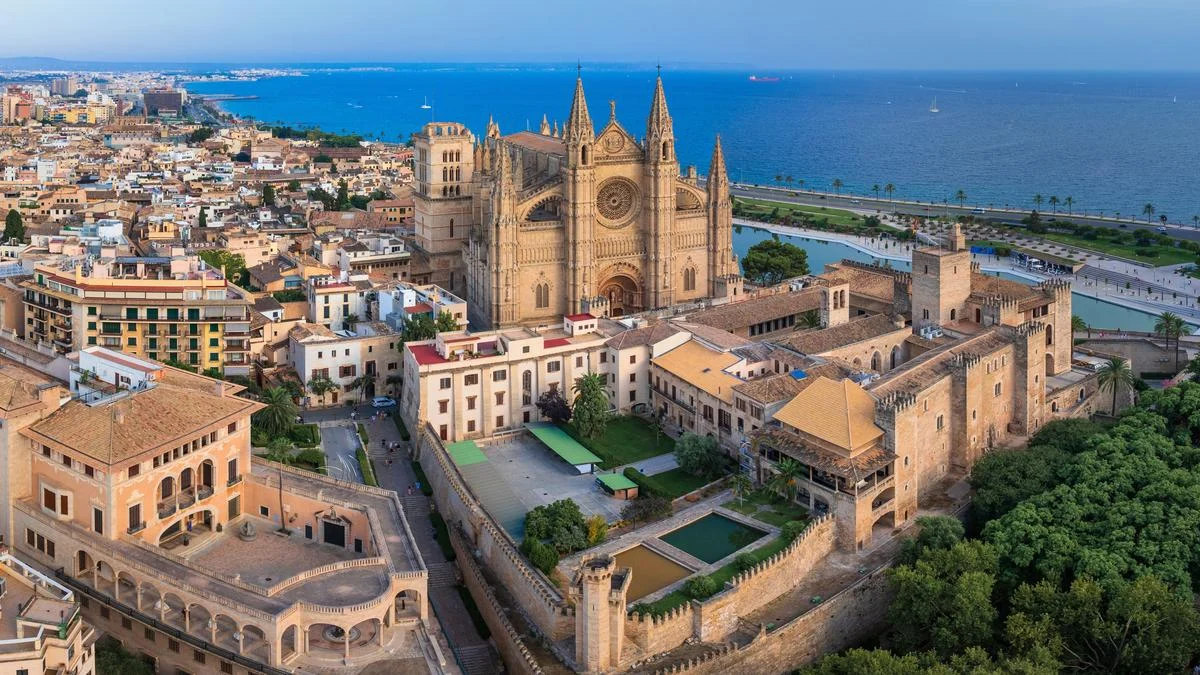
The transition from the frantic hubs of Frankfurt, Amsterdam, or Paris to Palma de Mallorca in December is a study in contrasts. The 2.5-hour flight ends not in a terminal of chaos, but in a city that has reclaimed its rhythm. Landing in Palma, one sees the sunburnt terraces and sea-soaked promenades without the clutter of thousands of rental umbrellas.
The Culinary and Cultural Pace
In the capital, Palma de Mallorca, the difference is visceral. At Japo Santa Catalina, a premier Japanese-fusion destination, a traveler can walk in without a reservation—an impossibility in July. The streets are lively with locals moving between cafés, taking their time over cañas (small beers) and tapas.
The historic bakery Can Joan de s’Aigo, which dates back to 1700, serves as the heartbeat of this slower pace. In the summer, tourists rush through, barely tasting the ensaimada (a spiral-shaped, sugar-dusted pastry). In December, the mood is unhurried. Locals chat over thick, decadent hot chocolate and Coca de Patata (a soft, sweet potato bun). This is not just eating; it is a cultural ritual that requires the absence of a crowd.

Beyond the Capital
Moving 45 minutes inland to Sóller or North to Pollença reveals a Mallorca that feels frozen in a more elegant time. The famous wooden tram from Sóller’s main square to the harbor, which is plagued by hour-long queues in August, becomes a peaceful 30-minute journey through citrus groves. In Pollença, the Calvari staircase—365 stone steps leading to a chapel—offers a silent climb with sweeping views of the hills, a stark contrast to the "selfie-stick" congestion of the peak season.
Official Responses: Managing the Deluge
European governments and the travel industry are no longer passive observers of these trends. They are actively implementing policies to "de-market" the summer and "re-market" the off-season.
- Entry Fees and Taxes: Venice has introduced a pilot "access fee" for day-trippers on peak days to discourage casual, high-impact tourism. Many Spanish cities have increased their "sustainable tourism taxes."
- Infrastructure Curbs: Amsterdam has moved to ban cruise ships from its city center and has launched "Stay Away" ad campaigns targeting disruptive tourists.
- Airline Strategy: Carriers like Lufthansa and Air France-KLM are adjusting their schedules to provide more frequent, year-round connectivity to secondary European cities, encouraging travelers to explore beyond the "Big Three" (London, Paris, Rome).
- Local Protests: In Barcelona and the Canary Islands, residents have taken to the streets to protest the "touristification" of their neighborhoods, which has driven up housing costs. This social pressure is forcing municipal governments to limit the number of short-term rental licenses (like Airbnb).
Implications: The Future of the European Holiday
The shift toward off-season travel represents a fundamental change in the "social contract" of tourism.

The Authenticity Dividend
When the crowds recede, the "stage set" version of Europe disappears, and the real continent emerges. Cities feel like places where people live rather than just places where people consume. For the Indian traveler, this offers a deeper connection to European history, art, and gastronomy.
The Economic Trade-off
While the off-season offers cheaper flights and hotels, it does come with compromises. Some beach clubs and seasonal restaurants in coastal Spain or Greece close their doors. The weather is milder (15-20°C) rather than hot, and the Mediterranean is often too cold for swimming. However, for those interested in museums, hiking, and dining, the trade-off is overwhelmingly positive.
Environmental Sustainability
Concentrating tourism in two months is environmentally disastrous, putting immense strain on water resources and waste management systems in places like the Balearic Islands. Spreading visitor numbers across twelve months is the only viable path forward for sustainable tourism.

Conclusion
The key to enjoying Europe in 2025 and beyond is no longer about finding a "hidden gem" that no one knows about—in the age of Instagram, such places hardly exist. Instead, the secret lies in the timing. By choosing to visit Mallorca in December or Venice in October, the Indian traveler isn’t just saving money; they are reclaiming the dignity of the travel experience. The "Great European Pivot" is a move toward a more respectful, sustainable, and ultimately more rewarding way to see the world. In the silence of a December morning in Palma, one realizes that the best part of Europe isn’t the sun—it’s the space.
