

Main Facts
Steve Hodge, an unassuming English midfielder, found himself inadvertently at the epicentre of perhaps the most iconic and controversial moment in football history. For 35 years, he kept a shirt, a simple blue and white jersey, that bore witness to a paradox of sporting brilliance and audacious deceit. This shirt, once a mere souvenir of a World Cup quarter-final, became a tangible link to a legend, ultimately selling at Sotheby’s in 2022 for an astonishing £7.1 million – a world record for sports memorabilia.
Hodge’s connection to the moment was accidental. In the 51st minute of a highly charged World Cup quarter-final in Mexico City, he attempted to clear a ball, only to miscue it badly, looping it back towards his own goalkeeper, Peter Shilton. What unfolded in the fractions of a second that followed – born from that very mistake – would define a game, a career, and a rivalry, etching itself into the collective memory of millions. After the final whistle, amidst the chaos and controversy, Hodge sought out Diego Maradona in the tunnel, exchanging shirts in a gesture of sporting camaraderie that unknowingly preserved a piece of history. He held onto it for decades, loaned it to a museum, before finally parting with it for a sum that underscored the immense, almost mythical, power of that single, unforgettable second of football.
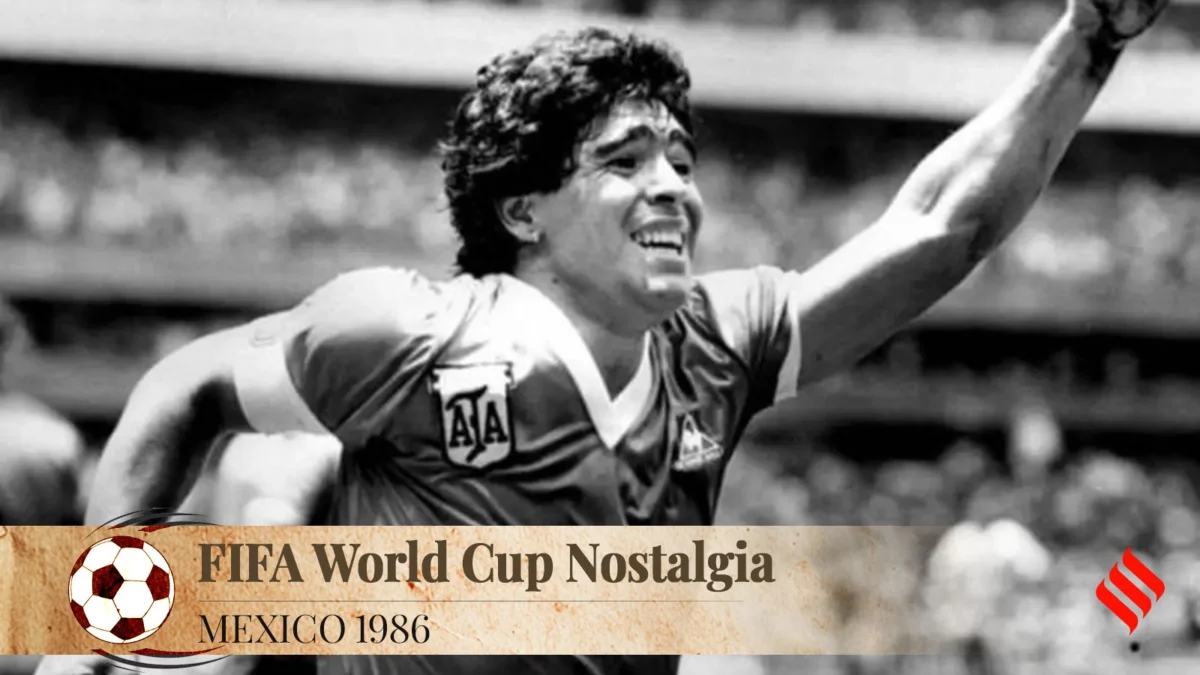
But the story of the shirt is merely a conduit to a larger narrative, one steeped in geopolitical tension, unparalleled athletic genius, and a profound, unyielding debate about sportsmanship versus victory. It is the story of Diego Maradona’s twin goals against England on June 22, 1986, an afternoon where one man, in the space of four minutes, simultaneously embodied the greatest cheat and the greatest player the game had ever seen.
The Unforgettable Afternoon: June 22, 1986
The stage was set with an almost theatrical intensity. June 22, 1986, at the Estadio Azteca in Mexico City. Inside, 114,000 spectators, a pulsating sea of humanity, bore witness to more than just a football match. Four years prior, the Falklands War had concluded, leaving Argentina humiliated, over 600 soldiers dead, and the sovereignty of "Las Malvinas" a festering wound in the national psyche. Maradona, the Argentine captain, publicly insisted the match was "only about football," yet privately, and indeed universally, everyone knew this was a lie. The air was thick with unspoken history, a crucible of sporting and political rivalry.
The first flashpoint arrived just six minutes into the second half. Steve Hodge’s mistimed clearance sent the ball arcing high into the England penalty area. England’s towering goalkeeper, Peter Shilton, nearly 20 centimetres taller than Maradona, advanced to punch it clear. Simultaneously, Maradona, with a blend of cunning and audacious deception, rose. Instead of heading the ball, he raised his left fist, subtly but definitively pushing it into the net, just out of Shilton’s reach.
Referee Ali Bin Nasser, positioned behind the two players, awarded the goal. The stadium erupted in a mixture of disbelief and exhilaration. Shilton, incandescent with rage, immediately turned and pursued Maradona, his protests echoing amidst the roar. England players swarmed the referee, their pleas falling on deaf ears. Linesman Bogdan Dochev, the Bulgarian official whose flag remained resolutely down, sealed the fate of the moment.
Maradona’s immediate reaction was a blend of terror and defiance. His teammate, Sergio Batista, was the first to reach him, whispering, "You knocked it in with your hand, right? Did you use your hand?" Maradona’s response, as he later recounted in his autobiography, Touched by God, was immediate and emphatic: "Shut the f*** up and keep on celebrating." He feared the conclusive television replays would lead to the goal being disallowed at half-time, yet he continued his jubilant celebrations, masking his apprehension with unbridled joy.
Then, just four minutes later, came the sublime counterpoint. Maradona, collecting the ball deep in his own half, embarked on a mesmerizing 60-metre run. He weaved past Peter Beardsley, Peter Reid, Terry Butcher (twice), and Terry Fenwick, leaving a trail of bewildered English defenders in his wake. With a final shimmy, he rounded Shilton and slotted the ball into an empty net. This was not a moment of controversy, but one of pure, unadulterated genius, later voted the "Goal of the Century."
Argentine commentator Victor Hugo Morales, overwhelmed by the sheer artistry, famously sobbed into his microphone: "Cosmic kite, what planet are you from that you can leave so many Englishmen in your wake? Thank you God! For football! For Maradona! For these tears!" On the other end of the pitch, even England’s Gary Lineker, still reeling from the "Hand of God," confessed to feeling like applauding. The duality of Maradona’s performance that afternoon was complete: the villain and the virtuoso, the cheat and the artist, all encapsulated within a single, unforgettable four-minute span.
The Duality of Diego: Maradona’s Perspective
Maradona’s own accounts and reflections on that day reveal a complex character, driven by an unshakeable belief in his own destiny and a fierce national pride. In the immediate aftermath, his infamous "Hand of God" quote at the post-match press conference became an instant legend: "A little with the head of Maradona," he quipped, "and a little with the hand of God." It was a masterclass in obfuscation, a mythical explanation for an undeniable act of cheating.
Years later, on Argentine television in 2005, he finally shed the pretense, albeit with a playful shrug. "As a kid in Fiorito," he admitted, referring to his impoverished hometown, "I would score goals with my hand all the time. And I did the same thing in front of a hundred thousand people. But no one saw it." This confession, delivered with a mischievous grin, only cemented his legend further for many, a testament to his audacious spirit.
Crucially, Maradona explicitly linked the "Hand of God" to the Falklands War. He saw the match as more than just a sporting contest, but a chance for symbolic retribution. In Kapadia’s documentary, he described it as a "beautiful feeling, a type of symbolic revenge against the English for Las Malvinas." He even invoked a popular saying on his television show, La Noche del 10: "Those who steal from a thief get a hundred years of forgiveness." For Maradona, the transgression was justified, a cosmic balancing of scales. He believed he was defending his flag, honouring "the dead kids, the survivors." This politicization of the act, however, would only deepen the wound for the English.
His unrepentant stance persisted throughout his life. On his 59th birthday, when asked on Argentine radio if VAR would have ruled out the goal, he defiantly declared, "I promise the English I wouldn’t score with my left hand. I’d do it with my right." It was a final, playful jab, a testament to his enduring belief that the end justified the means, especially against an old adversary.
In his autobiography, Yo Soy El Diego, Maradona reflected on the profound impact of that afternoon: "That goal became part of soccer history. There are still 10-year-old kids out there today with ‘Maradona’ on their backs. And that kind of insanity can only be explained by one goal. Or maybe two." He understood the duality, the indelible mark both goals had left, forever intertwined in the tapestry of his legacy. His description of the second goal also speaks to his incredible self-awareness and humble genius: "It floated down to me like a little balloon. Oh boy, what a treat. It was the goal you dream of as a kid. Whenever I see it again, I can’t believe I managed it. Not because I scored it, but because it seems a goal like that just isn’t possible."
The English Anguish: Shilton, Lineker, and the Team
For the English, particularly Peter Shilton, the pain of that moment never truly subsided. The towering goalkeeper, who had commanded his penalty area with distinction for years, felt personally violated. "People say I should have cleared the ball anyway and that I let a smaller man outjump me," he told the Daily Mail. "That’s rubbish." For Shilton, the deepest wound was not the goal itself, but Maradona’s subsequent lack of apology, his perpetuation of the "Hand of God" myth. "He never once said he had cheated. Instead, he used his ‘Hand of God’ line. That wasn’t right. He had greatness in him but sadly no sportsmanship." This profound sense of injustice led Shilton to never speak to Maradona again, famously refusing to attend the premiere of Asif Kapadia’s acclaimed 2019 documentary on the Argentine legend. He found the politicisation of the goal as upsetting as the act of cheating itself, viewing it as a gross disrespect to those who had died in the conflict.
Gary Lineker, England’s striker and the tournament’s eventual Golden Boot winner, offered a more tempered perspective. "I don’t have rage in me. I like Diego. He cheated us, but I’ve forgiven him," he stated in a FIFA documentary. Lineker, like many, couldn’t deny the sheer brilliance of the second goal. "I felt like applauding. It was impossible to score such a beautiful goal." His reaction captured the conflicting emotions many football purists felt: anger at the deception, but awe at the genius.
The broader English squad shared a collective sense of injustice and disappointment. The defeat meant elimination from the World Cup, a tournament they had genuine hopes of winning. The "Hand of God" became a symbol of unfairness, a wound that, while perhaps not as raw as Shilton’s, remained a significant part of their sporting narrative.
The Weight of the Whistle: The Officials’ Burden
The lives of referee Ali Bin Nasser and linesman Bogdan Dochev were irrevocably altered by that split-second decision. Both men spent the rest of their lives grappling with, and often blaming each other for, the controversy.
Bin Nasser, the Tunisian referee, maintained a consistent account of the incident. "The two players were facing me from behind. I was obliged to give the goal," he told Spanish sports portal AS in 2022. He claimed his position made it impossible to see the handball clearly and that he relied on his linesman. In a surprising turn, Bin Nasser visited Maradona in Tunisia in 2015, where Maradona reportedly called him his "eternal friend." This apparent reconciliation, however, was quickly followed by Maradona selling the match ball from that game for £2 million, a stark reminder of the commercialisation of the event.
Bogdan Dochev, the Bulgarian linesman, carried the heaviest burden. His flag stayed down, sealing the fate of the goal and, in his view, his life. Before his death in 2017, Dochev reached a different, far more bitter conclusion. "Diego Maradona has ruined my life," he lamented. "He is a brilliant footballer but a small man. The goal scarred me for life. I was accused when I was not guilty." Dochev steadfastly refused to meet Maradona, stating there was "nothing to discuss." The contrasting fates of the officials are striking: Bin Nasser, the referee, found a form of peace and even profit; Dochev, the linesman, died feeling unjustly accused and haunted by the shadow of the "Hand of God," receiving nothing from the millions generated by the memorabilia of that day.
Beyond the Pitch: Geopolitical Echoes and Enduring Implications
The legacy of June 22, 1986, extends far beyond the confines of the football pitch. It became a powerful symbol, particularly for Argentina. Former Argentine footballer Roberto Perfumo articulated a widely held sentiment, though rarely admitted publicly: "In 1986, winning that game against England was enough. Winning the World Cup was secondary for us." This statement underscores the profound impact of the Falklands War on the national consciousness and how this football match transcended sport to become an act of symbolic vindication.
Maradona, ever the populist hero, understood and amplified this sentiment. His deliberate framing of the "Hand of God" as an act of "revenge" for "Las Malvinas" resonated deeply with a nation still nursing its wounds. It transformed a sporting infraction into a defiant political statement, further solidifying his almost deity-like status in Argentina.
The implications of that day continue to be debated. It ignited enduring discussions about cheating versus gamesmanship, the fine line between cunning and outright deception, and the role of officials in high-stakes matches. It also highlighted the inherent subjectivity of memory and narrative; what was a moment of national pride and justified defiance for Argentina remained a blatant act of cheating and injustice for England.
The financial windfall generated by memorabilia from that day further illustrates its enduring significance. The combined sales of Steve Hodge’s shirt (£7.1 million) and Maradona’s match ball (£2 million) total over £9 million, a testament to the immense commercial value attributed to such pivotal historical moments. This staggering sum stands in stark contrast to the fate of figures like Bogdan Dochev, who bore the brunt of the controversy without any form of recompense or closure.
As the 2026 World Cup prepares to return to Mexico, and the iconic Estadio Azteca still stands as a monument to sporting history, the echoes of that fateful afternoon persist. Steve Hodge’s drawer, once home to a shirt that held so much history, is now empty. Yet, the story of Maradona, the "Hand of God," and the "Goal of the Century" continues to captivate, to provoke, and to define. It remains a potent reminder of how a single second, a single game, can encapsulate the complexities of human nature – genius and flaw, triumph and injustice, politics and passion – all woven into the indelible fabric of sporting legend. The sheer audacity, the unparalleled skill, and the profound political resonance ensured that Diego Maradona’s twin goals against England would forever remain one of football’s most compelling and controversial narratives.
