

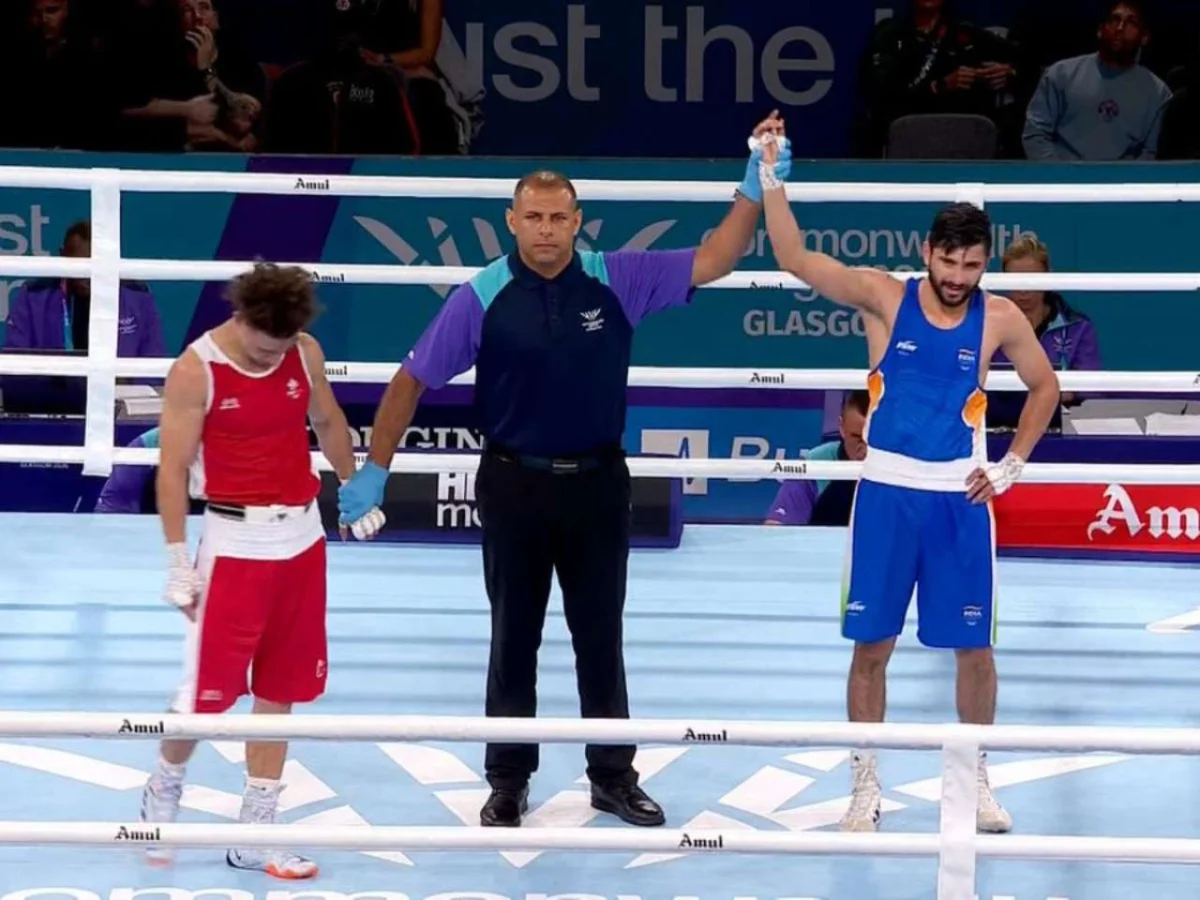
GLASGOW, Scotland – The highly anticipated Commonwealth Games 2026 in Glasgow have kicked off with a flurry of excitement, and for India, the early days have brought a mix of triumphs and spirited contests. Among the most significant developments for the Indian contingent on Saturday, July 25, was the commanding performance of boxer Sachin Siwach, who stormed into the men’s 60kg lightweight Round of 16, affirming his status as a leading medal hopeful. His composed yet powerful display against Canada’s Keoma Al-Ahmadieh not only secured his progression but also injected a fresh wave of optimism into the Indian camp.
The energy at the Clyde Auditorium, the boxing venue for these Games, was palpable as Siwach, a 26-year-old from the boxing hotbed of Haryana, stepped into the ring. Having already etched his name in recent history with a gold medal at the prestigious World Boxing Cup Finals – where he notably overcame Paris 2024 silver medallist Munarbek Seiitbek Uulu from Kazakhstan – expectations were undeniably high. Siwach, a former Youth World Champion, delivered on these expectations with a gritty and strategic victory, winning via a 4-1 split decision. This hard-fought win in a challenging opening bout underscored his resilience and tactical acumen, keeping his medal dreams very much alive as the Games progress.
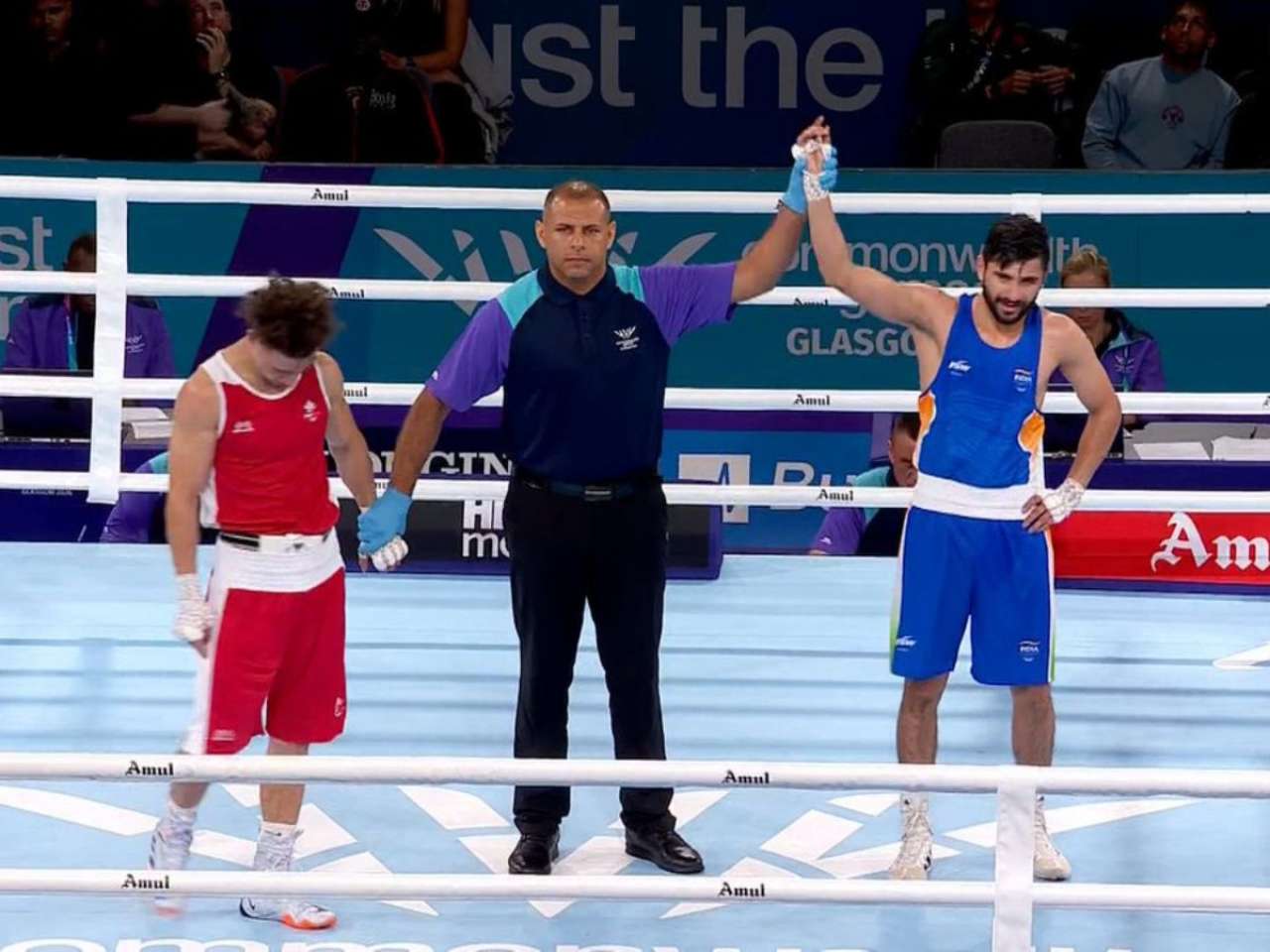
His victory is a crucial early boost for India’s ambitious boxing contingent, which arrived in Glasgow with a strong reputation and a roster brimming with talent. As the multi-sport event gathers momentum, Siwach’s success sets a positive precedent, demonstrating India’s readiness to compete at the highest levels of international amateur boxing.
The Road to Glasgow: India’s Preparations and Aspirations
The journey to the Commonwealth Games 2026 for the Indian contingent has been one of rigorous training, strategic planning, and a burning desire to surpass previous achievements. Following a commendable performance at the previous edition, where Indian athletes showcased their prowess across various disciplines, the focus for Glasgow has been on refining techniques, enhancing physical conditioning, and bolstering mental fortitude.
)
A Legacy of Champions: Siwach’s Rise to Prominence
Sachin Siwach’s ascent in the world of boxing has been marked by consistent dedication and a series of significant victories. Hailing from Haryana, a state renowned for producing a disproportionately high number of India’s elite boxers, Siwach’s journey began in the dusty training rings of his hometown. His natural talent was quickly identified, leading him to national junior titles before making a splash on the international stage as a Youth World Champion. This early success laid the groundwork for a senior career that has steadily gained momentum. His triumph at the World Boxing Cup Finals, particularly the victory over an Olympic medallist, was a watershed moment, solidifying his reputation as a boxer capable of defeating the world’s best. It was this impeccable form and a string of impressive results in the lead-up to Glasgow that positioned him as a prime candidate for a medal in the men’s 60kg category. His training regimen, often described as relentless, involves a combination of strength and conditioning, sparring with diverse opponents, and meticulous video analysis of potential rivals.
High Hopes for the Indian Boxing Contingent
The Indian boxing squad for the Commonwealth Games 2026 is arguably one of the strongest the nation has ever fielded. With a blend of seasoned veterans and promising young talents, the team carries the hopes of over a billion people. The contingent includes Olympic medallists, World Championship medallists, and a host of national champions, all poised to make their mark. The coaching staff, a mix of experienced Indian and international mentors, has worked tirelessly to ensure each boxer peaks at the right time. The Commonwealth Games represent a crucial stepping stone for many of these athletes, offering invaluable experience on a global stage and serving as a qualifier or crucial preparation for future Olympic cycles. The team’s collective spirit and mutual support are often highlighted as key strengths, fostering an environment where individual successes contribute to the overall morale and performance of the squad.

The Games Unfold: Early Triumphs and Challenges
The Commonwealth Games 2026, hosted by the vibrant city of Glasgow, officially commenced with a spectacular opening ceremony that blended Scottish heritage with a celebration of global sporting unity. From the outset, the Indian contingent has been actively involved across various disciplines, experiencing both moments of glory and tough learning curves.
A Medal on Day Two: Jhandu Kumar’s Bronze
Before Siwach’s boxing heroics, India had already celebrated its first official medal of the Games. On day two, para powerlifter Jhandu Kumar delivered a inspiring performance in the men’s heavyweight division, securing a bronze medal. His achievement was not just a testament to his individual strength and determination but also a powerful symbol of India’s growing presence and success in para-sports, bringing an early cheer to the entire delegation. His journey, marked by perseverance against adversity, resonated deeply, reminding everyone of the diverse talents representing the nation.
)
Boxing Dominance: Lovlina and Jadumani Pave the Way
The boxing arena has been a focal point for Indian fans from the beginning. Even before Siwach stepped into the ring, two other Indian boxers had already made significant strides. Olympic medallist Lovlina Borgohain, a titan in women’s boxing, secured India’s first boxing medal of the multi-sport event by earning a direct bye into the women’s 75kg semi-finals. Her reputation and seeding meant she avoided the initial rounds, guaranteeing at least a bronze medal, a testament to her consistent high-level performance and international standing.
Adding to the boxing success, Jadumani Mandengbam kicked off his Commonwealth Games journey with a strong performance on Thursday. Competing in the men’s 55kg category, Mandengbam advanced to the pre-quarterfinals after a decisive 5-0 unanimous decision win over Scotland’s Aaron Cullen in the Round of 32. His clean sweep victory showcased tactical superiority and technical precision, signaling India’s intent across multiple weight categories. These early successes from Borgohain and Mandengbam undoubtedly contributed to the positive atmosphere that Siwach walked into.
)
The Main Event: Siwach vs. Al-Ahmadieh
The men’s 60kg lightweight category bout between India’s Sachin Siwach and Canada’s Keoma Al-Ahmadieh was one of the most anticipated preliminary fights. Al-Ahmadieh, known for his aggressive style and robust physique, presented a formidable challenge, making Siwach’s victory all the more impressive.
Tactical Brilliance in the Ring
From the opening bell, Siwach displayed remarkable composure, a trait often attributed to seasoned champions. He carefully measured his opponent, avoiding Al-Ahmadieh’s initial charges and effectively using his footwork to create angles. The first round saw Siwach landing crisp jabs and straight rights, establishing his range and rhythm. He moved with purpose, occasionally tying up Al-Ahmadieh when the Canadian tried to get inside, preventing him from unleashing his powerful hooks. This tactical discipline allowed Siwach to control the pace, even against a relentless opponent.
)
The second round witnessed Al-Ahmadieh attempting to increase his aggression, but Siwach’s defensive prowess shone through. He skillfully slipped punches and countered effectively, demonstrating his ability to absorb pressure and respond with precision. There were moments of intense exchanges, particularly in the middle of the ring, where both boxers traded blows. However, Siwach’s superior technique and ring generalship ensured that he landed the cleaner, more impactful shots. His ability to maintain a high work rate without compromising his defensive guard was a key factor in accumulating points.
By the third and final round, Siwach appeared to be in control, though Al-Ahmadieh continued to press forward, seeking a knockout blow. Siwach, however, remained disciplined, using his experience to manage the distance and see out the round. He intelligently moved around the ring, occasionally unleashing combinations that kept Al-Ahmadieh on the back foot. The final bell brought an end to a compelling contest, leaving the decision to the judges.
)
A Decisive Split Decision
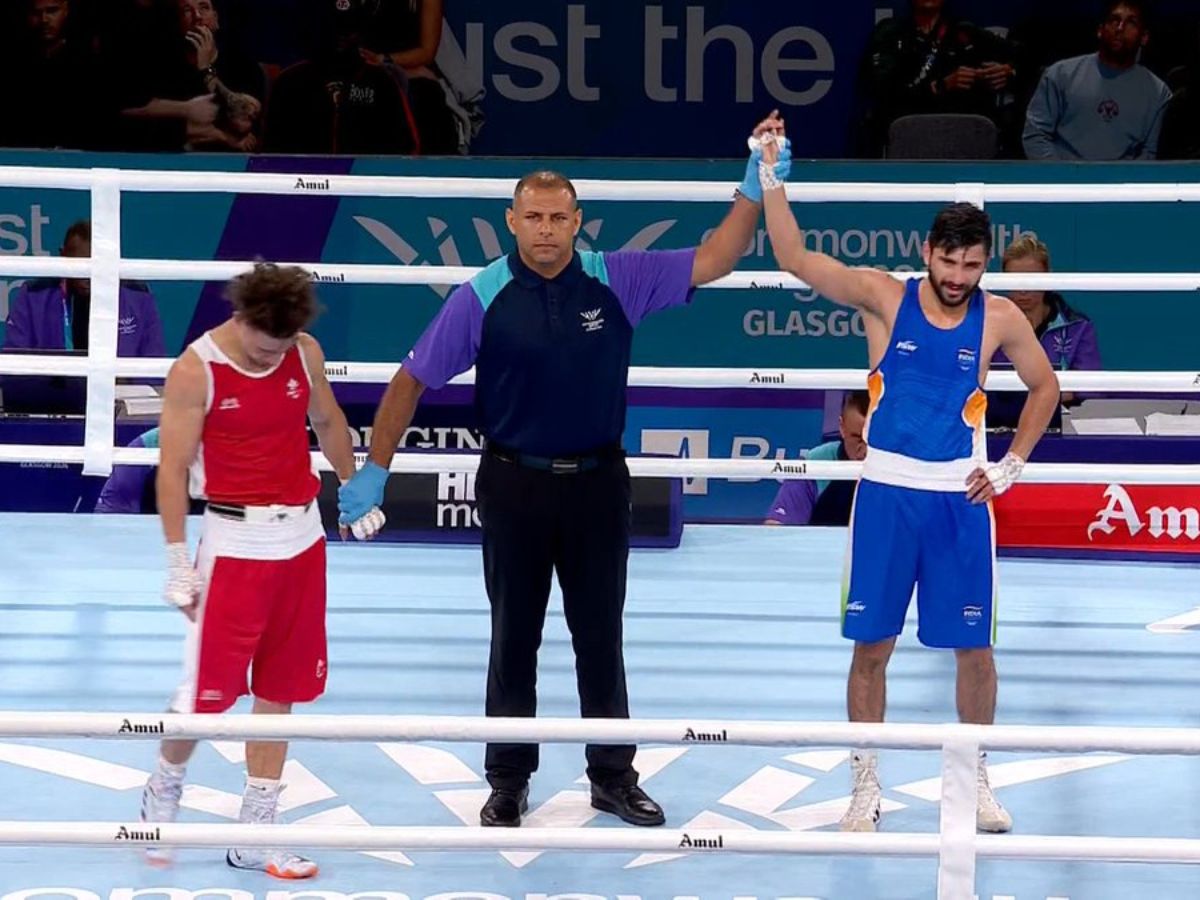
When the judges’ scores were announced, it was a 4-1 split decision in favour of Sachin Siwach. While a split decision might suggest a close contest, the dominant points for Siwach from four of the five judges clearly indicated his superiority. The single dissenting judge likely scored some of the tighter exchanges in favour of the Canadian, but the majority recognized Siwach’s cleaner punching, effective defence, and overall control of the bout. This victory, secured against a tough opponent, was a clear statement of intent from the Indian boxer, demonstrating his readiness for the challenges ahead in the Round of 16.
Mixed Fortunes Across Other Disciplines
While boxing delivered significant cheer, other disciplines saw mixed results for India, typical of the early stages of a multi-sport event.
)
Wheelchair Basketball: A Tough Outing
In Pool B of the 3X3 Wheelchair Basketball, the Indian team faced a formidable opponent in Wales. The match saw Wales achieve a commanding 16-1 victory over India. Their performance was marked by exceptional accuracy in shooting, precise passing, and dominant rebounding. The disparity in skill levels and experience between the two teams was evident throughout the game, as reflected in the final score. Despite the loss, the Indian team gained invaluable international exposure, highlighting areas for future development and growth in the sport.
Lawn Bowls: India’s Resilient Run Continues
In the women’s pairs sectional play of Lawn Bowls, India faced Tonga in a match that showcased remarkable resilience. After a challenging first set, India’s pair of Rupa Rani and Pinki demonstrated incredible comeback power, winning the second set 6-4. This forced the match into tiebreakers, a tense affair where nerves of steel are paramount. India clinched the tiebreakers with a decisive score of 2-0. Rupa Rani provided the initial advantage with her precise delivery, and Pinki expertly sealed the victory with a clutch shot. This win marked India’s third consecutive triumph in the women’s pairs sectional play of Lawn Bowls (having previously won 5-2, 4-6; 2-0), indicating a strong and consistent performance from the team in this often-underestimated discipline.
)
Delving Deeper: The Stats, Strategies, and Stories
Understanding the context and nuances of Siwach’s victory, and indeed India’s overall performance, requires a look at the broader landscape of boxing, the athlete’s background, and the historical significance of the Commonwealth Games.
Siwach’s Pedigree: A Champion in the Making
Sachin Siwach’s journey is a classic tale of dedication and talent meeting opportunity. Born and raised in Bhiwani, Haryana – often dubbed "Mini Cuba" for its prolific output of boxers – Siwach was immersed in boxing culture from a young age. His rigorous training at local academies, coupled with natural athletic gifts, saw him quickly rise through the ranks. His Youth World Championship title was a clear indicator of his potential, but it was his ability to transition successfully to the senior circuit that truly set him apart. His coaches often commend his analytical approach to the sport, his willingness to adapt, and his unyielding mental toughness – qualities that were vividly on display in his bout against Al-Ahmadieh. His victory over Munarbek Seiitbek Uulu, a Paris 2024 Olympic silver medallist, was not just a win but a statement that he belongs among the elite. This track record prior to Glasgow undoubtedly contributed to his composed performance under pressure.
)
Understanding the Commonwealth Games Boxing Format
The Commonwealth Games boxing tournament adheres to the international amateur boxing rules set by the relevant governing bodies, focusing on points-based scoring rather than professional boxing’s emphasis on knockouts. Bouts typically consist of three rounds, each lasting three minutes, with one-minute breaks in between. Five judges score the bout, and their decisions are tallied to determine the winner. A "split decision" (like Siwach’s 4-1 win) indicates that the judges were not unanimous, with a minority scoring for the other boxer. A "unanimous decision" (like Mandengbam’s 5-0 win) means all five judges agreed on the winner. The 60kg lightweight category requires boxers to maintain strict weight discipline, adding another layer of challenge to their preparation. The high stakes of the Games mean every punch, every defensive maneuver, and every strategic decision carries immense weight.
India’s Historical Performance in Commonwealth Boxing
India has a rich history in Commonwealth Games boxing, having consistently medalled across various editions. From legendary names like Akhil Kumar and Vijender Singh to more recent stars like Mary Kom and Lovlina Borgohain, Indian boxers have frequently stood on the podium. These past successes have not only brought glory to the nation but have also inspired generations of aspiring pugilists. The consistent performance in boxing reflects the robust grassroots development programs and the increasing professionalization of the sport within India. The 2026 contingent aims to build upon this legacy, with expectations of surpassing previous medal tallies, especially in a year where the team looks particularly strong and well-prepared.
)
Voices from the Corner: Reactions and Reflections
The immediate aftermath of a significant victory like Siwach’s often brings a wave of reactions from the athletes themselves, their coaches, and national sports bodies, providing deeper insights into the performance and future outlook.
Siwach’s Post-Fight Insights
Speaking to reporters shortly after his bout, a visibly determined but calm Sachin Siwach expressed satisfaction with his performance. "It was a tough fight, as expected," he remarked, wiping sweat from his brow. "Keoma is a strong opponent, very aggressive. My plan was to stay disciplined, use my footwork, and not get drawn into a brawl. I think I executed that well. The split decision shows it was close, but I felt I landed the cleaner shots. This first win is important; it settles the nerves and gives me confidence for the next stage." When asked about his upcoming opponent, England’s William Hewitt, Siwach added, "Every opponent at this level is strong. I’ll review the fight with my coaches, recover, and prepare for Hewitt. My focus is one fight at a time, and ultimately, on bringing a medal home for India."
)
Coaching Staff’s Assessment
The head coach for the Indian boxing team, a veteran of numerous international tournaments, lauded Siwach’s strategic execution. "Sachin fought a very smart fight," the coach stated. "We knew Al-Ahmadieh would come out strong, trying to overpower him. Sachin’s composure under pressure was exceptional. He stuck to the game plan, used his reach, and picked his shots wisely. This kind of performance in the first round against a quality opponent is a huge morale booster for the entire team. It shows that our training and strategy are paying off." Regarding the team’s overall performance, the coach added, "Lovlina and Jadumani have also started brilliantly. We have a strong contingent, and the early results are very encouraging. We will continue to work hard and maintain our focus."
National Federation’s Optimism
Officials from the Indian Boxing Federation and the Indian Olympic Association (IOA) were quick to express their pride and optimism. A senior IOA official commented, "Sachin Siwach’s victory is a fantastic start for our boxing campaign. He is a truly talented athlete, and his dedication is exemplary. This performance, coupled with Lovlina’s assured medal and Jadumani’s win, showcases the depth of talent we have. We are confident that our boxers will continue to make India proud and add to our medal tally at these Commonwealth Games." They also reiterated the significant investment made in athlete development and high-performance training, attributing these early successes to a long-term vision for Indian sports.
)
Expert Analysis: A Glimpse into the Future
Sports analysts and former boxers have also weighed in on Siwach’s performance. "Siwach looked sharp, very measured," observed a prominent boxing commentator. "He didn’t rush anything, which is crucial in these tournaments. His defence was solid, and he was clinical with his counters. The 60kg category is always fiercely competitive, but Sachin has shown he has the temperament and skill to go deep into the tournament. His next fight against William Hewitt will be another test, but he definitely looks like he’s in contention for a podium finish." This sentiment was echoed by others, highlighting Siwach’s mental fortitude as much as his physical prowess.
Implications and the Path Ahead: What This Means for India
Sachin Siwach’s hard-fought victory carries significant implications, not just for his individual campaign but for the entire Indian contingent and the broader landscape of Indian sports.
)
For Sachin Siwach: A Golden Opportunity
For Siwach, this win is far more than just progression to the next round; it is a powerful validation of his training, his strategic approach, and his mental strength. It confirms his status as a legitimate medal contender and sets him on a potential path to gold. The Round of 16 bout against England’s William Hewitt, scheduled for Monday at 4:45 PM IST, will be another stern test. Hewitt, competing on home soil (or near home soil, in Glasgow), will undoubtedly have strong crowd support and will be keen to advance. A victory against Hewitt would not only move Siwach closer to a medal but also boost his confidence exponentially, making him an even more formidable opponent in the later stages. Success at the Commonwealth Games would significantly enhance his international profile, potentially opening doors to further professional opportunities or cementing his place as a key figure in India’s Olympic aspirations.
For Indian Boxing: Momentum and Morale
The early successes in boxing, spearheaded by Siwach, Lovlina, and Jadumani, have provided an invaluable morale boost for the entire Indian boxing team. In multi-sport events, early victories can create a positive momentum that ripples through the squad. It instills belief, reduces pressure on other athletes, and fosters a competitive yet supportive environment. For a sport like boxing, where mental toughness is paramount, such early wins are crucial. They reinforce the effectiveness of the training programs, the strategies employed by the coaching staff, and the overall readiness of the team. This positive start could inspire other Indian boxers to push harder, knowing that their teammates are already laying down markers of excellence. It also sends a clear message to other nations that India’s boxing contingent is a force to be reckoned with.
)
The Broader Impact on India’s Sporting Ambitions
Beyond boxing, the collective performance of the Indian contingent, including Jhandu Kumar’s bronze and the resilient Lawn Bowls team, contributes to India’s overarching sporting ambitions. Success at international events like the Commonwealth Games is vital for national pride, but also for attracting greater investment in sports infrastructure, coaching, and athlete development programs. It encourages young people to take up sports, seeing successful athletes as role models. Each medal, each victory, reinforces India’s growing stature as a sporting nation on the global stage. It also provides valuable data and experience for sports administrators to refine policies and allocate resources more effectively, aiming for even greater success at future Olympic Games and other major championships.
Looking Ahead: The Pre-Quarterfinals and Beyond
As the Commonwealth Games 2026 continue, all eyes will be on Sachin Siwach’s pre-quarterfinal bout against William Hewitt. A win there would place him just one step away from a guaranteed medal, moving into the quarter-finals. The path to gold is arduous, requiring sustained peak performance, strategic adaptation, and mental resilience through multiple demanding fights. However, Siwach has demonstrated he possesses these qualities.
)
The next few days will be critical for the Indian boxing team as other weight categories also progress. The goal remains to maximize the medal tally, and Siwach’s promising start has certainly set a high standard. The journey in Glasgow has just begun, and the Indian athletes are poised to deliver more thrilling performances, embodying the spirit of competition and national pride. The echoes of "Jai Hind" will undoubtedly continue to resonate through the venues as India vies for glory at the Commonwealth Games 2026.
