

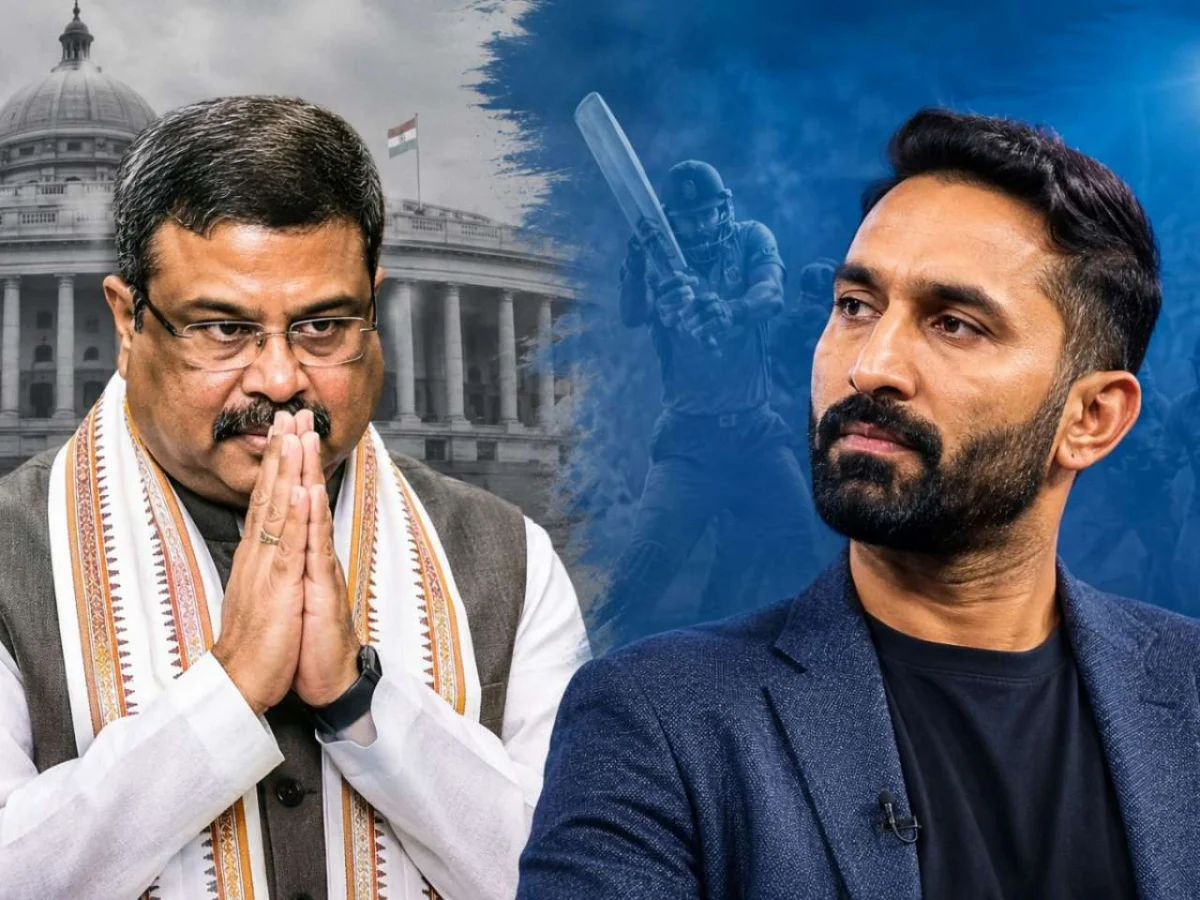
NEW DELHI, July 25, 2026 – In a significant political development that underscores the burgeoning power of India’s youth, Union Education Minister Dharmendra Pradhan tendered his resignation today, bowing to weeks of intense nationwide protests over alleged widespread irregularities in crucial national examinations. His departure marks a pivotal moment in the ongoing demand for accountability and systemic reform within India’s education sector, particularly following the contentious NEET paper leaks.
Amidst the swirling political currents, former India wicketkeeper-batter and current Royal Challengers Bengaluru batting coach, Dinesh Karthik, shared a powerful message of hope and admiration for the country’s younger generation. Taking to X (formerly Twitter) just hours after the Minister’s resignation, Karthik articulated a vision of a vibrant future, declaring, "The next decade is India’s," and lauding the "clarity, collaboration, and relentlessness of the younger generation." His words resonated deeply, serving as a testament to the profound impact of student activism that ultimately led to a high-profile ministerial exit.
This dramatic turn of events has not only ignited fresh debates about governance and transparency but has also firmly established the collective voice of India’s youth as an undeniable force in shaping the nation’s trajectory.
Main Facts: A Nation’s Outcry and a Minister’s Exit
The resignation of Union Education Minister Dharmendra Pradhan on Saturday, July 25, 2026, came as the culmination of weeks of relentless nationwide protests. Students, supported by civil society organizations and prominent activists, had taken to the streets and digital platforms, demanding accountability for alleged paper leaks in competitive examinations, most notably the National Eligibility cum Entrance Test (NEET). The scandal had eroded public trust in the integrity of the examination system, a gateway to coveted careers in medicine and other fields for millions of aspirants.
)
Dinesh Karthik, a respected voice in Indian cricket known for his analytical acumen and calm demeanour, swiftly reacted to the news. His message on X was not one of political commentary but rather a profound endorsement of the youth’s agency and potential. "At the end of the day, we’re all working towards a better India. The clarity, collaboration, and relentlessness of the younger generation is something I’m extremely in awe of. The future is bright, and the next generation is going to take us to new heights. Jai Hind," Karthik posted, adding the hashtag "#TheNextDecadeIsIndias" to his sentiment. This statement, coming from a figure celebrated by millions, underscored the widespread recognition of the youth’s pivotal role in demanding change.
The protests, spearheaded by groups like the ‘Cockroach Janta Party’ (CJP) and amplified by the involvement of revered educator and activist Sonam Wangchuk, had put immense pressure on the government. Wangchuk’s 26-day hunger strike, a powerful symbol of peaceful resistance, became a focal point for the movement, drawing national and international attention to the plight of students and the urgent need for educational reforms. Pradhan’s resignation, handed directly to Prime Minister Narendra Modi, signals a significant victory for student activists and a clear acknowledgment of the deep-seated grievances that had simmered for nearly a month.

Chronology of Events: A Month of Mounting Pressure
The narrative leading to Minister Pradhan’s resignation is a complex tapestry woven with student despair, activist resolve, and escalating public pressure. The roots of the crisis trace back to the initial allegations of paper leaks in the NEET examination, a high-stakes test that determines entry into undergraduate medical courses across India.
Early May 2026: The Whispers of Irregularity Begin
Reports of alleged paper leaks and widespread malpractices in the NEET examination began circulating on social media and local news outlets shortly after the exams were conducted. While initial reports were dismissed by some as isolated incidents, the sheer volume of complaints and anecdotal evidence from various parts of the country suggested a more systemic issue. Students reported suspicious scores, discrepancies in answer keys, and credible claims of question papers being available before the exam.
)
Late May – Early June 2026: Official Denial and Growing Skepticism
The National Testing Agency (NTA), responsible for conducting NEET, initially issued statements downplaying the severity of the allegations, often attributing them to rumour-mongering or isolated technical glitches. Education Ministry officials echoed this stance, attempting to reassure the public. However, the student community, armed with digital evidence and firsthand accounts, grew increasingly sceptical. Social media platforms became conduits for information sharing and collective grievance, laying the groundwork for organized protest.
Mid-June 2026: The Formation of the ‘Cockroach Janta Party’ (CJP) and Initial Protests
As official responses failed to quell anxieties, a grassroots movement began to coalesce. The ‘Cockroach Janta Party’ (CJP), a name chosen to symbolize resilience and widespread presence, emerged as a prominent voice. Comprising students, parents, and concerned citizens, the CJP began organizing local demonstrations and online campaigns, demanding a thorough investigation into the leaks and accountability from the highest levels of the education administration. Their initial protests, though smaller in scale, were characterized by a fierce determination and a clear set of demands: cancellation of the tainted exams, re-examination, and the resignation of the Education Minister.
)
Early July 2026: Sonam Wangchuk Joins the Fray
The movement gained significant momentum with the entry of Sonam Wangchuk, the renowned education reformist and environmental activist. Known for his innovative educational philosophies and prior successful campaigns, Wangchuk initiated a hunger strike, which would eventually span 26 days, from his base in Ladakh. His participation elevated the issue from a mere student grievance to a broader concern for ethical governance and the future of India’s youth. Wangchuk’s calls for systemic reform, transparency, and a corruption-free examination system resonated deeply across the nation, drawing unprecedented media attention and public sympathy. His principled stand provided a moral compass for the burgeoning protests.
July 20, 2026: The March to Parliament and Police Intervention
The simmering discontent reached a boiling point on Saturday, July 20, 2026, when thousands of students and CJP members attempted to march from Jantar Mantar – the traditional hub of protests in Delhi – towards the Parliament House. Their objective was to directly convey their demands to lawmakers and the Prime Minister. However, the peaceful march was met with a robust police presence. Demonstrators reported being stopped with batons and tear gas, leading to clashes and detentions. Images and videos of students being forcefully restrained further fueled public outrage and brought the issue to the forefront of national headlines, making it impossible for the government to ignore.
)
July 22, 2026: Prime Minister Modi Addresses the Nation
In an apparent attempt to de-escalate tensions following the Parliament march, Prime Minister Narendra Modi addressed the students directly. He acknowledged their concerns, assured them that the accused in the NEET scandal had been arrested, and pledged speedy trials in special courts. While the Prime Minister’s intervention was a significant step, it did not fully satisfy the protesters, who continued to demand the Education Minister’s resignation and more comprehensive reforms.
July 24, 2026: CJP Meets Government Officials
As pressure mounted, the government opened channels for dialogue. On Friday, July 24, 2026, representatives from the Cockroach Janta Party held a meeting with senior government officials. While the details of the discussion were not immediately made public, it is understood that the CJP reiterated its core demands, emphasizing the resignation of Minister Pradhan and concrete steps towards ensuring the sanctity of future examinations. The meeting signaled a recognition by the government of the protest’s legitimacy and influence.
)
July 25, 2026: Dharmendra Pradhan Resigns
Finally, on Saturday afternoon, July 25, 2026, just a day after the CJP meeting, Dharmendra Pradhan officially tendered his resignation as Union Education Minister to Prime Minister Narendra Modi. The move, coming after weeks of unrelenting pressure, marked a turning point in the crisis, offering a measure of accountability that protesters had vehemently sought. The timing suggested that the government had reached a point where further resistance to the demands for ministerial accountability was no longer tenable.
Supporting Data and Context: The Deep Roots of the Crisis
The resignation of Dharmendra Pradhan is not merely a political event; it is a symptom of deeper structural issues within India’s highly competitive education and examination system. Understanding the context reveals the gravity of the situation and why the youth’s reaction was so forceful.
)
The Sanctity of NEET and India’s Examination Culture:
NEET is arguably the most critical and competitive examination in India, serving as the sole gateway to undergraduate medical and dental courses. Millions of students, often from diverse socio-economic backgrounds, dedicate years of their lives and significant financial resources to prepare for this single test. The dream of becoming a doctor is deeply ingrained in Indian society, offering not just a lucrative career but also immense social prestige. A paper leak in an exam of this magnitude shatters not only individual aspirations but also the collective faith in meritocracy. The perception that success can be bought or cheated, rather than earned through hard work, strikes at the very heart of India’s educational ethos.
Historical Precedent of Exam Scams:
Unfortunately, exam irregularities are not an entirely new phenomenon in India. Over the past few decades, various states and national bodies have grappled with instances of paper leaks, recruitment scams, and cheating rackets. This history has fostered a deep-seated cynicism among students and parents, making them acutely sensitive to any hint of malpractice. The NEET scandal of 2026, therefore, tapped into a pre-existing reservoir of frustration and distrust, amplifying the public outcry. Each such incident erodes the credibility of institutions and reinforces the belief that the system is inherently flawed or corruptible.
)
India’s Youth Demographic Dividend:
India boasts one of the world’s largest youth populations. This demographic dividend, often hailed as the country’s greatest asset, also represents a significant political force. A highly educated and digitally connected youth is increasingly aware of their rights and less willing to tolerate systemic failures. Their collective energy, when mobilized, can exert immense pressure on governance. The 2026 protests demonstrated this power unequivocally, showcasing a generation that is articulate, organized, and persistent in its demands for good governance and a fair future. Their tech-savviness allowed for rapid information dissemination and coordination, making it harder for authorities to control the narrative or suppress dissent.
The Credibility of Key Figures:
The involvement of individuals like Dinesh Karthik and Sonam Wangchuk lent significant weight to the student protests. Karthik, a celebrated athlete, transcends political divides. His endorsement of the youth’s "clarity, collaboration, and relentlessness" served as a powerful validation of their movement, framing it as a constructive effort towards national progress rather than mere agitation. His words resonated with a broad audience, including those not directly affected by the exam scandal, by appealing to a shared vision of a better India.
)
Sonam Wangchuk, on the other hand, brought a moral authority rooted in his decades of work in education and social reform. His "Ice Stupa" project and the inspiration behind the film "3 Idiots" have cemented his image as an innovator and an ethical voice. His decision to undertake a 26-day hunger strike was a profound act of solidarity, putting his own well-being on the line for the cause. His demands went beyond just the NEET leak, calling for a broader overhaul of the examination system and a more responsive government, thus broadening the scope and impact of the movement.
The ‘Cockroach Janta Party’: A Symbol of Grassroots Power:
The very name ‘Cockroach Janta Party’ (CJP) is symbolic. Cockroaches are known for their resilience, ubiquity, and ability to survive adverse conditions. By adopting this moniker, the students and activists conveyed their determination to persist despite official resistance and their widespread presence across the country. The CJP represented a decentralized, organic movement that leveraged digital tools to organize and amplify its message, showcasing the evolving nature of activism in the digital age. They proved that a collective, determined voice, even without traditional political structures, can compel significant change.
)
Official Responses and Statements: Navigating a Crisis
The period leading up to Dharmendra Pradhan’s resignation was marked by a series of official statements and actions, each carefully calibrated to address the escalating crisis while attempting to manage public perception.
Dharmendra Pradhan’s Resignation Statement: A Calculated Exit
Following his resignation, Dharmendra Pradhan took to X to post a detailed statement, offering his perspective on the events that led to his departure. His post read: "The youth power of India is the real strength of this country. I am determined not to let India’s youth fall into a cycle of confusion or get trapped in legal issues. Anti-national forces shouldn’t exploit what’s happening at Jantar Mantar—the country’s unity has to come first, and every student deserves to focus on their studies and building their future. With all this in mind, I sent my resignation letter to the Honorable Prime Minister."
)
This statement is rich with layers of meaning. On one hand, Pradhan acknowledged the "youth power" and the need for students to focus on their future, seemingly expressing empathy. His assertion of being "determined not to let India’s youth fall into a cycle of confusion or get trapped in legal issues" could be interpreted as an attempt to justify his resignation as a sacrifice made for the greater good of the students, aiming to de-escalate the situation and prevent further disruption to their academic lives.
However, the inclusion of a warning against "anti-national forces" exploiting the situation at Jantar Mantar is particularly noteworthy. This phrase, often used in Indian political discourse to delegitimize protests by attributing ulterior motives, suggests an underlying concern about the broader implications of the student movement. It subtly attempts to shift focus from the specific grievances about exam irregularities to a perceived threat to "country’s unity," potentially aiming to isolate certain elements of the protest. Despite this caveat, the ultimate act of resignation signals an undeniable concession to public pressure and an implicit acceptance of accountability, even if framed as a strategic move to restore calm.
)
Prime Minister Narendra Modi’s Earlier Assurance:
Prior to Pradhan’s resignation, Prime Minister Modi had addressed the student community, promising swift action against those involved in the NEET scandal. His assurance that "the accused in the NEET scandal had been arrested and that speedy trials would follow in special courts" was a direct attempt to placate the agitated students and parents. This intervention highlighted the severity of the crisis, indicating that the issue had reached the highest echelons of government. While it offered a measure of reassurance regarding law enforcement, it did not initially quell the demands for ministerial accountability, leading to the continued pressure that ultimately resulted in Pradhan’s exit. The Prime Minister’s move was a classic strategy of acknowledging the problem and promising redressal through existing legal mechanisms, but the persistent calls for the Education Minister’s head showed that the public demanded more than just legal action.
Government’s Balancing Act:
Throughout the crisis, the government faced a delicate balancing act. It had to acknowledge the legitimacy of student grievances and the public’s anger, while simultaneously defending the integrity of its institutions and leadership. The initial downplaying of the leaks, followed by the Prime Minister’s assurances, and ultimately the Education Minister’s resignation, illustrate a reactive strategy to a rapidly evolving and increasingly potent social movement. The meeting with the CJP representatives on July 24 also demonstrated a willingness to engage, albeit under significant duress, suggesting that the government recognized the need to open a dialogue with the protesting groups. This engagement, coupled with the eventual resignation, points to the undeniable power of sustained public pressure in a democratic setup.
)
Implications and Future Outlook: A New Dawn for Accountability
The resignation of Union Education Minister Dharmendra Pradhan reverberates with profound implications, not just for the political landscape but for the very future of India’s education system and the role of its youth.
Immediate Political Fallout and Succession:
Pradhan’s departure leaves a significant void in a crucial ministry. The immediate challenge for Prime Minister Modi’s government will be to appoint a successor who can swiftly restore confidence and navigate the choppy waters of educational reform. The new minister will inherit a portfolio fraught with challenges, including the imperative to overhaul examination bodies, implement robust anti-leakage mechanisms, and rebuild trust with the student community. The ruling party will also need to assess the political cost of this episode, especially with an eye on future elections. The incident serves as a stark reminder that even popular governments are not immune to public outrage, particularly when it involves the aspirations of the youth.
)
The Imperative for Systemic Reforms:
The NEET scandal has shone an unforgiving light on the vulnerabilities within India’s high-stakes examination system. The primary implication is an undeniable demand for systemic reform. This will likely involve a comprehensive review of the National Testing Agency (NTA)’s operational procedures, including question paper setting, distribution, security protocols, and result processing. Calls for greater transparency, independent oversight, and the implementation of advanced technological solutions to prevent leaks will intensify. There is a strong likelihood that new legislation or stricter regulations will be introduced to penalize those involved in exam malpractices, potentially establishing specialized courts for swift adjudication of such cases, as hinted by Prime Minister Modi. The pressure for reforms extends beyond just security; it also encompasses a broader re-evaluation of the immense pressure placed on students by competitive exams and the need for more holistic assessment methods.
Empowerment of Youth Activism:
Perhaps the most significant long-term implication is the reinforced power of youth activism in India. The sustained and organized protests, culminating in a ministerial resignation, serve as a powerful precedent. This generation has demonstrated its capacity for "clarity, collaboration, and relentlessness," as noted by Dinesh Karthik. They have shown that they are not passive recipients of policy but active stakeholders willing to challenge authority for what they believe is right. This newfound confidence and effectiveness could inspire future movements on various social and political issues, fundamentally altering the dynamics between the government and its younger citizens. The use of social media and grassroots organization has proven to be an effective tool for mobilization, bypassing traditional gatekeepers and directly influencing public discourse.
)
Rebuilding Trust in Institutions:
The crisis has undoubtedly eroded public trust in critical educational institutions. Rebuilding this trust will be a colossal task. It will require not just policy changes but also a cultural shift towards greater accountability, transparency, and ethical conduct within these bodies. The government must demonstrate a sustained commitment to fairness and meritocracy to assure millions of aspiring students that their hard work will be justly rewarded. The role of public figures like Dinesh Karthik and Sonam Wangchuk in validating the youth’s concerns and providing a moral compass will be crucial in this process of healing and rebuilding. Their voices help bridge the gap between frustrated citizens and the establishment.
Dinesh Karthik’s Vision: "The Next Decade is India’s":
Dinesh Karthik’s optimistic pronouncement that "The next decade is India’s" takes on a deeper resonance in this context. It is not merely a patriotic slogan but a recognition of the dynamic energy and ethical consciousness displayed by the younger generation. His words imply that this generation, with its demonstrated ability to demand accountability and push for positive change, holds the key to the nation’s progress. The recent events suggest that India’s future will indeed be shaped by the active participation and unwavering resolve of its youth, who are increasingly unwilling to compromise on integrity and justice. Their actions today are laying the groundwork for a more transparent, accountable, and ultimately, a stronger India tomorrow. The challenge for the nation will be to harness this youth power constructively, providing them with the platforms and opportunities to drive meaningful transformation rather than just reacting to crises.
)
The resignation of Dharmendra Pradhan, triggered by the collective voice of India’s youth, marks a watershed moment. It signals a new era where the aspirations and integrity of students are paramount, and where accountability at the highest levels of governance is no longer just an expectation but a demand that can compel real change.
