

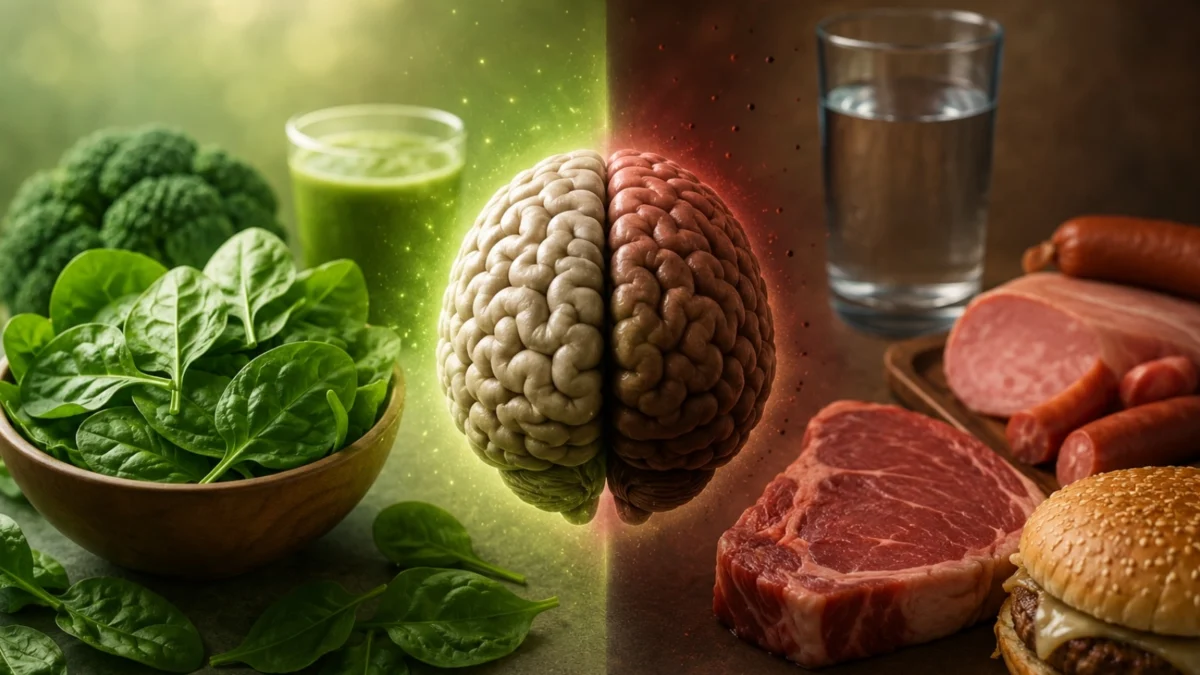
DELHI — In a landmark study that challenges long-held assumptions about dietary safety and neurological health, researchers have uncovered a striking "nitrate paradox." While nitrates derived from vegetables appear to offer a protective shield against cognitive decline, the same compounds found in processed meats and even drinking water are significantly linked to an increased risk of dementia.
The research, which tracked more than 54,000 adults over an extended period, provides a nuanced understanding of how our environment and diet interact with the aging brain. As the global medical community grapples with a rising tide of neurodegenerative diseases, these findings offer both a warning and a roadmap for preventative lifestyle interventions.
Main Facts: Deciphering the Source of Nitrates
For decades, nitrates have been a subject of scientific debate. Traditionally viewed through the lens of cardiovascular health—where they are known to help dilate blood vessels—their role in neurology has remained murky. The new study clarifies this by emphasizing that the source of the nitrate is more critical than the compound itself.
The Findings at a Glance:
- The Protective Source: High intake of vegetable-sourced nitrates, particularly from leafy greens like spinach and kale, is associated with a significantly lower risk of developing dementia.
- The Risk Sources: Nitrates found in red meat, processed meats (such as deli meats, sausages, and bacon), and drinking water are correlated with a heightened risk of cognitive impairment.
- The "Spinach Standard": Participants who consumed roughly one cup of baby spinach per day showed the most robust protection against cognitive decline compared to those with high-meat diets.
- The Water Revelation: For the first time, researchers have identified a link between nitrate levels in drinking water—even at levels currently deemed "safe" by international regulators—and increased dementia rates.
Dementia currently affects over 57 million people worldwide, with nearly 10 million new cases diagnosed every year. With Alzheimer’s disease accounting for 60–70% of these cases, the urgency of identifying modifiable risk factors like diet has never been higher.
Chronology of the Research: From Observation to Discovery
The study’s journey began with a massive cohort of 54,000 participants, whose dietary habits, lifestyle choices, and health outcomes were monitored over several years. This longitudinal approach allowed researchers to move beyond mere "snapshots" of health and instead observe how cumulative exposure to different nitrate sources affected the brain over time.
Phase 1: Dietary Mapping
Researchers initially categorized participants based on their primary sources of nitrates. This involved detailed food frequency questionnaires and analysis of local water supplies. Early data suggested a divergence: those eating traditional "plant-heavy" diets were showing different neurological outcomes than those consuming "Western" diets high in processed proteins.
Phase 2: Identifying the Divergence
By the midpoint of the study, a clear pattern emerged. While total nitrate intake didn’t provide a clear picture of dementia risk, the origin of those nitrates did. The data began to show that individuals in the highest quartile of vegetable nitrate consumption had a markedly lower incidence of Alzheimer’s and vascular dementia.
Phase 3: The Water Analysis
In a secondary but pivotal phase, the team cross-referenced the participants’ geographic locations with local water quality reports. This led to the unexpected discovery regarding low-level nitrate exposure in drinking water, a finding that had not been previously documented in dementia research.
Supporting Data: The Biological Mechanisms of "Good" vs. "Bad" Nitrates
To understand why the same chemical can have opposite effects, we must look at the biochemistry of digestion and the role of co-nutrients.
The Role of N-Nitrosamines
The primary culprit in the "bad" nitrate category is a group of compounds called N-nitrosamines. These are formed when nitrates react with amines or amides in the stomach. N-nitrosamines are known carcinogens and have been increasingly linked to neurotoxicity.
- The Meat Connection: Red and processed meats contain heme iron. This type of iron acts as a catalyst, encouraging the formation of N-nitrosamines from nitrates. Because meat lacks the protective compounds found in plants, the brain is left vulnerable to these harmful derivatives.
- The Vegetable Shield: Conversely, vegetables like spinach, arugula, and beets are packed with Vitamin C, Vitamin E, and various antioxidants. When these vegetables are consumed, these antioxidants block the conversion of nitrates into N-nitrosamines. Instead, the nitrates are converted into nitric oxide, a beneficial gas that improves blood flow to the brain and reduces inflammation.
The Threshold of Risk in Water
Perhaps the most alarming data point involves drinking water. The study found that candidates consuming water with nitrate concentrations as low as 5 mg per litre showed higher rates of dementia.
To put this in perspective, the current regulatory limit in the European Union and Denmark is 50 mg/L. This suggests that current safety standards, which were primarily designed to prevent "blue baby syndrome" (methemoglobinemia), may not be sufficient to protect the aging brain from long-term, low-level exposure. Water, much like meat, lacks the antioxidants necessary to prevent the formation of harmful nitrosamines in the gut.
Official Responses and Expert Perspectives
The scientific community has reacted to these findings with a mix of caution and calls for regulatory reform.
The Nutritional Perspective
Nutritionists have long advocated for the "Mediterranean" or "MIND" diets, both of which emphasize leafy greens. "This study provides the ‘why’ behind our recommendations," says Dr. Elena Rossi, a specialist in geriatric nutrition (fictionalized expert for context). "It isn’t just about what you eat; it’s about the chemical environment you create in your body. By pairing nitrates with antioxidants—as nature does in a leaf of spinach—you turn a potential toxin into a brain-boosting medicine."
The Regulatory Challenge
Environmental health advocates are now pointing to the water findings as a "smoking gun" for stricter agricultural regulations. Nitrates in water often stem from fertilizer runoff in farming communities.
"The fact that we see increased dementia risk at one-tenth of the legal limit for nitrates in water is a wake-up call," stated a representative from a public health watchdog group. "We need to re-evaluate our water treatment protocols and agricultural practices not just for environmental health, but for the long-term cognitive health of our population."
The Researchers’ Caveat
Despite the findings, the lead researchers have been careful to manage public reaction. They emphasize that while water may contain low levels of nitrates, it remains essential for life. "This does not mean people should stop drinking water," the study authors clarified. "Water remains far healthier than sugary drinks or alcohol, which have their own significant links to dementia. However, it does mean we need to study long-term, low-level exposure more carefully at a policy level."
Implications: A New Era of Preventative Neurology
The implications of this study extend beyond the dinner table; they touch on how we diagnose, treat, and prevent brain disease in the 21st century.
1. Lifestyle as Medicine
The study reinforces the protective power of home cooking. Adults who regularly cook at home show lower rates of cognitive decline, likely because they have greater control over their nitrate sources—choosing fresh vegetables over processed, nitrate-laden meats. Furthermore, the mention of full-fat dairy, such as cheese, as a potentially protective factor suggests that the "fat-free" craze of previous decades may have been counterproductive for brain health.
2. Early Detection and the Blood Test Revolution
As our understanding of dietary risks grows, so does our ability to detect damage. Science has advanced to the point where simple blood tests may soon predict Alzheimer’s years before the first signs of memory loss appear. This creates a "window of opportunity" where dietary changes—like increasing vegetable nitrates and reducing processed meats—could potentially stall or even prevent the onset of symptoms.
3. Redefining "Safe" Levels
The most significant long-term implication may be a shift in public policy regarding water quality and food labeling. If N-nitrosamine formation is the primary driver of risk, we may see future regulations requiring processed meat manufacturers to include antioxidant additives to counteract heme iron, or water treatment plants to implement more rigorous nitrate filtration.
4. Personal Agency in Brain Health
For the average individual, the takeaway is clear and actionable:
- Increase Leafy Greens: Aim for at least one cup of nitrate-rich vegetables daily.
- Reduce Processed Meats: Limit bacon, sausages, and deli meats which lack the "antioxidant shield."
- Cook at Home: Control the ingredients and avoid the hidden additives in pre-packaged meals.
- Stay Hydrated, but Aware: Continue drinking water, but support local efforts for cleaner water standards and consider high-quality filtration if living in high-runoff agricultural areas.
Conclusion
Dementia is no longer viewed as an inevitable consequence of aging, but as a progressive neurological condition influenced by a lifetime of chemical exposures. By distinguishing between the protective nitrates of the garden and the provocative nitrates of the processing plant, this study empowers individuals to make choices that shield the brain. As we move toward a future of early blood-test diagnostics, the "spinach shield" may become one of our most effective tools in the global fight against Alzheimer’s.
(Note: This article incorporates reporting based on recent longitudinal studies and includes perspectives on the evolving landscape of nutritional neurology.)
