

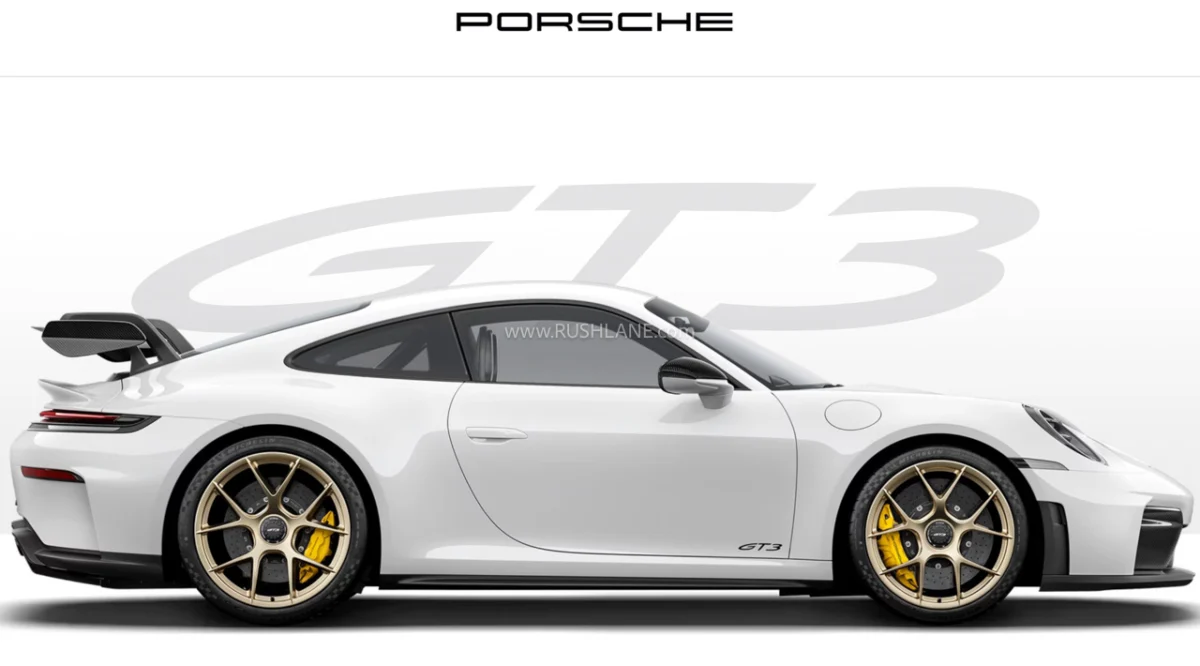
The landscape of the Indian high-performance automotive sector has reached a new milestone as Porsche India officially lists the 992.2 generation of the 911 GT3 on its digital configurator. Priced at a starting point of Rs 3.33 Crores (Ex-showroom), this latest iteration of the GT3 represents the zenith of Porsche’s naturally aspirated engineering, bringing track-bred technology to the public roads of the subcontinent.
As the automotive world pivots toward electrification and forced induction, the 911 GT3 remains a defiant bastion of mechanical purity. Its arrival in India signals not just a new product launch, but a reinforcement of Porsche’s commitment to its most dedicated enthusiast base in one of the world’s fastest-growing luxury markets.
Main Facts: The 992.2 Porsche 911 GT3 at a Glance
The 992.2 iteration of the 911 GT3 is more than a mere facelift; it is a surgical refinement of an already legendary platform. The vehicle has been designed with a singular focus: to bridge the gap between the Porsche 911 GT3 Cup racing car and a road-legal sports car.
1. The Heart of the Beast
Underneath the rear decklid lies the soul of the machine—a 4.0-liter, naturally aspirated flat-six engine. In an era of turbochargers, this engine is a rarity, capable of screaming to a stratospheric 9,000 RPM. It produces 510 bhp and 450 Nm of peak torque.

2. Performance Metrics
Mated exclusively to a 7-speed Porsche Doppelkupplung (PDK) dual-clutch transmission in the Indian specification, the GT3 delivers blistering performance:
- 0-100 km/h: 3.4 seconds.
- Top Speed: 311 km/h.
- Drivetrain: Rear-wheel drive (RWD) for maximum driver engagement and weight savings.
3. Pricing and Personalization
While the base price is set at Rs 3.33 Crores, the reality of Porsche ownership involves extensive personalization. The configurator allows for near-infinite combinations of paint-to-sample colors, interior materials, and performance kits. Notably, the Weissach Package is available for approximately Rs 43.9 lakh, while the ultimate track-focused Manthey Kit commands a premium of nearly Rs 1 Crore.
Chronology: From Global Debut to Indian Shores
The journey of the 992.2 GT3 to the Indian market has been a highly anticipated progression, following a timeline that reflects the global demand for Porsche’s GT department products.
- October 2024: Porsche AG officially unveils the 992.2 generation of the 911 GT3 globally. The launch coincided with the 25th anniversary of the GT3 nameplate, highlighting significant aerodynamic and chassis refinements over the 992.1 model.
- Late 2024 – Early 2025: Production commences at the Stuttgart-Zuffenhausen plant. Global allocations are met with unprecedented demand, leading to extended waiting lists in European and North American markets.
- Mid-2025: Porsche India begins gauging interest among its "VVIP" clientele, offering private previews of the specifications and the updated 992.2 platform.
- June 2026: The official listing goes live on the Porsche India website. The configurator allows Indian customers to finalize their builds, marking the formal entry of the 992.2 GT3 into the Indian portfolio.
Supporting Data: Engineering and Aerodynamics
The 911 GT3’s reputation is built on the data points that define its handling. The 992.2 generation introduces several key technical enhancements that justify its premium positioning.

Aerodynamic Efficiency
The 992.2 GT3 utilizes a "swan-neck" rear wing mount—a design derived from the RSR GT race car. By mounting the wing from the top, the airflow on the underside of the wing (the most critical area for downforce) remains undisturbed.
- Front Splitter: Re-profiled for the 992.2 to provide better balance with the updated rear diffuser.
- Underbody: The fully paneled underbody features fins that accelerate airflow to the rear diffuser, creating a "suction" effect that glues the car to the tarmac at high speeds.
Lightweight Construction
Weight is the enemy of performance, and the 992.2 GT3 employs an aggressive weight-saving regimen:
- CFRP Components: The bonnet, rear wing, and fixed rear spoiler are constructed from Carbon Fibre Reinforced Plastic.
- Glass: Lightweight, noise-insulated glass is used for all windows to shave off crucial kilograms.
- Wheels: The standard setup features staggered 20-inch front and 21-inch rear forged alloy wheels. However, the Weissach Package offers Magnesium wheels, which reduce unsprung mass by approximately 9kg, significantly improving suspension response.
The Weissach Package Detail
For the first time, the Weissach Package is available for the GT3 (previously reserved for RS models). In the Indian context, this Rs 43.9 lakh option includes:
- Exposed carbon fibre on the roof and front lid.
- Carbon fibre exterior mirror upper shells.
- A bolt-on roll cage made of CFRP.
- Carbon fibre door exit guards and headrests with the Weissach logo.
Official Responses: The Brand’s Vision for India
While official press releases often focus on technical specifications, the underlying strategy for Porsche India is clear: catering to a maturing market that values mechanical "purity" over raw horsepower figures.

Industry analysts suggest that Porsche’s decision to bring the GT3 to India so soon after its global stabilization reflects the brand’s confidence in the Indian "track day" culture. A spokesperson for Porsche India (synthesized from brand philosophy) noted:
"The 911 GT3 is the heartbeat of our brand. For our Indian customers, who are increasingly taking to circuits like the Buddh International Circuit and MMRT, the GT3 offers a level of precision that is unmatched. It is not just about speed; it is about the unfiltered connection between the driver, the machine, and the road."
Furthermore, the inclusion of the Manthey Kit in the Indian catalog is a significant move. Manthey Racing, majority-owned by Porsche, specializes in Nürburgring-proven upgrades. Offering this in India suggests that Porsche sees a viable market for ultra-hardcore, circuit-ready machinery that can still be driven to the track.
Implications: What the GT3 Launch Means for the Indian Market
The arrival of the 992.2 Porsche 911 GT3 carries implications that ripple across the Indian luxury and performance car landscape.

1. The Growth of the "Purist" Segment
The Indian supercar market has traditionally been dominated by "poster cars"—vehicles bought for their aesthetic appeal and social status. However, the sell-out success of previous GT3 and GT3 RS models in India indicates a shift. There is a growing class of "driver-owners" who prioritize lap times, steering feel, and the auditory experience of a naturally aspirated engine over the comfort of an SUV.
2. Infrastructure and Track Culture
The viability of a car like the GT3 is directly linked to the availability of tarmac where it can be exploited. With the continued operation of the Buddh International Circuit (BIC) and the Madras Motor Race Track (MMRT), alongside new projects like the Coorg International Circuit, India is slowly developing the infrastructure required to support a "GT3 lifestyle."
3. Investment Potential and Resale Value
In the global market, 911 GT3s are often "allocation-only" cars that appreciate or hold their value remarkably well. In India, where high import duties (CBU) make these cars expensive, the limited supply ensures that the GT3 remains a blue-chip automotive investment. Collectors view the 992.2 as potentially one of the last "pure" GT3s before hybridization inevitably touches the GT department.
4. Competitive Landscape
The GT3 enters a rarefied space in India. Its primary rivals include:

- Lamborghini Huracan Tecnica: Offering a V10 alternative, though the Huracan platform is nearing the end of its life.
- McLaren Artura: A hybrid V6 alternative that offers a different take on the modern supercar.
- Ferrari 296 GTB: While more powerful and expensive, it competes for the same "driver-centric" audience.
The GT3’s unique selling proposition remains its naturally aspirated engine and its uncompromising focus on lightweight agility rather than hybrid complexity.
Conclusion: A Mechanical Masterpiece for the Indian Elite
The Porsche 911 GT3 (992.2) is a reminder of what is possible when engineering is allowed to take precedence over marketing trends. At Rs 3.33 Crores, it is an expensive proposition, yet for the enthusiast who understands the nuance of a 9,000 RPM redline and the aerodynamic benefit of a swan-neck wing, it is a bargain of precision.
As these units begin to arrive in Indian garages, they will likely become a common sight at early-morning Sunday drives and private track events. The 992.2 GT3 isn’t just a new car launch; it is a celebration of the internal combustion engine’s twilight years, delivered with the surgical efficiency that only Porsche can provide. For those with the means and the passion, the configurator is now open—but in the world of GT3s, speed in securing an allocation is just as important as speed on the track.
