

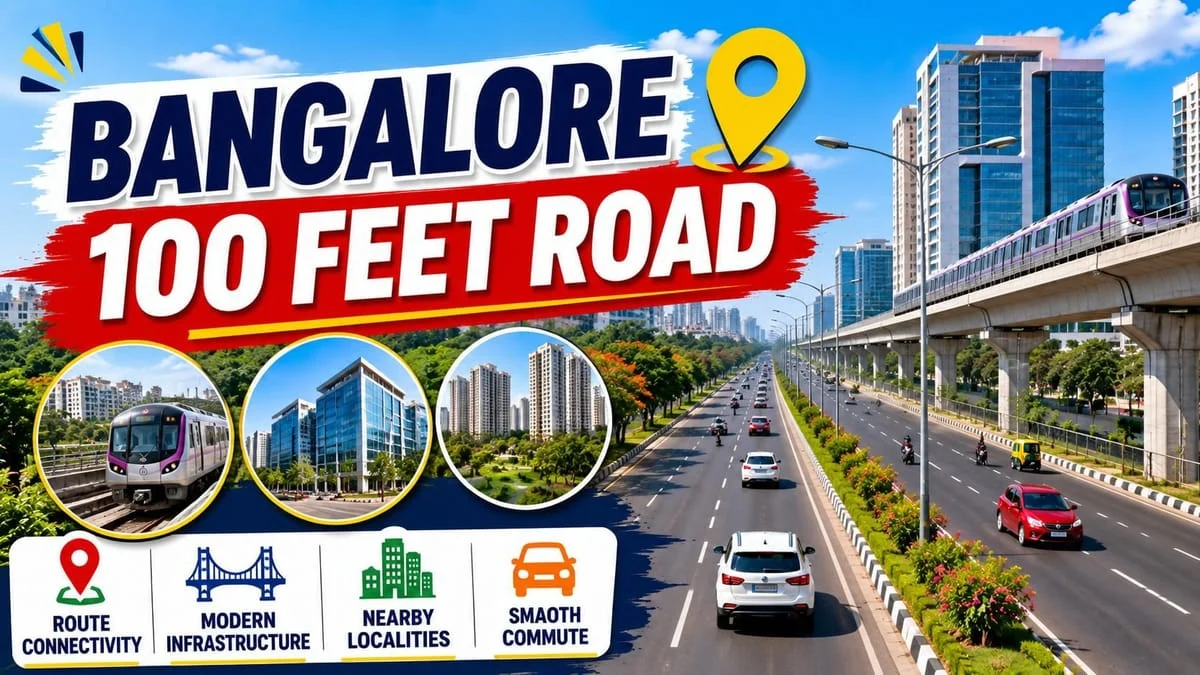
Introduction: The Commercial and Residential Lifeline
In the sprawling urban landscape of Bengaluru, few stretches of tarmac carry as much prestige and economic weight as the 100 Feet Road in Indiranagar. Officially designated as Dr. S. K. Karim Khan Road, this arterial thoroughfare has evolved from a quiet residential boulevard into one of India’s most expensive and sought-after commercial high streets. Serving as the primary north-south connector in the eastern part of the city, the road is a microcosm of Bengaluru’s transformation from a "Pensioner’s Paradise" to a global "Silicon Valley."
For real estate investors, business conglomerates, and high-net-worth individuals (HNIs), 100 Feet Road represents the pinnacle of urban connectivity and lifestyle. This report provides an in-depth analysis of the corridor’s geography, its infrastructure, the surrounding micro-markets, and the economic implications of its continued growth.
1. Main Facts: Defining the Dr. S. K. Karim Khan Road
The 100 Feet Road is a 2.5-kilometer stretch located in the heart of Indiranagar. It acts as a vital link between two of the city’s most critical transit routes: Old Airport Road at the southern end and Swami Vivekananda (SV) Road at the northern end.
Key Characteristics:
- Official Name: Dr. S. K. Karim Khan Road.
- Primary Function: Mixed-use corridor (High-street retail, elite dining, and premium residential).
- Connectivity: Direct access to the Purple Line of the Namma Metro and proximity to the Inner Ring Road.
- Commercial Density: Home to flagship stores of global brands, Michelin-standard culinary establishments, and burgeoning boutique offices.
The road’s strategic importance is underscored by its ability to manage heavy vehicular traffic while maintaining a premium pedestrian-friendly environment in several of its segments. Its valuation remains among the highest in the city, with commercial rentals often rivaling those of Brigade Road and MG Road.
2. Chronology and Evolution: From BDA Layout to Global High Street
To understand the current significance of 100 Feet Road, one must look at its historical trajectory.
- The 1970s – 1980s: Residential Foundations: Indiranagar was originally developed by the Bangalore Development Authority (BDA) as a quiet residential suburb. The 100 Feet Road was designed as a wide boulevard to facilitate easy movement for residents, many of whom were retired defense personnel and public sector employees.
- The 1990s: The IT Boom Begins: As the software revolution took hold in Bengaluru, Indiranagar’s proximity to the city center and the emerging IT hubs of eastern Bengaluru made it an attractive residential choice for tech executives.
- The 2000s: The Commercial Shift: The early 2000s saw the first wave of commercialization. Large residential plots began converting into retail spaces. The road quickly became a hub for the "pub capital" reputation of Bengaluru, with numerous craft breweries and fine-dining restaurants opening their doors.
- 2011 – Present: The Metro Era: The inauguration of the Namma Metro Purple Line was a watershed moment. The Indiranagar Metro Station, located just off the 100 Feet Road, transformed the area into a Transit-Oriented Development (TOD) hub, further skyrocketing property values and footfall.
3. Supporting Data: Infrastructure and Connectivity
The enduring demand for property along this stretch is rooted in its unparalleled connectivity. The road serves as a bridge between the old city charm and the new-age tech corridors.
The Metro Advantage
The Indiranagar Metro Station is the primary catalyst for the area’s commercial resilience. Located at the intersection of 100 Feet Road and CMH Road, it offers:
- Walking Distance: Most points on the 100 Feet Road are within a 200 to 800-meter radius of the station.
- Commute Times: It provides a 15-minute transit to the Central Business District (MG Road) and a 30-minute link to the western suburbs like Vijayanagar and Kengeri.
- Footfall: Thousands of commuters pass through the station daily, providing a steady stream of potential customers for the retail outlets lining the road.
Intersections and Traffic Flow
The road’s grid-like layout connects it to several vital neighborhoods:
- Domlur Flyover: Connects 100 Feet Road to the Inner Ring Road, providing a direct route to Koramangala and the Embassy GolfLinks (EGL) Tech Park.
- Jeevanbheemanagar & Halasuru: These intersections allow for a distribution of traffic toward the northern and western parts of the city.
- Old Airport Road: This junction is critical for residents and businesses needing access to Marathahalli, Whitefield, and the Outer Ring Road (ORR).
4. Micro-Market Analysis: Surrounding Localities
The real estate landscape surrounding 100 Feet Road is diverse, ranging from ultra-luxury bungalows to mid-segment apartments.
Defence Colony: The Elite Enclave
Situated on the northern side, Defence Colony remains one of the most prestigious addresses in Bengaluru. Known for its wide, leafy avenues and massive independent houses, it offers a serene escape from the commercial buzz of the main road. Zoning laws here are strictly enforced to prevent commercial encroachment, preserving its residential character.
HAL 2nd & 3rd Stages: The Executive Hub
These stages flank the southern half of the road. They are characterized by upscale low-rise apartments and independent floors. The proximity to healthcare giants like Cloudnine and Motherhood makes this a preferred choice for young families and corporate leaders.
Domlur & Doopanahalli: The Tech Bridge
Domlur acts as the gateway to the tech parks. It is a mix of older residential properties and new commercial developments. Doopanahalli, tucked behind the 100 Feet Road showrooms, has become a "rental cushion," providing high-end serviced apartments and flats for the workforce employed in Indiranagar’s offices.
Halasuru (Ulsoor): Heritage Meets Modernity
To the west lies Halasuru, one of the oldest neighborhoods in the city. It offers a unique blend of heritage temples, the scenic Ulsoor Lake, and new-age luxury high-rises. It serves as the bridge between Indiranagar and the Central Business District.
New Thippasandra & CV Raman Nagar: The Affordable Alternatives
For those seeking the Indiranagar lifestyle without the 100 Feet Road price tag, these areas are ideal. CV Raman Nagar is particularly popular due to its proximity to Bagmane Tech Park and defense establishments like DRDO.
5. Market Comparison and Real Estate Dynamics
The following table highlights the stark variation in capital values across the 100 Feet Road micro-market (Values are approximate based on current market trends):
| Locality | Primary Real Estate Type | Capital Value (INR per sq. ft.) | Proximity to 100 Ft Road |
|---|---|---|---|
| Defence Colony | Luxury Bungalows & Floors | INR 22,000 – INR 28,000+ | Immediate |
| HAL 2nd Stage | Premium Apartments | INR 18,000 – INR 22,000 | Immediate |
| Domlur | Mid-to-Premium Flats | INR 12,500 – INR 16,500 | < 1.5 km |
| CV Raman Nagar | Large Apartment Complexes | INR 9,500 – INR 13,500 | 2.0 – 3.5 km |
| New Thippasandra | Mid-segment Builder Floors | INR 8,500 – INR 12,000 | 1.5 – 2.5 km |
The "scarcity premium" is evident; as one moves closer to the 100 Feet Road axis, prices jump significantly due to the limited availability of land and the high demand for commercial conversion.
6. Expert Insights and Official Context
Urban planners and real estate experts point to several factors that sustain the road’s prominence. According to industry reports, Indiranagar’s 100 Feet Road maintains one of the lowest commercial vacancy rates in the city.
Official Infrastructure Focus:
The Bruhat Bengaluru Mahanagara Palike (BBMP) has frequently targeted this stretch for infrastructure upgrades, including white-topping (concreting) to handle heavy monsoons and high traffic volume. Furthermore, the Directorate of Urban Land Transport (DULT) has often proposed "pedestrian-only" weekends for the stretch, acknowledging its status as a social hub rather than just a transit route.
However, experts also warn of challenges. "The rapid commercialization has led to significant parking woes and noise pollution for the inner-lane residents," says an urban planning consultant. "The future of 100 Feet Road depends on how the city balances its commercial appetite with the residential needs of its legacy inhabitants."
7. Implications: The Future of the Corridor
The implications for the 100 Feet Road corridor are clear: it will remain the "Gold Standard" of Bengaluru real estate for the foreseeable future.
- For Investors: The capital appreciation in the surrounding areas (like Domlur and CV Raman Nagar) is expected to continue as the "halo effect" of 100 Feet Road expands outward.
- For Retailers: The road remains a "must-have" location for brands looking to establish a presence in South India. The high footfall and the affluent demographic of the neighborhood ensure high sales velocity.
- For Residents: While the main road is bustling, the interior blocks of Indiranagar and Defence Colony will continue to command a premium for offering a "walkable" lifestyle—a rarity in a city often criticized for its traffic.
Conclusion
Dr. S. K. Karim Khan Road, or the Bangalore 100 Feet Road, is more than just a transit link; it is the economic engine of East Bengaluru. By successfully integrating high-speed metro connectivity with luxury retail and elite housing, it has set a benchmark for urban development in India. While challenges regarding traffic management and sustainable growth remain, the road’s strategic position and social infrastructure ensure that it will remain the heartbeat of the city’s commercial and residential landscape for decades to come.
