

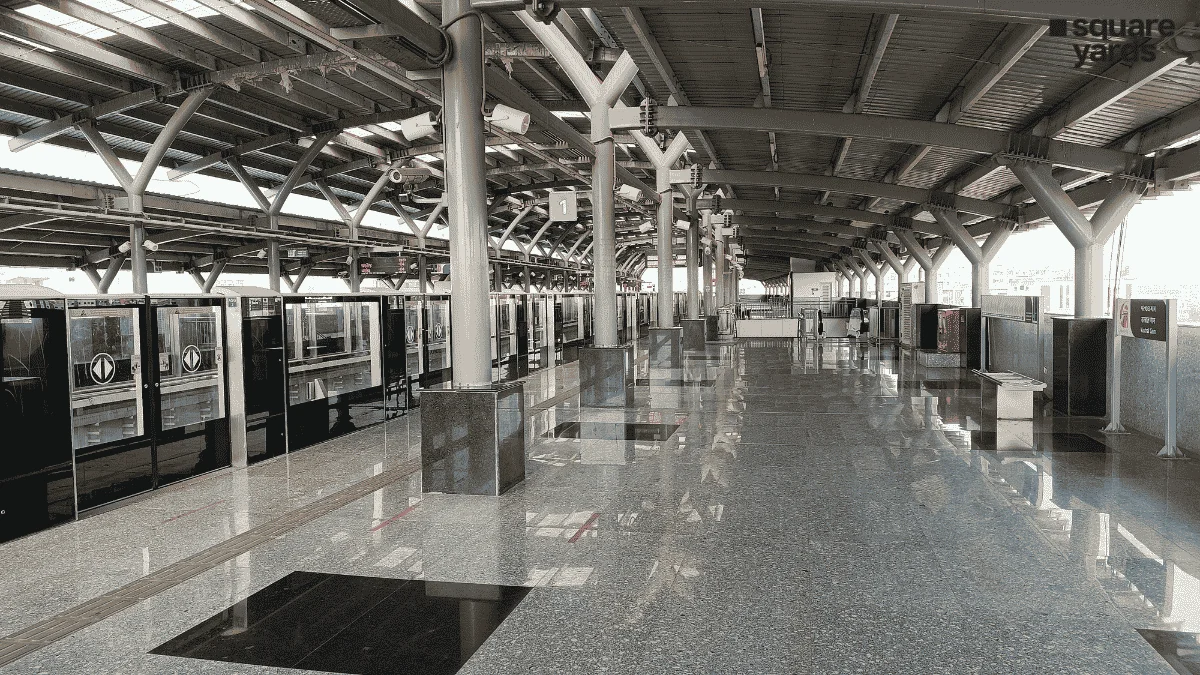
AHMEDABAD – In a move that signals the city’s transition from a regional commercial hub to a global metropolitan contender, the Union Cabinet, chaired by the Prime Minister, officially approved the Ahmedabad Metro Phase 2A on June 10, 2026. This critical 6.032-kilometer extension is more than a mere addition to the city’s transit map; it represents the long-awaited direct rail link between the Sardar Vallabhbhai Patel International (SVPI) Airport and the heart of Gujarat’s largest city.
With a sanctioned budget of ₹2,169.04 crore, the project arrives at a pivotal moment. As Ahmedabad prepares to step onto the world stage as the host for the World Police Games in 2029 and the Commonwealth Games in 2030, the expansion of the Gujarat Metro Rail Corporation (GMRC) network is being viewed as the backbone of the city’s international readiness.
I. Main Facts: The Blueprint of Phase 2A
The Phase 2A corridor is a specialized spur designed to solve one of Ahmedabad’s most persistent logistical bottlenecks: airport accessibility. While the existing metro network has successfully connected the East-West and North-South corridors, the "last mile" to the airport remained a gap filled by congested road networks.
Technical Specifications and Route
The 6.032 km corridor originates at Koteshwar Road and terminates at the SVPI Airport. The project features a hybrid architectural approach:
- Total Stations: Five new stations will be added to the grid—Ashram Road, Koteshwar Prachin Mandir, Sabarmati River, Sardar Nagar, and Airport.
- Elevation Dynamics: Four of these stations will be elevated, while the final approach to the SVPI Airport will be underground to comply with aviation safety standards and maximize passenger convenience.
- Total Network Reach: Upon the completion of Phase 2A, the combined Ahmedabad-Gandhinagar metro network will span 77.63 km, positioning it as one of the most comprehensive urban rail systems in Western India.
Financial and Strategic Allocation
The ₹2,169.04 crore investment is structured to cover not just the civil works but also the sophisticated signaling and safety systems required for an airport-link line. The funding is expected to be a mix of central and state equity, supplemented by soft loans from international multilateral agencies, a model that has successfully powered previous phases of the Gujarat Metro.
II. Chronology: From Concept to Cabinet Approval
The journey of the Ahmedabad Metro has been one of rapid scaling. To understand the significance of Phase 2A, one must look at the timeline of the city’s transit evolution.
- 2019–2022: Completion and commissioning of Phase 1, establishing the primary East-West and North-South axes.
- 2023–2025: Execution of Phase 2, which focused on connecting Ahmedabad to the state capital, Gandhinagar, and the GIFT City (Gujarat International Finance Tec-City) hub.
- Early 2026: Detailed Project Reports (DPR) for the airport link were fast-tracked following Ahmedabad’s successful bids for the 2029 and 2030 international sporting events.
- June 10, 2026: The Union Cabinet provides the final administrative and financial clearance, setting a construction commencement window for late 2026.
- 2029 (Target): The project aims for partial or full operational status to coincide with the World Police Games, ensuring seamless athlete and visitor transport.
III. Supporting Data: Economic and Environmental Impact
The approval of Phase 2A is backed by rigorous data suggesting a profound shift in the city’s socio-economic fabric.
Transit-Oriented Development (TOD) and FSI
The Gujarat government’s Transit-Oriented Development policy is the primary driver of real estate value along the new corridor.
- FSI Boost: Areas within a 500-meter radius of the five new stations are eligible for an enhanced Floor Space Index (FSI) of up to 4.0. This allows for high-density, vertical growth in a city that has traditionally been spread out.
- Projected Density: Urban planners estimate that the residential density in the Sardar Nagar and Koteshwar pockets could increase by 35% over the next decade as developers pivot from low-rise bungalows to premium high-rise apartments.
Environmental Math
The SVPI Airport road currently handles over 50,000 passenger vehicles daily, leading to significant carbon emissions and idling time.
- Carbon Reduction: GMRC estimates that Phase 2A will shift approximately 15% to 20% of airport-bound commuters from private cabs to the electric rail network within the first three years of operation.
- Energy Efficiency: As an all-electric network, the metro reduces the per-capita carbon load of the city, contributing to Ahmedabad’s "Green City" initiative ahead of the 2030 Commonwealth Games.
IV. Official Responses: Stakeholder Perspectives
The Cabinet’s decision has triggered a wave of responses from government officials, industry leaders, and urban experts.
The Union Cabinet Statement:
In the official briefing, a government spokesperson emphasized the strategic necessity of the project: "Ahmedabad is no longer just a commercial center; it is a future Olympic-standard host city. Phase 2A is a critical infrastructure piece that ensures international visitors experience world-class connectivity from the moment they land at SVPI Airport."
Gujarat Metro Rail Corporation (GMRC) Insights:
An executive from GMRC noted the engineering complexity: "The transition from the elevated Sabarmati River station to the underground Airport station is a feat of modern engineering. We are working closely with the Airports Authority of India (AAI) to ensure that construction does not disrupt flight operations while providing a seamless transfer for passengers with luggage."
Real Estate Sector (CREDAI Ahmedabad):
A representative from the developers’ body commented: "North Ahmedabad has been an undervalued pocket for too long. The metro approval, combined with the TOD policy, makes Koteshwar and the surrounding areas the new ‘it’ destination for luxury residential projects. We expect a 20-25% appreciation in land prices in the immediate vicinity of the stations over the next 24 months."
V. Implications: Transforming the Urban Fabric
The ripple effects of Phase 2A extend far beyond the tracks. The project is set to redefine three major sectors: Real Estate, International Sports, and Regional Logistics.
1. The Real Estate Paradigm Shift
The "TOD Magnet Effect" will create distinct micro-markets:
- Koteshwar and Ashram Road: These areas are likely to see a surge in "Work-Live-Play" complexes. With the Sabarmati Riverfront Phase 2 also progressing nearby, this zone is being marketed as the "New Downtown" of North Ahmedabad.
- Sardar Nagar: Historically a dense, middle-income neighborhood, Sardar Nagar is poised for gentrification. The improved connectivity will likely attract young professionals who work in GIFT City but prefer living within Ahmedabad’s cultural heart.
2. The "Sports City" Vision
The proximity of the metro to the Sardar Patel Sports Enclave is the linchpin of Ahmedabad’s hosting strategy. Phase 2A ensures that international delegations can move from the airport to their accommodation and competition venues without being caught in the city’s notorious traffic. This "Games-Ready" infrastructure is a prerequisite for the International Olympic Committee (IOC) and Commonwealth Games Federation standards.
3. Integration with the Bullet Train
Phase 2A is a crucial piece of the "multi-modal" puzzle. The Mumbai-Ahmedabad High-Speed Rail (MAHSR) will terminate at Sabarmati. The metro network will act as the circulatory system, taking high-speed rail passengers and distributing them to the airport or the Gandhinagar administrative zone seamlessly.
VI. Challenges and Roadblocks
Despite the optimism, the path to completion is fraught with technical and social hurdles.
The Underground Complexity
Building an underground station at an active international airport is one of the most sensitive construction tasks in civil engineering. GMRC will have to navigate strict AAI guidelines regarding vibrations and equipment height. Any delay in these clearances could jeopardize the 2029 deadline.
The Passenger Experience Gap
Indian metro systems have historically struggled with "airport integration." To be successful, the SVPI Airport station must feature:
- Luggage-Friendly Infrastructure: Extra-wide fare gates, specialized elevators, and trolleys allowed on platforms.
- Seamless Transfers: Ideally, check-in kiosks should be available at major metro stations like Sabarmati or Gandhinagar to allow for a "hands-free" commute to the airport.
Social Disruption in Sardar Nagar
Sardar Nagar is one of the city’s most congested areas. The construction phase will require significant road diversions and could lead to temporary utility disruptions. Managing the local community’s expectations and minimizing noise pollution will be a test of the project’s ESG (Environmental, Social, and Governance) commitments.
Conclusion
The approval of Ahmedabad Metro Phase 2A is a watershed moment for Gujarat’s urban planning. By connecting the SVPI Airport to the wider metropolitan grid, the city is not just solving a traffic problem; it is laying the tracks for its future as a global destination. As the skyline of North Ahmedabad begins to rise in response to the TOD policy, and as the countdown to the 2030 Commonwealth Games begins, Phase 2A stands as a symbol of Ahmedabad’s arrival on the world stage. The success of this 6-kilometer stretch will ultimately be measured by how effectively it moves people—not just from station to station, but from a regional past to a global future.
