

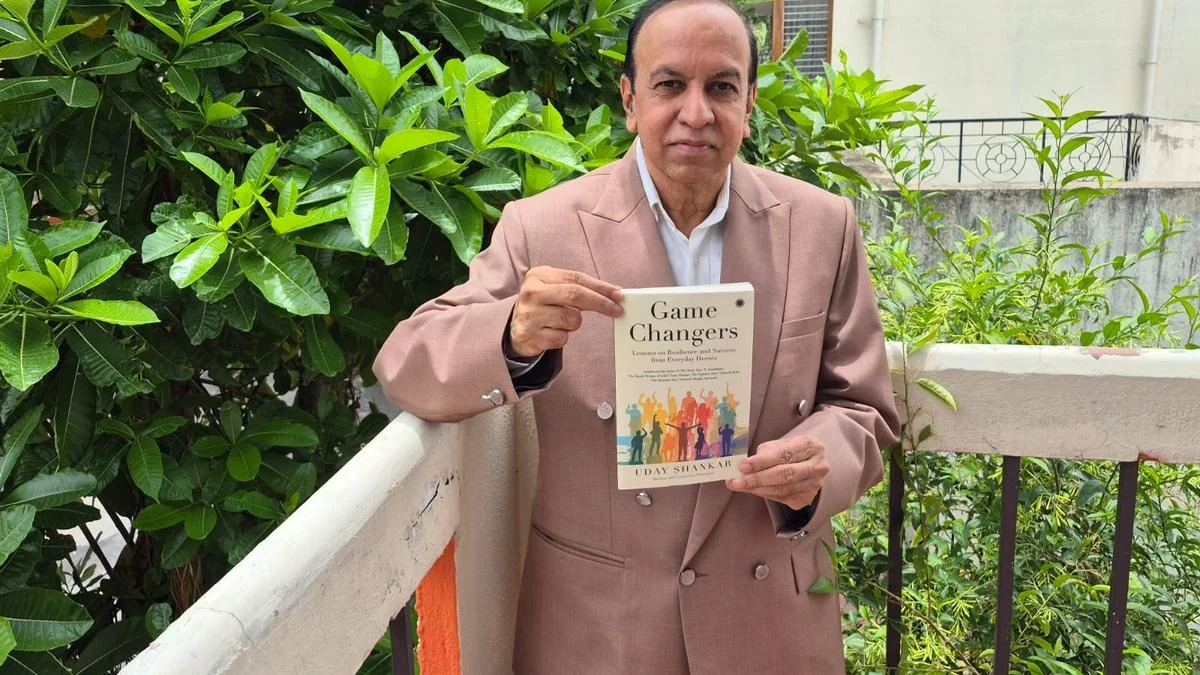
In an era where digital algorithms and 24-hour news cycles are dominated by the curated lives of celebrities, politicians, and sporting icons, a new literary work seeks to redirect the national spotlight toward the foundational, yet often invisible, pillars of Indian society. Uday Shankar’s latest publication, Game Changers: Lessons on Resilience and Success from Everyday Heroes, released by Jaico Publishing House, serves as both a sociological document and a motivational manifesto.
Spanning 236 pages, the book provides an intimate look into the lives of 18 individuals who have redefined success on their own terms. These are not stories of inherited wealth or "Silicon Valley" style venture capital; rather, they are narratives of men and women who emerged from the shadows of poverty, physical disability, and social marginalization to drive tangible progress in their communities.
Main Facts: Redefining the Indian Success Story
The core thesis of Game Changers is simple yet profound: true leadership is often found in the most unlikely places. Uday Shankar, a seasoned observer of human potential, identifies a significant gap in the contemporary Indian narrative. While the media "swarms" around high-profile figures, the individuals driving grassroots change—in remote hamlets, bustling urban slums, and rural administrative blocks—frequently go unacknowledged.
The book profiles a diverse cohort of 18 self-made achievers. The selection criteria focused on individuals who lacked a "safety net," influential connections, or the traditional markers of privilege. By documenting their journeys, Shankar aims to provide a roadmap for resilience that is accessible to the average citizen. The stories are geographically diverse, pulling from the tech hubs of Bengaluru and Hyderabad to the volatile landscapes of Jammu & Kashmir and the rugged terrains of Maharashtra and Gujarat.
Key Profiles Highlighted:
- Srikanth Bolla: The visually impaired industrialist and founder of Bollant Industries.
- Azhar Maqsusi: The activist behind the "Hunger Knows No Religion" campaign.
- Meenakshi Gadge: A sarpanch who turned a small village into a national model for development.
- Nazim Nazir: A young entrepreneur from Kashmir who revolutionized local apiculture.
- National Icons: Established figures like E. Sreedharan (the "Metro Man") and Tessy Thomas (the "Missile Woman of India").
Chronology: From Personal Adversity to Literary Vision
The genesis of Game Changers is deeply rooted in the author’s own life story, creating a chronological bridge between his past struggles and his current role as a chronicler of resilience.
The Formative Years and Personal Struggle
Long before he became an author, Uday Shankar faced his own set of "game-changing" challenges. Born with a congenital cataract, Shankar navigated his education and early career with partial blindness. His childhood was marked by the physical and psychological toll of visual impairment—carrying magnifying glasses to examination halls and struggling to read blackboards that his peers took for granted. This personal history is not merely a footnote; it is the lens through which he views the world. It provided him with an inherent empathy for those written off by society due to physical or economic limitations.

The Conceptualization Phase
The idea for the book crystallized as Shankar observed the lopsided nature of public recognition in India. Living in Bengaluru and Hyderabad, he witnessed the rapid modernization of India but noticed that the "human engines" of this growth were rarely interviewed or celebrated. He began a multi-year journey of research, traveling across states to identify individuals whose work had a high social impact but low media visibility.
The Research and Writing Process
Shankar’s methodology involved deep-dive interviews and on-ground reporting. He consciously avoided focusing solely on his home state of Telangana, fearing that a regional bias would limit the book’s national relevance. By late 2023 and early 2024, the manuscript took shape, integrating the lessons of the COVID-19 pandemic—a period that Shankar felt redefined the very definition of a "hero."
Supporting Data: The Anatomy of Resilience
To understand the impact of the individuals profiled in Game Changers, one must look at the data and the scale of their achievements. Shankar uses these 18 stories to illustrate broader socio-economic shifts in India.
Social Entrepreneurship and Hunger Alleviation
One of the most striking figures in the book is Azhar Maqsusi. Starting from a single meal shared with a woman under a bridge in Hyderabad, Maqsusi’s "Hunger Knows No Religion" campaign has scaled significantly. Today, his initiative feeds nearly 1,000 people daily. The data here reflects a growing trend of "crowdsourced compassion," where individual citizens step in to fill the gaps in state-provided social security.
Rural Governance and Women’s Empowerment
The story of Meenakshi Gadge, the sarpanch of Mukhra in Telangana, serves as a data point for the success of the Panchayati Raj system when led by visionary women. Under her leadership, the village achieved 100% open-defecation-free status, implemented comprehensive rainwater harvesting, and secured insurance for every household. Her journey from a Class XII education to a national award-winning administrator highlights the untapped potential of rural female leadership.
Economic Innovation in Conflict Zones
Nazim Nazir’s entry into the beekeeping industry in Kashmir provides a template for youth entrepreneurship in sensitive regions. Starting at the age of 18 against his parents’ wishes, Nazir has scaled his business to produce between 5,000 and 7,000 kg of honey annually. His success is a micro-economic indicator of how traditional industries, when modernized, can provide sustainable livelihoods and regional stability.

Overcoming Disability in the Corporate Sector
Srikanth Bolla’s story remains a cornerstone of the book. As the first international blind student at MIT and the founder of a multi-million dollar eco-friendly packaging company, Bolla’s life challenges the "charity mindset" often associated with disability. His company, Bollant Industries, provides employment to hundreds of differently-abled individuals, proving that inclusivity is a viable business model.
Official Responses and Launch Reception
The anticipation surrounding the book’s launch in August 2026 across major Indian metros—including Hyderabad, Bengaluru, Delhi, and Mumbai—reflects a growing appetite for "authentic" narratives.
Publisher’s Perspective
Jaico Publishing House has positioned Game Changers as a vital addition to the Indian self-help and biographical genre. "Uday Shankar has captured the essence of the ‘New India’—one that is built on grit rather than pedigree," a spokesperson for the publishing house noted. The publisher expects the book to resonate particularly well with the Gen Z and Millennial demographics, who are increasingly seeking purpose-driven career paths.
Author’s Reflection
During preliminary press interactions, Shankar has been vocal about the "silent" nature of progress. "The media practically swarm around celebrities," he states. "But there are people driving progress in the country without any hype or hoopla. These individuals are deeply rooted in their communities; they started with nothing and succeeded through sheer dedication."
Shankar has also hinted at the possibility of a sequel, tentatively titled Game Changer 2.0, acknowledging that 18 stories only scratch the surface of a country with 1.4 billion people. "There are so many deserving people who have never been in the spotlight," he adds.
Implications: The Social Value of Grassroots Narratives
The publication of Game Changers carries significant implications for how success is measured and taught in modern India.

1. Shifting the Educational Paradigm
By focusing on "leadership lessons" derived from everyday life, Shankar’s work suggests that management and resilience are not just taught in B-schools but are forged in the fires of real-world adversity. The book serves as a supplementary curriculum for aspiring entrepreneurs, emphasizing that resourcefulness (making do with what you have) is often more important than resources.
2. Validating the "Aatmanirbhar" Spirit
The stories of individuals like Dashrath Manjhi (the "Mountain Man") and the COVID-19 warriors align with the national narrative of self-reliance (Aatmanirbharta). These individuals did not wait for government intervention; they identified a problem—be it a mountain blocking access to a hospital or a global pandemic—and took personal responsibility for the solution.
3. Honoring the Fallen: The COVID Legacy
Perhaps the most poignant section of the book is the tribute to COVID-19 warriors. By documenting the sacrifices of doctors, nurses, ambulance drivers, and ward boys, Shankar ensures that the collective trauma of the pandemic results in a lasting memorial of service. This section reinforces the idea that heroism is often a quiet, daily choice made in the face of mortal danger.
4. A Call for Inclusive Media
Finally, the book serves as a critique of contemporary media priorities. It challenges editors and content creators to look beyond the "low-hanging fruit" of celebrity culture and invest in the labor-intensive work of discovering grassroots achievers.
As Game Changers: Lessons on Resilience and Success from Everyday Heroes hits bookstores, it stands as a testament to the fact that the most powerful stories in India are not found on red carpets, but in the sweat and resolve of those who refuse to let their circumstances define their destiny. Uday Shankar has not just written a book; he has provided a mirror in which a nation can see its true, hardworking self.
