

New Delhi, India – For two decades, a particular piece of cultural shorthand haunted the red-and-white half of North London. Immortalised in the British sitcom The IT Crowd, the dismissive line, "Did you see that ludicrous display last night? The thing about Arsenal is, they always try to walk it in," became a painful, albeit humorous, encapsulation of a club often perceived as prioritising aesthetic over outcome. It spoke of a beautiful, yet ultimately fragile, philosophy that, for 22 agonising years, left the Gunners yearning for English football’s ultimate prize.
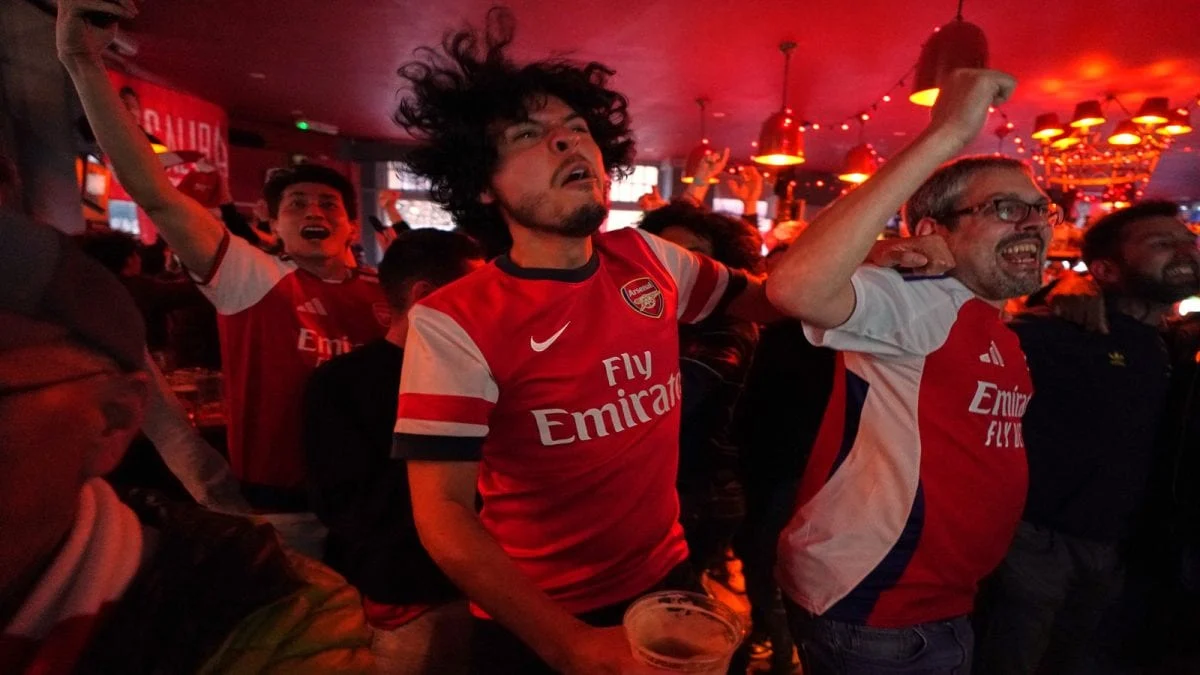
But on Tuesday night, May 20, 2026, those ghosts were not merely laid to rest; they were emphatically exorcised. Without kicking a single ball, Arsenal were crowned Premier League champions, their destiny sealed when defending champions Manchester City stumbled to a dramatic 1-1 draw against AFC Bournemouth at the Vitality Stadium. The result triggered an explosion of euphoria across North London, marking the end of a generation-long wait and heralding the arrival of Mikel Arteta’s meticulously crafted, cold-blooded winning machine. This wasn’t a triumph built on intricate passing alone; it was a victory forged in steel, resilience, and a ruthless pragmatism that defied the club’s recent history.
A Two-Decade Quest: From Invincibles to Inevitables
The journey back to the summit of English football has been protracted and fraught with emotional turmoil. The last time Arsenal lifted the Premier League trophy was in the golden sunshine of 2004, an epoch-making season where Arsène Wenger’s ‘Invincibles’ completed an entire league campaign undefeated. That legendary side, featuring icons like Thierry Henry, Patrick Vieira, and Dennis Bergkamp, set an impossibly high bar, casting a long, beautiful shadow over every subsequent Arsenal team.
The Shadow of the Invincibles
For years, the Invincibles served as both inspiration and burden. Their legacy represented the pinnacle of Wenger’s attacking philosophy, a brand of football that prioritised technical brilliance, fluid movement, and intricate passing. However, as the Premier League evolved, becoming increasingly physical and tactically diverse, Arsenal’s adherence to this aesthetic often came at the expense of defensive solidity and a killer instinct in front of goal. The twilight years of Wenger’s reign, while still producing moments of breathtaking football, were increasingly marked by a perceived softness, a tendency to falter when the stakes were highest. The "walk it in" jibe, initially a comedic observation, began to feel like a harsh truth for fans who watched their team repeatedly fall short.
A Club Adrift: Post-Wenger Wanderings
The departure of Arsène Wenger in 2018, after 22 years at the helm, plunged Arsenal into an identity crisis. Unai Emery’s brief tenure offered glimpses of tactical adaptation but ultimately failed to bridge the gap to the league’s elite. The club felt rudderless, caught between a glorious past and an uncertain future, oscillating between mid-table mediocrity and fleeting European challenges. High-earning players often underperformed, and the team lacked the cohesion and mental fortitude required to compete at the very top. The psychological DNA of the institution seemed trapped in a cycle of "beautiful failure," where moments of brilliance were consistently undermined by a collective fragility.
Arteta’s Blueprint: Dismantling the Culture of "Beautiful Failure"
When Mikel Arteta, a former Arsenal captain and a disciple of both Wenger’s aesthetic and Pep Guardiola’s brutal efficiency, walked through the doors of the Emirates Stadium in late 2019, he inherited a club that needed more than just a tactical tweak; it needed a cultural revolution. His mandate was not merely to win football matches but to fundamentally alter the psychological fabric of an entire institution.
The Ruthless Reconstruction
Arteta’s approach was systematic, cold, and often ruthless. He understood that the entrenched culture, however well-intentioned, was preventing the club from reaching its potential. High-earning individualists who did not conform to his non-negotiable standards of commitment, discipline, and collective effort were systematically excised. Players like Mesut Özil and Pierre-Emerick Aubameyang, once symbols of the club’s attacking prowess, were moved on, regardless of their reputation or cost. This was not about personal vendettas but about establishing a new, non-negotiable standard for every player representing the club.
Forging a New Identity: Steel and Substance
In their place, Arteta, working closely with Technical Director Edu Gaspar, began to build a machine designed to survive and thrive in the relentless, physical marathon of a modern 38-game Premier League campaign. The transfer strategy shifted dramatically, focusing on young, hungry players with high potential, strong character, and a willingness to embrace Arteta’s demanding philosophy. Key acquisitions like Gabriel Magalhães, Ben White, Aaron Ramsdale (and later David Raya), Martin Ødegaard, Bukayo Saka, Gabriel Martinelli, William Saliba, Declan Rice, and Kai Havertz were not just about talent; they were about creating a cohesive unit, a team that valued hard work and defensive responsibility as much as attacking flair.
This wasn’t an overnight revolution. Initial results were mixed, drawing immense scepticism from pundits and a frustrated fanbase. There were periods of genuine struggle, questions about Arteta’s inexperience, and doubts about the direction of the club. Yet, the leadership remained steadfast, backing Arteta’s vision. The FA Cup triumph in 2020 offered a glimpse of what was possible, a testament to the nascent resilience he was instilling. Over successive seasons, the tactical restructuring began to take shape, morphing Arsenal from an often-beautiful but brittle side into a formidable, well-drilled unit.
The Unyielding Fortress: Defensive Mastery as the Cornerstone
If the hallmark of Wenger’s great teams was fluid, attacking geometry and moments of individual genius, Arteta’s championship-winning side of 2026 will be remembered for its absolute defensive security and tactical discipline. This season, Arsenal did not "try to walk it in"; instead, they systematically choked the life out of the opposition, building their title charge on an impenetrable foundation.
The Saliba-Gabriel Wall
At the heart of this defensive transformation was the elite centre-back partnership of William Saliba and Gabriel Magalhães. The Frenchman, after several loan spells, returned to establish himself as one of the league’s premier defenders – a rare blend of physical dominance, blistering pace, and exquisite ball-playing ability. Alongside him, the Brazilian Gabriel provided raw power, aerial prowess, and an unyielding commitment to winning duels. Their complementary styles formed a formidable barrier, allowing Arsenal to play a high line with confidence and launch attacks from deep. This partnership transformed the Emirates into an impenetrable fortress, where visiting teams often struggled to create clear-cut chances, and away grounds became stages for tactical masterclasses in containment and control.
Raya’s Golden Touch
The acquisition of goalkeeper David Raya, initially triggering a fierce media debate over his competition with fan-favourite Aaron Ramsdale, was thoroughly vindicated. Raya’s distribution, command of his area, and shot-stopping prowess proved instrumental, culminating in him securing his third consecutive Golden Glove award. His ability to play out from the back under pressure, coupled with crucial saves in high-stakes moments, underpinned Arsenal’s controlled build-up play and defensive solidity.
Arsenal’s defensive structure was not just about individual brilliance; it was a collective effort. The full-backs, often inverted, provided tactical flexibility, while Declan Rice’s midfield presence offered an additional layer of protection, shielding the backline with his tireless work rate and exceptional ball recovery. This collective discipline allowed Arsenal to secure a staggering 19 clean sheets across the 2025/26 campaign – a league-leading figure that underscored their defensive dominance. This meant that even when the attacking engine room occasionally stalled, the back line ensured the team rarely dropped vital points, grinding out 1-0 victories or holding on for crucial draws when necessary.
The Relentless Pursuit: Navigating the 2025/26 Campaign
The 2025/26 season was a relentless marathon, a testament to Arsenal’s newfound consistency and mental fortitude. Having finished as runners-up to Manchester City for three successive, emotionally draining seasons (2023, 2024, 2025), a lesser squad would have succumbed to psychological fatigue. Instead, these near-misses seemed to steel Arteta’s side, sharpening their resolve and instilling a deeper understanding of what it takes to go the distance.
Key Victories and Defining Moments
The campaign was punctuated by a series of defining moments that showcased Arsenal’s evolution. Early season form saw them lay down a marker, dispatching rivals with a newfound clinical edge. Victories against fellow title contenders, often secured with late goals or through dominant defensive displays, provided crucial psychological boosts. A hard-fought 2-1 win at Anfield in December, a place where Arsenal had historically struggled, highlighted their growing maturity. The seamless integration of new signings, particularly Declan Rice, provided a midfield anchor that allowed the likes of Martin Ødegaard and Kai Havertz to flourish further up the pitch. Bukayo Saka and Gabriel Martinelli continued their electric form, providing pace, trickery, and goals from wide areas, while Leandro Trossard proved to be a consistently impactful presence off the bench.
Mental Fortitude Under Pressure
What truly set this Arsenal side apart was their ability to maintain composure and performance under immense pressure. They led the Premier League table for a staggering 200 days, a remarkable feat of consistency that speaks volumes about their mental resilience. In previous seasons, particularly during the run-in, Arsenal had shown a tendency to falter, to allow the pressure of the title race to overwhelm them. This year was different. When Manchester City inevitably launched their customary late-season charge, narrowing the gap and testing Arsenal’s nerve, Arteta’s men refused to blink. They responded with a series of professional, often gritty, performances, grinding out results even when not at their free-flowing best. A crucial 0-0 draw at the Etihad in March, followed by a commanding 3-0 victory over Chelsea, demonstrated their ability to perform on the biggest stages. This was a team that had learned from its past disappointments, transforming vulnerability into an unbreakable will to win.
Breaking the Blue Hegemony: Slaying the Manchester City Monster
What makes this 2026 title triumph truly historic is the sheer calibre of the monster Arsenal had to slay. Pep Guardiola’s Manchester City machine, chasing an unprecedented fifth consecutive league crown, represented arguably the most formidable obstacle in modern English sports. For three consecutive seasons, City had shattered Arsenal’s title aspirations, demonstrating an unmatched blend of financial power, tactical genius, and relentless consistency.
Three Seasons of Agony: Learning from Defeat
The pain of finishing second, repeatedly, had been immense. The 2023 season saw Arsenal lead for much of the campaign only to falter in the final weeks. The 2024 and 2025 seasons were similar tales of valiant efforts ultimately undone by City’s relentless, almost robotic, pursuit of perfection. These defeats, however, were not in vain. They served as brutal, yet invaluable, lessons. Arteta and his squad meticulously analysed their shortcomings, identifying areas for improvement – both tactically and psychologically. They learned to manage the physical demands of a long season, to conserve energy, and to deliver peak performances when it mattered most. The recruitment of Declan Rice, in particular, was a direct response to the need for greater midfield control and robustness against elite opponents.
City’s Slip: The Inevitable Conclusion
While Arsenal remained hyper-focused on their own performances, Manchester City’s camp was occasionally distracted by external factors. Off-field administrative speculation and the looming departure of their iconic manager, Pep Guardiola, who had confirmed he would leave at the end of the season, created an undercurrent of uncertainty. Though City remained a formidable force, their legendary consistency seemed to waver ever so slightly.
When AFC Bournemouth finally took two points off City on Tuesday night, securing a dramatic 1-1 draw, it wasn’t a stroke of luck for North London; it was the mathematical inevitability of Arsenal’s relentless consistency forcing their rivals into a fatal error. City’s slip was not a gift, but a consequence. Arsenal had built an insurmountable lead through sheer grit, tactical acumen, and unwavering belief. They had done their part, accumulating points week after week, putting themselves in a position where any stumble from their rivals would be decisive. This was not a title handed to them; it was a title earned, point by hard-fought point, over nine arduous months.
Voices of Triumph: Reactions from the Heart of North London
The final whistle at the Vitality Stadium unleashed a torrent of emotion, not just among the small pockets of Arsenal fans present, but across North London and around the globe. The reaction from the club’s key figures underscored the magnitude of the achievement and the arduous journey to get there.
Arteta’s Vision Realised
Mikel Arteta, often stoic and intense on the touchline, allowed himself a moment of raw emotion. "This is for every single person who believed in us, who suffered with us, who doubted us, and who always kept the faith," he reportedly told club staff, his voice thick with emotion. "We dared to dream, and we dared to work harder than anyone else. This isn’t just a trophy; it’s a statement. It’s the proof that if you have a clear vision, non-negotiable standards, and a united spirit, anything is possible. We didn’t try to walk it in this season; we ran, we fought, and we conquered." His words encapsulated the philosophy that had driven the club’s transformation.
Captain’s Pride and Player Jubilation
Captain Martin Ødegaard, the Norwegian maestro who had epitomised the team’s creative spirit and newfound leadership, spoke of immense pride. "This feeling is indescribable," he stated in a post-celebration interview. "We’ve worked so hard, faced so many challenges, and learned from every setback. To finally achieve this, after so many close calls, it means everything. It’s a testament to the belief the manager instilled in us, the bond within this squad, and the incredible support of our fans. We are champions, and we deserve it."
Star forward Bukayo Saka, a product of the Arsenal academy and a symbol of the club’s future, was visibly emotional. "This is what we dreamed of as kids," he exclaimed. "To bring the Premier League trophy back to Arsenal, after so long, it’s just incredible. We owe so much to the gaffer for pushing us, for believing in us, and for making us believe in ourselves." Midfield powerhouse Declan Rice added, "The intensity, the focus, the sheer desire to win – that’s what Arteta brought. Every single player bought into it. This is the culmination of years of hard work, and I’m just so proud to be a part of it."
A Unified Club: Ownership and Staff
The Kroenke ownership group, often criticised in the past, released a statement praising Arteta’s leadership and the club’s strategic direction. "This Premier League title is the result of years of dedicated planning, significant investment, and unwavering commitment from everyone at Arsenal Football Club," the statement read. "We commend Mikel Arteta, Edu, the entire coaching staff, and especially our incredible players for this monumental achievement. This is a new era for Arsenal, built on ambition, resilience, and a profound connection with our supporters." Technical Director Edu, the architect of many of the key transfers, was seen embracing staff members, his long-term vision finally bearing fruit.
A New Dawn: Implications for Arsenal and the Premier League
The return of the Premier League trophy to N5 after 22 years marks not just the end of a long wait but the beginning of a new chapter for Arsenal Football Club, with significant implications for the wider landscape of English football.
The End of a Psychological Burden
For Arsenal, this title signifies the definitive end of a profound psychological burden. The ‘Invincibles’ shadow, the ‘beautiful failure’ narrative, and the ‘walk it in’ jibe can finally be consigned to history. The club has proven it can win the toughest league in the world, not just with flair, but with the necessary steel and pragmatism. This victory validates Arteta’s project, solidifying his status as a top-tier manager and cementing the belief that his methods, however demanding, lead to success. It will undoubtedly foster a winning mentality that can be sustained for years to come, attracting top talent and elevating the club’s stature on the global stage.
Shifting Power Dynamics in English Football
For the Premier League, Arsenal’s triumph represents a significant shift in power dynamics. For nearly a decade, Manchester City has been the undisputed hegemon, collecting titles with a regularity that threatened to make the competition predictable. Arsenal’s victory breaks that stranglehold, signalling that the league is far from a one-horse race. It suggests that meticulous planning, strategic recruitment, and a relentless focus on culture and identity can still challenge and overcome even the most financially powerful and tactically astute empires. This newfound competitiveness will undoubtedly energise the league, promising more thrilling title races in the seasons to come and offering hope to other aspiring challengers.
The Legacy of the 2026 Champions
Twenty-two years after Patrick Vieira lifted the trophy in the golden sunshine of 2004, the trophy is returning to N5. This 2026 Arsenal side may not have gone unbeaten, but their journey has been equally compelling, a narrative of redemption, transformation, and unwavering belief. Their legacy will be defined not just by the trophy itself, but by the manner in which they achieved it: through a profound cultural shift, tactical evolution, and an unshakeable mental fortitude. There is nothing ludicrous about this display—Mikel Arteta’s Arsenal are, definitively, the real deal, and English football has a new champion to celebrate. The era of "walking it in" is over; the era of winning is here.
