

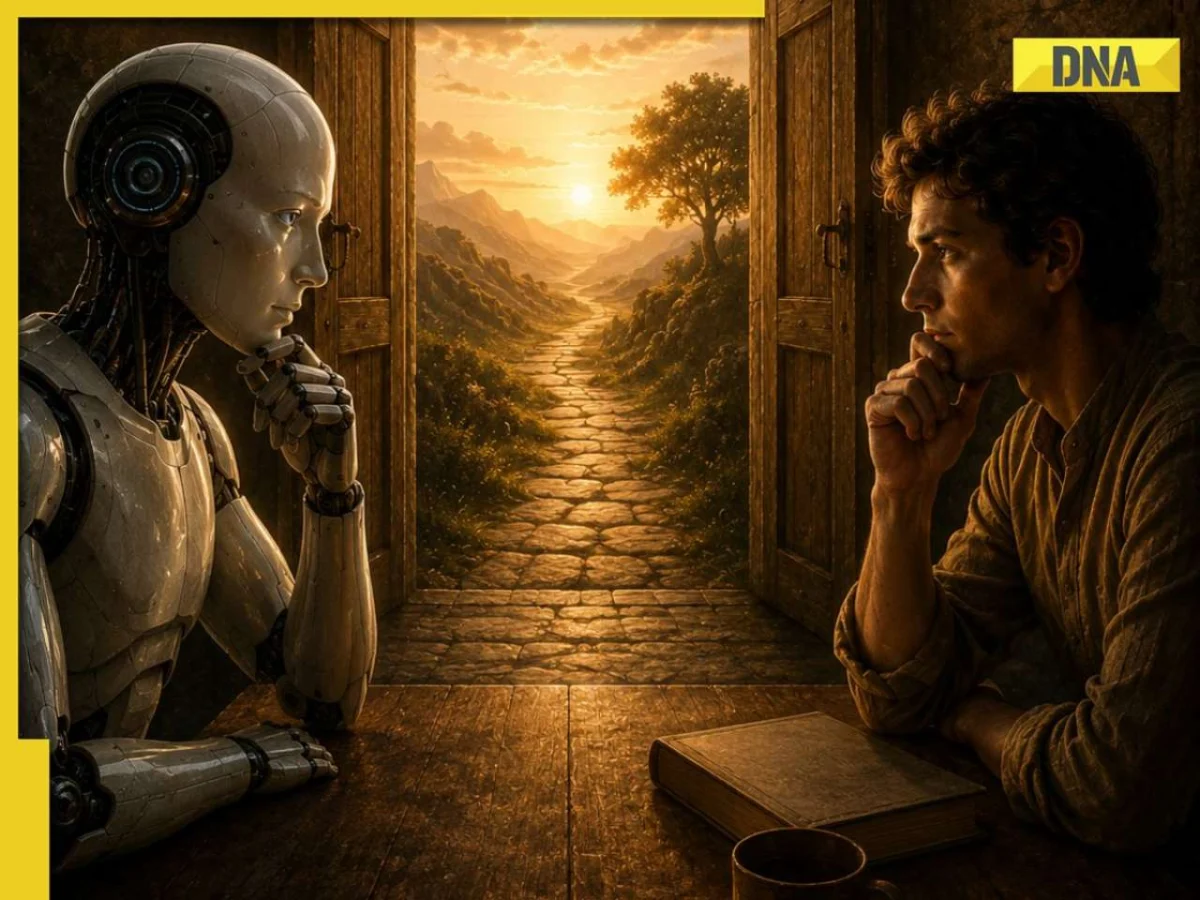
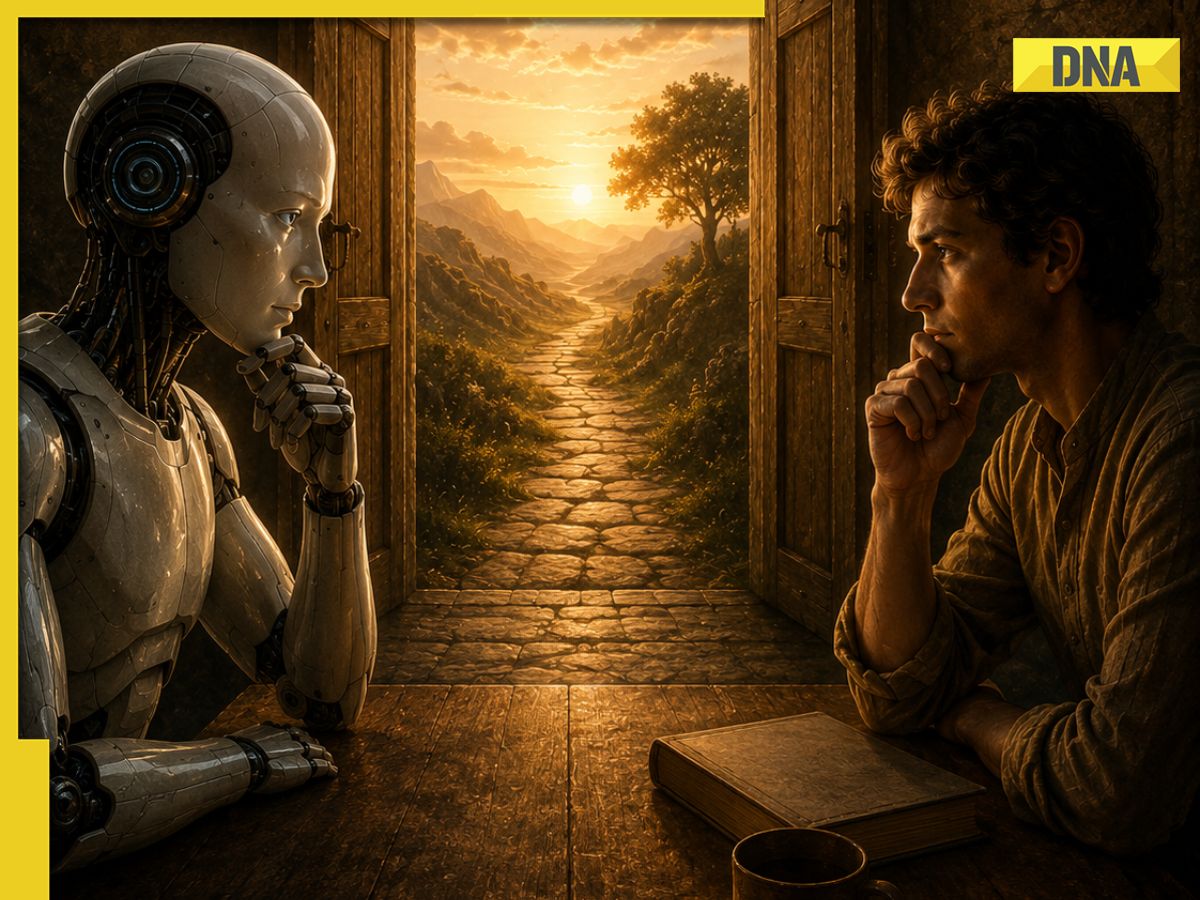
In an era where artificial intelligence is rapidly blurring the lines between machine-generated output and genuine human thought, a profound question emerges: are we on the cusp of an intellectual abdication? While AI’s ability to process and synthesize information at unprecedented speeds is undeniable, experts and philosophers alike are urging a return to fundamental human cognitive skills, particularly the ancient discipline of doubt, to safeguard our understanding of reality and our capacity for critical thinking.
The seemingly profound outputs generated by AI, from nuanced essays to complex analyses, often mask a sophisticated underlying mechanism: advanced pattern optimization. These systems, trained on vast datasets of human knowledge and expression, are adept at identifying and replicating patterns, producing responses that appear thoughtfully constructed but are, in essence, highly sophisticated compilations of past data. This distinction is crucial, as it highlights a fundamental difference between AI’s predictive capabilities and true human cognition, which involves consciousness, subjective experience, and the capacity for genuine understanding.
As we increasingly rely on these tools for information and ideation, the risk of intellectual complacency looms large. The ease with which AI delivers answers can be a siren song, tempting us to bypass the rigorous, often challenging, process of inquiry. However, as ancient philosophical traditions and contemporary psychological research suggest, it is precisely within this struggle – the grappling with incomplete information, flawed arguments, and the very act of questioning – that true learning and intellectual growth are forged.
The Ancient Roots of Skepticism: Nyaya Sutra and the Power of Productive Doubt
The Indian philosophical tradition, particularly the Nyaya school, offers a timeless framework for navigating the complexities of knowledge acquisition. Central to its teachings is the concept of samsaya, often translated as "doubt" or "uncertainty." However, samsaya is not a mere absence of knowledge, but a productive doubt – a catalyst for deeper investigation and the pursuit of valid knowledge. According to the Nyaya Sutra (1.1.1), doubt is one of the sixteen categories of inquiry essential for attaining true understanding.
)
This ancient wisdom underscores the importance of engaging with information critically. The Nyaya Sutra advocates for methods such as vada (honest debate), drishtanta (example), tarka (hypothetical reasoning), and vitanda (critical refutation) as tools to dissect arguments and arrive at sound conclusions. These disciplines encourage a proactive stance towards knowledge, where claims are not passively accepted but rigorously examined through reasoned discourse and empirical evidence.
The essence of productive doubt lies in the ability to discern truth from convenience, to actively seek counter-arguments, and to withhold judgment until a cautious and thorough examination has been conducted. This requires an open mind, a willingness to explore alternative perspectives, and the intellectual humility to acknowledge the limitations of one’s own understanding.

Echoes in Western Philosophy: The Enduring Value of Questioning
The emphasis on critical inquiry and intellectual humility is not unique to Eastern philosophy. Western thinkers have long grappled with similar themes. Aristotle, in his Metaphysics, posited that humans possess an innate drive to know, a fundamental curiosity that fuels our pursuit of understanding. Plato, in his dialogues, explored the importance of intellectual readiness, suggesting that true wisdom involves a willingness to confront the possibility of being wrong.
Later, John Stuart Mill, a prominent figure in utilitarian philosophy, articulated the profound dangers of intellectual stagnation. He argued that an opinion held without being subjected to scrutiny and challenge is intellectually inert. A closed mind, he warned, is not only detrimental to individual development but also poses a significant threat to the progress of discourse and the health of democracy. Mill’s assertion that "the only way in which a human being can make some approach to knowing the whole of a subject, is by hearing what can be said of it by persons of every sort of opinion" resonates powerfully in our current information landscape.
)
The Cultivation of Questions: Beyond the Accumulation of Answers
Both Eastern and Western philosophical traditions converge on a crucial insight: true intellectual growth is not merely the accumulation of answers, but the cultivation of better questions. In the face of AI’s seemingly effortless generation of information, this shift in focus becomes paramount.
Psychologist Carol Dweck’s groundbreaking research on "mindset" provides further compelling evidence for this principle. Dweck’s work highlights that intelligence is not a fixed entity but a malleable quality that thrives on challenges and risks. Individuals with a "growth mindset" view difficulties as opportunities for learning and development, whereas those with a "fixed mindset" often shy away from challenges, interpreting them as indicators of inadequacy. This leads to a closed-off, self-limiting intellectual approach, a stark contrast to the open-mindedness required for genuine understanding.
)
In an age where AI can provide instant answers, the temptation to circumvent the struggle inherent in learning is immense. However, it is precisely this struggle – the process of wrestling with ambiguity, identifying logical gaps, and sifting through potentially flawed data – that strengthens our cognitive faculties.
The Generative AI Paradox: Sophistication Without Sentience
We stand at a precipice, where large language models (LLMs) and generative AI systems, trained on the vast repository of human thought, are capable of producing outputs with astonishing speed and apparent coherence. These systems are, in essence, hyper-sophisticated pattern-completion engines, able to reproduce, remix, and extrapolate information at a pace far beyond human capacity.
)
However, it is crucial to reiterate that these LLMs and generative AI systems do not possess consciousness or genuine understanding. They cannot "think" in the human sense of the word. Therefore, accepting their outputs as unquestionable truth without adequate examination is not only dangerous but poses a profound threat to human intelligence, our grasp of reality, and ultimately, our sense of self.
The real danger lies not in whether AI will eventually "think for us," but whether we will allow it to, thereby facilitating the atrophy of our own cognitive skills. The frictionless availability of answers through AI can lead to an overwhelming temptation to skip the arduous but essential process of intellectual engagement.
)
The Necessity of Friction: Reclaiming the Learning Process
The struggle for knowledge, the process of contesting ideas and being contested in return, is the very engine of learning. The Nyaya Sutra refers to this as anuvyavasaya, the reflexive awareness of being engaged in the act of knowing. This state of self-awareness is fundamental to developing a deep and internalized understanding.
The consequences of bypassing this process are already becoming evident. Students who rely on AI to draft their arguments, rather than painstakingly constructing them themselves, often exhibit weaker retention of information, shallower convictions, and a diminished capacity to defend their viewpoints under pressure. This is unsurprising. A belief forged through genuine inquiry becomes an intrinsic part of one’s intellectual framework. A belief generated by an external source, however sophisticated, remains fundamentally artificial and external.
)
Navigating the Future: A Disciplined Embrace of Open-Mindedness
Rejecting AI tools outright in the current technological landscape is neither feasible nor desirable. These technologies are deeply interwoven into the fabric of our society and will continue to evolve. What is required, however, is a more deliberate and disciplined approach to their integration.
This necessitates a conscious effort to cultivate open-mindedness as a practiced discipline, even in an environment that often rewards the illusion of certainty. It calls for a reimagining of our reward systems, one that values process over mere output. This means acknowledging and rewarding the "tolerance of not knowing" – the willingness to sit with uncertainty long enough to engage in thorough thought.
)
Furthermore, it requires actively engaging with opposition and diverse viewpoints rather than filtering them out. Every confident assertion, whether from a human or an AI, should be treated as a hypothesis, subject to rigorous scrutiny and critical reasoning (tarka), until it either stands up to the challenge or yields to a more robust understanding.
The journey ahead demands that we leverage the power of AI as a tool, not a surrogate for our own intellect. By consciously re-embracing the ancient art of doubt, fostering intellectual humility, and prioritizing the process of inquiry, we can ensure that the rise of artificial intelligence amplifies, rather than diminishes, the power of the human mind. The ultimate edge humanity possesses in this evolving technological landscape is not a faster processing speed, but the enduring capacity to question, to doubt, and to truly, deeply, understand.
