

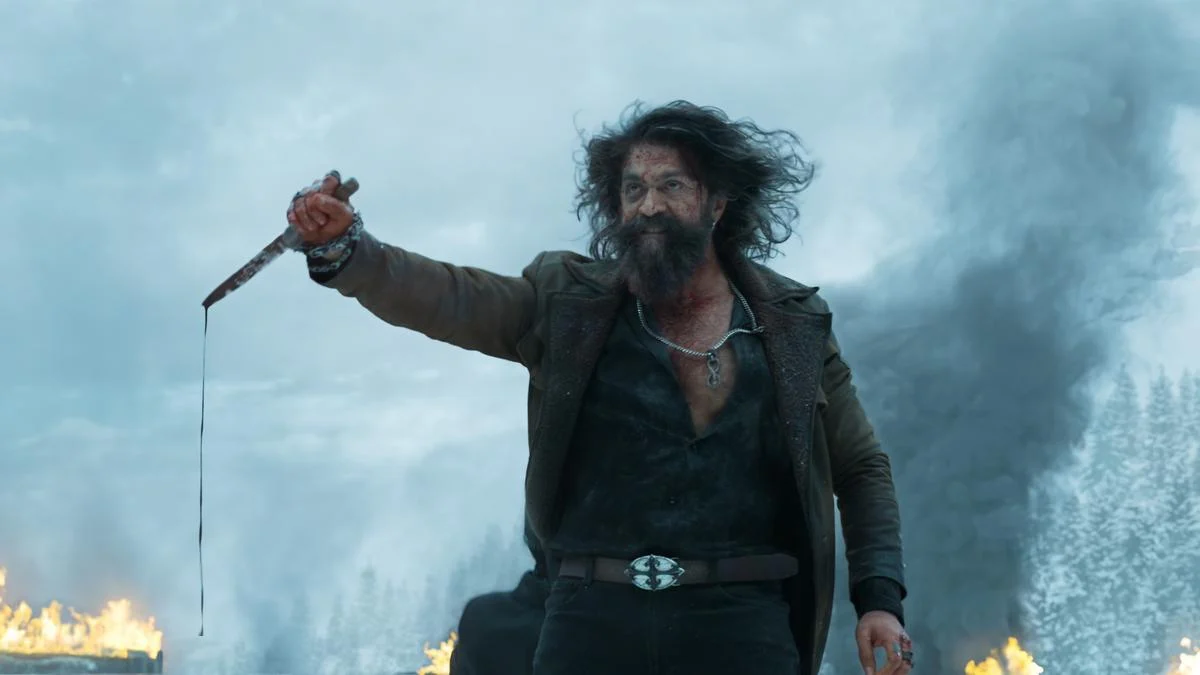
The cinematic landscape is often a fascinating battleground where disparate artistic visions collide, creating either a harmonious synthesis or a jarring dissonance. The highly anticipated "Toxic: A Fairy Tale for Grown Ups," starring Rocking Star Yash and helmed by director Geetu Mohandas, promised to be one such ambitious collaboration. Yash, known for his larger-than-life persona and intense action roles, and Mohandas, celebrated for her nuanced and character-driven narratives, were expected to forge a unique cinematic alloy. However, the resultant film, while visually striking and conceptually bold, ultimately succumbs to a fundamental disconnect between its star’s established persona and the director’s intended artistic direction, leading to an ambitious yet ultimately flawed endeavor.
The Genesis of "Toxic": A Gangster’s Gambit with a Human Heart
"Toxic" was heralded by Yash himself as a "gangster drama with a difference," hinting at a narrative that would delve into an "interesting aspect of human life." This promise, while intriguing, has unfortunately been undermined by what critics are describing as a "terrible execution" of these promising ideas. The film attempts to weave a complex tapestry of power, ambition, and human frailty against the backdrop of Portuguese-ruled Goa around the time of India’s Independence.
At its core, the narrative follows Raya (Yash), a loyal lieutenant to the formidable crime boss Salvador. Raya’s ambition knows no bounds as he sets his sights on monopolizing the lucrative opium trade that flourished in the region during that era. This gritty gangster chronicle is intended to be interwoven with a more introspective exploration of Raya’s tumultuous personal life, particularly his fraught relationships with women. The initial arc sees him entangled with Rebecca (Tara Sutaria), Salvador’s daughter, a relationship seemingly driven by convenience and need rather than genuine emotional connection. The narrative takes a significant turn with the introduction of Nadia (Kiara Advani), a captivating circus performer who ignites a genuine spark of love in Raya’s otherwise hardened heart.
A Narrative Unraveling: From Promise to Pacing Predicaments
The film’s critical failing appears to lie in its inability to translate its ambitious themes into a cohesive and compelling viewing experience. The central premise of Raya’s descent into a more violent and "toxic" persona, triggered by his infatuation with Nadia, is conceptually rich. Nadia, in this context, serves as a mirror reflecting Raya’s primal instincts, urging him towards a more mindful connection. Her poignant dialogue, "Next time when you make love, I feel like you care about me and not feel attacked," offers a glimpse into the film’s potential for emotional depth.
However, this promising foundation quickly erodes as "Toxic" struggles to maintain narrative momentum. The film is criticized for cramming an excessive number of plot points, leading to a disjointed and rushed progression. Ujwal Kulkarni’s editing is frequently described as "choppy," exacerbating the sense of narrative fragmentation and hindering the development of crucial character arcs. This, coupled with what critics perceive as the film’s "relentless showboating of Raya," detracts from the potential for nuanced storytelling.
The film’s structure also faces scrutiny for its repetitive reliance on action sequences and a lack of focus on character development. The narrative question posed by critics – "why every conversation between Raya and his lady love had to lead to sex?" – highlights a perceived overemphasis on physical encounters at the expense of meaningful dialogue and emotional intimacy. The film introduces a significant ensemble of female characters, including Huma Qureshi and Rukmini Vasanth, alongside Tara Sutaria and Kiara Advani, and Nayanthara in a pivotal role as Ganga. Despite their initial promise, these characters are largely underserved, failing to leave a significant impact on the overarching narrative due to insufficient screen time and underdeveloped storylines.

Yash’s Shadow: The "K.G.F." Legacy and its Grip on "Toxic"
A significant point of contention for "Toxic" is the pervasive influence of Yash’s established on-screen persona, particularly from the blockbuster "K.G.F." franchise. The film’s co-writer, Yash, appears to have infused his character’s dialogues and delivery with the same intensity and style that defined his previous blockbuster role. This stylistic carryover, while perhaps catering to his established fan base, is perceived by critics as a fundamental mismatch with the world and tone that Geetu Mohandas sought to establish. The dialogues are described as feeling "like they belong to the K.G.F. universe," and his dialogue delivery is seen as a direct extension of his "K.G.F." performance, ultimately failing to integrate into the distinct milieu of "Toxic." This disconnect between the star’s image and the film’s narrative intent is cited as a primary reason for the film’s struggles.
Mohandas’ Vision: Staging and Artificiality
Geetu Mohandas’ directorial approach, typically lauded for its subtlety and realism, appears to have been stifled in "Toxic." Critics point to a pervasive sense of artificiality in the film’s staging. Scenes are described as characters standing in "fixed positions and deliver their lines, as though they are waiting for their turn to speak." This lack of organic movement, spontaneity, and lived-in quality contributes to an artificial atmosphere, undermining the potential for emotional resonance. The carefully arranged scenes, while perhaps aesthetically deliberate, fail to achieve the naturalism required to draw the audience into the narrative’s emotional core.
Violence as a Crutch: The Cycle of Bloodshed and Its Diminishing Returns
The narrative takes a darker turn as Raya embraces violence, initially as a means to protect his sister Ganga (Nayanthara). However, this violence soon becomes an intrinsic part of his character, a "second skin" that he cannot shed. The film’s extensive action sequences and prolonged gunfights, while intended to showcase Raya’s ruthlessness, ultimately become "stale and exhausting." The lack of a compelling rationale for Raya’s insatiable thirst for blood, and the absence of a truly formidable adversary, further diminishes the impact of these sequences. The narrative only begins to regain some traction with the introduction of Ticket (also played by Yash), Raya’s son, who serves as a catalyst for his father’s introspection.
A Late Awakening: The Psychological Depths of a Damaged Soul
It is in the latter half of the film that "Toxic" begins to touch upon its most compelling thematic material: the psychological toll of loss and violence on a gangster’s psyche. The idea of a man "dead inside" after losing loved ones is a potent concept, and Yash’s performance in these vulnerable moments is noted as giving his all, even if it doesn’t always hit the mark. As the unhinged Ticket, Yash delivers a performance that is described as "completely unhinged" and, once again, "more interesting than it is outright perfect." This late exploration of complex psychological themes, however, arrives too late in the film’s three-hour runtime to salvage the overall experience.
Visual Spectacle vs. Narrative Substance: A Mismatched Marriage
Despite its narrative shortcomings, "Toxic" is undeniably a visually grand production. The film is lauded for its "visual grandeur," "slick action," "gorgeous frames," and "enormous production design." Audiences are drawn in by the sheer aesthetic appeal, holding onto the hope that this visual opulence will eventually be underpinned by a more compelling story. The film’s ultimate failure lies in this very disconnect: a director’s vision and a star’s ambition that, instead of coalescing into a harmonious whole, result in a "mismatched blend." While Geetu Mohandas may have had a compelling idea, and Yash a distinct vision for its execution, the final product suggests a lack of synergy that prevented this ambitious fairy tale for grown-ups from truly taking flight.
In conclusion, "Toxic: A Fairy Tale for Grown Ups" stands as a testament to the challenges inherent in merging divergent artistic sensibilities. While boasting impressive production values and a strong central performance from Yash, the film’s narrative inconsistencies, pacing issues, and the overwhelming influence of the star’s established persona ultimately prevent it from achieving its full potential. The film’s late-stage exploration of profound psychological themes offers a glimpse of what could have been, but it is ultimately insufficient to redeem a production that prioritizes visual spectacle and star power over cohesive storytelling and character development.
