

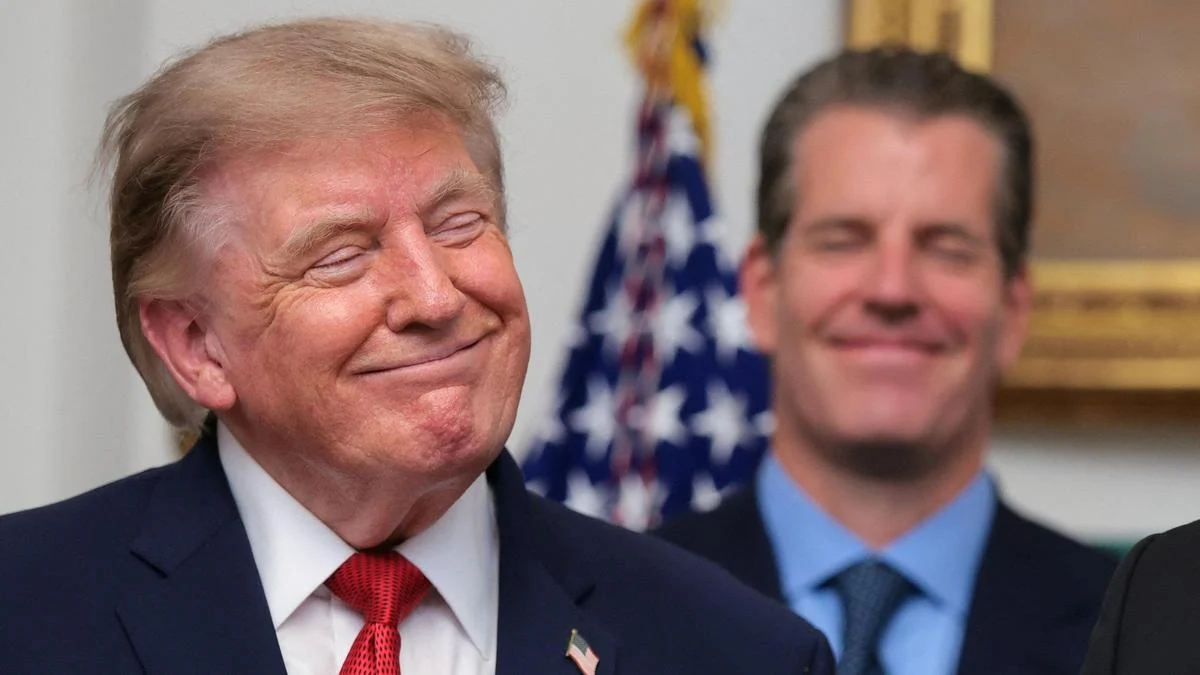
Washington D.C. – In a move underscoring the Trump administration’s commitment to fostering the burgeoning cryptocurrency industry, President Donald Trump is set to host a pivotal meeting with leading crypto executives and technology leaders at the White House on Wednesday. This high-profile engagement coincides with a critical week for digital asset regulation, as U.S. financial watchdogs prepare to advance their frameworks for the complex sector. The meeting arrives amidst heightened scrutiny of the President’s personal financial ties to cryptocurrency ventures, prompting questions about potential conflicts of interest.
President Trump, whose official schedule indicates he will deliver remarks alongside technology leaders in the afternoon, has reportedly amassed over $1.4 billion from his family’s various crypto enterprises. This significant personal stake has fueled a debate over the administration’s increasingly crypto-friendly policy direction, particularly since his return to office in January 2025. While representatives for the White House did not immediately respond to requests for comment, the event signals a deepening alignment between the executive branch and the rapidly evolving digital finance landscape.
Main Facts: A White House Summit for the Digital Age
Wednesday’s gathering at the White House is not merely a ceremonial event but a strategic convocation designed to solidify the administration’s stance on cryptocurrency. President Trump will engage directly with key figures from the crypto industry, including executives from major digital asset firms and representatives from influential industry trade groups. Sources familiar with the matter confirm the attendance of prominent industry leaders, all keen to shape the future of digital asset regulation in the United States.
The summit gains further gravitas with the expected presence of top financial regulators. U.S. Commodity Futures Trading Commission (CFTC) Chair Mike Selig and U.S. Securities and Exchange Commission (SEC) Chair Paul Atkins are anticipated attendees, alongside crypto advisor Patrick Witt. Their participation highlights the interagency coordination and the administration’s holistic approach to integrating digital assets into the existing financial architecture.
This meeting occurs as the regulatory landscape for cryptocurrencies is undergoing significant transformation. On Tuesday, the SEC unveiled a long-anticipated proposal aimed at exempting certain token offerings from stringent securities regulations, a move widely lauded by the industry as a facilitator for easier capital raising and innovation. Following this, the CFTC is slated to delve into its own regulatory discussions concerning crypto at an industry gathering on Thursday. These concurrent developments underscore a concentrated effort by the administration to provide clarity and a more conducive environment for digital asset innovation, contrasting with previous periods of regulatory ambiguity.
However, the administration’s proactive engagement with the crypto sector is not without controversy. A recent Reuters/Ipsos poll revealed that a majority of Americans harbor concerns that President Trump and his family have "inappropriately profited" from the crypto sector since his return to power. The poll further indicated a public perception that his policy decisions may be influenced by his private business dealings, which notably include ventures such as World Liberty Financial and the Trump meme coin. These findings cast a shadow over the administration’s policy initiatives, raising ethical questions about the intersection of personal wealth and public policy.
Chronology: The Evolution of Trump’s Crypto Stance and Policy Initiatives
The journey of cryptocurrency from niche technological curiosity to a mainstream financial topic has been marked by rapid innovation and regulatory uncertainty. For much of its early history, the U.S. regulatory environment for digital assets remained fragmented and reactive, often stifling innovation due to a lack of clear guidelines.
Pre-2025 Stance and the Shift: Before his return to the Oval Office in January 2025, President Trump’s public statements on cryptocurrency were often characterized by skepticism, and at times, outright criticism. He had previously expressed concerns about the volatility of digital assets and their potential use in illicit activities. However, a notable pivot in his stance became apparent leading up to and following his re-election. This shift has been widely interpreted as a strategic embrace of a sector with growing economic and political influence, particularly among younger and more technologically adept demographics.
January 2025 Onward: A Pro-Crypto Presidency: Upon re-entering office, the Trump administration swiftly embarked on a path of crypto-friendly policy adjustments. A key aspect of this approach has been the strategic appointments and directives within critical financial regulatory bodies, particularly the SEC and the CFTC. The appointments of Mike Selig as CFTC Chair and Paul Atkins as SEC Chair signaled a clear intent to foster innovation rather than solely focusing on enforcement and restrictive oversight. These regulators have since worked to clarify jurisdictional boundaries and develop frameworks that acknowledge the unique characteristics of digital assets.
The Legislative Stalemate: Concurrently with executive actions, the crypto industry’s top legislative priority – a sweeping bill aimed at providing comprehensive regulatory clarity – gained traction in Congress. This proposed legislation sought to define various digital assets, assign oversight responsibilities, and establish consumer protection mechanisms. Despite initial bipartisan optimism, the bill ultimately stalled in Congress, facing significant hurdles due to complex technical issues, differing philosophical approaches among lawmakers, and a crowded legislative calendar. With little time remaining before the end of the year, the prospects for its passage appear slim, placing greater emphasis on regulatory agencies to fill the void.
Recent Regulatory Momentum: The past week has seen a flurry of activity underscoring the administration’s proactive approach.
- Tuesday’s SEC Proposal: The Securities and Exchange Commission, under Chair Atkins, formally proposed new rules designed to exempt certain token offerings from traditional securities regulations. This initiative, long awaited by the industry, aims to simplify the process for crypto companies to issue tokens and raise capital, potentially unlocking significant innovation and investment within the U.S. market. The proposal seeks to create a more tailored regulatory environment that distinguishes between investment contracts and utility tokens, a distinction central to the industry’s advocacy.
- Thursday’s CFTC Discussion: The Commodity Futures Trading Commission, led by Chair Selig, is scheduled to hold an industry gathering where crypto regulation will be a primary topic of discussion. The CFTC typically oversees derivatives markets, and its increasing engagement with spot crypto markets, particularly those involving commodities like Bitcoin, highlights the ongoing jurisdictional dance between the SEC and CFTC. This meeting is expected to provide further insights into the CFTC’s evolving role in regulating the broader digital asset ecosystem.
The White House Summit: Wednesday’s meeting serves as a capstone to these recent regulatory movements. By directly engaging with industry leaders, President Trump aims to project an image of a government actively listening to and supporting technological advancement. The discussions are expected to cover a range of topics, including the need for further regulatory clarity, fostering innovation, ensuring U.S. competitiveness in the global crypto landscape, and addressing potential risks associated with digital assets. The symbolism of the President himself hosting such a summit cannot be overstated, signaling a top-down endorsement of the crypto sector.
Supporting Data: Market Dynamics, Personal Fortunes, and Public Sentiment
The backdrop to these policy discussions is a rapidly maturing, albeit still volatile, global cryptocurrency market. Valued at trillions of dollars, the digital asset space has attracted significant institutional investment, venture capital, and a growing retail investor base. Proponents argue that a clear and supportive regulatory framework in the U.S. is crucial for maintaining its global leadership in financial innovation and preventing a brain drain of talent and capital to more permissive jurisdictions.
Economic Potential vs. Risks: The economic potential of blockchain technology and cryptocurrencies is vast, promising efficiencies in financial transactions, new forms of ownership, and decentralized applications. Advocates point to potential job creation, increased financial inclusion, and enhanced national security through technological superiority. However, critics highlight persistent concerns regarding market manipulation, consumer protection, illicit financing, and the environmental impact of certain consensus mechanisms. A balanced regulatory approach, they argue, must mitigate these risks without stifling legitimate innovation.

The Trump Family’s Crypto Ventures: Central to the controversy surrounding the administration’s crypto policies are President Trump’s personal financial interests. The reported $1.4 billion earned from his family’s crypto ventures is a substantial sum that raises eyebrows. These ventures reportedly include World Liberty Financial, a diversified financial services entity with significant digital asset holdings and services, and the "Trump meme coin," a speculative digital asset often seen as a political collectible. The direct financial benefit derived from these activities presents a clear potential for perceived or actual conflicts of interest, as policy decisions that benefit the broader crypto market could directly inflate the value of his family’s holdings.
Public Opinion on Conflicts of Interest: The Reuters/Ipsos polling data provides a critical snapshot of public sentiment. A "majority of Americans" expressing belief that Trump and his family have "inappropriately profited" from the crypto sector since his return to power underscores a significant public trust deficit. The perception that his policy decisions are "influenced by his private business dealings" suggests a skepticism about the impartiality of government actions. While specific percentages from the poll were not provided in the original article, such findings typically indicate a widespread concern that personal gain might be prioritized over public interest. This sentiment could have broader implications for public confidence in the integrity of government and the financial system.
Industry Expectations: From the perspective of crypto executives and trade groups, the White House meeting represents an invaluable opportunity. Their primary objectives include advocating for greater regulatory clarity, urging the passage of comprehensive legislation, and promoting a nuanced understanding of the technology’s potential. They seek a regulatory environment that fosters innovation, attracts investment, and allows the U.S. to compete effectively with other nations actively developing their own digital asset strategies. The current piecemeal approach, while showing progress, still leaves many uncertainties that hinder large-scale institutional adoption and product development.
Official Responses: Defenses, Mandates, and Divergent Views
The various stakeholders involved in the cryptocurrency debate articulate their positions with distinct rationales, often clashing over the optimal path forward.
The White House and President Trump’s Defense: In response to allegations of impropriety, the White House has consistently dismissed such claims. President Trump maintains that he has "had no day-to-day role in his family’s business" and asserts that his investments are "independently managed." This defense aims to create a firewall between his presidential duties and his family’s financial ventures, suggesting that his policy decisions are driven by broader national interests rather than personal enrichment. The administration’s stated goals for crypto policy typically revolve around fostering American innovation, maintaining technological leadership, and ensuring the U.S. remains competitive in the global digital economy, while also addressing financial stability and national security concerns.
Regulators’ Stances (SEC and CFTC):
- SEC Chair Paul Atkins: As the primary regulator for securities, the SEC’s mandate is to protect investors, maintain fair, orderly, and efficient markets, and facilitate capital formation. Under Chair Atkins, the SEC appears to be shifting towards a more accommodative stance for certain digital assets, as evidenced by the proposed token offering exemptions. This move suggests a recognition that not all tokens fit neatly into traditional securities classifications and that a more flexible approach may be necessary to support innovation while still safeguarding investors.
- CFTC Chair Mike Selig: The CFTC’s jurisdiction primarily covers derivatives markets. However, its role in regulating spot crypto markets, particularly those deemed commodities like Bitcoin, has grown. Chair Selig’s active engagement signals the CFTC’s intent to provide regulatory clarity within its purview, potentially focusing on market integrity, prevention of manipulation, and oversight of derivatives products built on digital assets. The ongoing "turf war" between the SEC and CFTC over which agency has primary jurisdiction for various types of digital assets remains a critical point of contention that both agencies are attempting to navigate.
Congressional Divisions: The stalled "sweeping crypto legislation" in Congress highlights the deep divisions within the legislative branch.
- Pro-Crypto Faction: A bipartisan group of lawmakers advocates for comprehensive legislation, arguing that it is essential for regulatory certainty, fostering innovation, and preventing the U.S. from falling behind other nations. They often emphasize economic growth, job creation, and the potential for blockchain technology to modernize financial infrastructure.
- Skeptics and Critics: Other members of Congress express caution, citing concerns about consumer protection, market volatility, the potential for illicit finance, and systemic risks to the broader financial system. They often push for stronger oversight, robust anti-money laundering (AML) and know-your-customer (KYC) regulations, and stricter investor safeguards before broad adoption. The failure of the bill underscores the difficulty in reaching a consensus on such a complex and rapidly evolving technological and financial domain.
External Critics: Beyond official responses, critics from various sectors—including consumer advocacy groups, financial ethics watchdogs, and some academic institutions—have voiced strong objections. They argue that President Trump’s direct financial interests in the crypto space create an undeniable conflict of interest, potentially leading to policies that benefit his personal portfolio rather than the public good. They advocate for more stringent ethics rules, greater transparency in presidential finances, and robust oversight to ensure that regulatory decisions are made impartially. Concerns are also raised about the potential for regulatory capture, where industry interests unduly influence government policy.
Implications: The Future Trajectory of Crypto and U.S. Leadership
The convergence of executive attention, regulatory action, and public scrutiny around cryptocurrency marks a critical juncture for the digital asset industry and the U.S. economy. The outcomes of this week’s events and the broader policy direction under the Trump administration will have profound implications.
For the Crypto Industry: A clear, predictable, and supportive regulatory framework would be a game-changer. It would likely lead to a surge in institutional investment, facilitate the launch of new products and services, and encourage mainstream adoption. The SEC’s proposed exemptions could significantly ease the burden on startups and smaller companies, fostering a more vibrant ecosystem for innovation. However, the industry must also contend with the ethical cloud hanging over the administration’s involvement, which could undermine public trust even as regulatory clarity improves. A perception of regulatory capture could invite future backlash and legislative pushback.
For the U.S. Economy and Global Standing: By actively embracing and seeking to regulate the crypto sector, the U.S. aims to solidify its position as a global leader in financial technology. Failure to do so could see talent, capital, and innovation migrate to jurisdictions with more welcoming environments. A robust U.S. crypto industry could create new jobs, attract foreign investment, and drive technological advancements that benefit other sectors. Conversely, an overly permissive or politically motivated regulatory approach could expose the U.S. financial system to new risks, potentially leading to instability or a loss of international credibility if ethical standards are perceived to be compromised.
Political and Electoral Landscape: President Trump’s pivot to a pro-crypto stance is not merely an economic decision; it is also a political calculation. The demographic of crypto enthusiasts often includes younger, tech-savvy voters who are increasingly engaged in the digital economy. Appealing to this demographic could broaden his political base and potentially sway future elections. However, the ethical concerns raised by the Reuters/Ipsos poll highlight a potential vulnerability. If a significant portion of the electorate believes his policies are driven by personal gain, it could erode public trust and provide ammunition for political opponents. The administration will need to carefully balance its pro-innovation rhetoric with robust ethical firewalls to mitigate these risks.
Global Context and Competition: Other major economies, including the European Union, the United Kingdom, and several Asian nations, are also actively developing their own comprehensive regulatory frameworks for digital assets. The U.S. approach will undoubtedly influence global standards and competitiveness. A coherent and effective U.S. strategy could set a precedent for international regulatory harmonization, fostering cross-border innovation and trade. Conversely, a fragmented or ethically compromised approach could isolate the U.S. or lead to a divergence of standards, complicating global cooperation.
Long-Term Outlook: The path forward for crypto regulation in the U.S. remains complex. Even with the current administration’s proactive stance, the absence of comprehensive congressional legislation means that much of the regulatory burden will continue to fall on agencies like the SEC and CFTC. Future challenges will include adapting to rapidly evolving technology, addressing new forms of digital assets, ensuring interoperability, and striking a delicate balance between fostering innovation and protecting consumers. The ongoing debate about President Trump’s personal financial involvement will likely remain a persistent subplot, shaping public discourse and potentially influencing the long-term sustainability and legitimacy of U.S. crypto policy. The outcome of these efforts will ultimately determine whether the U.S. fully capitalizes on the promise of digital assets or faces new forms of financial and ethical challenges.
